TR
TR EN
EN

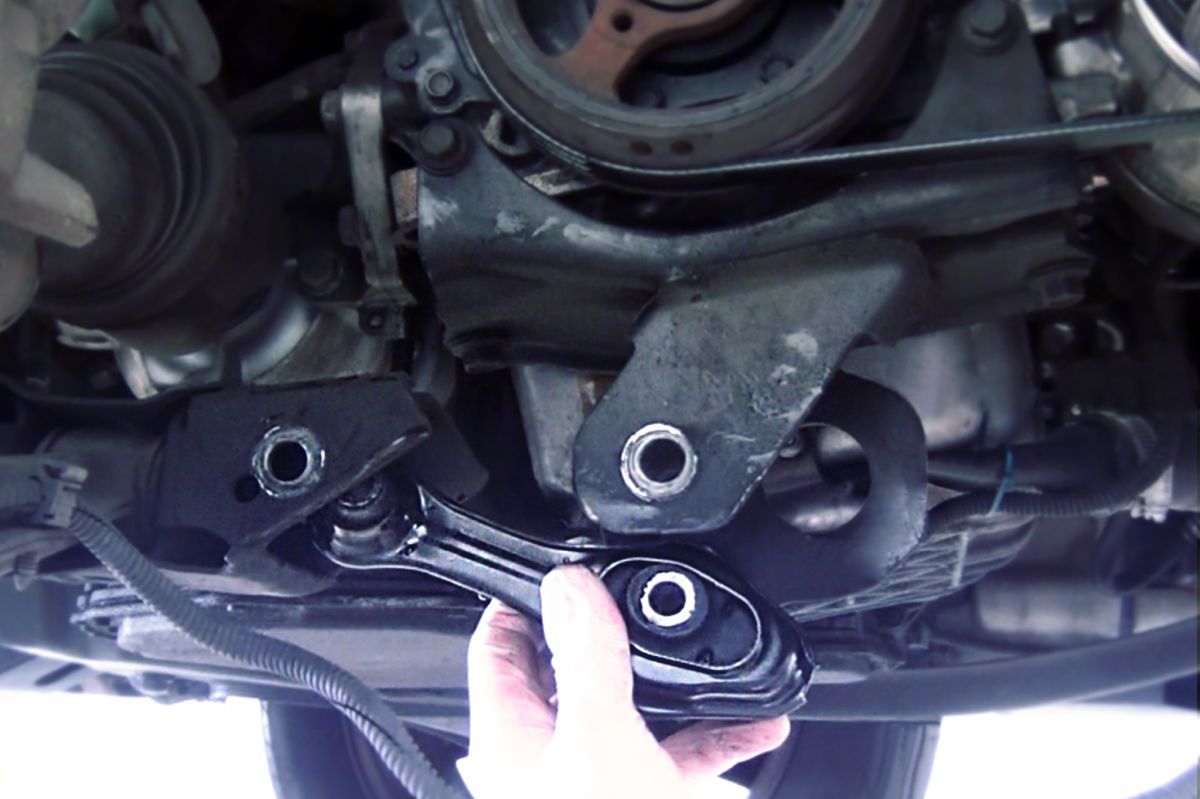
What Is an Engine Mount? What Are the Symptoms of Engine Mount Failure?
The engine mount is a component that connects the engine and transmission assembly to the vehicle's chassis while controlling movement and absorbing vibration.
Although an engine may appear to be firmly fixed inside the engine bay, it cannot simply be bolted rigidly to the body. The engine produces significant vibration and torque reactions while starting, idling, accelerating, shifting gears, and decelerating.
Engine mounts are designed to support the weight of the engine while allowing a controlled amount of movement. When a mount becomes worn, cracked, collapsed, or torn, the engine may move excessively and transmit more vibration into the cabin.
This can result in noticeable symptoms such as vibration, knocking noises, excessive engine movement, and harsh gear changes.
What Does an Engine Mount Do?
An engine mount has several important functions.
First, it supports the weight of the engine and transmission assembly. Second, it keeps the powertrain correctly positioned inside the engine compartment.
Its other major function is vibration isolation.
The engine naturally produces vibrations as the pistons move, combustion occurs, and the crankshaft rotates. The transmission and drivetrain also generate forces when torque is transferred to the wheels.
The engine mounts absorb and control these forces so that less vibration reaches the vehicle's chassis and passenger compartment.
During acceleration, for example, the engine attempts to rotate slightly because of torque reaction. The mounts prevent this movement from becoming excessive.
What Are Engine Mounts Made Of?
Traditional engine mounts commonly use rubber combined with a metal mounting structure.
The rubber section provides flexibility and absorbs vibration while the metal portion provides the required structural strength.
Depending on the vehicle, more advanced designs may also be used.
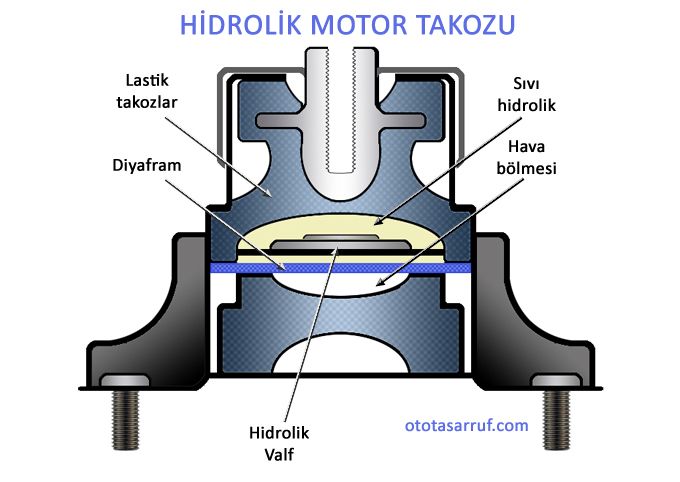
Hydraulic engine mounts contain fluid inside the mount. The fluid helps control vibration and engine movement under different operating conditions.
Vacuum-controlled mounts can change their characteristics using vacuum control, allowing the vehicle to reduce vibration during certain operating conditions.

Active engine mounts are used on some modern vehicles and can electronically or mechanically adjust their behavior according to engine speed, load, and driving conditions.
The exact design varies considerably between vehicles.
What Are the Symptoms of a Bad Engine Mount?
Engine mount failure can produce several symptoms, but they may initially appear similar to problems with the engine, transmission, exhaust system, or suspension.
The most common warning signs include excessive vibration, clunking noises, excessive engine movement, and harsh movement when accelerating or changing gears.
Excessive Vibration at Idle
One of the most common symptoms of a worn engine mount is increased vibration while the engine is idling.
You may feel vibration through the steering wheel, seat, floor, dashboard, or pedals.
The engine itself may be running normally, but the vibration becomes much more noticeable inside the cabin because the damaged mount can no longer isolate engine vibration effectively.
However, excessive idle vibration does not automatically mean that an engine mount has failed. Misfires, incorrect idle speed, ignition problems, fuel-system problems, and other engine faults can produce similar symptoms.
Clunking or Knocking Sounds
A damaged mount can allow the engine to move farther than it should.
When the engine moves suddenly during acceleration, deceleration, or gear changes, the mount or another nearby component may make a clunking or knocking sound.
The noise may be particularly noticeable when moving from reverse to drive, accelerating suddenly, releasing the accelerator, or shifting gears.
A single loud knock does not necessarily identify the exact failed mount, so the complete mounting system should be inspected.
Excessive Engine Movement
A healthy engine mount limits the movement of the engine.
When a mount is broken or severely deteriorated, the engine may move noticeably when the accelerator is pressed and released.
This can sometimes be observed during a controlled inspection with the engine running, although such checks should only be performed safely and by someone familiar with the procedure.
Excessive movement can also place additional stress on hoses, wiring, exhaust components, intake components, and other connections around the engine.
Strong Vibration During Acceleration
A worn engine mount may become particularly noticeable when the engine is under load.
When the driver accelerates, engine torque increases and the powertrain attempts to move within its mounts.
If the mount can no longer control this movement, vibration or a knocking sensation may be felt through the vehicle.
The problem can be more noticeable during hard acceleration than during normal cruising.
Harsh Gear Changes
Engine mounts and transmission mounts help keep the powertrain properly positioned.
When a mount is damaged, the engine and transmission can move excessively during gear changes.
This may make a gear change feel harder or produce a noticeable thump when selecting Drive, Reverse, or changing gears.
However, harsh shifting can also be caused by transmission problems, transmission fluid issues, clutch problems, or electronic control faults. Therefore, the mount should not be blamed without proper inspection.
A Thump When Accelerating or Releasing the Accelerator
A common symptom is a single thump when the accelerator is pressed and then released.
This occurs because the engine changes from a relatively low-torque condition to a higher-torque condition and then back again. A worn mount may allow the powertrain to move excessively during these transitions.
Drivers may describe the sensation as if something underneath the hood is moving or hitting its mounting point.
Increased Noise Inside the Cabin
Engine mounts are also designed to isolate mechanical noise.
When the rubber or hydraulic portion of a mount deteriorates, more engine vibration can be transferred directly into the chassis.
As a result, the cabin may become noticeably louder, particularly at idle or during acceleration.
The noise may not necessarily sound like a traditional engine fault. It can instead appear as a low-frequency vibration or deep mechanical resonance.
Visible Cracks or Damage
Sometimes an engine mount can be diagnosed visually.
Rubber components may show:
-
Cracks
-
Splitting
-
Separation
-
Collapse
-
Deformation
-
Deterioration caused by oil contamination
Hydraulic mounts may also show signs of fluid leakage.
A mount that looks physically damaged should be inspected carefully, but visual appearance alone is not always enough to determine whether the mount is still functioning correctly.
Oil or Fluid Contamination
Engine oil and other fluids can damage some types of rubber mounts over time.
If an engine mount is repeatedly exposed to leaking engine oil, transmission fluid, or another chemical, the rubber can deteriorate more rapidly.
For this reason, replacing the mount without repairing the underlying fluid leak may result in another premature failure.
Why Do Engine Mounts Fail?
Engine mounts can fail for several reasons.
Normal aging
Rubber naturally becomes harder and less flexible over time. This reduces the mount's ability to absorb vibration.
High mileage
Repeated engine movement and vibration gradually wear the mounting components.
Oil contamination
Oil can deteriorate certain rubber materials and cause the mount to soften, swell, crack, or separate.
Excessive engine movement
A mount may experience greater stress if the engine produces abnormal vibration or excessive torque reaction.
Aggressive driving
Frequent hard acceleration, sudden clutch engagement, and high-load driving can increase the mechanical stress placed on the mounts.
Poor-quality replacement parts
An inexpensive or incorrectly specified mount may not have the same characteristics as the original component.
Can a Bad Engine Mount Damage Other Components?
Yes.
An engine mount does not work in isolation. The powertrain, wiring, hoses, exhaust system, intake system, and other components are positioned around it.
If the engine moves excessively, these components may experience additional stress.
In severe cases, excessive movement can contribute to damaged hoses, stretched wiring, exhaust contact, or problems with other mounts.
A failed mount should therefore be repaired rather than ignored for a long period.
Engine Mount or Transmission Mount?
Engine mounts and transmission mounts perform similar functions, but they are not necessarily the same component.
Some vehicles have separate mounts supporting the engine and transmission, while others use a combination of mounts to support the complete powertrain assembly.
This is why vibration or knocking cannot always be attributed to the engine mount simply because the symptom occurs during acceleration.
A proper inspection should identify which mount is worn and whether the transmission mounts or other powertrain mounting components are also affected.
How Is an Engine Mount Diagnosed?
Diagnosis normally begins with a visual inspection.
The technician checks the condition of the rubber, metal brackets, mounting bolts, hydraulic sections, and surrounding components.
The engine may also be observed for abnormal movement under controlled conditions.
Different mounts can produce similar symptoms, so it is important to identify which part is actually allowing excessive movement.
A technician should also check for other possible causes of vibration, such as engine misfires, worn transmission components, exhaust contact, driveshaft problems, or other mechanical faults.
Can an Engine Mount Be Repaired?
In most cases, a damaged engine mount is replaced rather than repaired.
Some specialized mounts can technically be rebuilt, but replacement with a properly specified part is generally the preferred solution for passenger vehicles.
If several mounts are old and one has failed, the condition of the remaining mounts should also be checked.
Replacing only one mount does not necessarily mean that the other mounts need to be replaced automatically. Their actual condition should determine whether they require replacement.
Is It Safe to Drive With a Bad Engine Mount?
A vehicle with a mildly worn engine mount may continue to operate for some time, but driving with a severely damaged or broken mount is not advisable.
If the engine can move excessively, the movement may place additional stress on other components.
Severe knocking, visible engine movement, fluid leakage from a hydraulic mount, or signs that the engine is contacting surrounding components should be treated as a more urgent problem.
Engine Mount Failure vs. Engine Misfire
These two problems are sometimes confused because both can cause vibration.
An engine misfire is a combustion problem. It may be accompanied by rough running, loss of power, an illuminated check engine light, or specific diagnostic trouble codes.
An engine mount problem, on the other hand, can cause significant vibration even when the engine is running normally.
If the vibration is mainly noticeable when the engine is loaded, during gear changes, or when accelerating and releasing the accelerator, the mounting system deserves particular attention.
How Long Does an Engine Mount Last?
There is no universal replacement interval for engine mounts.
Their lifespan depends on vehicle design, driving conditions, engine torque, climate, road conditions, mileage, and exposure to oil or other fluids.
Some mounts can last for many years and well over 100,000 km, while others may deteriorate considerably earlier.
Engine mounts are generally replaced when inspection shows excessive wear, damage, leakage, or loss of their ability to control engine movement.
Final Thoughts
Engine mounts are easy to overlook because they do not normally appear in routine maintenance discussions, yet they play an important role in both vehicle comfort and powertrain stability.
Excessive vibration, clunking during acceleration, unusual movement of the engine, harsh powertrain movement, and increased cabin vibration can all point toward a worn engine mount.
However, these symptoms can also be caused by other mechanical problems. Replacing an engine mount based solely on vibration or noise can therefore lead to unnecessary repairs.
The best approach is to inspect the complete mounting system and determine whether the engine mount itself has actually lost its ability to support and control the powertrain.