TR
TR EN
EN

What Is Paintless Dent Repair? How Is PDR Done?
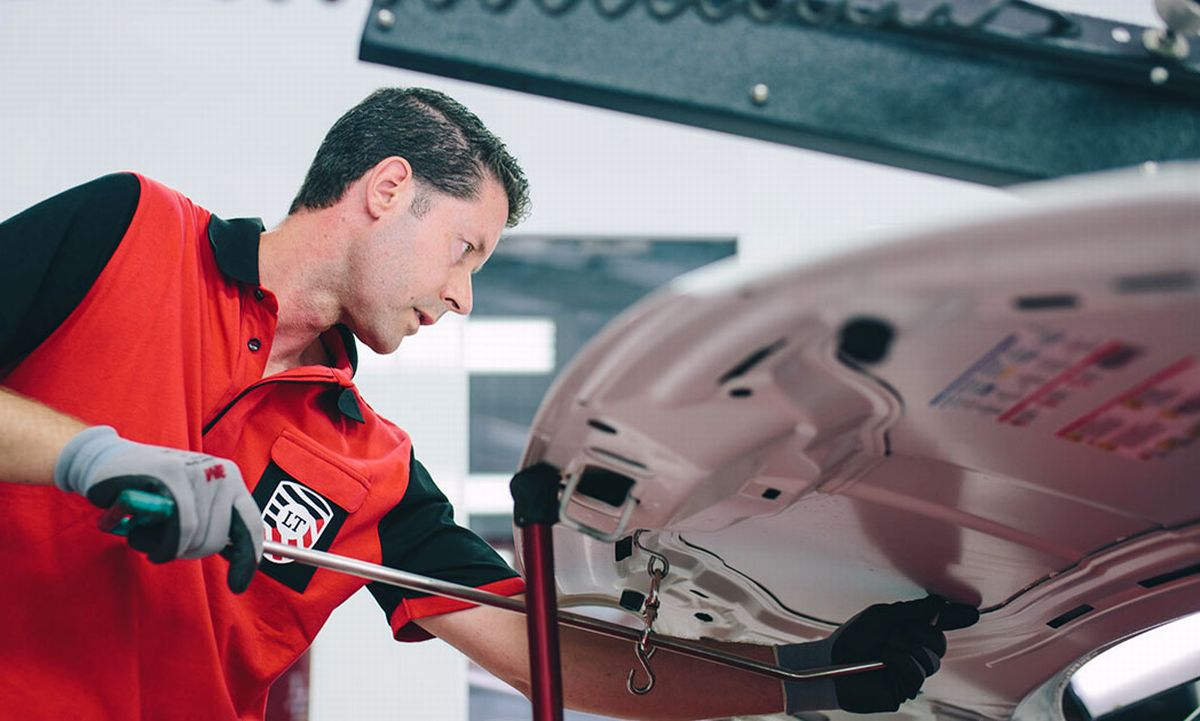
Paintless Dent Repair, commonly known as PDR, is a body repair technique used to remove dents and small body deformations without repainting the damaged panel.
Unlike conventional bodywork, PDR does not normally involve sanding, filling, priming, or repainting the damaged area. Instead, the original metal or aluminum panel is carefully returned to its original shape using specialized tools and controlled pressure.
When performed correctly by an experienced technician, the repair can leave the factory paint and original panel finish intact.
What Does Paintless Dent Repair Mean?
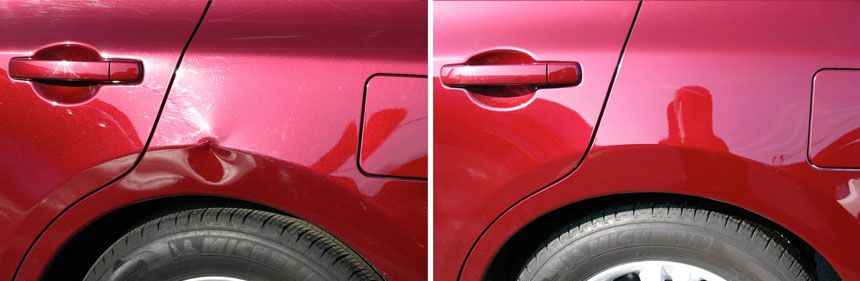
Paintless Dent Repair means repairing a dent without disturbing the vehicle's original paint.
The technician carefully manipulates the damaged panel from behind or, in some situations, pulls the dent from the outside using specialized equipment.
The objective is not simply to push the dent outward. The metal must be moved gradually and precisely so that the original surface shape is restored without creating new deformation.
This requires considerable experience because excessive force can easily create another high spot or stretch the metal.
Which Dents Can Be Repaired With PDR?
PDR is particularly effective for dents where the paint surface remains intact.
Typical examples include:
-
Door dents
-
Parking lot dents
-
Small fender dents
-
Minor hood dents
-
Roof dents
-
Quarter-panel dents
-
Small creases
-
Hail damage
-
Dents caused by falling objects
-
Minor body panel impacts
The size of the dent is important, but it is not the only factor.
A relatively large shallow dent can sometimes be easier to repair than a small but deep dent.
Why Is the Paint Condition Important?
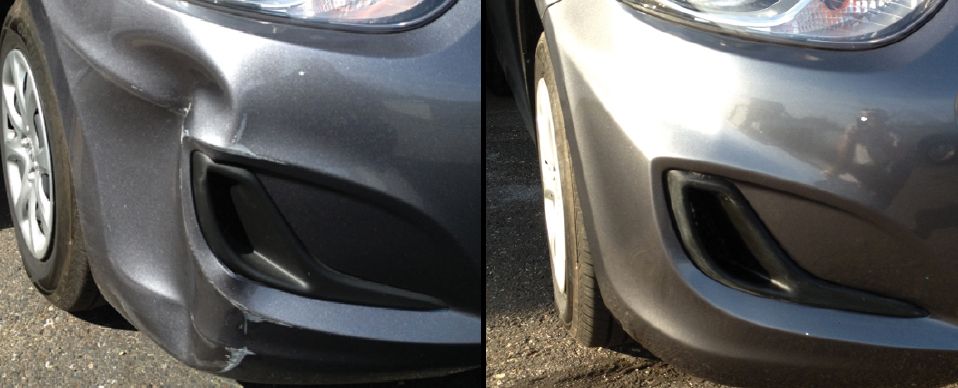
The original paint needs to remain sufficiently flexible for PDR.
If the paint has cracked, chipped, or separated from the panel, pushing the metal back into shape may cause further paint damage.
Modern automotive paint systems can tolerate a certain amount of panel movement, but this does not mean every painted dent can be repaired using PDR.
A technician must inspect the paint before deciding whether the repair is suitable.
How Is PDR Performed?
PDR is a controlled process rather than simply pushing a dent from behind.
The exact procedure depends on the location, depth, size, and shape of the damage.
A typical repair involves several stages.
Inspecting the Damage
The first step is a detailed inspection.
The technician examines:
-
Dent size
-
Dent depth
-
Paint condition
-
Metal condition
-
Location of the dent
-
Accessibility behind the panel
-
Presence of body lines
-
Previous repairs
-
Panel material
-
Possible stretching of the metal
The technician also determines whether the dent is suitable for PDR.
Preparing the Vehicle
The damaged area is cleaned so that the technician can clearly inspect the surface.
Interior trim, door panels, wheel-arch liners, lights, or other components may need to be removed if they prevent access to the back of the damaged panel.
The amount of disassembly depends on where the dent is located.
Using a Dent Light
One of the most important tools in professional PDR is the specialized reflection or dent light.
The light creates controlled reflections across the damaged panel.
These reflections allow the technician to see subtle changes in the metal surface that may not be visible under normal lighting.
The technician watches the reflection while manipulating the panel.
This is essential because the goal is to restore the panel accurately rather than simply make the dent look smaller.
Accessing the Back of the Panel
When possible, the technician reaches the back of the damaged panel using specialized PDR rods and tools.
Different tools are available for different situations.
Some are long and thin for reaching deep areas, while others are shorter and shaped for specific access points.
The technician may access the panel through existing openings, service holes, trim openings, or specially prepared access points.
Applying Controlled Pressure
The technician then applies very small amounts of pressure to the back of the dent.
The process is usually gradual.
Instead of pushing the entire dent outward at once, the technician works through the deformation step by step.
This controlled movement allows the metal to return to its original shape while minimizing the risk of creating high spots.
Working From the Outside
Not every dent can be accessed easily from behind.
In some situations, technicians use special glue-pulling systems.
A small glue tab is attached to the damaged area, and a specialized pulling tool is used to gradually move the panel outward.
The glue is then removed without normally damaging the original paint when the appropriate technique and materials are used.
Glue pulling can be particularly useful when access behind the panel is limited.
Why Does PDR Require So Much Skill?
A dent may appear simple from the outside, but the metal underneath may have several different deformation points.
The technician needs to understand how the panel reacts to pressure.
Pushing too hard in one location can create a high spot.
Applying pressure in the wrong location can move the damage in an undesirable direction.
The technician therefore needs to identify the correct pressure points and work progressively toward the original panel shape.
This is one of the main differences between professional PDR and an improvised dent repair attempt.
What Are Body Lines and Why Do They Matter?
Body lines are the sharp or defined contours designed into vehicle panels.
They can include:
-
Door character lines
-
Fender creases
-
Hood contours
-
Shoulder lines
-
Wheel-arch contours
A dent that crosses a strong body line can be considerably more difficult to repair.
The metal behaves differently around these reinforced or sharply formed areas, and the technician must restore both the damaged area and the original contour.
Can PDR Repair Deep Dents?
Sometimes.
Depth alone does not determine whether PDR is possible.
A deep dent with intact paint may still be repairable if the metal has not been excessively stretched.
However, a deep impact can stretch the metal or create sharp damage that makes a perfect PDR repair difficult or impossible.
The technician must evaluate the actual deformation rather than judging the repairability only by the dent's appearance.
Can Hail Damage Be Repaired With PDR?
Yes.
Hail damage is one of the most common applications of Paintless Dent Repair.
A vehicle affected by hail may have dozens or even hundreds of small dents across:
-
Hood
-
Roof
-
Trunk lid
-
Doors
-
Fenders
-
Quarter panels
Because the original paint often remains intact after hail damage, PDR can be an excellent repair method.
The technician can systematically work through the affected panels and restore the original surface without repainting every damaged area.
Can PDR Repair Aluminum Panels?
Yes, but aluminum can require a different approach.
Aluminum behaves differently from steel and generally requires different techniques and tools.
Some aluminum panels have greater resistance to being reshaped, and repeated manipulation can make the repair more challenging.
Experienced PDR technicians need to understand the characteristics of the specific panel material before applying pressure.
What About High-Strength Steel?
Modern vehicles increasingly use different grades of high-strength steel and advanced materials.
These materials can behave differently from traditional body steel.
A technician must consider the construction of the panel before deciding how much force can safely be applied.
The fact that a panel is made from metal does not mean that every PDR technique is suitable for it.
Can PDR Repair a Dent With Scratched Paint?
It depends on the damage.
If the dent itself is suitable for PDR but the paint has been scratched, PDR may still be used to restore the shape of the panel.
However, PDR will not repair the paint itself.
In this situation, the panel may require additional paint repair after the dent has been corrected.
Can PDR Repair a Dent With Paint Cracks?
This is more complicated.
Cracked paint indicates that the paint layer has already lost its integrity.
Moving the panel can cause the crack to spread or the paint to separate further.
A conventional body repair may therefore be more appropriate depending on the severity of the damage.
PDR vs Conventional Dent Repair
The biggest difference is what happens to the original panel and paint.
With conventional body repair, the technician may:
-
Straighten the panel
-
Sand the damaged area
-
Apply body filler
-
Prime the surface
-
Paint the panel
-
Blend the surrounding paint
-
Polish the repaired area
PDR aims to avoid these steps whenever the damage allows it.
This makes PDR particularly attractive when preserving the factory finish is important.
What Are the Advantages of Paintless Dent Repair?
PDR has several important advantages.
The original paint can be preserved
The factory paint remains on the vehicle when the repair is performed successfully.
No body filler is normally required
Because the panel is reshaped rather than filled, the repair does not depend on a layer of filler to recreate the surface.
The repair can be faster
Depending on the damage, some dents can be repaired significantly faster than conventional bodywork.
The repaired panel can retain its factory finish
This can be especially valuable on newer vehicles.
There is less risk of a paint mismatch
Because the panel is not repainted, there is no new paint color that needs to be matched to the surrounding panels.
The vehicle's original appearance can be preserved
For many owners, retaining the original body and paint is an important advantage.
Is PDR Always Cheaper?
Not necessarily.
A simple parking dent may be relatively inexpensive to repair, while a difficult dent requiring extensive access, disassembly, and precision work can be expensive.
The cost depends on:
-
Dent size
-
Dent depth
-
Location
-
Number of dents
-
Panel material
-
Body-line involvement
-
Accessibility
-
Paint condition
-
Metal stretching
-
Technician experience
Therefore, comparing PDR and conventional repair solely by price can be misleading.
How Long Does PDR Take?
Repair time varies significantly.
A small accessible dent may be repaired relatively quickly.
A larger or more complicated dent can require several hours.
Hail-damaged vehicles can take considerably longer because many individual dents must be repaired.
Disassembly can also increase the repair time if the technician needs to remove interior trim, lights, liners, or other components to access the damaged panel.
Does PDR Damage the Original Paint?
Professional PDR is specifically designed to preserve the original paint.
However, the condition of the paint and the type of damage are important.
If the paint is already damaged, brittle, poorly repaired, or cracked, additional damage can occur during the repair process.
The technician should therefore inspect the paint before starting.
Can You Do PDR at Home?
Basic dent-repair kits are widely available, but professional PDR is much more difficult than it may appear.
A person without experience can easily:
-
Create high spots
-
Stretch the metal
-
Crack the paint
-
Pull the panel too far
-
Damage the panel structure
-
Leave visible distortion
The reflection technique used by professional technicians also requires practice.
For a valuable vehicle or a visible body panel, professional repair is generally the safer option.
Why Pushing a Dent From Behind Can Make It Worse
A common mistake is to assume that the dent should simply be pushed outward from its deepest point.
A dent is not always shaped like a simple depression.
The surrounding metal may contain tension and secondary deformation.
If excessive pressure is applied directly to the deepest point, the technician may create a raised area that is more difficult to correct.
Professional PDR therefore involves many small corrections rather than one large push.
What Happens If the Metal Is Stretched?
Metal can stretch when subjected to a sufficiently strong impact.
This is one of the most important limitations of PDR.
If the panel has been significantly stretched, returning it perfectly to its original shape may not be possible using conventional PDR techniques alone.
Some stretched areas can be improved substantially, but a perfect factory-level result may require conventional body repair.
Can PDR Be Used on Plastic Bumpers?
PDR is primarily associated with metal body panels.
Plastic bumpers can sometimes be reshaped using controlled heat and other repair techniques, but this is not the same process as traditional PDR.
The repair method depends on the type of plastic, the location of the deformation, and whether the bumper has been cracked or damaged.
What Dents Are Usually Poor Candidates for PDR?
PDR may not be appropriate when:
-
Paint is severely cracked
-
Paint has peeled away
-
The metal is badly stretched
-
The panel is torn
-
There is a sharp and severe crease
-
The panel has a large structural deformation
-
Previous bodywork has weakened the area
-
The damaged area cannot be accessed adequately
-
The panel has severe corrosion
In such cases, conventional body repair may produce a better result.
Does PDR Affect the Vehicle's Original Paint?
One of the major reasons people choose PDR is precisely because it can preserve the original paint.
This can be particularly valuable when selling a vehicle because the repaired panel may remain factory-painted rather than showing evidence of a repaint.
However, PDR does not automatically guarantee that a panel will have no paint-related history. The actual condition of the vehicle before the repair must also be considered.
How Can You Tell If a PDR Repair Was Done Properly?
A high-quality PDR repair should leave the panel looking natural from different angles.
Under proper lighting, you should not see:
-
High spots
-
Remaining low spots
-
Waves
-
Distorted body lines
-
Uneven reflections
-
Sharp tool marks
The repaired area should follow the original shape of the surrounding panel.
This is why professional PDR technicians spend so much time checking the panel under specialized lighting.
PDR Is More Than Simply Removing a Dent
Paintless Dent Repair is essentially a precision metal-forming process.
The technician is not covering the damage or hiding it under paint. The objective is to restore the original shape of the panel itself.
For this reason, the quality of the final repair depends heavily on:
-
The condition of the paint
-
The amount of metal deformation
-
The location of the dent
-
Access to the rear of the panel
-
The technician's experience
-
The correct selection of tools
-
The amount and direction of applied pressure
When these factors are favorable, PDR can restore a damaged panel while preserving its original paint and appearance.
For small parking dents, hail damage, shallow creases, and similar body damage, it can be one of the most effective alternatives to conventional bodywork.