TR
TR EN
EN

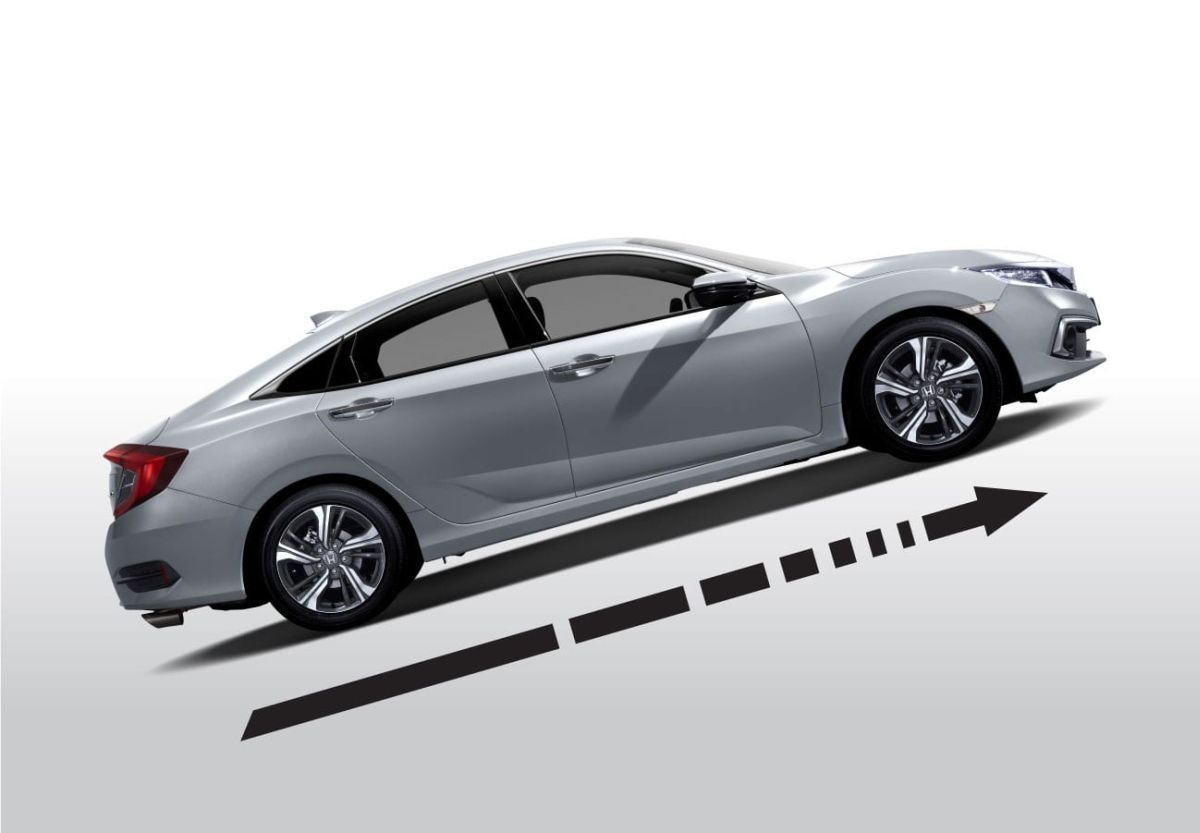
What Is Hill Start Assist? How Does Hill Holder Work?
Hill Start Assist, commonly called Hill Holder, is a vehicle assistance system designed to prevent the vehicle from rolling backward when starting on an incline.
The system is particularly useful when stopping on a steep hill and then moving away again. Without Hill Start Assist, the driver may need to coordinate the clutch, brake, and accelerator quickly in a manual-transmission vehicle. With an automatic transmission, the system can also help prevent unwanted rollback when the brake pedal is released.
Although the system is often associated with manual transmissions, modern vehicles can use Hill Start Assist with manual, automatic, dual-clutch, and other electronically controlled transmissions.
What Does Hill Holder Do?
The basic purpose of Hill Holder is simple:
It temporarily keeps the brakes applied after the driver releases the brake pedal.
For example, imagine that the vehicle is stopped on an uphill road.
The driver presses the brake pedal and brings the vehicle to a complete stop. When the driver releases the brake to move to the accelerator or engage the clutch, Hill Start Assist can maintain brake pressure for a short period.
This gives the driver enough time to start moving without the vehicle rolling backward.
The system normally releases the brakes automatically once the vehicle begins to move or the system determines that sufficient driving torque is available.
How Does Hill Start Assist Work?
Hill Holder does not usually have a separate mechanical brake mechanism.
Instead, it works through the vehicle's electronically controlled braking system.
The system can use information from several sensors and control modules, including:
-
Wheel speed sensors
-
Brake pedal position or pressure information
-
Accelerator pedal position
-
Clutch pedal position on manual vehicles
-
Engine torque information
-
Transmission status
-
Vehicle longitudinal acceleration
-
Yaw and stability-control information
-
ABS/ESC control module
When the vehicle stops on an incline, the control system determines whether the conditions are suitable for Hill Start Assist.
If the system is activated, brake pressure is maintained temporarily after the driver releases the brake pedal.
When the driver begins accelerating or releases the clutch sufficiently, the system gradually releases the brake pressure.
How Does Hill Holder Work on a Manual Transmission?
Hill Start Assist can be particularly useful with a manual transmission.
Normally, starting on an incline requires coordination between the clutch and accelerator.
If the driver releases the brake before enough engine torque is transmitted to the wheels, the vehicle can roll backward.
With Hill Holder, the brakes remain applied briefly after the brake pedal is released.
The driver can then:
-
Select the appropriate gear.
-
Release the brake pedal.
-
Begin engaging the clutch.
-
Apply the accelerator.
-
Build enough engine torque to move the vehicle.
-
Allow the system to release the brakes.
The exact operating strategy varies between manufacturers and vehicle models.
How Does Hill Holder Work With an Automatic Transmission?
Automatic vehicles can also use Hill Start Assist.
In an automatic vehicle, the transmission may already provide some forward driving force when the brake pedal is released. However, this may not always be enough to prevent rollback on a steep incline.
Hill Start Assist can temporarily maintain brake pressure while the driver moves from the brake pedal to the accelerator.
The transmission control system and engine control system can also communicate with the braking system to determine when the vehicle is ready to move.
Does Hill Holder Use the ABS System?
In many modern vehicles, Hill Start Assist operates through the ABS/ESC hydraulic control unit.
The ABS system already has electronically controlled valves and a hydraulic pump capable of controlling brake pressure at individual wheels.
Hill Start Assist can therefore use this existing hardware rather than requiring a completely separate brake mechanism.
This is one reason why problems with the ABS or ESC system can sometimes disable Hill Start Assist.
What Sensors Does Hill Holder Use?
Hill Holder does not rely on one single sensor in every vehicle.
Depending on the vehicle design, the system may receive information from several sources.
Wheel speed sensors
These provide information about whether the vehicle is stationary or moving.
Accelerator pedal sensor
The system can use accelerator input to determine when the driver intends to move away.
Brake pressure information
The system needs to know when the vehicle has been stopped using the brakes.
Clutch pedal information
Manual-transmission vehicles can use clutch position to determine when the driver is preparing to move.
Longitudinal acceleration sensor
The vehicle's stability-control system can determine whether the vehicle is positioned on an incline.
Transmission information
Automatic and dual-clutch vehicles can use transmission status and selected gear information.
How Does the System Know That the Vehicle Is on a Hill?
The vehicle does not necessarily need a dedicated "hill sensor."
The ABS/ESC system can determine the vehicle's longitudinal movement and inclination using information from sensors such as the acceleration sensor.
In some vehicles, this information is combined with wheel speed, brake pressure, engine torque, transmission status, and other data.
The exact strategy differs between manufacturers.
The system is therefore not simply measuring the road angle with one sensor and activating the brakes whenever the road points upward.
How Long Does Hill Holder Hold the Brakes?
The holding period varies by vehicle.
In many systems, brake pressure is maintained for only a few seconds.
The purpose is not to keep the vehicle stationary indefinitely. It is simply to give the driver enough time to move from the brake pedal to the accelerator and establish driving force.
The system can release the brakes earlier if it detects that the vehicle is ready to move.
Can Hill Holder Work on a Downhill Slope?
The primary purpose of Hill Start Assist is to prevent backward rolling when starting uphill.
Some systems can also assist when starting on a downhill slope, depending on the vehicle's design and the direction of travel.
However, the exact behavior varies considerably between vehicles.
Hill Start Assist should therefore be considered a starting assistance function, not a general-purpose parking brake or vehicle-holding system.
What Happens If Hill Holder Does Not Work?
If Hill Start Assist stops working, the vehicle can usually still be driven normally if there are no other brake or stability-system problems.
The driver simply needs to control the vehicle manually when starting on an incline.
However, a Hill Start Assist warning should not automatically be ignored.
Because the system can share components with ABS and ESC, a fault may indicate a problem elsewhere in the vehicle's braking or stability-control system.
Possible causes include:
-
Faulty wheel speed sensor
-
ABS sensor wiring problem
-
Low brake fluid
-
Brake pressure sensor fault
-
Steering angle sensor problem
-
Longitudinal acceleration sensor fault
-
ABS/ESC control unit problem
-
Weak battery or low system voltage
-
Communication problem between control modules
-
Clutch pedal sensor problem
-
Brake pedal switch problem
-
Transmission-related fault
Why Can ABS or ESC Faults Disable Hill Holder?
Hill Holder depends on accurate information about vehicle speed, movement, and braking.
If the ABS/ESC system cannot reliably determine wheel speed or vehicle movement, it may disable Hill Start Assist as a precaution.
For example, a faulty wheel speed sensor may trigger an ABS warning and simultaneously cause Hill Start Assist to become unavailable.
This does not necessarily mean that the Hill Holder itself is defective.
The underlying ABS or ESC fault should be diagnosed first.
Can a Weak Battery Cause Hill Holder Problems?
Yes.
Modern Hill Start Assist systems depend on electronic control modules, sensors, and electrically operated hydraulic components.
If battery voltage is too low, several electronic systems can temporarily become unavailable.
A weak battery or charging-system problem may therefore cause warning messages involving:
-
Hill Start Assist
-
ABS
-
ESC
-
Traction control
-
Electric power steering
-
Parking brake
If several warnings appear simultaneously, checking battery voltage and the charging system can be an important first step.
Hill Holder Failure Symptoms
A malfunctioning Hill Start Assist system can produce different symptoms depending on the cause.
Common indications include:
-
Vehicle rolls backward more easily when starting uphill
-
Hill Start Assist warning message
-
ABS warning light
-
ESC/traction-control warning light
-
Hill Holder unavailable message
-
Brake-system warning
-
Several warning lights appearing simultaneously
-
System works intermittently
-
Hill Holder works on some inclines but not others
If the system is simply disabled because another control-system fault has been detected, there may be no physical brake problem at all.
Can Hill Holder Be Turned Off?
Some vehicles allow the driver to disable Hill Start Assist.
The method depends on the manufacturer and model.
It may be controlled through:
-
A dedicated button
-
Vehicle settings
-
Driving-mode settings
-
Instrument-cluster menus
-
Infotainment settings
Other vehicles do not provide a driver-accessible option to disable the system.
Is Hill Holder the Same as an Electronic Parking Brake?
No.
Hill Start Assist and an electronic parking brake have different purposes.
Hill Start Assist temporarily holds the brakes during a hill start.
Electronic parking brake is designed to keep the parked vehicle stationary for a much longer period.
Hill Holder should therefore never be treated as a replacement for the parking brake.
When parking the vehicle, the proper parking procedure should always be followed.
Is Hill Holder Useful With a Manual Transmission?
Yes.
It can make uphill starts considerably easier, particularly for inexperienced drivers.
Without Hill Start Assist, the driver must coordinate:
Brake → clutch → accelerator → clutch engagement
Hill Holder gives the driver additional time to complete this sequence.
It can also reduce clutch abuse because the driver does not need to rely on excessive clutch slipping to prevent the vehicle from rolling backward.
Can Hill Holder Damage the Brakes?
Under normal operation, Hill Start Assist is designed to use the vehicle's braking system within its intended operating parameters.
The temporary application of brake pressure is a normal function of the system.
It should not cause abnormal brake wear simply because Hill Holder is being used.
However, if the system behaves incorrectly and keeps the brakes applied for too long, the vehicle should be inspected.
A brake that remains partially applied can cause overheating, accelerated pad wear, poor fuel economy, and other problems.
Does Hill Holder Work Every Time?
Not necessarily.
The system may have specific activation conditions.
For example, it may not activate when the incline is too small, when the vehicle is not completely stationary, or when another control-system fault is present.
Different manufacturers also use different activation thresholds.
Therefore, Hill Holder should not be considered a system that guarantees the vehicle will never move backward under every condition.
Hill Holder vs Auto Hold
Hill Start Assist and Auto Hold are related but different functions.
Hill Start Assist is primarily intended to assist during starting on an incline and generally operates for a short period.
Auto Hold is designed to keep the vehicle stationary after stopping, including at traffic lights or in traffic, until the driver accelerates.
Auto Hold can remain active for considerably longer than Hill Start Assist.
Some modern vehicles have both systems.
Can Hill Holder Be Added to a Vehicle?
Retrofitting Hill Start Assist is possible on some vehicles but is not necessarily simple.
Because the system can communicate with the ABS/ESC, engine, transmission, and other control modules, it may require compatible hardware and software.
A simple switch installation is generally not enough.
Depending on the vehicle, retrofit requirements may include:
-
Compatible ABS/ESC module
-
Appropriate sensors
-
Correct wiring
-
Compatible control modules
-
Software coding
-
Calibration
-
Manufacturer-specific configuration
Improper modifications to the braking system should be avoided because the system directly affects vehicle safety.
How Is a Hill Holder Fault Diagnosed?
A proper diagnosis should begin with a diagnostic scan of the vehicle.
The ABS/ESC module should be checked in addition to the engine ECU because Hill Start Assist is often controlled through the braking and stability-control system.
The technician may check:
-
Stored ABS/ESC fault codes
-
Wheel-speed sensor data
-
Brake switch operation
-
Brake pressure data
-
Steering angle information
-
Vehicle acceleration data
-
Clutch position
-
Battery voltage
-
CAN communication
-
ABS hydraulic unit operation
Live-data testing can be particularly useful when the problem occurs intermittently.
Final Thoughts
Hill Start Assist, or Hill Holder, is an electronic driver-assistance system that temporarily maintains brake pressure when starting on an incline.
It works by combining information from the braking, stability-control, engine, transmission, and pedal systems. In many vehicles, the ABS/ESC hydraulic unit provides the actual brake-pressure control.
The system is especially helpful with manual transmissions because it gives the driver additional time to coordinate the clutch and accelerator. Automatic and dual-clutch vehicles can also use Hill Start Assist to reduce unwanted rollback.
If Hill Holder becomes unavailable, the problem is not necessarily inside the Hill Holder function itself. A faulty wheel-speed sensor, ABS/ESC component, brake switch, sensor, wiring connection, battery, or communication network can also cause the system to be disabled.
For this reason, a proper diagnostic scan and examination of the related control systems are important before replacing any components.