TR
TR EN
EN

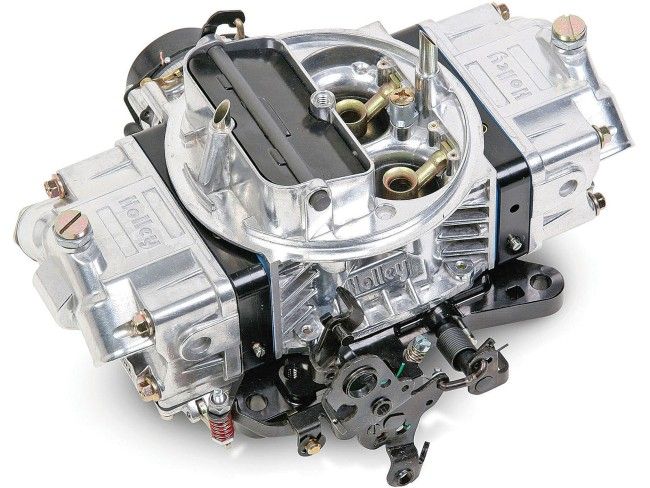
What Is a Mechanical Fuel System?
A mechanical fuel system is a type of fuel delivery system in which the amount of fuel supplied to an engine is controlled primarily by mechanical components, fuel pressure, airflow, vacuum, springs, diaphragms, linkages, and calibrated passages, rather than being calculated and controlled mainly by an electronic engine control unit (ECU).
Mechanical fuel systems were widely used in gasoline and diesel engines before electronic fuel injection became standard.
The term does not refer to a single specific system. Carburetors, mechanical continuous fuel injection systems such as Bosch K-Jetronic, and traditional mechanical diesel injection systems can all be considered examples of mechanical fuel delivery technology.
How Does a Mechanical Fuel System Work?
The basic purpose is simple: deliver the correct amount of fuel to the engine according to its operating conditions.
The required fuel quantity changes depending on factors such as:
-
Engine speed
-
Engine load
-
Airflow
-
Throttle position
-
Intake manifold vacuum
-
Fuel pressure
-
Engine temperature
-
Mechanical adjustment of the system
In a modern electronic injection system, many of these parameters are measured by sensors and processed by the ECU.
In a mechanical system, similar functions are achieved through physical mechanisms.
For example, a carburetor uses the pressure difference created by airflow through a Venturi to draw fuel into the incoming air stream. The amount of fuel is then influenced by components such as jets, the float level, and different fuel circuits.
Carburetor Fuel Systems
The carburetor is one of the best-known examples of a mechanical fuel system.
A carburetor mixes fuel and air before the mixture enters the engine.
Depending on the design, it may contain:
-
Float bowl
-
Float
-
Needle valve
-
Venturi
-
Main jet
-
Idle jet
-
Mixture circuit
-
Throttle valve
-
Accelerator pump
-
Choke
-
Vacuum diaphragms
When the driver presses the accelerator, the throttle opens and the engine draws in more air. As airflow changes, different fuel circuits inside the carburetor become active.
Unlike electronic fuel injection, the carburetor does not use an ECU to calculate injector pulse width. Fuel metering is achieved through mechanical and fluid-dynamic principles.
Mechanical Continuous Fuel Injection
Mechanical fuel systems are not limited to carburetors.
A good example is Bosch K-Jetronic, which is a mechanical continuous fuel injection system.
Unlike a carburetor, K-Jetronic does not mix fuel with air inside a carburetor body. Instead, fuel is continuously delivered through mechanically controlled injectors.
The airflow sensor plate moves according to the amount of air entering the engine. This movement affects the fuel distributor and determines how much fuel is supplied.
K-Jetronic therefore represents an important stage between traditional carburetion and modern electronically controlled fuel injection.
Mechanical Diesel Fuel Systems
Mechanical fuel systems were also widely used in diesel engines.
In traditional diesel engines, a high-pressure injection pump mechanically determines the amount and timing of fuel delivered to the injectors.
A typical system can be described as:
Fuel tank → fuel filter → injection pump → high-pressure lines → injectors → cylinders
Unlike modern common-rail diesel systems, traditional mechanical diesel systems do not rely primarily on electronically controlled injectors to determine injection quantity and timing.
The injection pump itself performs much of the fuel metering and timing work.
Mechanical Fuel Pumps
Older vehicles, particularly carbureted vehicles, often used mechanical fuel pumps.
A common example is the diaphragm-type mechanical fuel pump driven by the engine's camshaft.
Instead of using an electric motor, the pump uses engine movement to create suction and pressure, drawing fuel from the tank and delivering it to the carburetor.
The basic operation involves a diaphragm moving back and forth. This creates pressure differences that allow fuel to enter the pump and then flow toward the carburetor.
A mechanical fuel pump can therefore perform the fuel delivery function without requiring an electric fuel pump.
Mechanical Fuel Metering
One of the most important characteristics of a mechanical fuel system is the way fuel quantity is determined.
In a carburetor, fuel metering can depend on:
-
Jet size
-
Float level
-
Airflow
-
Venturi pressure
-
Mixture adjustment
-
Throttle position
-
Vacuum
-
Accelerator pump operation
In a mechanical injection system, fuel quantity can instead depend on:
-
Pump position
-
Control pressure
-
Airflow measurement
-
Mechanical linkages
-
Injection pump calibration
-
Injector characteristics
The exact method depends on the type of mechanical fuel system.
The Role of Fuel Pressure
Fuel pressure is important in virtually every fuel system, but it is particularly significant in mechanical injection systems.
For example, K-Jetronic relies heavily on fuel pressure and control pressure to determine how fuel is metered.
Mechanical diesel injection systems also depend on very high injection pressures generated by the injection pump.
If fuel pressure is incorrect, the engine may experience:
-
Hard starting
-
Poor acceleration
-
Misfire or uneven running
-
Excessive smoke
-
Poor fuel economy
-
Loss of power
-
Difficult hot or cold starting
For this reason, fuel pressure should be measured when diagnosing a suspected mechanical fuel-system problem rather than assuming that a component has failed.
Choke and Cold Starting
Cold starting is one of the areas where mechanical fuel systems can be more challenging than modern electronic injection.
A cold gasoline engine generally requires a richer mixture because fuel does not vaporize as easily at low temperatures.
Carburetors commonly use a choke system to enrich the mixture during cold starting.
The choke restricts airflow or otherwise changes the fuel-air ratio so that the engine can start more easily.
As the engine warms up, the choke needs to open progressively.
If it remains closed for too long, the engine may run excessively rich, resulting in:
-
Increased fuel consumption
-
Black exhaust smoke
-
Rough running
-
Carbon deposits
-
Poor throttle response
Automatic choke systems may use thermostatic mechanisms, vacuum diaphragms, or other mechanical arrangements depending on the carburetor design.
Vacuum-Controlled Mechanisms
Vacuum is another important principle used in many mechanical fuel systems.
Vacuum-operated diaphragms can control different functions depending on the design of the system.
For example, they may be used for:
-
Choke operation
-
Choke pull-off
-
Secondary throttle control
-
Load enrichment
-
Fuel-metering compensation
-
Other auxiliary functions
A cracked diaphragm or leaking vacuum hose can therefore cause symptoms that initially appear to be related to fuel metering.
This is one reason vacuum lines should be inspected during mechanical fuel-system diagnosis.
Advantages of Mechanical Fuel Systems
Mechanical fuel systems have several advantages, especially when viewed in the context of the technology available when they were developed.
Simple mechanical operation
Many systems can operate without a sophisticated electronic control unit.
Relatively straightforward construction
Some carburetor systems use relatively simple mechanical components that can be inspected and serviced without specialized electronic diagnostic equipment.
Good durability
A properly maintained mechanical system can operate for many years.
Repairability
Many older systems can be disassembled, cleaned, adjusted, and rebuilt rather than automatically replaced as an entire assembly.
Historical reliability
Well-designed mechanical injection systems such as K-Jetronic demonstrated that mechanical fuel metering could achieve surprisingly sophisticated engine control for its time.
Limitations of Mechanical Fuel Systems
Mechanical fuel systems also have important limitations.
Less precise fuel control
Mechanical systems generally cannot adjust fuel delivery as precisely and as quickly as modern electronically controlled injection.
Limited adaptation
Changes in altitude, temperature, engine load, and operating conditions can be more difficult to compensate for.
Cold-start limitations
Carbureted engines can require more complicated cold-start strategies and may be more sensitive to temperature.
Emissions control
Meeting increasingly strict emissions regulations became difficult with purely mechanical fuel metering.
Fuel economy
Modern electronic injection can optimize fuel delivery much more accurately under a wide range of operating conditions.
Adjustment sensitivity
Incorrect jetting, float level, fuel pressure, or mechanical adjustment can significantly affect engine operation.
Common Problems With Mechanical Fuel Systems
The symptoms depend heavily on the type of system, but common problems include:
-
Hard starting
-
Long cranking time
-
Rough idle
-
Stalling
-
Hesitation during acceleration
-
Poor throttle response
-
Loss of power
-
Excessive fuel consumption
-
Black exhaust smoke
-
Lean running
-
Fuel leakage
-
Fuel odor
-
High idle speed
-
Difficult cold starting
However, these symptoms do not automatically prove that the fuel system is faulty.
For example, an engine that hesitates under acceleration may have a fuel-delivery problem, but ignition faults, vacuum leaks, incorrect ignition timing, restricted exhaust flow, or low compression can produce similar symptoms.
A proper diagnosis should therefore consider the entire engine rather than replacing fuel-system components based only on symptoms.
Mechanical Fuel System Diagnosis
Diagnosis should begin with the basic operating conditions of the system.
Depending on the system, useful checks may include:
-
Fuel pressure
-
Fuel flow
-
Fuel filter condition
-
Fuel pump operation
-
Fuel leakage
-
Float level
-
Needle valve operation
-
Jet condition
-
Vacuum hoses
-
Diaphragms
-
Throttle linkage
-
Choke operation
-
Injector condition
-
Injection pump timing
-
Injector opening pressure
-
Engine compression
-
Ignition timing
For mechanical injection systems, pressure measurements are particularly valuable because a pressure problem can affect several components at the same time.
Blindly replacing the carburetor, fuel pump, injectors, or injection pump can be expensive without first confirming the actual fault.
Mechanical Fuel System vs Electronic Fuel Injection
The biggest difference between the two technologies is how fuel delivery is controlled.
A mechanical system relies mainly on physical relationships such as airflow, pressure, vacuum, mechanical position, springs, and calibrated passages.
An electronic injection system uses sensors and an ECU to calculate fuel delivery and electronically control the injectors.
A modern ECU can continuously process information such as:
-
Engine speed
-
Crankshaft position
-
Camshaft position
-
Engine coolant temperature
-
Intake pressure or airflow
-
Throttle position
-
Oxygen sensor feedback
-
Accelerator pedal position
-
Fuel pressure
It can then adjust injector operation accordingly.
This allows modern engines to maintain much tighter control over air-fuel ratio, emissions, fuel consumption, and drivability.
Why Were Mechanical Fuel Systems Replaced?
Mechanical fuel systems were not replaced because they were incapable of making an engine run properly. In fact, they were highly successful for many decades.
The main issue was that modern engines required a much higher level of control.
Manufacturers needed to achieve:
-
Lower emissions
-
Better fuel economy
-
Easier cold starting
-
More stable idle
-
Faster throttle response
-
Better altitude compensation
-
More precise fuel metering
-
Integration with catalytic converters and other emission systems
-
More sophisticated engine diagnostics
Electronic fuel injection was better suited to these requirements.
Sensors could continuously monitor engine conditions, while the ECU could change fuel delivery much faster and more precisely than most purely mechanical systems.
Mechanical Does Not Always Mean Completely Non-Electronic
An important distinction is that the presence of mechanical components does not automatically mean that a fuel system is completely mechanical.
Some older systems evolved into hybrid designs.
For example, Bosch KE-Jetronic retained much of the mechanical fuel-metering architecture of K-Jetronic but added electronic control.
Similarly, a vehicle may have a mechanically regulated fuel-pressure component while using an electronically controlled fuel pump or injectors.
Therefore, when identifying a fuel system, it is better to examine how fuel is metered, how pressure is generated, and how injection timing and quantity are controlled rather than simply labeling the entire system as mechanical or electronic.
The Place of Mechanical Fuel Systems in Automotive History
Mechanical fuel systems played a major role in the development of modern engine technology.
Carburetors demonstrated how airflow and pressure differences could be used to meter fuel. Mechanical injection systems such as K-Jetronic took fuel metering to a more advanced level, while mechanical diesel injection pumps provided highly pressurized fuel delivery long before modern common-rail systems became widespread.
Although most modern passenger cars now use electronically controlled fuel injection, mechanical fuel systems remain important in classic vehicles, older diesel engines, motorcycles, industrial engines, and restoration projects.
Understanding how these systems work is also useful for diagnosing older vehicles because many of their faults can be traced to basic principles such as fuel pressure, airflow, vacuum, mechanical adjustment, and fuel metering rather than electronic control software.