TR
TR EN
EN

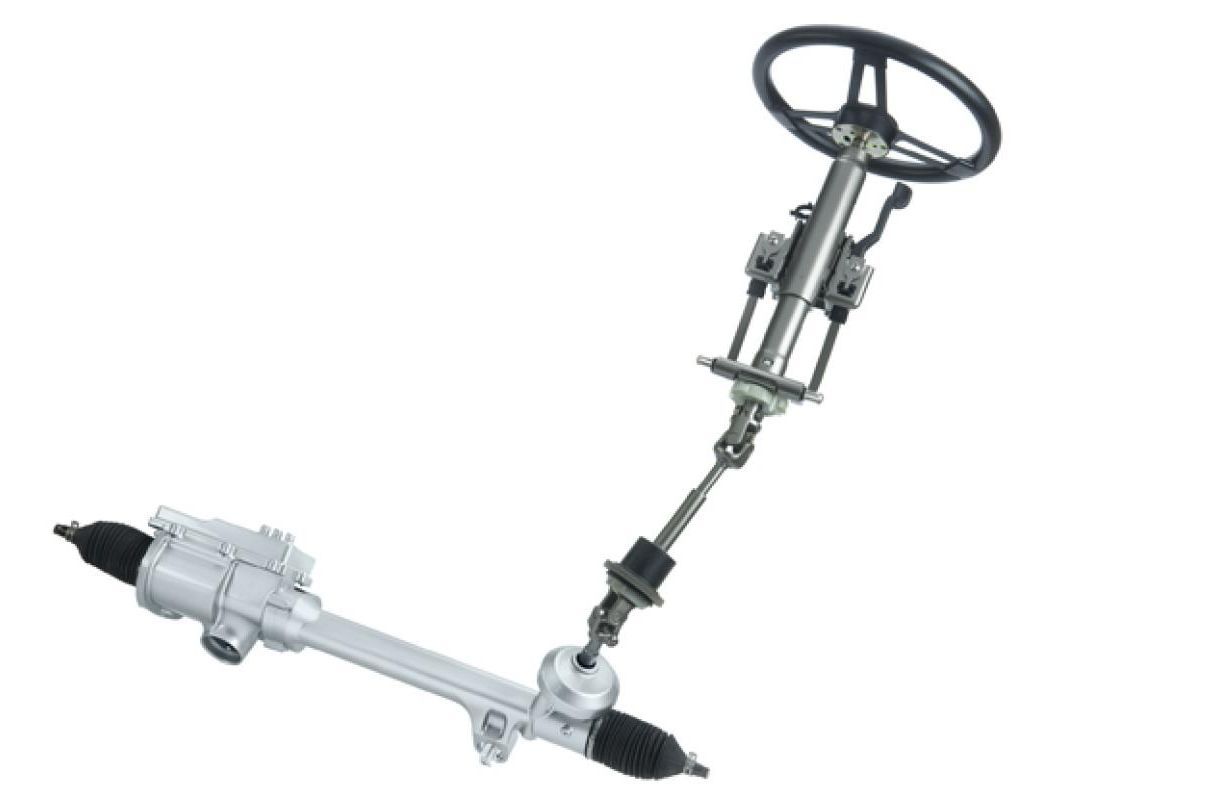
What Is Electric Power Steering (EPS)? What Are Its Common Failures?
Electric Power Steering, commonly known as EPS, is a steering assistance system that uses an electric motor instead of a traditional hydraulic pump to help the driver turn the steering wheel.
Unlike hydraulic power steering, EPS does not require a continuously driven hydraulic pump, power-steering fluid, or many of the hoses used in conventional systems. The amount of steering assistance is electronically controlled according to factors such as steering input, vehicle speed, and system conditions.
EPS has become standard on many modern passenger cars because it can reduce engine load, improve fuel efficiency, and work together with advanced driver-assistance systems.
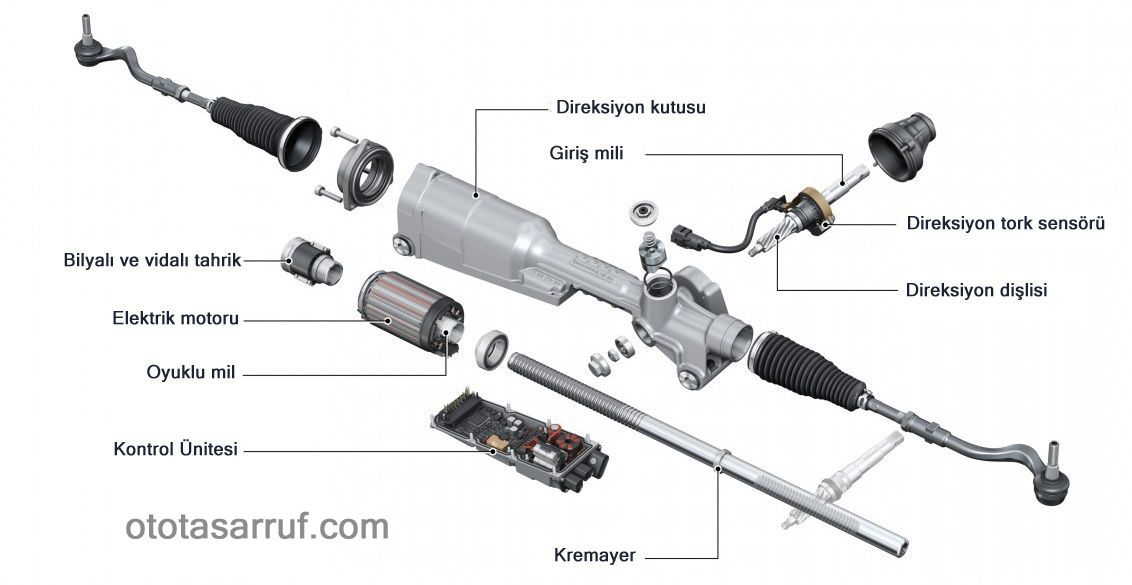
How Does EPS Work?
The basic principle is relatively simple.
When the driver turns the steering wheel, the EPS system detects the steering input and determines how much assistance is required.
The system generally uses information from:
-
Steering torque sensor
-
Steering angle sensor
-
Vehicle speed signal
-
Steering position information
-
Electric motor position
-
Motor current
-
Battery and charging voltage
-
CAN bus communication
The EPS control unit processes these signals and commands the electric motor to provide the appropriate amount of steering assistance.
At low speeds, such as when parking, the system can provide more assistance. At higher speeds, assistance is generally reduced so that the steering feels more stable and controlled.
Main Components of an EPS System
Although the exact design varies between vehicles, an EPS system typically contains several important components.
Electric steering motor
The motor generates the force required to assist steering.
EPS control unit
The control unit calculates the required assistance and controls the electric motor.
In some vehicles, the control electronics are integrated into the steering assembly.
Torque sensor
The torque sensor detects how much force the driver is applying to the steering wheel and in which direction.
This is one of the most important inputs for determining steering assistance.
Steering angle sensor
The system can use steering-angle information to determine the position and movement of the steering wheel.
Motor position sensor
The control unit needs to know the position of the electric motor so that it can control the motor accurately.
Power supply
EPS systems require a reliable electrical supply. The battery, alternator, fuses, wiring, grounds, and connectors can therefore all affect EPS operation.
Where Is the EPS Motor Located?
EPS systems can be designed in different ways.
The electric motor may be mounted:
-
On the steering column
-
On the steering rack
-
On the steering gear
-
On an intermediate steering shaft
This creates several different EPS architectures.
Column-assist EPS places the motor near the steering column.
Rack-assist EPS places the motor directly on or near the steering rack.
Pinion-assist EPS applies electric assistance through the steering pinion.
The exact location is important when diagnosing a fault because the motor, sensors, and control electronics may be integrated differently from one vehicle to another.
What Are the Symptoms of EPS Failure?
EPS failure can produce very noticeable steering problems.
Common symptoms include:
-
EPS warning light
-
Steering becoming unusually heavy
-
Intermittent loss of steering assistance
-
Complete loss of power assistance
-
Steering assistance changing suddenly
-
Steering wheel becoming difficult to turn
-
Uneven steering assistance
-
Steering feeling unusually light
-
Steering that does not return to center normally
-
Clicking, whining, or other noises from the steering system
-
Multiple warning lights appearing at the same time
The severity depends on the type of failure.
Heavy Steering Is One of the Most Common Symptoms
One of the clearest signs of an EPS problem is suddenly heavy steering.
When electric assistance is lost, the driver may still be able to physically turn the steering wheel because the mechanical steering connection usually remains intact.
However, significantly more effort may be required.
This is particularly noticeable when:
-
Parking
-
Making a U-turn
-
Turning at low speed
-
Maneuvering into a parking space
If the steering suddenly becomes heavy while driving, the vehicle should be handled carefully and the fault should be diagnosed promptly.
EPS Warning Light
Many vehicles have a dedicated EPS, electric steering, or power-steering warning light.
Depending on the manufacturer, it may appear as:
-
A steering wheel symbol
-
A steering wheel with an exclamation mark
-
"EPS"
-
"Power Steering"
-
"Steering Assist"
When this warning light appears, the system has detected a fault or abnormal operating condition.
The light alone does not identify the defective component.
The cause could be electrical, electronic, mechanical, sensor-related, or communication-related.
Intermittent EPS Failure
EPS faults do not always happen continuously.
A vehicle may have normal steering assistance when first started and then suddenly lose assistance.
It may also return after switching the ignition off and restarting the vehicle.
Possible causes include:
-
Low battery voltage
-
Charging-system problems
-
Loose electrical connections
-
Poor grounds
-
Wiring problems
-
Faulty torque sensor
-
Motor overheating
-
EPS control-unit fault
-
CAN communication problems
-
Internal steering-rack problems
Intermittent faults are particularly important to diagnose using stored and history fault codes rather than simply replacing the EPS assembly.
Low Battery Voltage Can Trigger EPS Problems
EPS systems can draw significant electrical current, especially during low-speed steering.
For this reason, the electrical system must be in good condition.
A weak battery or charging problem can cause the EPS system to shut down or record a fault.
Possible causes include:
-
Weak battery
-
Defective alternator
-
Poor battery terminals
-
Loose ground connection
-
Corroded electrical connections
-
Damaged wiring
-
Excessive voltage drop
A vehicle that develops an EPS warning immediately after starting or during heavy steering should have its battery and charging system checked before expensive steering components are replaced.
Can a Bad Alternator Cause EPS Failure?
Yes.
If the alternator cannot maintain the vehicle's electrical system at the required voltage, the EPS system may detect insufficient power and disable assistance.
This can be accompanied by other symptoms such as:
-
Battery warning light
-
Headlights becoming dim
-
Multiple dashboard warning lights
-
Start-stop system deactivation
-
Transmission or ABS warnings
-
Engine-management faults
In this situation, replacing the EPS motor or steering rack without checking the charging system can result in an unnecessary repair.
EPS Motor Failure
The electric motor itself can fail.
Possible causes include:
-
Internal wear
-
Bearing problems
-
Electrical winding failure
-
Excessive heat
-
Water contamination
-
Excessive current
-
Mechanical overload
A motor problem may result in reduced assistance, intermittent operation, unusual noises, or complete loss of assistance.
However, a motor-related fault code does not always mean that the motor itself is defective. The power supply, motor wiring, control unit, and mechanical steering system must also be checked.
Torque Sensor Failure
The torque sensor measures the driver's steering effort.
If its signal becomes inaccurate, intermittent, or implausible, the EPS control unit may not know how much assistance to provide.
Possible symptoms include:
-
Uneven steering assistance
-
Steering that suddenly becomes heavy
-
Steering assistance in the wrong direction
-
EPS warning light
-
Intermittent power assistance
-
Steering that feels unusual around the center position
Some EPS systems allow the torque sensor to be replaced separately, while others integrate it into the steering column or rack assembly.
Steering Angle Sensor Problems
The steering angle sensor provides information about steering-wheel position.
Its data may be used by:
-
EPS
-
ABS
-
ESC
-
Traction control
-
Lane-keeping systems
-
Driver-assistance systems
If the steering angle information is incorrect, several systems can register faults simultaneously.
A steering-angle sensor may also require calibration after certain repairs or after steering geometry has been disturbed.
EPS Calibration and Learning
Some vehicles require an EPS calibration or steering-angle initialization after repairs.
Depending on the vehicle, calibration may be required after:
-
Steering rack replacement
-
Steering column replacement
-
Steering angle sensor replacement
-
Wheel alignment
-
Battery disconnection
-
EPS control-unit replacement
-
Suspension or steering repairs
The exact procedure varies by manufacturer.
A diagnostic scanner may be required to perform the calibration.
CAN Bus Communication Problems
Modern EPS systems are often connected to other vehicle control modules through the CAN bus.
The EPS system may communicate with:
-
ABS/ESC module
-
Engine control module
-
Body control module
-
Instrument cluster
-
Automatic transmission control module
-
Driver-assistance systems
A communication problem can therefore cause the EPS to stop functioning even when the motor and steering mechanism are mechanically healthy.
Possible causes include:
-
Damaged CAN wiring
-
Poor electrical connections
-
Connector corrosion
-
Short circuit
-
Open circuit
-
Low system voltage
-
Faulty control module
Fuse and Power Supply Problems
Before replacing an EPS unit, the electrical supply should be checked.
A blown fuse, poor ground, damaged power cable, or high-resistance connection can prevent the steering system from operating correctly.
Important checks include:
-
EPS power supply
-
Main fuses
-
Ground connections
-
Battery voltage
-
Charging voltage
-
Voltage drop under load
-
EPS connector condition
A visual inspection alone may not reveal a high-resistance connection. Voltage-drop testing can be much more informative.
Can Water Damage the EPS System?
Yes.
Water or moisture can damage electrical steering components, especially when connectors, wiring, control electronics, or motor assemblies are exposed to contamination.
Potential sources include:
-
Water entering the cabin
-
Damaged seals
-
Flooding
-
Pressure washing in inappropriate areas
-
Steering-rack exposure
-
Corroded connectors
Water-related faults can be intermittent and may become worse over time as corrosion develops.
EPS Failure After a Battery Replacement
It is possible for an EPS warning to appear after battery replacement or battery disconnection.
This does not necessarily mean the EPS has failed.
Some vehicles can lose steering-angle or steering-position information after power has been interrupted and may require initialization or calibration.
Other vehicles may record low-voltage fault codes during the battery-disconnection event.
The correct response is to scan the vehicle and determine whether the fault is active or simply stored from the previous low-voltage condition.
Can EPS Failure Affect Other Systems?
Yes.
Because EPS communicates with several vehicle systems, one EPS problem can result in multiple warning lights.
For example, the driver may see warnings for:
-
EPS
-
ABS
-
ESC
-
Traction control
-
Lane-keeping assistance
-
Driver-assistance systems
This does not necessarily mean that all of these systems have failed.
A single communication or voltage problem can cause several modules to report related faults.
How Is an EPS Fault Diagnosed?
A proper EPS diagnosis should start with the vehicle's electrical and diagnostic systems.
First, scan the vehicle
The EPS module and other relevant control units should be scanned for fault codes.
Check battery voltage
Battery condition and resting voltage should be evaluated.
Check charging voltage
The alternator and charging system should be tested.
Check fuses and grounds
Main EPS power and ground connections should be tested under load.
Inspect wiring and connectors
Look for corrosion, broken wires, loose terminals, and signs of water intrusion.
Check live data
Steering torque, steering angle, motor position, vehicle speed, and other available parameters can be compared with actual steering input.
Check mechanical steering components
The steering rack, tie rods, ball joints, strut mounts, and other components should be inspected to ensure that excessive mechanical resistance is not overloading the EPS motor.
Why Should Mechanical Steering Be Checked?
An EPS system can be electrically healthy but still experience excessive resistance from the mechanical steering system.
For example:
-
Seized steering rack
-
Damaged ball joint
-
Binding tie rod
-
Damaged strut bearing
-
Incorrect steering geometry
-
Mechanical damage
can make steering unusually difficult.
The EPS motor may then draw excessive current as it attempts to overcome this resistance.
Therefore, replacing the EPS motor without checking the mechanical steering system may not solve the problem.
Can Wheel Alignment Cause an EPS Warning?
Incorrect wheel alignment does not normally mean that the EPS system itself has failed.
However, certain repairs or alignment-related procedures can affect steering-angle calibration.
If the steering wheel is no longer centered after suspension or steering work, the steering-angle data may need to be recalibrated according to the vehicle's procedure.
Wheel alignment and EPS calibration are related in some vehicles but are not the same operation.
EPS vs Hydraulic Power Steering
EPS and hydraulic power steering provide the same basic purpose: helping the driver turn the wheels.
Hydraulic systems use:
-
Hydraulic pump
-
Power-steering fluid
-
Hoses
-
Hydraulic steering gear
EPS uses:
-
Electric motor
-
Control unit
-
Sensors
-
Electrical wiring
-
Software
One major advantage of EPS is that the electric motor operates according to demand. A conventional hydraulic pump can consume engine power continuously, whereas EPS can reduce electrical assistance when it is not needed.
Advantages of EPS
EPS offers several important advantages.
Lower engine load
Because there is no continuously engine-driven hydraulic pump, mechanical losses can be reduced.
Improved fuel efficiency
Reduced accessory load can contribute to better efficiency.
Variable steering assistance
Assistance can be electronically adjusted according to speed and driving conditions.
Easy integration with driver assistance
EPS can communicate with systems that need to make controlled steering inputs.
This makes EPS particularly important for technologies such as lane-keeping assistance and automated parking.
Reduced maintenance
There is no conventional power-steering fluid reservoir, hydraulic pump, or hydraulic hose network in a typical fully electric EPS system.
Disadvantages of EPS
EPS also has some disadvantages.
-
Complex electronic components
-
Dependence on electrical power
-
Expensive steering assemblies on some vehicles
-
Sensor-related faults
-
Software and calibration requirements
-
Difficult diagnosis without suitable equipment
-
Possible high repair costs when integrated components fail
Some vehicles require replacement of a complete steering rack or column because individual components are not separately serviceable.
Does EPS Use Power Steering Fluid?
A fully electric EPS system does not use conventional power-steering fluid for steering assistance.
This is one of the major differences from hydraulic power steering.
However, some vehicles use electro-hydraulic systems. These systems have an electric motor driving a hydraulic pump and therefore still use power-steering fluid.
The terms EPS and electro-hydraulic power steering should not be confused.
Can EPS Be Repaired?
It depends on the design.
Some systems allow individual components such as sensors, control units, or motors to be repaired or replaced.
Other systems are supplied as complete steering-column or steering-rack assemblies.
Specialized electronic steering repair facilities may be able to diagnose and repair certain internal faults.
However, any repair must preserve the safety-critical characteristics of the steering system and should be followed by the required calibration and functional checks.
Is It Safe to Drive With an EPS Warning?
It depends on how the vehicle behaves.
If steering assistance is still operating normally and the warning is intermittent, the vehicle should still be inspected as soon as possible.
If the steering suddenly becomes very heavy or assistance disappears completely, extra caution is required.
The vehicle may remain mechanically steerable, but significantly increased steering effort can make emergency maneuvers and low-speed steering difficult.
If steering behavior becomes unpredictable, the safest option is to stop driving and have the vehicle inspected.
How Can EPS Problems Be Prevented?
There is no maintenance schedule that can prevent every EPS failure, but several practices can reduce the risk of problems.
-
Keep the battery in good condition.
-
Check the charging system when electrical problems appear.
-
Keep battery terminals and grounds clean.
-
Avoid ignoring EPS warning lights.
-
Repair water leaks promptly.
-
Avoid unnecessary high-pressure washing around electrical steering components.
-
Inspect suspension and steering components regularly.
-
Perform wheel alignment when necessary.
-
Use the correct calibration procedure after steering repairs.
-
Do not replace expensive EPS components without proper diagnosis.
Final Thoughts
Electric Power Steering (EPS) is an electronically controlled steering-assistance system that uses an electric motor instead of a conventional hydraulic pump.
When EPS develops a fault, the symptoms can range from an illuminated warning light to intermittent or complete loss of steering assistance.
Importantly, an EPS warning does not automatically mean that the steering motor or steering rack needs to be replaced. Low battery voltage, alternator problems, wiring faults, poor grounds, sensor failures, CAN communication problems, calibration issues, and mechanical steering resistance can all produce similar symptoms.
For this reason, the correct diagnosis should begin with fault-code scanning, battery and charging-system checks, power and ground testing, live-data analysis, and mechanical steering inspection before replacing expensive EPS components.