TR
TR EN
EN

What Is an ABS Sensor? What Are the Symptoms of ABS Sensor Failure?
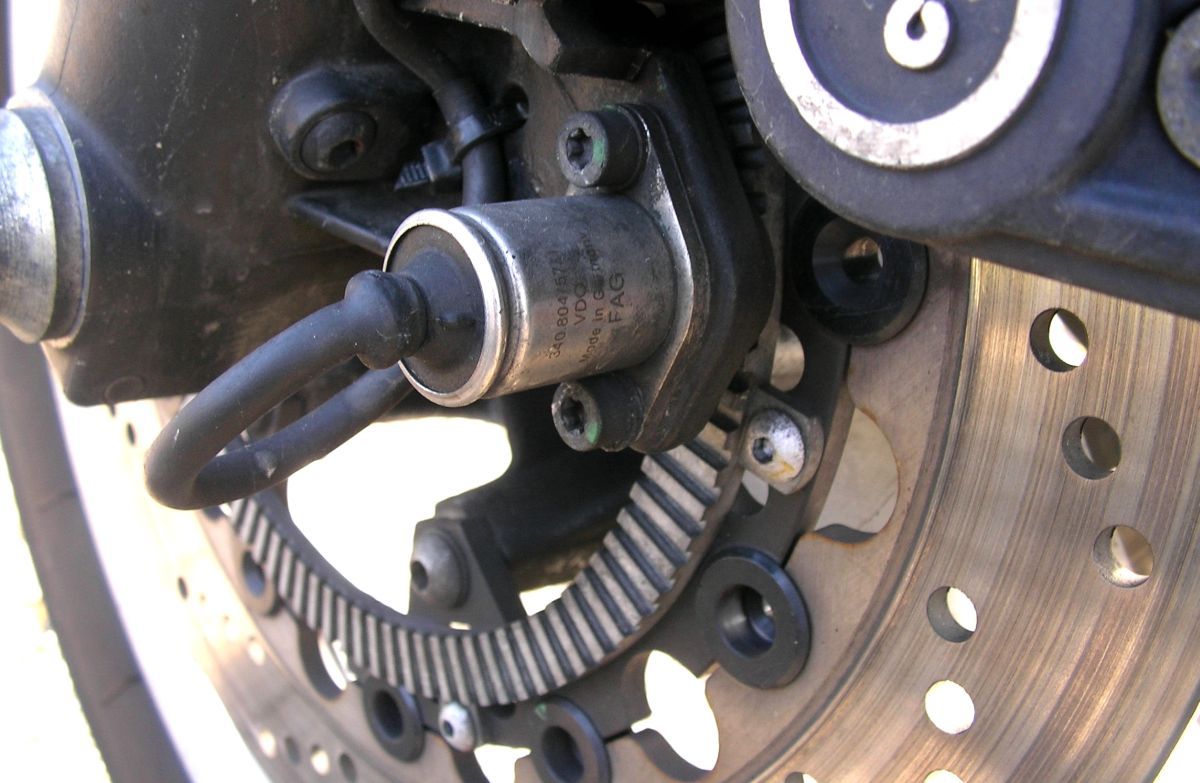
The ABS sensor is one of the most important components of a vehicle’s braking and safety systems. It continuously monitors the rotational speed of each wheel and sends this information to the ABS control module.
The system uses this information to determine whether one or more wheels are about to lock during braking. Modern vehicles may also use wheel-speed sensor data for traction control, electronic stability control, hill-start assistance, automatic emergency braking, cruise control, and other driver-assistance functions.
Because of this, a faulty ABS sensor can cause much more than an ABS warning light. It can affect several electronic systems that depend on accurate wheel-speed information.
What Does an ABS Sensor Do?
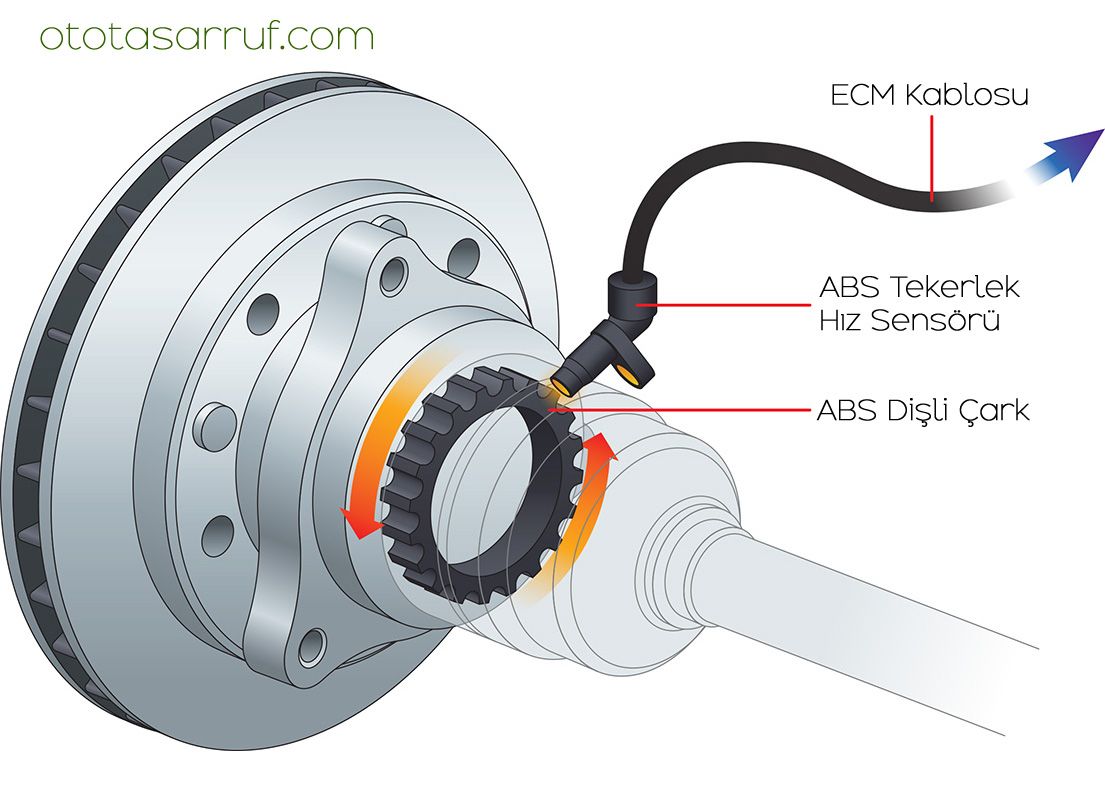
An ABS sensor, also called a wheel speed sensor, measures how quickly a wheel is rotating.
Each wheel can have its own sensor. The sensor sends wheel-speed information to the ABS/ESC control module.
During normal driving, the control module compares the speed of the wheels. If one wheel suddenly slows down much more than the others during braking, the system may determine that the wheel is beginning to lock.
The ABS system can then reduce and restore brake pressure to that wheel very rapidly.
This allows the driver to maintain steering control while braking heavily.
How Does an ABS Sensor Work?
There are two main types of wheel-speed sensors:
-
Passive magnetic sensors
-
Active wheel-speed sensors
Older ABS systems commonly used passive sensors. These sensors generate an electrical signal as a toothed reluctor ring rotates past the sensor.
Modern vehicles increasingly use active sensors. These can detect wheel speed at very low speeds and may provide a more precise signal to the control module.
Depending on the vehicle design, the sensor may work with:
-
A toothed reluctor ring
-
A magnetic encoder
-
A magnetic bearing seal
-
An integrated wheel hub
-
An electronic sensing element
The exact design varies between manufacturers and vehicle generations.
Where Is the ABS Sensor Located?

The ABS sensor is normally installed near the wheel hub or wheel bearing assembly.
It is positioned so that it can detect the rotation of a tone ring, reluctor ring, magnetic encoder, or another rotating component.
There is usually one wheel-speed sensor for each wheel.
At the front wheels, the sensor wiring must accommodate steering and suspension movement. At the rear wheels, the sensor may be mounted on the hub, axle assembly, or suspension depending on the vehicle.
Because the sensor is located close to the wheel and road surface, it is exposed to water, mud, road salt, dust, stones, temperature changes, and mechanical damage.
What Are the Symptoms of ABS Sensor Failure?
A faulty ABS sensor can produce several different symptoms.
The most common signs include:
-
ABS warning light
-
Electronic stability control warning
-
Traction control warning
-
Wheel-speed-related fault codes
-
ABS activation at low speed
-
ABS becoming unavailable
-
Traction control becoming unavailable
-
Stability control becoming unavailable
-
Cruise control becoming disabled on some vehicles
-
Speedometer problems on some vehicles
-
Automatic transmission shifting irregularities on some vehicles
-
Driver-assistance system warnings
The exact symptoms depend on the vehicle and how its electronic systems are interconnected.
ABS Warning Light
The most obvious symptom is an illuminated ABS warning light.
When the control module detects an implausible or missing wheel-speed signal, it can disable some or all ABS functions and store a diagnostic trouble code.
The conventional braking system may continue to work, but the anti-lock function may no longer be available.
This distinction is important: an ABS warning light does not necessarily mean that the vehicle has lost its normal hydraulic brakes.
However, the vehicle should still be inspected as soon as possible because ABS and related safety functions may be unavailable.
Traction Control and Stability Control Warning Lights
The ABS sensor also provides wheel-speed information used by traction control and electronic stability control.
If one wheel-speed sensor stops working, the vehicle may no longer have reliable information about wheel rotation.
As a result, the system may disable:
-
Traction control
-
Electronic stability control
-
Hill-start assistance
-
Certain driver-assistance functions
Multiple warning lights appearing at the same time does not necessarily mean that several components have failed.
One faulty wheel-speed signal can trigger warnings in several systems.
ABS Activates at Low Speed Without Hard Braking
One particularly important symptom is unexpected ABS activation.
For example, the driver may be braking normally at low speed and suddenly feel the brake pedal pulsate even though the wheels are not actually locking.
This can happen when one wheel-speed sensor provides an incorrect signal.
The control module may interpret the incorrect signal as wheel lock and activate the ABS system unnecessarily.
This problem should not be ignored because unexpected ABS intervention can increase stopping distance on some surfaces.
ABS Works Intermittently
An ABS sensor does not always fail completely.
Sometimes the signal becomes unreliable only under certain conditions.
The ABS system may work normally for several kilometers and then activate a warning light.
The problem may disappear after restarting the vehicle and return later.
Intermittent ABS problems can be caused by:
-
Damaged wiring
-
Loose connectors
-
Corrosion
-
Sensor contamination
-
Excessive wheel-bearing play
-
Damaged reluctor ring
-
Magnetic encoder damage
-
Internal sensor failure
In these cases, simply replacing the sensor without checking the wiring and rotating components may not solve the problem.
Speedometer Problems
On some vehicles, wheel-speed information is used to calculate vehicle speed.
Depending on the vehicle's architecture, a faulty wheel-speed sensor can therefore cause:
-
Incorrect speedometer readings
-
Speedometer dropping to zero
-
Intermittent speed readings
-
Cruise control becoming unavailable
However, the speedometer does not always depend directly on an ABS sensor. Some vehicles obtain vehicle-speed information from the transmission or another sensor.
Therefore, a speedometer problem should not automatically be blamed on the ABS sensor.
Cruise Control Stops Working
Some vehicles use wheel-speed data as part of their cruise-control logic.
If the vehicle cannot determine accurate wheel speed, cruise control may be disabled as a safety precaution.
This is why an ABS sensor fault can sometimes appear to be a cruise-control problem even though the cruise-control system itself is functioning correctly.
Causes of ABS Sensor Failure
ABS sensors can fail for many reasons.
Common causes include:
-
Physical damage
-
Corrosion
-
Dirt and contamination
-
Water intrusion
-
Damaged wiring
-
Broken wiring near the suspension
-
Loose electrical connectors
-
Wheel-bearing failure
-
Damaged reluctor ring
-
Damaged magnetic encoder
-
Incorrect sensor installation
-
Excessive wheel-bearing play
-
Heat exposure
-
Age and general wear
Because the sensor is installed close to the wheel, physical damage is relatively common.
Can Dirt Cause an ABS Sensor Problem?
Yes.
Depending on the sensor design, dirt, metallic particles, rust, or other contamination can interfere with the signal.
However, cleaning the sensor is not always enough.
If the reluctor ring is damaged, rusted, cracked, missing teeth, or contaminated, the problem can remain even after the sensor itself has been cleaned.
Some modern wheel bearings contain magnetic encoder rings. Damage to this magnetic ring can also produce an ABS fault even when the sensor is functioning correctly.
ABS Sensor Wiring Problems
The wiring is just as important as the sensor itself.
Front-wheel ABS wiring is particularly exposed to movement because the steering and suspension constantly move.
A wire can become:
-
Stretched
-
Chafed
-
Cracked
-
Broken internally
-
Corroded
-
Disconnected
An intermittent wire fault can be especially difficult to diagnose because the sensor may test normally when the vehicle is stationary.
The problem may only appear when the wheel moves, the suspension travels, or the steering is turned.
Can a Wheel Bearing Cause an ABS Sensor Fault?
Yes.
A worn wheel bearing can create excessive movement between the sensor and the rotating encoder or reluctor ring.
This can distort the wheel-speed signal.
Some wheel bearings also contain the magnetic encoder required by the ABS system. If that encoder becomes damaged, the ABS system can detect an incorrect wheel-speed signal.
Therefore, an ABS fault code does not always mean that the sensor itself is defective.
The wheel bearing and encoder should also be inspected.
Can a Damaged Reluctor Ring Cause ABS Problems?
Yes.
The reluctor ring is the rotating component that allows the sensor to determine wheel speed on many systems.
If it becomes:
-
Cracked
-
Rusted
-
Bent
-
Damaged
-
Missing teeth
-
Loose
-
Contaminated
the ABS signal can become incorrect.
This can produce symptoms very similar to a failed sensor.
On some vehicles, the reluctor ring is integrated into the driveshaft, CV joint, wheel hub, or bearing assembly, depending on the design.
ABS Sensor Fault Codes
When an ABS problem occurs, the control module can store a diagnostic trouble code.
The code may indicate:
-
Wheel-speed sensor circuit malfunction
-
No signal
-
Implausible signal
-
Intermittent signal
-
Signal too low
-
Signal too high
-
Sensor communication problem
The exact code format depends on the manufacturer and diagnostic system.
It is important to read the ABS/ESC control module, not only the engine ECU.
A basic OBD scanner that reads engine-related codes may not be able to access the ABS module.
How Is an ABS Sensor Diagnosed?
Proper diagnosis should begin by reading the ABS control module for stored fault codes.
The next step is to determine which wheel is producing the problem.
A technician may then inspect:
-
Sensor condition
-
Sensor mounting
-
Wiring
-
Connector
-
Wheel bearing
-
Reluctor ring
-
Magnetic encoder
-
Sensor air gap
-
Live wheel-speed data
Live data can be especially useful.
When driving slowly with a diagnostic scanner connected, the wheel-speed values can be compared.
If three wheels show approximately the same speed while one wheel shows zero or an abnormal value, that wheel becomes the primary area of investigation.
Can an ABS Sensor Be Tested With a Multimeter?
In some cases, yes, but the testing method depends heavily on the sensor type.
A passive magnetic sensor may be checked for resistance and AC signal generation.
However, resistance testing alone is not reliable for many modern active sensors.
Active sensors may require proper voltage supply and signal testing with diagnostic equipment or an oscilloscope.
Therefore, blindly measuring resistance and declaring a modern ABS sensor defective can lead to an incorrect diagnosis.
Why Live Data Is Important
Live wheel-speed data can reveal problems that a simple resistance test cannot.
For example, a sensor may appear electrically normal while producing an intermittent or distorted signal when the wheel rotates.
During a road test, the technician can compare all four wheel-speed signals.
A problematic sensor may show:
-
Sudden drops to zero
-
Unrealistic speed increases
-
Intermittent signal loss
-
Speed differences compared with the other wheels
-
Irregular readings at low speed
This type of diagnosis can help distinguish a sensor problem from a mechanical problem.
ABS Sensor Replacement
Replacing an ABS sensor is often relatively straightforward, but access varies significantly between vehicles.
The general procedure involves:
-
Removing the wheel if necessary
-
Locating the sensor
-
Disconnecting the electrical connector
-
Removing the retaining bolt
-
Removing the old sensor
-
Inspecting the mounting area
-
Installing the replacement sensor
-
Routing the wiring correctly
-
Reconnecting the connector
-
Clearing stored fault codes
-
Performing a road test
A sensor that has been installed incorrectly or whose wiring is routed incorrectly can fail again.
The mounting surface should also be checked for excessive rust or contamination because the sensor position can affect the signal.
Does an ABS Sensor Need Calibration?
Usually, a conventional wheel-speed sensor does not require a calibration procedure after replacement.
However, the vehicle may need fault codes cleared and a road test performed before the ABS system returns to normal operation.
Some vehicles may also require additional procedures involving:
-
Steering-angle sensor calibration
-
ABS initialization
-
Stability-control calibration
-
Wheel-speed sensor relearning
-
Advanced driver-assistance system calibration
These requirements depend on the vehicle.
Can You Drive With a Bad ABS Sensor?
The vehicle may still have conventional braking capability, but driving with an ABS sensor fault is not recommended for an extended period.
Depending on the system, ABS, traction control and stability control may be disabled.
This means that during emergency braking, the wheels may lock more easily.
The risk becomes more significant on:
-
Wet roads
-
Snow
-
Ice
-
Gravel
-
Loose surfaces
If the brake pedal feels normal and only the ABS warning is illuminated, the vehicle may still be driven carefully to a repair facility.
However, if the red brake warning light is also illuminated, the brake pedal feels abnormal, braking performance has changed, or brake fluid is low, the vehicle should be treated as a potentially serious brake-system problem.
ABS Sensor vs ABS Control Module
These components are often confused.
The ABS sensor measures wheel speed.
The ABS control module receives the sensor signals and controls the ABS hydraulic system and related functions.
A sensor fault does not automatically mean that the ABS module is defective.
Replacing the expensive control module without properly testing the sensor, wiring, wheel bearing, and reluctor ring can result in unnecessary expense.
ABS Sensor vs Brake Pad Sensor
An ABS sensor and a brake pad wear sensor are completely different components.
The ABS sensor measures wheel rotation.
A brake pad wear sensor detects brake pad wear.
Some vehicles have both systems, and both can produce warning messages, but their functions are different.
How Long Does an ABS Sensor Last?
There is no fixed replacement interval for ABS sensors.
A good-quality sensor can last for many years.
Its lifespan depends on:
-
Road conditions
-
Water exposure
-
Salt and corrosion
-
Wheel-bearing condition
-
Wiring quality
-
Sensor construction
-
Installation quality
-
Physical damage
Because ABS sensors are exposed to harsh environmental conditions, failures are more common on older vehicles.
How Can ABS Sensor Problems Be Prevented?
There is no specific maintenance interval for replacing an ABS sensor, but several practices can reduce the risk of problems.
The following checks are useful during brake and suspension service:
-
Inspect sensor wiring
-
Check electrical connectors
-
Inspect the sensor mounting area
-
Check wheel bearings
-
Look for damaged reluctor rings
-
Avoid damaging sensor wiring during suspension repairs
-
Keep the sensor area reasonably clean
-
Use the correct replacement sensor
Special care should be taken when working around the wheel hub, suspension, driveshaft, and brake components.
Final Thoughts
The ABS sensor is a small component, but it plays a major role in modern vehicle safety systems. By continuously monitoring wheel speed, it allows the ABS control module to detect wheel lock and regulate braking pressure.
A failed ABS sensor can cause much more than an ABS warning light. Depending on the vehicle, it may also disable traction control, electronic stability control, cruise control, and other systems that depend on accurate wheel-speed information.
One of the most important points in ABS diagnosis is that an ABS sensor fault code does not automatically prove that the sensor itself is defective. Wiring, connectors, wheel bearings, reluctor rings, magnetic encoders, and even installation problems can produce very similar symptoms.
For this reason, the correct approach is to read the ABS module, examine live wheel-speed data, inspect the sensor and wiring, and then check the associated mechanical components before replacing parts.
A properly diagnosed ABS problem can usually be repaired without excessive cost, while ignoring the warning can leave important vehicle safety systems unavailable when they are needed most.