TR
TR EN
EN

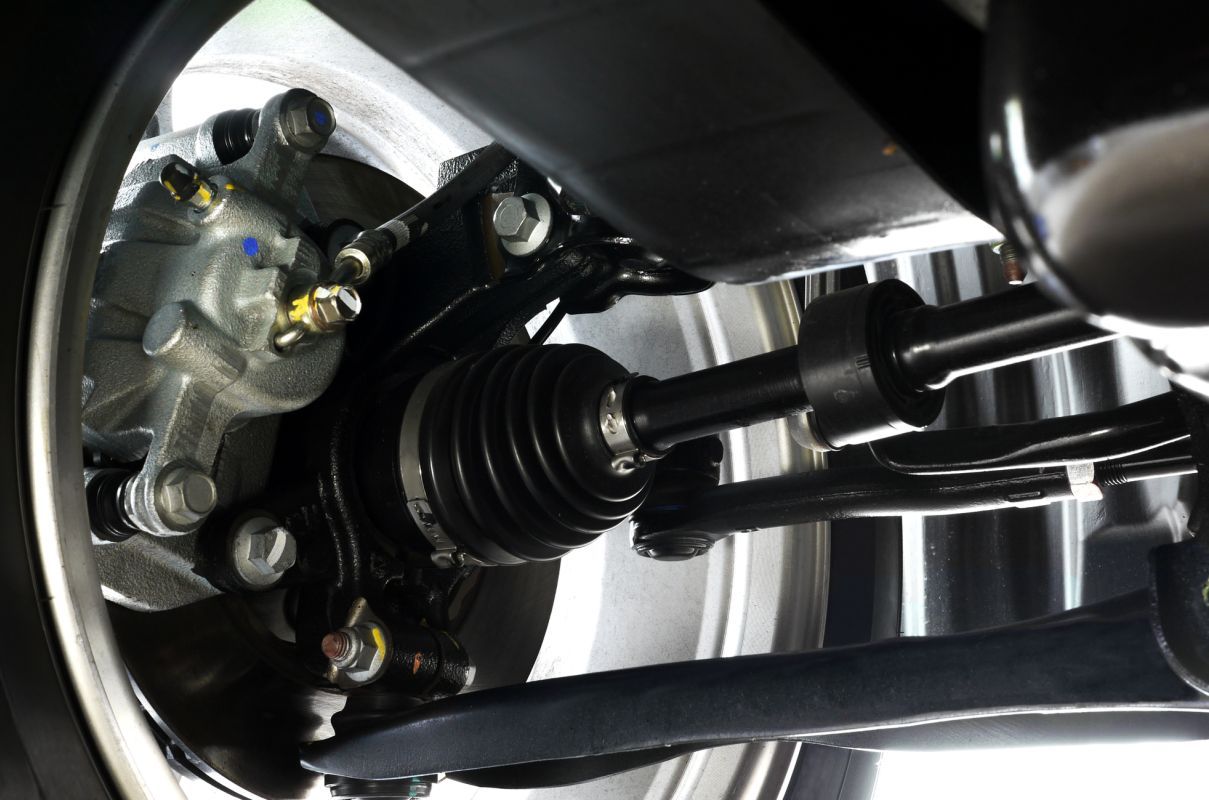
What Is an Axle Shaft? What Are the Symptoms of Axle Shaft Failure?
The axle shaft is one of the key components that transfers engine torque to the driven wheels. It works between the differential and the wheels, allowing the vehicle to move forward and backward while transmitting the rotational force produced by the engine and transmission.
In front-wheel-drive vehicles, the axle shaft usually works together with CV joints because the front wheels must both drive the vehicle and steer. In rear-wheel-drive vehicles, the axle arrangement is different and may include solid axles, independent rear axles, axle shafts, and differential assemblies depending on the vehicle design.
An axle problem can cause vibrations, clicking or clunking noises, difficulty transferring power to the wheels, and in severe cases, complete loss of drive.
What Does an Axle Shaft Do?
The primary function of an axle shaft is to transfer rotational power from the differential or final-drive assembly to the wheel.
The power flow can generally be described as:
Engine → Transmission → Differential → Axle Shafts → Wheels
The axle must withstand substantial torque while also dealing with suspension movement, steering movement, road impacts, and changes in wheel position.
In modern vehicles, the axle shaft is therefore designed not simply as a rigid metal rod but as part of a system that can accommodate movement while continuing to transmit power.
What Are the Main Parts of an Axle Assembly?
The exact design varies depending on the vehicle, but a typical driven-wheel axle assembly may include:
-
Axle shaft
-
Inner CV joint
-
Outer CV joint
-
CV joint boot
-
Splined shaft
-
Differential connection
-
Wheel hub connection
-
Retaining nut or fastening hardware
In some designs, the differential and axle shafts are integrated into a larger axle assembly.
The terminology can also vary between manufacturers. In everyday automotive language, "axle" may refer to the complete power-transmitting assembly rather than only the metal shaft itself.
How Does an Axle Shaft Work?
When the engine produces torque, the transmission sends that torque through the drivetrain toward the differential.
The differential distributes torque between the driven wheels.
The axle shafts then transfer this rotational force from the differential to the wheels.
On a front-wheel-drive vehicle, the outer CV joint allows the wheel to turn left and right while the axle continues to transmit power.
The inner CV joint allows the axle to accommodate suspension movement and changes in shaft length or angle.
This is why the axle shaft must remain flexible in its operating geometry while maintaining a strong mechanical connection between the differential and wheel.

What Is a CV Joint and Why Is It Important?
A CV joint, or constant-velocity joint, is an important part of many axle shafts.
It allows torque to be transmitted smoothly while the shaft operates at an angle.
Front-wheel-drive vehicles commonly use two CV joints on each driven axle:
-
Inner CV joint
-
Outer CV joint
The outer joint primarily accommodates steering angle and suspension movement.
The inner joint primarily accommodates suspension movement and changes in the operating geometry of the axle.
A CV joint problem can therefore produce symptoms that are often described generally as an "axle problem."
What Are the Symptoms of Axle Shaft Failure?
An axle shaft or related axle assembly problem can produce several warning signs.
Common symptoms include:
-
Vibration during acceleration
-
Clicking or popping while turning
-
Clunking when accelerating or decelerating
-
Shuddering during acceleration
-
Grease leaking from a CV boot
-
Difficulty transferring power to a wheel
-
Abnormal drivetrain noise
-
Excessive movement or play
-
Complete loss of drive in severe cases
The exact symptom depends on which component has failed.
For example, clicking during tight turns is more commonly associated with an outer CV joint than with a physically broken axle shaft.
Vibration During Acceleration
One of the most noticeable symptoms of an axle or CV axle problem is vibration during acceleration.
The vehicle may feel relatively normal when coasting but develop a vibration when the accelerator is pressed.
This can be caused by:
-
Bent axle shaft
-
Worn inner CV joint
-
Damaged CV joint
-
Excessive joint play
-
Incorrect axle installation
-
Damaged drivetrain components
A vibration that appears specifically under acceleration is particularly important because wheel imbalance usually produces vibration according to vehicle speed, while drivetrain-related vibration can change significantly with engine load.
However, wheel and tire problems can sometimes create similar symptoms, so diagnosis is necessary.
Clicking Noise When Turning
A repetitive clicking or popping sound while making a tight turn is a classic symptom of an outer CV joint problem.
It is particularly noticeable when:
-
Turning sharply
-
Accelerating while turning
-
Performing a tight U-turn
-
Driving slowly with the steering near full lock
This problem is often caused by wear inside the outer CV joint.
If the protective CV boot has been damaged for a long time, grease can escape and dirt and moisture can enter the joint, accelerating wear.
Clunking When Accelerating or Decelerating
A clunk when switching between acceleration and deceleration can indicate excessive play somewhere in the drivetrain.
Possible causes include:
-
Inner CV joint wear
-
Differential backlash
-
Engine or transmission mounts
-
Driveshaft joints
-
Worn suspension components
-
Axle shaft play
Therefore, a clunking noise should not automatically be blamed on the axle.
The location and conditions under which the noise occurs are important diagnostic clues.
Shuddering During Acceleration
Some axle problems produce a shuddering or shaking sensation when accelerating, particularly at low or medium speeds.
A worn inner CV joint can be one possible cause.
The sensation may become more pronounced under heavy acceleration and decrease when the accelerator is released.
However, engine misfires, transmission problems, worn mounts, and wheel or tire issues can also produce similar symptoms.
A proper diagnosis should therefore distinguish between engine-related vibration and drivetrain-related vibration.
Grease Around the Wheel or Suspension
If a CV boot becomes cracked or torn, grease can escape from the joint.
You may notice grease:
-
Around the inside of the wheel
-
On suspension components
-
Around the axle
-
Near the CV joint
A damaged boot does not necessarily mean the CV joint has already failed.
If the problem is discovered early and the joint has not been contaminated or damaged, replacing the boot and renewing the correct grease may sometimes prevent further damage.
If the joint has already worn or become contaminated, replacing only the boot may not be sufficient.
What Causes Axle Shaft Failure?
Axle shafts are designed to withstand significant loads, but they can eventually develop problems.
Common causes include:
-
Normal wear
-
Excessive torque
-
Severe acceleration
-
Damaged CV joints
-
Torn CV boots
-
Road impacts
-
Bent shaft
-
Corrosion
-
Incorrect installation
-
Poor-quality replacement parts
-
Excessive suspension movement
-
Modified suspension geometry
High-torque engines and vehicles that have been modified for increased power can place substantially greater loads on axle components.
Can a Bent Axle Cause Vibration?
Yes.
An axle shaft that has been bent can rotate unevenly and produce vibration.
A bent shaft can result from:
-
A severe pothole
-
Collision damage
-
Suspension damage
-
Incorrect handling during repair
-
A previous drivetrain impact
The vibration may increase with vehicle speed or become more noticeable under acceleration depending on the location and severity of the damage.
A visibly damaged axle should not be straightened casually. Replacement is generally the safer approach when the shaft's structural integrity has been compromised.
Can a Bad CV Boot Cause Axle Failure?
A damaged CV boot can eventually lead to CV joint failure.
The boot protects the joint from:
-
Water
-
Dirt
-
Dust
-
Road debris
It also keeps the special grease inside the joint.
Once the boot tears, grease can escape and contaminants can enter.
The joint may then wear rapidly.
This is why a torn CV boot should be repaired promptly, even if the vehicle has not yet developed clicking or vibration.
Inner CV Joint vs Outer CV Joint Problems
The location of the problem can help identify the faulty component.
Outer CV joint
More commonly produces clicking or popping noises during sharp turns.
Inner CV joint
More commonly produces vibration or shuddering during acceleration.
These are general diagnostic patterns rather than absolute rules.
A damaged outer joint can also produce vibration, and an inner joint can produce clunking or other noises.
How Is an Axle Problem Diagnosed?
Diagnosis should begin by identifying exactly when the symptom occurs.
A technician should determine whether the noise or vibration appears:
-
During acceleration
-
During deceleration
-
While turning
-
At constant speed
-
During braking
-
Over bumps
-
When shifting between drive and reverse
The vehicle can then be inspected for:
-
Torn CV boots
-
Grease leakage
-
Damaged axle shafts
-
Excessive joint play
-
Loose fasteners
-
Wheel-bearing problems
-
Suspension damage
-
Differential problems
A road test is often extremely useful because drivetrain vibrations can change depending on engine load.
Can an Axle Be Checked Visually?
Some problems can be identified visually.
A technician may find:
-
Bent shaft
-
Torn CV boot
-
Grease leakage
-
Missing or damaged fasteners
-
Corrosion
-
Physical impact damage
However, a CV joint can be internally worn even when the outside appears normal.
Therefore, visual inspection alone cannot always determine whether an axle assembly is healthy.
Is Axle Play Normal?
Some movement can be normal depending on the axle and CV joint design.
However, excessive looseness, unusual movement, or obvious mechanical play can indicate wear.
The important point is that not every movement observed during an inspection means that the axle is defective.
The technician must understand the specific axle and joint design before deciding whether the amount of movement is abnormal.
Can a Bad Axle Damage the Transmission?
A severely damaged axle can potentially cause additional drivetrain problems.
If an axle shaft or CV joint breaks, the drivetrain may experience abnormal loads or the vehicle may suddenly lose drive.
In some designs, damage to an axle or differential-side seal can also result in transmission fluid leakage.
This is one reason an axle problem should not be ignored.
What Happens If an Axle Shaft Breaks?
A completely broken axle shaft can result in loss of drive to the affected wheel.
Depending on the drivetrain design, the vehicle may:
-
Stop moving
-
Move with difficulty
-
Produce loud mechanical noise
-
Lose power transmission to one side
-
Leak fluid from the differential or transmission area
A broken axle can also create a safety hazard if other components become damaged or if the vehicle loses propulsion unexpectedly.
The vehicle should generally be towed rather than driven after a serious axle failure.
Can You Drive With a Bad Axle?
It depends on the severity of the problem.
A vehicle with a slightly damaged CV boot may still be driven for a short period while arranging repair, but delaying the repair can turn a relatively simple boot problem into an expensive CV joint replacement.
If the vehicle has:
-
Severe vibration
-
Loud clicking
-
Strong clunking
-
Significant mechanical play
-
Visible axle damage
-
Loss of drive
-
Severe grease leakage
continued driving is not advisable.
A serious axle or CV joint failure can worsen rapidly.
Axle Shaft vs Driveshaft
The terms axle shaft and driveshaft are sometimes confused.
A driveshaft generally transfers power from the transmission or transfer case to a differential, particularly in rear-wheel-drive and four-wheel-drive vehicles.
An axle shaft generally transfers power from the differential or final drive to the driven wheel.
In a front-wheel-drive vehicle, the components commonly called drive axles or CV axles connect the transaxle differential to the front wheels.
The terminology can vary, but the basic distinction is useful when diagnosing drivetrain problems.
Axle Shaft vs Wheel Bearing
An axle shaft and wheel bearing perform completely different functions.
The axle transfers torque to the wheel.
The wheel bearing allows the wheel and hub to rotate smoothly while supporting the vehicle's load.
A worn wheel bearing commonly produces a humming or growling noise that changes with vehicle speed and cornering.
An axle or CV joint problem is more likely to produce clicking during turns or vibration under acceleration.
However, symptoms can overlap, which is why proper diagnosis is important.
How Long Does an Axle Shaft Last?
There is no universal replacement interval for an axle shaft.
A good-quality axle can last for many years and hundreds of thousands of kilometers when the vehicle is used under normal conditions.
Its lifespan depends on:
-
Driving conditions
-
Engine torque
-
Road quality
-
Suspension condition
-
CV boot condition
-
Maintenance
-
Vehicle modifications
-
Replacement-part quality
CV boots are particularly important because they protect the joints that allow the axle to operate correctly.
Should Both Axle Shafts Be Replaced at the Same Time?
Not necessarily.
Unlike some maintenance items, axle shafts do not automatically need to be replaced as a pair.
If one axle has failed while the other is in good condition, replacing only the defective side may be appropriate.
However, if both sides show significant wear, replacing both may be reasonable.
The decision should be based on the actual condition of each component rather than simply the vehicle's mileage.
How Can Axle Problems Be Prevented?
Regular inspection can help prevent major axle repairs.
During routine maintenance, it is worth checking:
-
CV boots
-
Grease leakage
-
Axle shaft condition
-
CV joint condition
-
Wheel bearings
-
Differential seals
-
Axle fasteners
A torn CV boot should be addressed as soon as possible.
Avoiding severe impacts and using properly specified replacement parts can also reduce the risk of premature failure.
Final Thoughts
The axle shaft is an essential drivetrain component because it transfers engine torque from the differential to the driven wheels. In many modern vehicles, especially front-wheel-drive models, the axle works together with inner and outer CV joints to accommodate steering and suspension movement while continuously transmitting power.
The most recognizable axle-related symptoms include vibration during acceleration, clicking while turning, clunking, shuddering and grease leakage from a damaged CV boot.
However, these symptoms are not exclusive to axle problems. Engine mounts, wheel bearings, tires, suspension components, differential backlash and transmission-related problems can produce similar sensations.
For this reason, replacing an axle based only on a noise or vibration is not always the correct approach. The symptom should first be reproduced under controlled conditions, followed by inspection of the axle, CV joints, boots, wheel bearings and other drivetrain components.
Early detection is particularly important with CV boot damage. A relatively inexpensive damaged boot can become a much more costly CV joint or complete axle replacement if dirt enters the joint and the grease escapes.
A properly maintained axle assembly can provide many years of reliable service, but severe vibration, loud clicking, significant mechanical play or visible damage should be treated as a serious drivetrain problem.