TR
TR EN
EN

What Is a Reverse Light Switch? What Are the Symptoms of Reverse Light Switch Failure?
The reverse light switch is a small but important electrical component that tells the vehicle when reverse gear has been selected. When the switch detects that the transmission is in reverse, it completes or sends an electrical signal to activate the reverse lights.
Although the component is relatively simple, a faulty reverse light switch can cause several problems. The most obvious one is that the reverse lights may not illuminate when reverse gear is selected. Depending on the vehicle, the switch can also be involved in other functions such as reverse parking sensors, camera activation, transmission control, or other body electronics.
What Does a Reverse Light Switch Do?
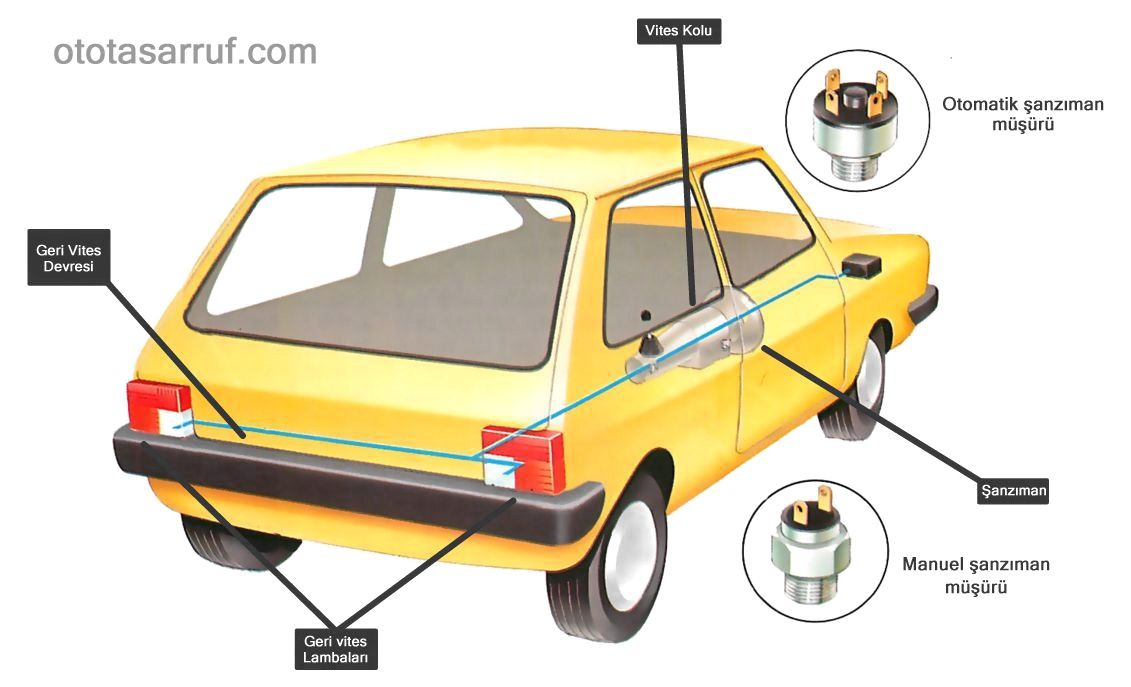
The primary function of the reverse light switch is to detect reverse gear engagement and activate the reverse lights.
In a conventional manual transmission, the switch is usually installed directly on the transmission housing. When the gear selector moves into reverse, an internal mechanism in the transmission mechanically operates the switch.
The electrical circuit is then completed, allowing current to reach the reverse lamps.
In a basic system, the operating principle is approximately:
Reverse gear selected → reverse switch activated → electrical circuit completed → reverse lights turn on.
Modern vehicles can use a somewhat different arrangement. Instead of directly switching the lamps, the reverse gear signal may be sent to a body control module or another electronic control unit, which then controls the lights and other systems.
Where Is the Reverse Light Switch Located?
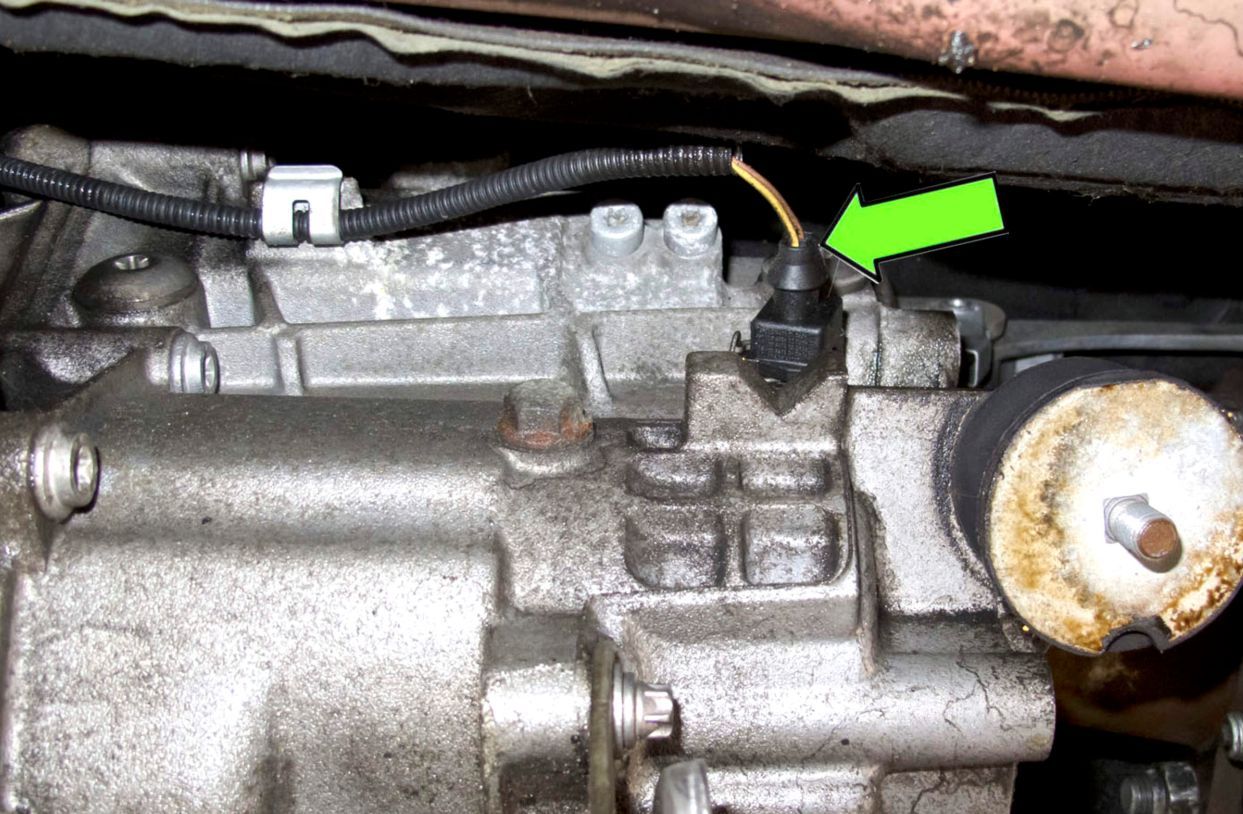
On many manual-transmission vehicles, the reverse light switch is mounted on the transmission casing.
Its exact location varies according to the vehicle and transmission design. It is commonly found on the side or upper section of the gearbox where it can detect the position of the reverse gear mechanism.
The switch usually has an electrical connector attached to it. Some designs use two terminals, while electronically controlled systems can use different wiring arrangements.
Access can sometimes be difficult because the switch may be located underneath the vehicle or behind other components.
How Does a Reverse Light Switch Work?
A conventional reverse light switch works like an electrical contact switch.
When the transmission is not in reverse, the switch remains in one state and the reverse-light circuit is inactive. When reverse gear is selected, the transmission mechanism pushes or otherwise activates the switch.
The electrical contacts then change state and allow the reverse-light circuit to operate.
When reverse gear is disengaged, the switch returns to its normal position and the reverse lights turn off.
The exact electrical logic depends on the vehicle. Some systems use a simple switched circuit, while newer vehicles may send a signal to an electronic control module.
Symptoms of a Faulty Reverse Light Switch
A failed reverse light switch does not always produce a warning light on the dashboard. In many vehicles, the problem is first noticed because the reverse lights behave incorrectly.
Common symptoms include:
Reverse lights do not turn on
This is the most common symptom. The transmission is correctly placed in reverse, but the rear reverse lamps remain off.
Reverse lights stay on
A switch that is stuck or internally damaged may cause the reverse lights to remain illuminated even when the transmission is not in reverse.
This can drain the battery if the vehicle is parked for a long period.
Reverse lights work intermittently
The switch may operate correctly sometimes and fail at other times. Internal contact wear, contamination, corrosion, or a loose connector can cause intermittent operation.
Reverse lights flicker
If the switch contacts are worn or the electrical connection is unstable, the lights may flicker when reverse gear is selected.
Parking sensors do not activate
Some vehicles use the reverse-gear signal to activate the parking sensor system. If that signal is missing, the parking sensors may not switch on when reverse is selected.
However, this symptom does not automatically mean the reverse switch is faulty. The parking sensor system itself can also have problems.
Reverse camera does not activate
On vehicles where the reverse camera depends on a reverse-gear signal, a faulty switch or missing reverse signal can prevent the camera from switching on.
Again, this depends on the vehicle's electrical architecture.
Reverse Lights Not Working Does Not Always Mean the Switch Is Bad
A very important point is that a reverse light problem does not automatically mean the reverse light switch has failed.
Other components can produce exactly the same symptom.
Possible causes include:
-
Blown reverse-light fuse
-
Burned-out reverse bulbs
-
Failed LED light assembly
-
Corroded bulb socket
-
Damaged wiring
-
Loose electrical connector
-
Poor ground connection
-
Faulty body control module
-
Damaged transmission wiring
-
Faulty reverse light switch
-
Incorrect transmission adjustment
Therefore, replacing the switch without testing the circuit can result in unnecessary repairs.
Common Causes of Reverse Light Switch Failure
Reverse light switches are generally reliable, but they can eventually fail.
Internal contact wear
Mechanical switches operate repeatedly over thousands of gear changes. The internal contacts can eventually wear or develop electrical resistance.
Oil or fluid contamination
Because the switch is installed on or near the transmission, contamination can sometimes affect the switch or its connector.
Water and corrosion
Moisture entering the electrical connector can create corrosion and increase electrical resistance.
Damaged wiring
The wiring near the transmission is exposed to heat, vibration, moisture, and road debris. A damaged wire can interrupt the reverse signal.
Loose connector
A connector that is not properly secured can cause intermittent operation.
Mechanical damage
The switch can be damaged during transmission work, clutch replacement, or other repairs around the gearbox.
Age and repeated operation
Even a relatively simple switch can eventually wear out after years of use.
How Is a Reverse Light Switch Diagnosed?
Diagnosis should begin with the simplest parts of the circuit.
First, check whether the reverse lights themselves are functioning. If both lights are out simultaneously, the problem may be upstream of the lamps.
The fuse should then be checked.
The electrical connector at the reverse switch should also be inspected for corrosion, loose terminals, broken wires, or physical damage.
If necessary, the switch can be electrically tested with a multimeter. Depending on the switch design, its electrical state should change when reverse gear is selected.
A technician can also test whether the appropriate voltage or signal reaches the switch and whether the signal leaves the switch when reverse is engaged.
This distinction is important because a switch can appear physically normal while the actual problem is located in the wiring.
Can a Reverse Light Switch Cause a Warning Light?
Usually, a simple failed reverse light switch will not illuminate the check engine light.
However, modern vehicles can monitor transmission-related signals electronically. If the reverse signal is used by a control module and the module detects an implausible or missing signal, a diagnostic trouble code may sometimes be stored.
The exact behavior depends on the vehicle's electronic architecture.
A vehicle with a conventional manual transmission may have no dashboard warning at all when the switch fails.
Reverse Light Switch vs. Reverse Gear Sensor
The terms "reverse light switch" and "reverse gear sensor" are sometimes used interchangeably, but they do not always refer to exactly the same component.
A traditional reverse light switch is usually a simple electrical switch that directly detects reverse gear engagement.
A modern vehicle may instead use a transmission position sensor, range sensor, or electronic transmission signal. The vehicle's control modules then determine that reverse has been selected and activate the appropriate systems.
This is particularly important when diagnosing newer automatic and automated transmissions.
Can a Faulty Reverse Light Switch Affect the Transmission?
In a basic manual transmission with a simple reverse light switch, a failed switch normally does not affect the mechanical operation of the gearbox.
You can still select reverse and drive the vehicle normally.
However, in modern vehicles, the reverse-gear signal may be shared with other electronic systems. If the problem is not simply the switch but a missing transmission-position signal, other functions can potentially be affected.
For this reason, diagnosis should consider the vehicle's specific transmission and electrical system.
Can You Drive With a Faulty Reverse Light Switch?
The vehicle may remain mechanically driveable, especially when the only problem is that the reverse lights do not operate.
However, driving without functioning reverse lights is not ideal from a safety perspective. Other road users and pedestrians may not realize that the vehicle is moving backward.
If the problem is accompanied by transmission warning lights, gear-selection problems, or other electronic faults, the vehicle should be diagnosed rather than assuming that the reverse switch is the only issue.
How Is a Reverse Light Switch Replaced?
Replacement is generally straightforward on vehicles where the switch is easily accessible.
The typical procedure involves:
-
Switching off the ignition
-
Disconnecting the electrical connector
-
Removing the old switch
-
Installing the replacement switch
-
Reconnecting the electrical connector
-
Testing the reverse lights
Depending on the transmission design, the switch may have a sealing washer or other sealing arrangement that should be replaced or installed correctly.
The correct replacement part is important because switches can differ in thread size, electrical operation, connector design, and activation characteristics.
Does Replacing the Switch Require Transmission Fluid Replacement?
Not necessarily.
Many reverse light switches are positioned so that they can be removed without draining the transmission fluid. However, this depends on the specific transmission and switch location.
If removing the switch opens a section of the transmission housing where fluid can escape, the fluid level may need to be checked or the fluid may need to be drained and refilled.
The vehicle-specific service procedure should therefore be followed.
Reverse Light Switch Problems After Transmission or Clutch Work
A reverse light problem that appears immediately after transmission, clutch, or gearbox-related work deserves particular attention.
During repairs, the electrical connector may be left disconnected, wiring may be damaged, or the switch may be physically disturbed.
Before replacing the switch, check:
-
Reverse switch connector
-
Wiring near the transmission
-
Fuse
-
Reverse light bulbs
-
Ground connections
-
Transmission-related components that were removed during the repair
This can prevent replacing a perfectly good switch when the real problem is simply a disconnected connector.
How Long Does a Reverse Light Switch Last?
There is no universal replacement interval for a reverse light switch.
It is normally replaced only when it fails.
Its lifespan depends on the vehicle, transmission design, operating environment, moisture exposure, electrical load, and frequency of use. Many switches can remain functional for many years, while others can develop problems earlier.
There is generally no reason to replace a properly functioning switch as preventive maintenance.
Is a Reverse Light Switch an Expensive Repair?
The switch itself is usually a relatively inexpensive component compared with major transmission parts.
The total repair cost depends mainly on accessibility and labor time.
If the switch is easily accessible, replacement may be quick. If it is positioned in a difficult area, additional components may need to be removed to reach it.
Electrical diagnosis can also increase the repair time if the problem is actually caused by wiring, a fuse, a control module, or another component.
Final Thoughts
The reverse light switch is a small component, but it plays an important role in vehicle safety and, on some modern vehicles, communication between the transmission and electronic systems.
The most recognizable signs of failure are reverse lights that do not turn on, remain on, flicker, or operate intermittently. A non-functioning reverse camera or parking sensor system can also sometimes be related to a missing reverse-gear signal.
However, the switch should not be blamed immediately. Fuses, bulbs, wiring, connectors, grounds, and electronic control modules can create very similar symptoms.
A proper electrical test can usually determine whether the switch itself is defective or whether the problem lies elsewhere in the reverse-light circuit.