TR
TR EN
EN

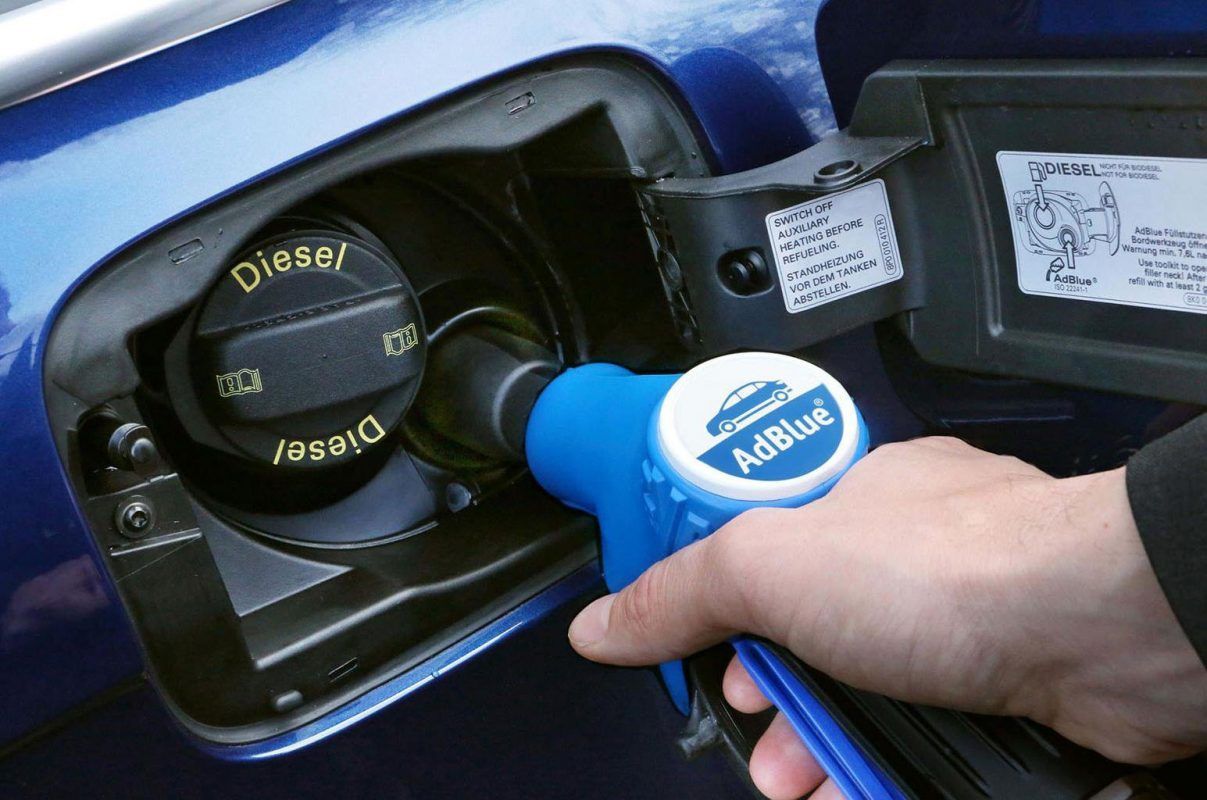
What Is AdBlue? What Is the SCR System Used For?
Modern diesel engines are designed to produce lower emissions while maintaining good fuel economy and performance. One of the most important technologies used to reduce diesel exhaust emissions is the SCR (Selective Catalytic Reduction) system.
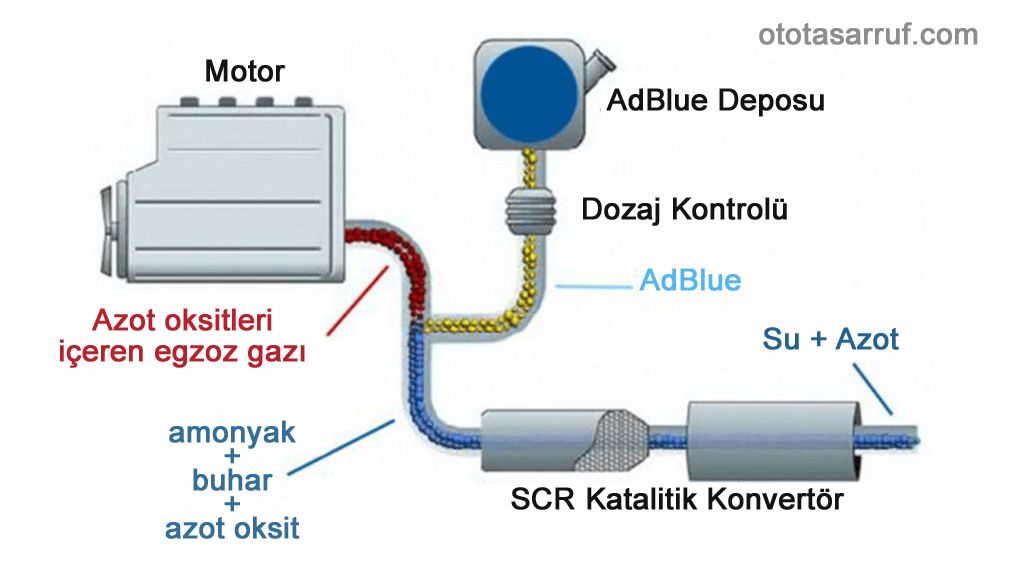
AdBlue is a liquid used by many modern diesel vehicles equipped with SCR. It is injected into the exhaust system, where it helps convert harmful nitrogen oxides (NOx) into nitrogen and water.
AdBlue does not function as a fuel additive and is not mixed with diesel fuel. It has its own separate tank and is managed by the vehicle's emission-control system.
What Is AdBlue?
AdBlue is a standardized aqueous solution consisting of 32.5% high-purity urea and 67.5% deionized water.
It is also commonly referred to as Diesel Exhaust Fluid (DEF) in some markets. The terminology can vary, but the basic purpose is the same: the fluid is used by an SCR system to reduce NOx emissions from diesel exhaust.
AdBlue itself is not a fuel and does not improve engine power or lubrication.
Its primary purpose is emission reduction.
What Is the SCR System?
SCR stands for Selective Catalytic Reduction.
The system is designed primarily to reduce nitrogen oxide emissions produced during diesel combustion.
Diesel engines can produce relatively high levels of NOx because they operate with excess air and combustion temperatures can become high under certain operating conditions.
The SCR system addresses this problem after combustion by treating the exhaust gases.

A typical SCR system includes:
-
AdBlue tank
-
AdBlue pump
-
Fluid level and temperature sensors
-
AdBlue injector
-
Exhaust temperature sensors
-
NOx sensors
-
SCR catalyst
-
Electronic control unit
-
Heated fluid lines on many vehicles
All of these components work together to maintain the correct amount of AdBlue injection under different driving conditions.
How Does the SCR System Work?
The process begins after the diesel engine produces exhaust gases.
These gases contain various pollutants, including nitrogen oxides.
The SCR system monitors exhaust conditions and determines when AdBlue should be injected.
The basic process is:
-
Diesel combustion produces exhaust gases containing NOx.
-
The vehicle's control system calculates the required AdBlue quantity.
-
AdBlue is injected into the exhaust stream.
-
Heat causes the urea solution to produce ammonia.
-
Ammonia reacts with NOx inside the SCR catalyst.
-
The NOx is converted primarily into nitrogen and water.
-
Cleaner exhaust gases leave the exhaust system.
The system must carefully control the amount of AdBlue injected. Too little may result in insufficient NOx reduction, while excessive injection can cause ammonia slip and other emissions problems.
What Happens to AdBlue in the Exhaust?
AdBlue does not simply pass through the exhaust system as a liquid.
When injected into the hot exhaust stream, the water component evaporates and the urea undergoes thermal decomposition.
This produces ammonia (NH₃), which acts as the reducing agent inside the SCR catalyst.
The ammonia reacts with nitrogen oxides such as NO and NO₂.
The overall result is the conversion of NOx into mainly:
-
Nitrogen
-
Water
Nitrogen is naturally present in large quantities in the atmosphere, making this chemical conversion highly useful for reducing harmful exhaust emissions.
Why Do Diesel Vehicles Need AdBlue?
AdBlue is used because modern diesel engines need to meet increasingly strict emissions requirements.
The engine itself can use combustion strategies and exhaust-gas recirculation to reduce NOx, but these methods can involve compromises between emissions, fuel economy, combustion efficiency, and performance.
SCR provides another way to control NOx after combustion.
This allows the engine to be optimized while the SCR system handles a significant portion of the NOx reduction in the exhaust.
Is AdBlue Mixed With Diesel Fuel?
No.
This is one of the most important things to understand about AdBlue.
AdBlue is stored in a separate tank and is injected into the exhaust system.
It should never be poured into the diesel fuel tank.
Likewise, diesel fuel must never be poured into the AdBlue tank.
Putting the wrong fluid into either system can cause expensive damage.
If diesel fuel is accidentally added to the AdBlue tank, or AdBlue is accidentally added to the diesel tank, the vehicle should generally not be started. The system should be drained and inspected by a qualified technician.
Where Is the AdBlue Tank Located?
The location depends on the vehicle.
The filler may be located:
-
Next to the diesel filler
-
Under the fuel filler flap
-
In the trunk
-
Under a service cover
-
In the engine compartment
Some vehicles have a blue-colored filler cap or clearly labeled AdBlue/DEF filler.
The location should always be confirmed using the vehicle owner's manual.
How Much AdBlue Does a Vehicle Use?
AdBlue consumption varies considerably between vehicles.
It depends on factors such as:
-
Engine size
-
Vehicle weight
-
Driving style
-
Engine load
-
Exhaust temperature
-
Average speed
-
Ambient temperature
-
SCR calibration
-
Distance driven
AdBlue consumption is normally much lower than diesel fuel consumption.
Some vehicles may require AdBlue replenishment after several thousand kilometers, while others can travel considerably farther between refills.
The vehicle's own warning system is therefore more useful than relying on a fixed refill interval.
What Happens When AdBlue Runs Out?
Modern vehicles generally provide several warnings before the AdBlue tank becomes empty.
A typical sequence may include:
-
AdBlue level warning
-
Remaining-range warning
-
Low AdBlue warning
-
Reduced starting range
-
"Refill AdBlue" message
-
No-start warning
If the tank becomes completely empty, many vehicles will eventually prevent the engine from being restarted after it is switched off.
This is an important difference between an AdBlue warning and a normal fuel warning.
A vehicle may continue operating temporarily after an AdBlue warning, but ignoring the warning can eventually result in a no-start condition.
Can You Drive With the AdBlue Warning On?
If the warning indicates that the AdBlue level is low, the vehicle can often continue to operate for some time.
However, the remaining range may be limited.
The correct approach is to refill the AdBlue as soon as practical rather than waiting until the system reaches zero.
If the warning is accompanied by messages such as SCR system fault, emissions system fault, or AdBlue system malfunction, the situation is different.
In that case, the problem may not simply be a low fluid level.
What Are the Symptoms of an SCR System Failure?
An SCR system fault can produce several different symptoms.
Common signs include:
-
AdBlue warning light
-
Check engine light
-
SCR warning message
-
Emissions system warning
-
"Check AdBlue" message
-
"AdBlue system fault" message
-
Limited remaining starting distance
-
Reduced engine power on some vehicles
-
Increased NOx emissions
-
Engine management fault codes
-
Failure to restart after the remaining range reaches zero
The exact symptoms depend on the vehicle manufacturer and the nature of the fault.
What Causes AdBlue or SCR Problems?
SCR systems contain several electronic, mechanical, and chemical components, so there are many possible causes of failure.
Low AdBlue level
The simplest cause is an empty or nearly empty tank.
Incorrect or contaminated fluid
SCR systems require fluid that meets the appropriate quality specification. Contamination can damage the pump, injector, or other components.
AdBlue crystallization
AdBlue can leave white crystalline deposits when it dries. These deposits can form around the injector, filler, or exhaust components and may interfere with proper operation.
AdBlue injector failure
The injector must deliver the correct amount of fluid into the exhaust. A blocked or malfunctioning injector can cause SCR efficiency problems.
Pump failure
The system needs to pressurize and deliver AdBlue correctly. A failing pump can trigger SCR-related fault codes.
NOx sensor failure
NOx sensors monitor nitrogen oxide levels before and/or after the SCR catalyst. A faulty sensor can cause incorrect system calculations or trigger an SCR fault.
Temperature sensor problems
The SCR system needs accurate exhaust temperature information. Incorrect temperature readings can affect AdBlue dosing.
Heater failure
AdBlue can freeze at approximately −11°C (12°F). Vehicles designed for cold climates therefore use heating systems to thaw the fluid and keep the SCR system operational.
Wiring and connector problems
Damaged wiring, corrosion, poor connections, or moisture intrusion can cause intermittent SCR faults.
SCR catalyst deterioration
The catalyst itself can lose efficiency or become contaminated, resulting in insufficient NOx reduction.
Does AdBlue Freeze?
Yes.
AdBlue freezes at approximately −11°C (12°F).
This does not necessarily mean that a vehicle cannot operate in very cold weather.
SCR-equipped vehicles are generally designed with heated tanks and/or heated fluid lines. When the system detects low temperatures, it can use electrical heating to thaw the fluid.
Freezing and thawing normally does not permanently damage properly stored AdBlue, provided the fluid remains within specification and the system is designed for those conditions.
Does AdBlue Expire?
AdBlue has a limited shelf life.
Its quality can deteriorate when exposed to unsuitable temperatures, direct sunlight, or contamination.
For this reason:
-
Keep the container properly sealed.
-
Store it according to the manufacturer's temperature recommendations.
-
Avoid contamination.
-
Do not use fluid that has been mixed with other chemicals or liquids.
-
Check the manufacturer's stated shelf life.
Using poor-quality or contaminated AdBlue can cause problems with the SCR system.
What Happens If AdBlue Is Contaminated?
The SCR system is sensitive to fluid quality.
Contamination can affect:
-
AdBlue pump operation
-
Injector operation
-
Fluid pressure
-
Chemical conversion efficiency
-
NOx reduction performance
Contaminated fluid can also result in expensive component replacement.
For this reason, only use AdBlue that complies with the required quality specification for the vehicle.
Can AdBlue Increase Engine Power?
No.
AdBlue is not intended to increase engine power.
Its purpose is to reduce NOx emissions.
The SCR system works primarily in the exhaust system, after combustion has already occurred. It therefore does not function like a fuel additive, octane booster, or performance product.
What Is the Difference Between AdBlue and a Diesel Fuel Additive?
AdBlue and diesel additives have completely different purposes.
A diesel fuel additive is introduced into the fuel system and may be designed for purposes such as cleaning, lubrication, cetane improvement, or fuel-system treatment.
AdBlue is injected into the exhaust system and is used specifically for NOx reduction through the SCR process.
They must never be confused or interchanged.
Can You Disable the AdBlue System?
Some people attempt to disable SCR systems through software modifications or other methods.
This is generally a bad idea for a road vehicle.
Disabling the SCR system can:
-
Increase NOx emissions
-
Trigger warning lights
-
Cause diagnostic faults
-
Create inspection or regulatory problems
-
Cause problems with other emissions systems
-
Affect the vehicle's legal emissions compliance
The correct solution to an SCR fault is to diagnose and repair the underlying problem rather than simply attempting to remove the warning.
How Is an SCR Fault Diagnosed?
Proper diagnosis requires more than checking the AdBlue level.
A diagnostic technician may inspect:
-
Stored diagnostic trouble codes
-
AdBlue tank level
-
AdBlue temperature
-
AdBlue pressure
-
Pump operation
-
Injector operation
-
NOx sensor readings
-
Exhaust temperatures
-
SCR catalyst efficiency
-
Wiring and connectors
-
System adaptations and software
Live data is particularly useful because the system can appear normal during a basic inspection while a sensor or dosing problem occurs only under specific operating conditions.
Common AdBlue and SCR Fault Codes
Depending on the manufacturer, several diagnostic trouble codes can be associated with SCR and NOx control.
Possible fault categories include:
-
Reductant pressure problems
-
Reductant injector problems
-
Reductant pump faults
-
NOx sensor faults
-
SCR catalyst efficiency faults
-
Reductant temperature faults
-
Reductant heater faults
-
Incorrect reductant quality
-
Communication faults
The exact meaning of a code should always be checked against the specific vehicle because manufacturer-specific diagnostic strategies can differ.
How Can AdBlue Problems Be Prevented?
Good maintenance can reduce the risk of SCR problems.
Useful practices include:
-
Use only high-quality AdBlue that meets the required specification.
-
Keep the filler area clean.
-
Do not allow dirt to enter the AdBlue tank.
-
Do not mix AdBlue with water or other fluids.
-
Do not put AdBlue into the diesel tank.
-
Do not put diesel into the AdBlue tank.
-
Avoid storing AdBlue in unsuitable conditions.
-
Refill the tank before the remaining range reaches zero.
-
Take SCR warning messages seriously.
-
Diagnose recurring warnings instead of repeatedly clearing the fault code.
Final Thoughts
AdBlue and the SCR system are important parts of modern diesel emission control.
AdBlue is a urea-based fluid, while SCR is the exhaust-treatment technology that uses it to reduce harmful nitrogen oxide emissions. The fluid is injected into the exhaust, converted into ammonia, and used inside the SCR catalyst to transform NOx primarily into nitrogen and water.
A low AdBlue level is usually straightforward to correct, but an SCR system fault is a different matter. Problems with the pump, injector, NOx sensors, wiring, heaters, temperature sensors, or SCR catalyst can all produce warning messages and may eventually prevent the engine from restarting.
For this reason, an AdBlue warning should not simply be ignored or repeatedly reset. Correct fluid quality, timely refilling, and proper diagnosis are essential for keeping the SCR system operating correctly.