TR
TR EN
EN

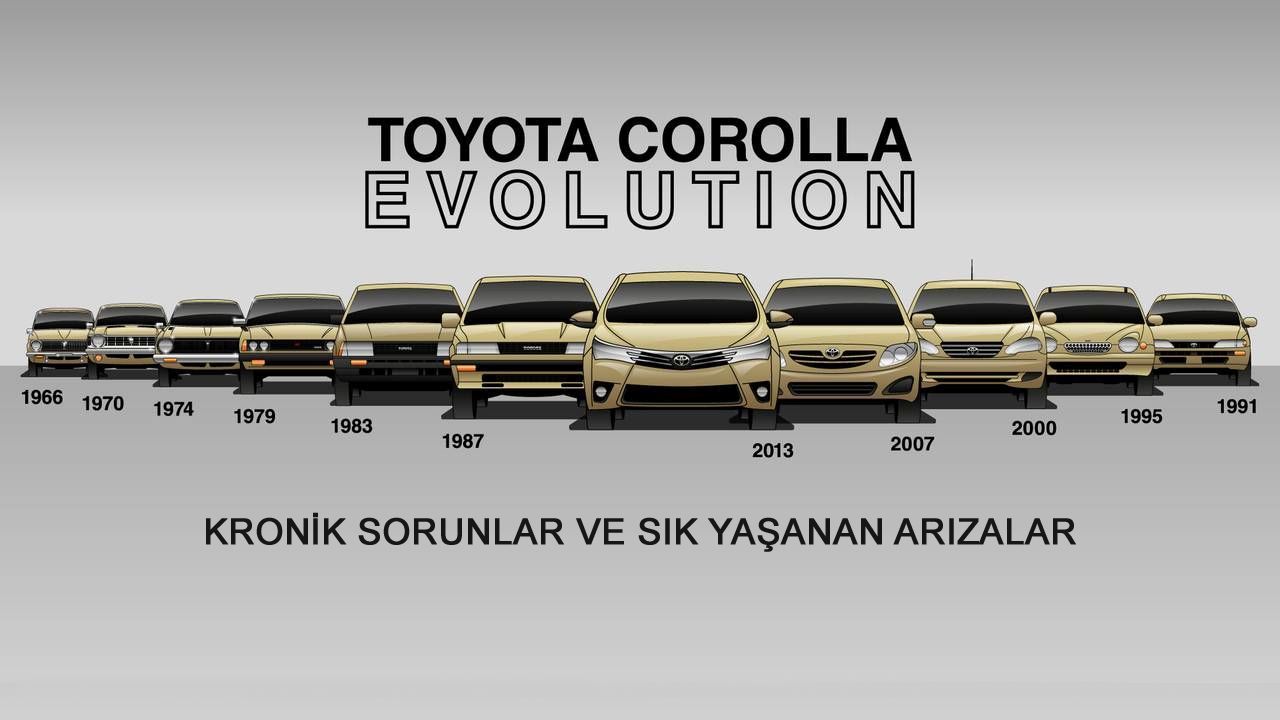
Is a Used Toyota Corolla Worth Buying? Toyota Corolla Common Problems and Failures
Toyota Corolla is one of the most recognized and widely used compact cars in the world. Its reputation for reliability, low running costs, simple mechanical design and long service life has made it a popular choice in the second-hand market.
However, Corolla is not completely free from problems. Different generations use different engines, transmissions, steering systems and electronic equipment, so the problems found in one model year should not automatically be applied to every Corolla.
Some complaint databases identify 2002, 2003, 2009, 2010 and 2014 as years that deserve additional attention. But this does not mean that every Corolla from these years should be avoided. Engine type, transmission, production date, maintenance history and actual vehicle condition are much more important than the model year alone.
One of the most important issues to investigate on certain older Corollas is excessive engine oil consumption. Other areas worth checking include the water pump, steering system, automatic transmission, EVAP system, air conditioning, mass airflow sensor, starter motor and various electrical components.
Is the Toyota Corolla Reliable?
In general, yes. Corolla has a strong reputation for long-term reliability.
One of its biggest advantages is that many generations use relatively straightforward mechanical systems. This can make maintenance easier and, in many markets, parts are readily available.
However, reliability depends heavily on maintenance.
A Corolla that has received regular oil changes, correct transmission servicing and timely replacement of worn components can remain dependable at very high mileage.
On the other hand, a neglected Corolla can develop expensive problems even if the odometer shows relatively low mileage.
This is why a used Corolla should be evaluated as an individual vehicle rather than simply being judged by its model year.
Which Toyota Corolla Model Years Should You Avoid?
You may find lists recommending that buyers avoid 2002, 2009, 2010, 2003 or 2014 Corollas.
These lists can be useful for identifying areas that deserve additional inspection, but they should not be interpreted as a universal blacklist.
Complaint databases measure reported problems, not necessarily the percentage of vehicles that failed.
For example, a model year with a large number of vehicles on the road can naturally generate more complaints than a less common year.
The better approach is to identify the specific engine and transmission in the vehicle and then inspect the known problem areas for that particular powertrain.
2002 Toyota Corolla Problems
The 2002 Corolla is frequently mentioned in owner complaint data, particularly for engine-related problems.
One of the most important issues to investigate is excessive engine oil consumption.
An engine that consumes an unusually large amount of oil may require frequent top-ups between oil changes. If the driver ignores the low oil level, the consequences can become much more serious.
Possible symptoms include:
-
Frequent low engine-oil levels
-
Blue exhaust smoke
-
Oil-fouled spark plugs
-
Reduced engine performance
-
Increased emissions
-
Catalytic-converter problems
-
Check-engine light
-
Engine damage caused by insufficient lubrication
However, not every 2002 Corolla has this problem.
Before buying one, ask whether the engine consumes oil between services and inspect the exhaust, spark plugs and engine for signs of excessive consumption or leakage.
If necessary, a compression test and leak-down test can provide additional information about engine condition.
2003 Toyota Corolla Transmission Problems
Some 2003 Corolla owners have reported automatic transmission problems.
A transmission that is beginning to fail may show:
-
Delayed engagement
-
Harsh shifting
-
Gear slipping
-
Shuddering
-
Abnormal noises
-
Difficulty changing gears
-
Poor acceleration
-
Transmission warning lights
However, not every shifting problem means that the transmission itself needs to be replaced.
Transmission behavior can also be affected by:
-
Solenoids
-
Transmission fluid condition
-
Throttle position information
-
Sensors
-
Wiring
-
Engine-management problems
A proper diagnostic process should therefore be performed before an expensive transmission replacement is considered.
2009 Toyota Corolla Problems
The 2009 Corolla is often mentioned because of engine-related complaints, particularly excessive oil consumption in certain engine applications.
Oil consumption can become a serious problem if the driver does not regularly check the oil level.
A low oil level can eventually cause:
-
Bearing damage
-
Increased engine wear
-
Overheating of internal components
-
Loss of compression
-
Catalytic-converter damage
-
Complete engine failure
Claims that every 2009 Corolla needs an engine replacement are incorrect.
The condition of the individual engine must be established.
When buying a 2009 Corolla, check the maintenance records and ask specifically about oil consumption. If the seller says that the engine regularly needs additional oil, this should be investigated rather than ignored.
2009 Corolla Water Pump Problems
The water pump is another component worth checking on an older Corolla.
A failing water pump may develop a coolant leak or bearing noise and can eventually prevent the cooling system from operating correctly.
Possible symptoms include:
-
Coolant loss
-
Coolant leaking around the pump
-
Grinding or whining noises
-
Engine temperature rising
-
Overheating
-
Steam or coolant odor
A water pump itself is usually much less expensive than an engine replacement.
The real danger comes from continuing to drive an overheating engine.
If a cooling-system problem causes severe overheating, cylinder-head or head-gasket damage can turn a relatively small repair into a major engine repair.
2009 Corolla Steering Problems
Some owners have reported steering-related complaints, including the vehicle pulling to one side or the steering wheel not remaining centered.
However, this does not automatically mean that the steering system is defective.
A car pulling to one side can be caused by:
-
Wheel alignment
-
Unequal tire pressure
-
Uneven tire wear
-
Damaged suspension components
-
Bent wheels
-
Worn steering components
-
Road crown
The first step should therefore be a complete inspection of the tires, suspension, steering and wheel alignment.
2010 Toyota Corolla Problems
The 2010 Corolla is another model year that deserves some additional attention, but it should not automatically be considered an unsafe or unreliable vehicle.
Potential areas to inspect include steering, braking, accelerator-pedal operation and electrical systems.
Some complaints associated with this period also overlap with the broader Toyota unintended-acceleration issues of the late 2000s and early 2010s.
However, it is important to distinguish between documented recalls affecting specific vehicles and generalized internet reports.
A vehicle's VIN and recall history should be checked to determine whether a particular Corolla was affected.
Accelerator Pedal and Unintended Acceleration
Toyota's large-scale recalls during this period involved issues such as floor-mat interference and accelerator-pedal mechanisms on certain vehicles.
It is therefore inaccurate to say that every 2010 Corolla has a permanently defective accelerator pedal.
If an accelerator pedal feels abnormal, sticks, does not return smoothly or behaves differently from normal, the vehicle should not continue to be driven until the cause is identified.
The pedal assembly, floor mat positioning, throttle system and relevant electronic controls should be inspected.
2015 Toyota Corolla Problems
The 2015 Corolla is generally considered a more mature and dependable used-car option, but it can still develop individual problems.
Some owners have reported:
-
Dashboard rattles
-
Door-lock or key-fob problems
-
Air-conditioning performance issues
-
Electrical faults
-
Interior noises
A dashboard rattle is usually an annoyance rather than a major mechanical failure. It can be caused by loose trim, clips, wiring or interior components.
Similarly, a key fob that does not consistently lock the doors does not necessarily indicate a major vehicle electrical problem. The key-fob battery, door-lock actuator, receiver and vehicle battery should all be checked.
2015 Corolla Air-Conditioning Problems
Air-conditioning performance should be checked carefully on any used Corolla.
If the system does not cool effectively, possible causes include:
-
Low refrigerant
-
Refrigerant leaks
-
Compressor problems
-
Condenser problems
-
Cooling-fan problems
-
Pressure-sensor faults
-
Electrical problems
-
Cabin air-filter restriction
Some vehicles may also have manufacturer technical information addressing specific HVAC conditions.
The important point is to diagnose the cause rather than simply recharging the refrigerant repeatedly.
If refrigerant is disappearing, there is likely a leak somewhere in the system.
Corolla Airbag Recalls
Airbag recalls have affected many Toyota vehicles over the years, including Corolla models in various markets and production periods.
However, saying that every Corolla from 2011 through 2019 was covered by exactly the same recall would be misleading.
Recall campaigns depend on:
-
Model
-
Production date
-
Market
-
Specific airbag component
-
Vehicle identification number
Airbag-related recalls should therefore always be checked using the vehicle's VIN and the relevant manufacturer or government recall database.
If an airbag warning light is illuminated, the vehicle should be diagnosed regardless of whether the owner believes it is related to a recall.
EVAP Problems and the Check-Engine Light
The EVAP system controls fuel vapors and prevents them from being released directly into the atmosphere.
A fault in this system can illuminate the check-engine light on a Corolla.
Possible causes include:
-
Loose or damaged fuel cap
-
EVAP hose leak
-
Purge valve problem
-
Vent valve problem
-
Charcoal canister problem
-
Wiring or connector failure
-
Fuel-tank pressure sensor problem
A loose fuel cap is one of the simplest possibilities, but it should not automatically be blamed for every EVAP code.
For example, a code related to a small EVAP leak may require a smoke test to find the actual leak.
Replacing the canister or purge valve without confirming the cause can waste money.
Toyota Corolla Automatic Transmission Problems
A high-mileage Corolla can eventually develop transmission-related problems, particularly if the transmission fluid has been neglected or the vehicle has been driven under demanding conditions.
Possible symptoms include:
-
Harsh gear changes
-
Delayed shifting
-
Slipping
-
Shuddering
-
Poor acceleration
-
Abnormal transmission noises
-
Delayed engagement when selecting Drive or Reverse
A shifting problem does not automatically mean that the transmission must be rebuilt.
The transmission fluid, solenoids, sensors, wiring and engine-management system should be checked first.
On some older vehicles, throttle-position information can also influence transmission behavior.
Corolla CVT Problems
Newer Corolla generations increasingly use CVT transmissions.
CVT operation feels different from a conventional automatic transmission. Engine speed may rise and remain relatively high during acceleration, and this is not necessarily a fault.
However, the following symptoms deserve investigation:
-
Severe shuddering
-
Delayed acceleration
-
Abnormal whining
-
Transmission warning lights
-
Jerking
-
Sudden loss of power
-
Abnormal vibration
Correct transmission fluid and proper servicing are particularly important for CVT-equipped vehicles.
Toyota Corolla Daytime Running Light Problems
Some Corolla owners have reported problems involving daytime running lights or related lighting systems.
Possible symptoms include:
-
Lights switching off unexpectedly
-
Lights flickering
-
Lights remaining on after the vehicle is switched off
-
Battery discharge
These symptoms can have different causes, including bulbs, LED modules, relays, switches, wiring or control modules.
If the lights remain on after the vehicle is parked, the battery can eventually become discharged.
The electrical circuit should be diagnosed rather than simply replacing the lamp assembly.
Mass Airflow Sensor Problems
The Mass Airflow Sensor, or MAF sensor, measures the amount of air entering the engine.
A contaminated or failing MAF sensor can cause:
-
Check-engine light
-
Poor acceleration
-
Rough idle
-
Increased fuel consumption
-
Hesitation
-
Difficult starting
However, not every MAF-related symptom means that the sensor itself has failed.
Vacuum leaks, intake leaks, wiring problems and other engine-management faults can produce similar symptoms.
Cleaning the sensor may help when contamination is the cause, but the correct cleaning method must be used. Some sensors can be damaged by inappropriate cleaners or physical contact.
Corolla Starting and Starter Motor Problems
A high-mileage Corolla may eventually develop starting problems.
If the engine does not crank or cranks inconsistently, possible causes include:
-
Weak battery
-
Battery terminals
-
Starter motor
-
Starter solenoid
-
Ignition switch
-
Wiring
-
Immobilizer system
A common mistake is to replace the starter immediately without checking battery voltage and the electrical connections.
If the starter clicks but the engine does not crank, the battery, starter circuit and starter motor should be tested systematically.
Corolla Battery and Alternator Problems
Electrical problems on an older Corolla are sometimes caused by the charging system rather than the component that appears to be malfunctioning.
A weak alternator can produce:
-
Battery warning light
-
Dim headlights
-
Slow electrical accessories
-
Starting problems
-
Battery discharge
-
Multiple warning lights
Battery condition should also be checked.
A failing battery can cause unusual electronic behavior, especially when its voltage drops significantly during starting.
Toyota Corolla Engine Mount Problems
As mileage increases, engine mounts can deteriorate.
Worn engine mounts may cause:
-
Excessive vibration at idle
-
Clunking when shifting into Drive or Reverse
-
Engine movement during acceleration
-
Vibration inside the cabin
-
Thumping when accelerating or releasing the throttle
These symptoms can sometimes be confused with transmission problems.
A technician should inspect the engine mounts before expensive drivetrain repairs are approved.
Corolla Suspension Problems
Suspension components eventually wear out on any high-mileage Corolla.
The following parts deserve attention:
-
Shock absorbers
-
Strut mounts
-
Control-arm bushings
-
Stabilizer links
-
Ball joints
-
Tie rods
-
Wheel bearings
Typical symptoms include:
-
Knocking over bumps
-
Uneven tire wear
-
Steering instability
-
Excessive body movement
-
Reduced ride comfort
-
Vehicle pulling to one side
A proper suspension inspection is particularly important when buying a high-mileage Corolla.
Corolla Brake Problems
Brake squeaking is one of the complaints commonly associated with many vehicles, including Corolla.
A squeaking brake does not necessarily mean that the brake system is dangerously defective.
Possible causes include:
-
Brake-pad material
-
Dust
-
Glazing
-
Rotor condition
-
Caliper movement
-
Incorrectly installed hardware
-
Environmental conditions
The entire brake system should be inspected if noise is persistent.
Also check the brake discs, pads, calipers, brake fluid and ABS system.
Corolla Catalytic Converter Problems
High-mileage Corolla models can eventually experience catalytic-converter or oxygen-sensor problems.
Possible symptoms include:
-
Check-engine light
-
Poor acceleration
-
Increased fuel consumption
-
Emissions problems
-
Rattling from the exhaust
-
Reduced engine performance
A code such as P0420 does not automatically prove that the catalytic converter needs to be replaced.
An exhaust leak, oxygen sensor problem, engine misfire or fuel-mixture issue can also affect catalyst efficiency readings.
Proper diagnosis can prevent an unnecessarily expensive repair.
Corolla Oil Leaks
Older Corolla engines can develop oil leaks as seals and gaskets age.
Common areas to inspect include:
-
Valve-cover gasket
-
Oil pan
-
Timing-cover area
-
Crankshaft seals
-
Camshaft seals
-
Oil-filter area
A small oil seepage is different from a serious leak that causes the oil level to drop rapidly.
The source of the leak should be identified before purchasing the vehicle.
How Long Can a Toyota Corolla Last?
A well-maintained Toyota Corolla can reach very high mileage.
There is no single mileage at which a Corolla is guaranteed to fail.
A properly maintained Corolla with 250,000 km can potentially be a better purchase than a poorly maintained car with 150,000 km.
At high mileage, however, more components are likely to have reached the end of their service life.
Pay particular attention to:
-
Engine oil consumption
-
Transmission condition
-
Cooling system
-
Suspension
-
Steering
-
Brakes
-
Wheel bearings
-
Air conditioning
-
Electrical system
-
Rust
-
Accident history
What Should You Check Before Buying a Used Corolla?
A professional pre-purchase inspection is strongly recommended.
Start the engine cold
The engine should be started when completely cold. Listen for abnormal noises and check for excessive exhaust smoke.
Check oil consumption
Ask the owner whether oil needs to be added between services. Inspect the oil level and look for signs of excessive consumption.
Test the transmission
Drive the vehicle at different speeds and test it both when cold and after reaching operating temperature.
Scan the vehicle
Use a diagnostic scanner to check the engine, transmission, ABS, airbag and other relevant control modules.
Check the cooling system
Inspect the radiator, hoses, water pump, thermostat and coolant level.
Inspect the steering
Check whether the steering wheel remains centered and whether the car pulls to either side.
Inspect the suspension
Listen for knocking and check the condition of the shocks, bushings, ball joints and wheel bearings.
Test the brakes
Check braking performance, pedal feel, brake noise and whether the vehicle pulls to one side.
Test the air conditioning
Run the air conditioner long enough to verify that it continues cooling properly.
Check the electrical system
Test the headlights, daytime running lights, windows, central locking, key fob, dashboard electronics and charging system.
Check recall history
Verify recalls and manufacturer campaigns using the vehicle's VIN.
Inspect the body and chassis
Look for accident repairs, paint inconsistencies, chassis damage and corrosion.
Is a High-Mileage Toyota Corolla Worth Buying?
Yes, it can be.
High mileage should not automatically disqualify a Corolla.
A high-mileage example with a complete maintenance history and a healthy engine and transmission can be an excellent purchase.
However, the buyer should expect more age-related repairs as mileage increases.
At 250,000–300,000 km, for example, suspension components, engine mounts, wheel bearings, starter motors, alternators, seals and other parts may already have been replaced—or may be approaching the end of their service life.
The question should therefore be "How well has this Corolla been maintained?", rather than simply "How many kilometers does it have?"
Advantages of a Used Toyota Corolla
The Corolla has many qualities that make it attractive as a used car.
Its main advantages include:
-
Strong overall reliability
-
Durable engine options
-
Relatively simple mechanical design in many generations
-
Good fuel economy
-
Practical interior
-
Low operating costs
-
Good availability of replacement parts
-
Strong resale demand
-
High mileage potential
-
Large knowledge base among independent repair shops
These characteristics make Corolla particularly attractive to buyers looking for a practical daily driver rather than a complicated luxury vehicle.
Disadvantages of a Used Toyota Corolla
Corolla is not perfect.
Depending on generation and powertrain, potential disadvantages include:
-
Excessive oil consumption on certain older engines
-
Transmission problems on some older examples
-
CVT concerns on neglected newer vehicles
-
Age-related suspension wear
-
Air-conditioning problems
-
Electrical faults
-
Interior rattles
-
Road and cabin noise in some generations
-
Rust on older vehicles
-
Relatively basic interior materials in some versions
None of these issues means that the Corolla is generally unreliable. They simply show why the exact vehicle should be inspected before purchase.
Final Verdict: Is a Used Toyota Corolla Worth Buying?
Yes, the Toyota Corolla is generally one of the safer choices in the used compact-car market.
Its reputation for durability is deserved, but it should not be treated as a car that can be purchased without inspection.
The 2002 Corolla deserves particular attention for possible excessive oil consumption. 2003 models should be carefully tested for transmission behavior. 2009 models require careful inspection of engine oil consumption and the cooling system, while 2010 models should be checked for steering, accelerator-pedal and applicable recall-related issues.
The 2015 Corolla and newer generations are generally attractive used-car options, but they are not completely free from problems. Air conditioning, electrical systems, CVT behavior, driver-assistance equipment and general wear should still be inspected.
It is also important not to automatically reject every 2002, 2009, 2010, 2003 or 2014 Corolla. Complaint statistics can identify areas for inspection, but they do not tell the complete story of every vehicle.
The most important factors are the engine, transmission, maintenance history, mileage, accident history and current mechanical condition.
A well-maintained Toyota Corolla with a healthy powertrain can provide many more years and hundreds of thousands of kilometers of service. For a second-hand buyer who prioritizes reliability, reasonable maintenance costs and long-term usability, a properly inspected Corolla remains one of the strongest choices in its class.