TR
TR EN
EN

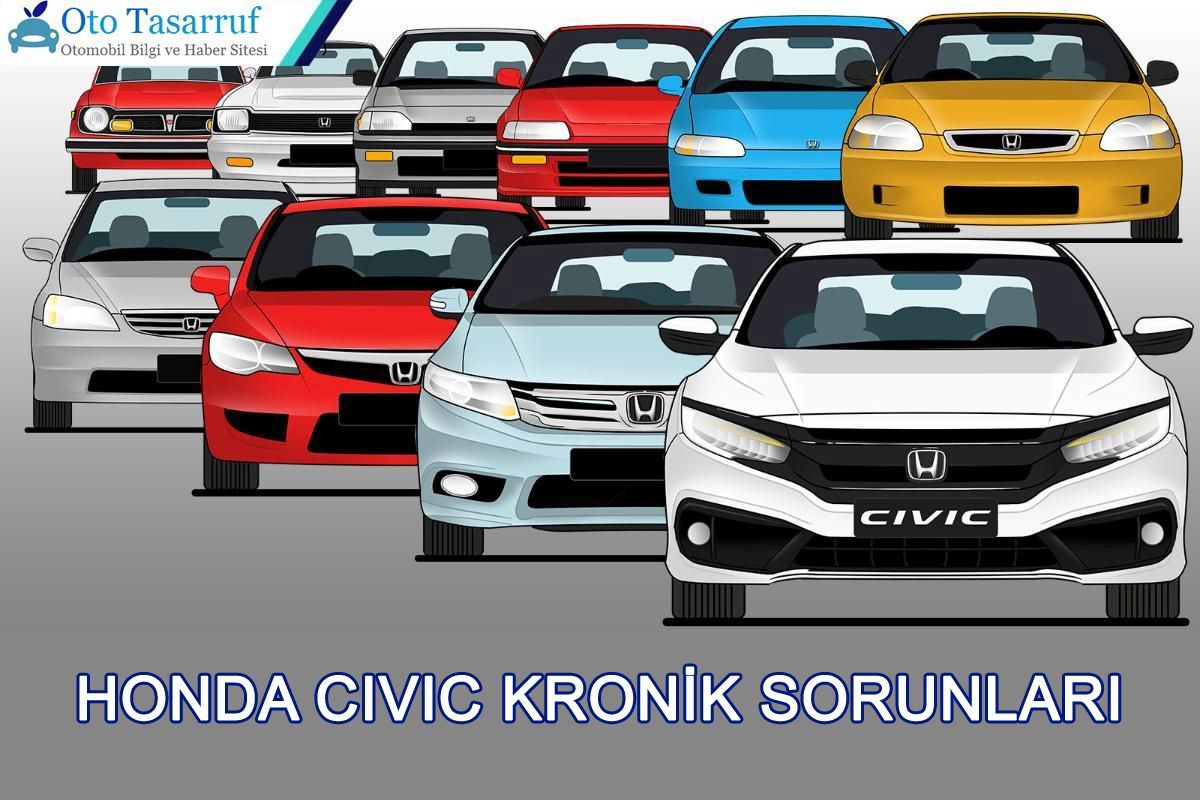
Is a Used Honda Civic Worth Buying? Honda Civic Common Problems and Failures
Honda Civic has one of the strongest reputations for reliability among compact cars. First introduced in the early 1970s, the Civic has gone through numerous generations and has been sold in many different markets with a wide range of gasoline, diesel, hybrid, manual, automatic, CVT, and turbocharged powertrains.
Its reputation for durability is well deserved, but that does not mean every Civic is trouble-free. Some generations and powertrains have recurring problems involving transmissions, engines, air conditioning, suspension, electrical systems, airbags, and interior components.
The important point when buying a used Civic is that there is no single model year that should automatically be avoided. Complaint statistics can highlight areas that deserve inspection, but they do not mean every car from a particular year will develop the same failure. Engine type, transmission, production market, maintenance history, mileage, accident history, and recall status can make a much bigger difference.
So, is a used Honda Civic worth buying?
In most cases, yes. A well-maintained Civic with a good engine and transmission can be a very durable used car. However, certain generations deserve closer inspection before purchase.
Honda Civic Transmission Problems
Transmission problems are among the most expensive issues that can affect a used Civic, but the type of problem depends heavily on the generation and transmission.
Older Honda Civics equipped with conventional automatic transmissions can develop symptoms such as delayed engagement, slipping, harsh shifting, shuddering, abnormal noises, or difficulty selecting certain gears.
A whining or humming noise can sometimes indicate a transmission or bearing problem, but it should not automatically be interpreted as transmission failure. Wheel bearings, differential components, driveshafts, tires, and other drivetrain components can produce similar noises.
On higher-mileage vehicles, transmission problems may also be related to:
-
Worn transmission fluid
-
Shift solenoids
-
Valve-body problems
-
Internal clutch wear
-
Torque converter problems
-
Sensors
-
Wiring or electrical connections
-
Incorrect fluid level or specification
Some older Honda automatic transmissions developed a poor reputation, particularly certain early-2000s applications. However, it would be inaccurate to claim that most Civic owners experience transmission failure or that every 2001–2002 Civic requires a transmission replacement.
The transmission should be evaluated based on its actual condition rather than its model year alone.
For a used Civic, perform a cold-start test and a fully warmed-up test. Check for delayed engagement when shifting from Park to Drive or Reverse, slipping under acceleration, harsh shifts, unusual noises, and transmission warning lights.
Honda Civic Engine Problems
The Civic has been offered with many different engines, so engine reliability varies considerably between generations.
Some older Civics are capable of very high mileage with relatively few major problems when they receive regular oil changes and cooling-system maintenance. However, age-related problems become increasingly important as these cars get older.
Potential engine-related problems include:
-
Oil consumption
-
Oil leaks
-
Cooling-system leaks
-
Overheating
-
Head-gasket problems
-
Ignition coil or spark plug issues
-
Valve-cover gasket leaks
-
Engine mounts
-
Timing-belt or timing-chain maintenance
-
Variable valve timing system problems
-
Carbon buildup on certain direct-injection engines
-
Turbocharger-related problems on turbocharged versions
A cracked engine block is a serious problem, but it should not be described as one of the most common problems across all Honda Civic generations.
There have, however, been well-known engine-block issues involving certain 2006–2009 Civic 1.8-liter applications, particularly certain production vehicles in specific markets. Honda provided extended warranty coverage for certain affected vehicles. This does not mean every 2006 or 2007 Civic has a cracked block.
When inspecting an older Civic, look for unexplained coolant loss, overheating, coolant stains around the engine, white exhaust smoke after the engine is fully warm, contaminated fluids, and evidence of previous overheating.
If an engine has a history of overheating, a cooling-system pressure test and appropriate combustion-gas testing can be much more useful than simply looking for visible leaks.
Honda Civic Air Conditioning Problems
Air conditioning problems have become an important inspection point on several Civic generations.
Certain 2016–2021 Civic models, for example, have been associated with A/C complaints involving refrigerant leaks and condenser-related problems. Depending on the vehicle and market, Honda has issued service information, warranty extensions, or other support concerning specific A/C components.
A common mistake is to assume that an A/C system that stops cooling simply needs refrigerant.
Low refrigerant is usually a symptom of a leak, not the underlying cause.
Possible sources include:
-
A/C condenser
-
Compressor
-
Evaporator
-
O-rings
-
Refrigerant lines
-
Service valves
-
Pressure sensors
-
Compressor clutch or control system
A proper A/C diagnosis should include leak detection and pressure testing rather than repeatedly adding refrigerant.
Replacing a condenser can be relatively straightforward compared with replacing an evaporator or compressor, so the actual failed component needs to be identified before estimating repair costs.
Honda Civic Airbag Warning Light Problems
Airbag warning lights have appeared in Civic complaint histories across different generations.
This should never be treated as a harmless dashboard annoyance.
An illuminated SRS or airbag warning light means that the restraint system has detected a fault. Possible causes include:
-
Seat wiring
-
Occupancy sensors
-
Seat-belt pretensioners
-
Clock spring
-
Impact sensors
-
SRS control module
-
Battery-voltage problems
-
Wiring or connector faults
Honda Civics were also among the many vehicles affected by the Takata airbag recall campaign.
The Takata issue was extremely serious because defective inflators could rupture during deployment and send metal fragments into the passenger compartment. Millions of vehicles from numerous manufacturers were affected worldwide.
Therefore, anyone considering an older Civic should verify the vehicle identification number and recall history rather than simply asking whether the car is “a Takata model.”
A Civic with an unresolved airbag recall or an active SRS warning should receive attention before purchase.
Honda Civic Engine Mount Problems
Engine mounts are another common source of complaints, particularly on older and higher-mileage Civics.
When an engine mount deteriorates, the driver may notice:
-
Excessive vibration at idle
-
Vibration through the steering wheel
-
Clunks when shifting between Drive and Reverse
-
Engine movement during acceleration
-
Increased cabin vibration
-
Thumping when accelerating or decelerating
There is no universal rule stating that Civic engine mounts must be replaced every five to seven years.
Their service life depends on the engine, driving conditions, climate, mount design, and mileage.
A car driven primarily in heavy traffic may place different loads on its mounts than a vehicle used mainly for highway driving. Rubber mounts also deteriorate with age even when mileage is relatively low.
Engine mounts are usually much less expensive than a transmission or engine repair, but several mounts may need replacement at the same time.
Honda Civic Suspension and Steering Problems
Suspension components deserve particular attention when purchasing an older Civic.
Possible problems include:
-
Worn lower control-arm bushings
-
Ball joints
-
Tie-rod ends
-
Stabilizer links
-
Shock absorbers
-
Strut mounts
-
Wheel bearings
-
Uneven tire wear
-
Steering rack problems
-
Alignment issues
Some Civic generations have received complaints about premature or uneven tire wear.
However, uneven tire wear should not automatically be blamed on a specific suspension component. Incorrect alignment, worn bushings, bent wheels, incorrect tire pressure, damaged suspension components, or previous accident damage can all produce similar symptoms.
During a test drive, the car should track straight without excessive steering correction. Listen for knocking noises over bumps and inspect all four tires for unusual wear patterns.
Honda Civic Brake Problems
Brake complaints can range from ordinary brake squeal to more serious braking-system faults.
Brake squeal is relatively common on many vehicles and does not automatically mean that the braking system is defective. Pad material, rotor condition, dust, temperature, humidity, caliper movement, and installation quality can all influence brake noise.
More important warning signs include:
-
Brake pedal vibration
-
Pulling to one side
-
Grinding
-
Excessive pedal travel
-
ABS warning light
-
Brake-system warning light
-
Uneven braking
-
Repeated premature brake wear
Some newer Civics are also equipped with driver-assistance systems such as Honda Sensing. Complaints involving automatic braking should be distinguished from conventional ABS operation.
If the car appears to activate emergency braking unexpectedly, the system should be professionally diagnosed. Radar/camera calibration, sensors, software, environmental conditions, and other factors can affect driver-assistance operation.
It would be inaccurate to describe this simply as the Civic's “electronic brake system failing.”
Honda Civic Electrical and Infotainment Problems
Modern Civics contain considerably more electronics than older generations, which means electrical and software-related complaints have become more common.
Depending on the generation and equipment, owners may experience:
-
Bluetooth connection problems
-
Infotainment freezing
-
Smartphone connectivity problems
-
Backup-camera issues
-
Audio-system failures
-
Display problems
-
Keyless-entry problems
-
Battery drain
-
Warning lights
-
Sensor faults
The 2016 Civic, in particular, received numerous owner complaints concerning infotainment and Bluetooth connectivity.
However, saying that Honda never developed a solution would be too strong. Software updates, replacement modules, wiring repairs, and other service procedures can address some problems depending on the vehicle and production specification.
Before buying a used Civic with a complicated infotainment system, test every function rather than assuming everything works because the screen powers on.
Honda Civic Paint and Interior Problems
Not every Civic problem is mechanical.
Older Civics can develop age-related interior deterioration, including:
-
Sagging headliners
-
Peeling door-panel surfaces
-
Damaged sun visors
-
Cracked trim
-
Worn steering wheels
-
Broken interior clips
-
Faded plastics
Certain Civics have also received complaints about premature paint deterioration.
A complete repaint can be expensive, but cosmetic deterioration is not necessarily evidence of mechanical unreliability.
When inspecting a used Civic, look carefully at the roof, hood, trunk, door edges, and areas around the windshield for clear-coat failure, peeling, fading, or evidence of previous body repairs.
Honda Civic 2001–2002: What Should You Check?
The early-2000s Civic deserves attention because some vehicles from this period can now be more than two decades old.
Automatic-transmission condition is one of the most important things to inspect.
Look for:
-
Delayed shifting
-
Harsh engagement
-
Transmission slipping
-
Shuddering
-
Abnormal noises
-
Fluid leaks
-
Transmission warning lights
However, it is incorrect to say that a 2001–2002 Civic transmission should always last 250,000–300,000 km or that failure before 150,000 km represents a universal defect.
A transmission's lifespan depends heavily on maintenance, usage, temperature, fluid condition, driving style, and the specific transmission.
The exhaust system should also be inspected for cracks and leaks, particularly on an older vehicle. An exhaust manifold problem can cause noise, exhaust fumes, reduced performance, or oxygen-sensor-related fault codes.
Interior deterioration is another age-related issue. A sagging headliner or damaged trim can be annoying, but it should not be confused with a major mechanical failure.
For these older Civics, overall condition is often more important than the model year itself.
Honda Civic 2006–2007: Engine Block and Suspension Inspection
The 2006–2007 Civic is one of the generations that deserves additional inspection because certain vehicles experienced engine-block coolant leaks.
The important distinction is that this was not a universal failure affecting every 2006–2007 Civic.
If coolant is disappearing without an obvious external leak, investigate the problem before buying.
Check for:
-
Coolant stains
-
Overheating history
-
Low coolant level
-
White exhaust smoke
-
Cooling-system pressure loss
-
Signs of previous engine repairs
-
Head-gasket or combustion-gas symptoms
A Civic with a documented history of an engine-block repair can actually be more attractive than an apparently original car that has never been properly inspected.
Suspension and tire wear should also be checked carefully. Uneven tire wear can result from worn bushings, alignment problems, suspension damage, incorrect tire pressure, or previous accidents.
The 2007 Civic's paint condition should also be inspected closely because clear-coat and paint deterioration can occur on some vehicles.
Honda Civic 2016: What Are the Common Problems?
The 2016 Civic introduced a major redesign and was generally much more modern than the previous generation.
It is also a good example of why buying a used car based solely on a “worst model year” list can be misleading.
The 2016 Civic has received complaints involving infotainment, Bluetooth connectivity, A/C performance, electrical systems, brakes, and various electronic components.
The A/C system deserves particular attention. Before buying, allow the system to operate long enough to determine whether it produces consistently cold air. Check for unusual compressor noises and verify that the system does not intermittently stop cooling.
Infotainment should also be tested thoroughly.
Connect a phone through Bluetooth, test the touchscreen, audio, steering-wheel controls, backup camera, navigation if equipped, and USB connections.
Brake performance should be evaluated during the test drive, but reports of unexpected braking should not automatically be interpreted as a mechanical brake failure. On vehicles equipped with Honda Sensing, driver-assistance functions can influence braking behavior.
A professional diagnostic scan is especially valuable on a modern Civic because electronic faults may not always produce obvious symptoms during a short test drive.
Honda Civic CVT Problems
CVT-equipped Civics require a slightly different inspection approach from conventional automatic transmissions.
A CVT does not shift through traditional fixed gears in the same way as a conventional automatic. Some operating characteristics that feel unusual to a driver unfamiliar with CVTs are not necessarily signs of failure.
Nevertheless, warning signs include:
-
Strong shuddering
-
Delayed acceleration
-
Excessive RPM fluctuations
-
Judder during low-speed acceleration
-
Transmission warning lights
-
Abnormal whining
-
Overheating
-
Loss of drive
CVT fluid maintenance is particularly important.
The correct fluid specification should be used, and service intervals should be followed according to the specific Civic's maintenance requirements. Using an incorrect transmission fluid can create additional problems.
When buying a used CVT Civic, ask for maintenance records rather than relying solely on mileage.
Honda Civic Turbocharged Engine Problems
Later Civics were offered with turbocharged engines in several markets.
Turbocharged engines can provide strong performance and good fuel economy, but they also contain more components than naturally aspirated engines.
Potential areas to inspect include:
-
Turbocharger operation
-
Oil leaks
-
Cooling system
-
Intercooler and intake system
-
Boost-control components
-
PCV system
-
Direct-injection carbon buildup
-
Spark plugs
-
Ignition coils
A turbocharged Civic that has been modified with aftermarket tuning should receive additional attention.
Aggressive tuning, poor-quality fuel, inadequate maintenance, and repeated high-load driving can increase stress on the engine and turbocharger.
A completely stock car with documented maintenance is generally easier to evaluate.
Honda Civic Hybrid Problems
Hybrid Civic versions should be evaluated differently from gasoline-only models.
The hybrid battery is one of the most expensive components to consider on an older hybrid.
Before buying a used hybrid Civic, check:
-
Hybrid-system warning lights
-
Battery condition
-
Battery cooling system
-
Charging and regeneration behavior
-
Engine operation
-
Electric motor operation
-
Diagnostic fault codes
-
Service history
A hybrid should not be rejected simply because its battery is old, but the battery condition should be included in the purchase decision.
Honda Civic Recall and Safety Checks
Recall history is one of the most important things to check before buying any used Civic.
Recalls have affected different Civic generations for issues involving airbags, fuel systems, electrical components, seat belts, steering components, and other systems.
However, recall information varies according to:
-
Model year
-
Production date
-
Engine
-
Trim
-
Market
-
VIN
Therefore, a statement such as “all 2001–2005 Civics have this problem” is usually too broad.
The correct approach is to check the specific vehicle's VIN and determine whether any recall or manufacturer campaign remains outstanding.
Which Honda Civic Models Should You Avoid?
It is tempting to create a simple list of “bad” Civic years such as 2001, 2002, 2006, 2007, 2008, 2009, or 2016.
That approach is not particularly useful.
A 2007 Civic with a properly repaired engine-block issue, good transmission, clean body, and complete maintenance history can be a better purchase than a neglected 2012 Civic with poor maintenance.
Likewise, a 2016 Civic with a properly functioning A/C system, updated electronics, good CVT maintenance, and a clean history may be a very good used-car choice.
Instead of automatically avoiding a model year, pay particular attention to the following:
2001–2002:
Inspect the automatic transmission, exhaust system, suspension, interior deterioration, and Takata airbag recall status.
2006–2007:
Pay special attention to the engine cooling system, coolant loss, engine-block history, suspension, tire wear, and paint condition.
2008–2009:
Check engine condition, oil consumption, cooling system, transmission, suspension, and overall maintenance history.
2016 and later:
Test the A/C system, infotainment, CVT or turbocharged powertrain, electronic driver-assistance systems, battery, and recall status.
The exact engine and transmission should always be considered before judging the entire model year.
What Should You Check Before Buying a Used Honda Civic?
A professional pre-purchase inspection can save considerably more money than it costs.
At minimum, inspect the following:
Engine
Check for oil leaks, coolant leaks, abnormal noises, overheating, excessive smoke, rough idle, and unusual oil consumption.
Transmission
Test the vehicle when cold and warm. Look for slipping, hesitation, harsh engagement, abnormal noises, and warning lights.
Cooling system
Check coolant level, radiator condition, hoses, thermostat operation, water pump, and evidence of previous overheating.
Air conditioning
Run the A/C at different settings and make sure the system produces consistent cooling.
Suspension
Check shocks, struts, bushings, ball joints, tie rods, wheel bearings, and stabilizer components.
Brakes
Inspect pads, rotors, calipers, brake lines, ABS operation, and warning lights.
Tires
Uneven wear can reveal alignment, suspension, steering, or accident-related problems.
Electronics
Test the infotainment system, Bluetooth, cameras, sensors, windows, locks, lights, climate controls, and dashboard functions.
SRS and safety systems
Make sure the airbag/SRS warning light operates normally and then turns off after startup. Verify recall status by VIN.
Body
Look for paint differences, panel gaps, rust, accident repairs, corrosion, and poorly repaired structural damage.
Diagnostic scan
An OBD scan can reveal stored or pending fault codes that may not be visible on the dashboard during the inspection.
Is a High-Mileage Honda Civic Worth Buying?
A high-mileage Civic is not necessarily a bad Civic.
These cars can accumulate substantial mileage when properly maintained. The bigger concern is whether the previous owner followed the correct maintenance schedule.
A 250,000 km Civic with complete service records, healthy compression, good transmission operation, clean fluids, and properly maintained suspension can be a safer purchase than a 150,000 km vehicle that has been neglected.
With high-mileage examples, pay particular attention to:
-
Engine oil consumption
-
Transmission condition
-
Cooling system
-
Engine mounts
-
Suspension bushings
-
Wheel bearings
-
A/C system
-
Alternator and starter
-
Battery
-
CVT fluid history where applicable
-
Timing-belt maintenance on engines that use a timing belt
-
Timing-chain condition on engines that use a chain
At this age and mileage, preventive maintenance becomes just as important as the original factory design.
Honda Civic Advantages
The Civic remains popular as a used car for several good reasons.
Its main advantages include:
-
Generally strong engine durability
-
Good fuel economy
-
Large supply of replacement parts
-
Good aftermarket support
-
Comfortable daily driving
-
Good resale value
-
Strong availability in the used market
-
Many engine and transmission choices
-
Relatively straightforward maintenance on many older versions
-
Good reliability when properly maintained
Another major advantage is the large number of Civic vehicles on the road. This means experienced technicians are generally familiar with the model and replacement parts are usually easier to find than for many less common vehicles.
Honda Civic Disadvantages
The Civic is not perfect.
Potential disadvantages include:
-
Some generations have known transmission concerns
-
Certain 2006–2009 vehicles deserve extra engine inspection
-
Some newer models have A/C complaints
-
CVT maintenance is important
-
Electronic and infotainment problems can occur
-
Some older cars suffer from paint and interior deterioration
-
Suspension components wear with age and mileage
-
Original replacement parts can sometimes be expensive
-
Accident-damaged or heavily modified examples can be difficult to evaluate
The key is to distinguish between a known area of concern and a guaranteed failure.
Final Verdict: Is a Used Honda Civic Worth Buying?
Yes, a used Honda Civic is generally worth considering.
Honda Civic has earned its reputation for durability for good reason, but buying one blindly because it has a Honda badge would be a mistake.
The biggest mistake is also to reject an entire model year based on online complaint lists.
A Civic's actual condition is much more important than a simple “best year” or “worst year” ranking. The engine, transmission, maintenance history, accident history, mileage, recall status, and previous repairs should all be evaluated together.
Older 2001–2002 Civics deserve careful transmission and safety-system inspection, while certain 2006–2009 cars deserve particular attention to engine cooling and block-related problems. The 2016 and newer models require more attention to A/C systems, CVTs, turbocharged engines, electronics, and driver-assistance technology.
If you find a Civic with good maintenance records, a healthy engine and transmission, no serious accident history, properly functioning safety systems, and no unresolved major faults, it can still be an excellent used car.
In other words, don't ask only “Which Civic year should I avoid?” Ask “Which specific Civic has been maintained properly?” That is usually the much more important question when buying a used Honda Civic.