TR
TR EN
EN

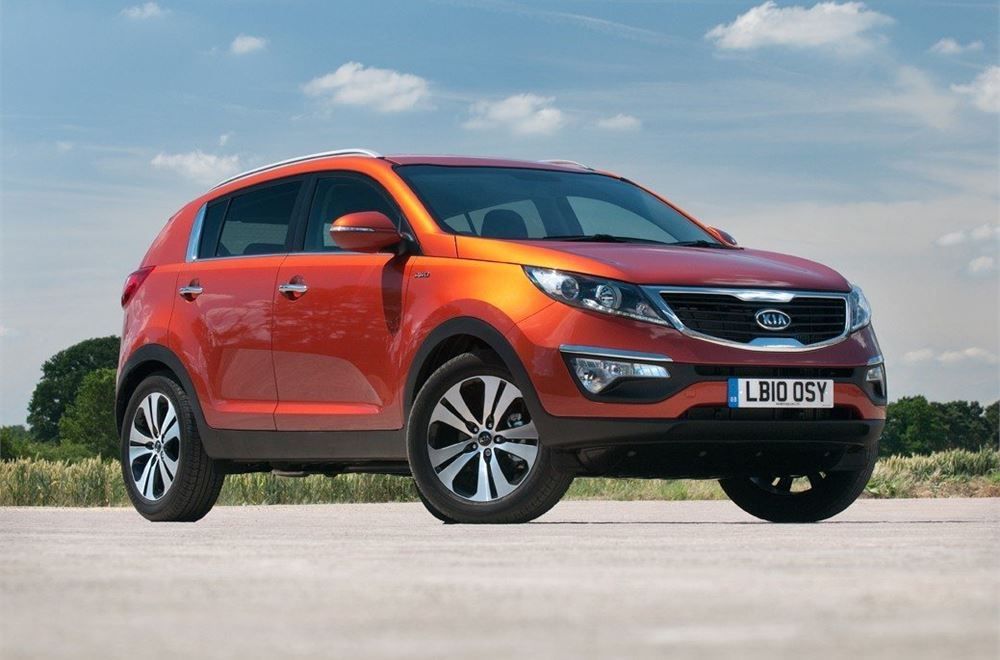
Is a Used Kia Sportage Worth Buying? Kia Sportage Common Problems and Failures
The Kia Sportage is one of Kia's most successful SUV models and has become a popular choice for families looking for a practical, comfortable, and relatively affordable vehicle. Its combination of interior space, driving position, equipment, fuel economy, and SUV practicality makes it attractive on the used-car market.
Kia has also built a much stronger reputation for reliability than it had in the past. However, the Sportage has been produced across several generations with very different engines, transmissions, electrical systems, and safety equipment. As a result, the reliability of a 2005 Sportage cannot be compared directly with that of a 2018 or 2022 model.
Some Sportage generations and engines have experienced significant problems, including engine failures, oil-pressure issues, fuel leaks, HECU/ABS-related fire risks, transmission problems, electrical faults, air-conditioning problems, and emissions-system failures on diesel versions.
This does not mean that the Sportage is an unreliable SUV. It means that the specific engine, model year, transmission, maintenance history, and recall status should be checked before buying one.
The claim that every 2011–2013 Sportage should be avoided is also too broad. Those years deserve additional attention because certain engines and markets were affected by serious engine-related problems, but a well-maintained example with documented repairs can still be a reasonable purchase.
Kia Sportage Generations
The Sportage has changed considerably throughout its production history.
The first-generation Sportage dates back to the 1990s and was a relatively simple compact SUV compared with modern versions. Age-related problems such as corrosion, fuel-system problems, electrical faults, suspension wear, and drivetrain deterioration are now more important than the original model-year reputation.
The second generation was introduced in the mid-2000s and brought a more modern design, improved safety, and a wider range of engines.
The third generation arrived around 2010 and is particularly important when researching used Sportage reliability. Certain gasoline engines used in this generation have been associated with serious engine problems in some markets.
The fourth generation arrived around 2015–2016, depending on market, and introduced newer engines, transmissions, safety systems, and electronics.
The fifth-generation Sportage followed for the 2022 model year in many markets. It is considerably more technologically advanced and is available with gasoline, diesel, hybrid, and plug-in hybrid powertrains depending on the market.
Because of these differences, it is not accurate to describe "Sportage reliability" as if every generation used the same mechanical components.
Kia Sportage Recalls and Major Safety Issues
Recall history is one of the most important things to check before purchasing a used Sportage.
One significant recall involved the Hydraulic Electronic Control Unit, commonly known as the HECU. Certain Sportage vehicles were affected by an electrical short-circuit risk that could potentially cause an engine-compartment fire, even under some circumstances when the vehicle was parked.
This is an important distinction: the recall does not mean every Sportage was going to catch fire. It means certain vehicles required inspection or repair because of an identified safety risk.
Another important group of recalls involved high-pressure fuel pipes on certain Sportage models. A fuel pipe that was improperly aligned or damaged could leak fuel, creating a fire hazard.
There were also recalls involving brake-light switches on older Kia vehicles. A faulty brake-light switch could affect brake-light operation and other systems such as cruise-control deactivation.
Some older Sportage vehicles were also included in engine-related recall campaigns involving connecting-rod bearing wear. In affected engines, bearing deterioration could eventually result in engine failure or, in extreme cases, engine seizure while driving.
The exact recall coverage depends on the market, production date, engine, and VIN.
Therefore, when buying a used Sportage, do not rely on a general internet list of recalls. Check the individual vehicle's VIN and recall history.
Sportage Engine Failure Problems
Engine problems are probably the most serious issue associated with certain older Sportage models.
Some 2011–2013 Sportage vehicles equipped with certain engines were affected by problems associated with connecting-rod bearing wear. As the bearing deteriorates, the engine can develop abnormal knocking and eventually suffer severe internal damage.
Possible warning signs include:
-
Metallic knocking from the engine
-
Increasing engine noise
-
Low oil-pressure warnings
-
Check Engine Light
-
Loss of power
-
Engine vibration
-
Excessive oil consumption
-
Engine seizure
-
Engine stopping while driving
A particularly dangerous scenario is an engine that begins knocking but continues to be driven. A small internal lubrication problem can develop into catastrophic engine damage.
However, it is incorrect to say that every 2012 Sportage will eventually need a new engine.
The actual risk depends on the engine specification, production date, previous maintenance, recall status, and whether the affected components were already repaired or replaced.
Why 2011–2013 Sportage Models Need Extra Attention
The 2011–2013 period is frequently mentioned when discussing Sportage problems, but the reason needs to be explained carefully.
Certain vehicles from this period were affected by engine-related recalls and complaints. The problem was not simply "the Sportage engine" as a whole.
Different markets received different engines, and not every engine was affected in the same way.
Therefore, if you are considering a 2011, 2012, or 2013 Sportage, find out:
-
Which engine is installed
-
The engine code
-
Whether the engine was included in a recall
-
Whether the recall was completed
-
Whether the engine has previously been replaced
-
Whether there is evidence of low oil pressure
-
Whether the engine has abnormal noise
-
Whether oil consumption is excessive
-
Whether maintenance records are available
A vehicle with documented corrective work can be a very different proposition from one with an unknown history.
Sportage Engine Stalling While Driving
Engine stalling is one of the most serious symptoms a Sportage can develop.
Older Sportage models can experience stalling for many different reasons, including:
-
Fuel-pump failure
-
Fuel-pressure problems
-
Electrical relay faults
-
Crankshaft-position sensor failure
-
Camshaft-position sensor failure
-
Ignition problems
-
Wiring faults
-
ECU-related problems
-
Low battery voltage
-
Engine-management faults
-
Internal engine damage
Therefore, replacing both the fuel pump and a control relay should not automatically be considered the correct repair.
A proper diagnosis should determine whether fuel pressure, ignition, injector operation, crankshaft/camshaft signals, power supply, and ECU communication are correct.
If an engine stalls at highway speed, the problem becomes a significant safety concern because power-assisted steering and braking behavior can also change after the engine stops.
Sportage Oil Pressure Problems
Low oil pressure is especially important on engines with a history of lubrication-related problems.
The oil-pressure warning light should never be treated as a routine maintenance reminder.
Possible causes include:
-
Low engine oil level
-
Incorrect oil viscosity
-
Oil leaks
-
Clogged oil pickup
-
Sludge contamination
-
Worn oil pump
-
Faulty oil-pressure sensor
-
Excessive bearing clearance
-
Internal engine wear
If a Sportage shows a low oil-pressure warning, the actual oil pressure should be measured with appropriate equipment rather than simply replacing the pressure sensor.
Driving with genuinely low oil pressure can cause severe damage to bearings, the crankshaft, camshaft, turbocharger, and other lubricated components.
Sportage Engine Knocking
Engine knocking should always be investigated.
A light ticking sound from an accessory or valve-train component is not necessarily the same as a deep metallic knock from the bottom end of the engine.
A serious knocking noise may indicate:
-
Connecting-rod bearing wear
-
Main-bearing wear
-
Low oil pressure
-
Piston damage
-
Excessive bearing clearance
-
Timing-system problems
-
Detonation or abnormal combustion
When inspecting a used Sportage, listen to the engine both when cold and after it reaches operating temperature.
A vehicle that has been warmed up before the buyer arrives deserves additional attention because some noises are much easier to identify during a cold start.
Kia Sportage Timing Chain Problems
Many modern Sportage gasoline engines use timing chains rather than timing belts.
The timing chain itself is not usually the only component that matters. The tensioner, guides, sprockets, oil supply, and variable-valve-timing components all affect the reliability of the system.
Possible symptoms of timing-system problems include:
-
Rattling during cold starts
-
Difficult starting
-
Rough idle
-
Misfires
-
Loss of power
-
Check Engine Light
-
Camshaft/crankshaft correlation fault codes
A timing-chain noise should not automatically result in a chain replacement without diagnosis.
The technician should determine whether the noise comes from the chain, tensioner, guides, VVT components, or another part of the engine.
Sportage Oil Consumption
Oil consumption can become a concern as gasoline engines accumulate mileage.
Some engines may consume more oil because of:
-
Piston-ring wear
-
Cylinder wear
-
Valve-stem seal deterioration
-
PCV-system problems
-
Turbocharger seal problems
-
External oil leaks
Oil consumption should be measured rather than judged by simply looking at the exhaust.
Blue smoke, low oil level, oily intake components, or repeated oil top-ups can indicate a problem that deserves further investigation.
A seller saying "all engines use some oil" should not be accepted as an explanation for excessive oil consumption.
Sportage Air-Conditioning Noise and Vibration
Some Sportage owners have reported excessive noise or vibration when the air conditioner is operating.
The A/C compressor, clutch or pulley, belt, tensioner, or other accessory components can be responsible.
Possible symptoms include:
-
Loud noise when the A/C is switched on
-
Vibration at idle
-
Chirping or grinding sounds
-
Reduced cooling performance
-
Belt noise
-
Engine RPM fluctuation
The compressor should not automatically be replaced based only on noise.
A technician should determine whether the compressor itself, pulley bearing, clutch, belt, tensioner, refrigerant pressure, or another component is responsible.
Sportage Check Engine Light Problems
A Check Engine Light can be caused by dozens of different faults.
Older Sportage models may experience problems involving the throttle-position sensor, vacuum or intake leaks, ignition components, oxygen sensors, fuel systems, and engine-management sensors.
On newer vehicles, additional possibilities include:
-
Turbocharger boost problems
-
Direct-injection fuel-system faults
-
Variable-valve-timing problems
-
EGR problems
-
DPF problems
-
NOx sensor faults
-
SCR/AdBlue system faults
-
Hybrid-system faults on applicable versions
A blinking Check Engine Light is particularly important because it can indicate an active misfire capable of damaging the catalytic converter.
The correct approach is to scan the vehicle and diagnose the stored and pending codes rather than simply clearing the warning light.
Sportage Fuel Tank and Fuel Leak Problems
Fuel leaks are among the problems that should never be ignored.
Older vehicles can develop fuel leaks because of:
-
Tank corrosion
-
Fuel-line deterioration
-
Damaged hoses
-
Fuel-pump sealing problems
-
Filler-neck deterioration
-
High-pressure fuel-line problems
Corrosion can be particularly relevant in regions where road salt is heavily used during winter.
When inspecting an older Sportage, check underneath the vehicle for corrosion and signs of fuel leakage.
A fuel smell around the vehicle should also be investigated immediately.
A fuel leak is not a problem to postpone until the next service because gasoline vapors can create a fire hazard.
Sportage ABS and ESC Warning Lights
ABS and ESC warning lights can appear for several reasons.
A common cause is a wheel-speed sensor or its wiring, but other possibilities include:
-
Damaged reluctor ring
-
Wheel-bearing problems
-
ABS control-module faults
-
Brake-light switch problems
-
Steering-angle sensor faults
-
Low battery voltage
-
Communication problems between control modules
The ABS and ESC systems work together with other safety systems, so an illuminated warning light should be diagnosed rather than simply reset.
If the ABS or ESC light appears together with other warning lights, a complete module scan is particularly important.
Sportage Brake-Light Switch Problems
Some older Kia vehicles were affected by brake-light-switch-related recalls.
A defective switch can cause more than a brake-light problem.
Depending on the vehicle configuration, it can affect:
-
Brake lights
-
Cruise-control operation
-
Traction-control functions
-
Shift interlock
-
Other electronic systems
This is why a used Sportage should be checked to make sure the brake lights operate correctly every time the brake pedal is pressed.
Sportage Infotainment and Software Problems
Electrical and infotainment complaints are more common in newer, more electronically complex vehicles.
Some Sportage owners have experienced:
-
No sound from the speakers
-
Radio problems
-
Bluetooth connection failures
-
Navigation problems
-
Screen freezing
-
Touchscreen problems
-
Intermittent infotainment operation
-
Camera display problems
Not every infotainment failure requires hardware replacement.
Software bugs, low battery voltage, communication faults, or a failed control module can produce similar symptoms.
A proper diagnosis should therefore be performed before replacing an expensive infotainment unit.
Disconnecting the battery can sometimes reset an electronic system, but it should not be considered a permanent repair. Modern vehicles may also require certain initialization procedures after battery disconnection.
Sportage Transmission Problems
Transmission reliability varies significantly between Sportage generations and powertrains.
Depending on the market and engine, Sportage models have been equipped with manual transmissions, conventional automatic transmissions, dual-clutch transmissions, and other configurations.
Potential symptoms include:
-
Delayed engagement
-
Harsh shifting
-
Shuddering
-
Hesitation
-
Gear slipping
-
Transmission overheating
-
Unusual noises
-
Warning lights
Dual-clutch versions deserve particular attention during a test drive because low-speed clutch behavior can reveal wear that may not be obvious during highway driving.
Test the vehicle in:
-
Stop-and-go traffic
-
Reverse
-
Parking maneuvers
-
Uphill starts
-
Low-speed acceleration
-
Hard acceleration
-
Highway cruising
A transmission that behaves perfectly at 100 km/h can still have significant problems during low-speed operation.
Diesel Sportage Problems
Diesel Sportage models can be economical and well suited to long-distance driving, but they have additional components that gasoline models do not.
Depending on the engine and emissions system, potential problems include:
-
DPF blockage
-
EGR valve contamination
-
EGR cooler problems
-
Turbocharger wear
-
Diesel injector problems
-
High-pressure fuel-system problems
-
Intake carbon buildup
-
AdBlue/SCR faults on applicable models
A diesel Sportage used primarily for very short journeys can be a poor choice because DPF regeneration requires suitable operating conditions.
If the vehicle frequently enters regeneration, loses power, or displays DPF-related warnings, the problem should be investigated before purchase.
Sportage Turbocharger Problems
Turbocharged Sportage engines can develop problems with the turbocharger or the systems controlling it.
Possible symptoms include:
-
Loss of power
-
Slow acceleration
-
Whistling or siren-like noise
-
Excessive smoke
-
Increased oil consumption
-
Underboost or overboost fault codes
However, a lack of boost does not automatically mean the turbocharger is defective.
Vacuum leaks, boost-control valves, wastegate problems, intercooler leaks, sensors, hoses, and electronic controls can produce similar symptoms.
Replacing the turbocharger without testing these systems can result in an unnecessary and expensive repair.
Sportage Cooling System Problems
The cooling system should be carefully inspected on any used Sportage.
Potential failure points include:
-
Water pump
-
Thermostat
-
Radiator
-
Coolant hoses
-
Expansion tank
-
Cooling fans
-
Temperature sensors
Signs of trouble include:
-
Low coolant
-
Coolant stains
-
Overheating
-
Temperature fluctuations
-
Sweet coolant smell
-
Cooling fan running excessively
-
Visible coolant leaks
An overheating engine can suffer head-gasket, cylinder-head, piston, or bearing damage, so cooling-system problems should be repaired promptly.
Suspension and Steering Problems
The Sportage's suspension is generally durable, but high-mileage examples can develop normal wear.
Inspect:
-
Shock absorbers
-
Control-arm bushings
-
Ball joints
-
Stabilizer links
-
Tie-rod ends
-
Wheel bearings
-
Steering components
Common symptoms include:
-
Knocking over bumps
-
Steering vibration
-
Uneven tire wear
-
Vehicle pulling to one side
-
Excessive body movement
-
Steering looseness
A test drive over uneven roads is one of the best ways to identify these problems.
Is the 2012 Kia Sportage the Worst Year?
The 2012 Sportage is often described as one of the worst years in complaint-based reliability rankings.
There is some justification for giving certain 2011–2013 vehicles additional scrutiny because of documented engine-related problems.
However, "2012 is the worst year, so never buy one" is an oversimplification.
The engine specification is much more important.
A 2012 Sportage with a documented engine replacement, completed recall work, excellent maintenance records, and a clean diagnostic inspection can be a better purchase than a newer Sportage that has been poorly maintained.
The same principle applies to 2011 and 2013 vehicles.
Are 2018–2020 Sportage Models Better?
Later Sportage models generally benefit from newer designs, updated safety equipment, improved electronics, and lessons learned from earlier generations.
However, that does not make 2018–2020 vehicles completely problem-free.
A later Sportage can still experience:
-
Transmission problems
-
Turbocharger issues
-
Cooling-system failures
-
Electrical faults
-
Infotainment problems
-
DPF/EGR issues on diesel versions
-
A/C problems
-
Suspension wear
Therefore, it is reasonable to prefer a well-maintained later-generation Sportage, but the exact vehicle still needs to be inspected.
What Should You Check Before Buying a Used Kia Sportage?
Before buying a Sportage, perform a complete inspection rather than relying on a visual examination.
Check the VIN and recall history
Confirm whether the vehicle has any outstanding safety recalls and whether previous recall repairs were completed.
Identify the exact engine
Find the engine code and determine whether that particular engine has known problems or recall campaigns.
Listen to the engine from cold
Do not inspect only a warm engine. Cold-start noises can reveal timing-chain, lubrication, bearing, or other problems.
Check oil pressure
If there is any history of oil-pressure warnings or engine knocking, actual oil pressure should be measured.
Inspect the transmission
Drive the vehicle both slowly and quickly. Check reverse, parking maneuvers, takeoff, gear changes, and hard acceleration.
Perform a full diagnostic scan
Scan the engine, transmission, ABS/ESC, airbag, body-control, and other relevant modules.
Inspect the underside
Look for oil leaks, coolant leaks, fuel leaks, corrosion, damaged wiring, and previous accident repairs.
Check the cooling system
Look for coolant loss, overheating, stains, and evidence of previous repairs.
Check all electrical equipment
Test the infotainment system, speakers, cameras, parking sensors, windows, mirrors, lights, climate control, steering-wheel buttons, and USB/Bluetooth functions.
Check the air-conditioning system
Operate the A/C at idle and during driving. Listen for unusual compressor or belt noise.
Check the diesel emissions system
For diesel vehicles, inspect DPF regeneration history, EGR operation, turbocharger condition, and relevant fault codes.
Which Kia Sportage Should You Buy?
There is no universal "best Sportage" because engine availability varies by country.
For primarily urban driving, a gasoline or hybrid Sportage may be more appropriate than a diesel because of DPF-related considerations.
For frequent highway driving, a properly maintained diesel can still be an excellent choice.
If buying a used Sportage with a dual-clutch transmission, pay particular attention to low-speed behavior and service history.
The most important factors are:
-
Engine specification
-
Transmission type
-
Maintenance history
-
Recall status
-
Mileage
-
Previous accident history
-
Previous engine or transmission repairs
-
Actual mechanical condition
Is a Used Kia Sportage Worth Buying?
Yes, the Kia Sportage can be a good used SUV, but buying the right example is essential.
The Sportage offers many advantages:
-
Spacious and practical interior
-
Comfortable driving position
-
Good family usability
-
Generally good equipment levels
-
Attractive design
-
Good safety technology on newer generations
-
A wide range of gasoline, diesel, and electrified powertrains
-
Strong availability of parts and service support
The disadvantages are mainly related to particular engines, transmissions, and model years rather than the Sportage name itself.
Older 2011–2013 examples deserve particularly careful engine and recall checks. Certain HECU, fuel-system, brake-switch, and engine-related recalls also make recall verification essential.
The biggest mistake is to assume that every 2012 Sportage is bad or that every 2018–2020 Sportage is automatically reliable.
The best used Sportage is the one with the right engine, a documented maintenance history, completed recalls, a healthy transmission, and no unresolved engine or electronic faults.
If those conditions are met, a used Kia Sportage can be a very sensible family SUV.