TR
TR EN
EN

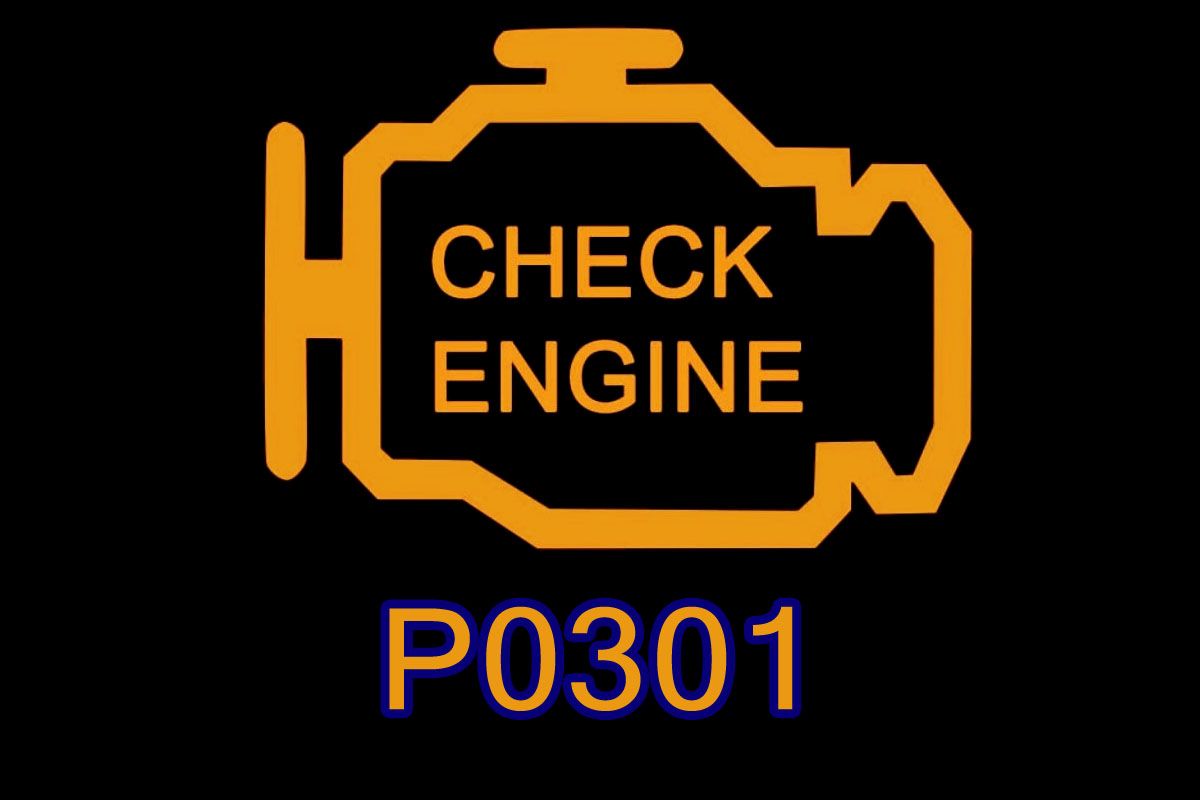
P0301 Cylinder #1 Misfire Detected
The P0301 trouble code means that the engine control module (ECM/PCM) has detected a misfire on cylinder #1.
This is a cylinder-specific misfire code. In other words, the control module knows that cylinder #1 is not producing combustion as consistently as the other cylinders, but P0301 does not tell you what caused the misfire.
The important point is that P0301 should not automatically be interpreted as “cylinder #1 spark plug is bad” or “cylinder #1 ignition coil needs to be replaced.” The fault can originate from the ignition system, fuel system, air supply, compression, valve train, engine timing, or even the wiring controlling one of these systems.
What Does a Misfire Actually Mean?
A gasoline engine needs three basic things to produce proper combustion:
-
Correct amount of air
-
Correct amount of fuel
-
Strong and correctly timed ignition
It also needs adequate compression and correct valve timing.
If one of these conditions is missing, combustion in that cylinder becomes weak or does not occur at all.
The crankshaft does not rotate at exactly the same speed during every part of its revolution. When a cylinder produces a normal power stroke, it accelerates the crankshaft slightly. When a cylinder fails to produce the expected power, the crankshaft slows down slightly.
The ECM monitors these small changes through the crankshaft position sensor. When the pattern indicates that cylinder #1 is repeatedly failing to produce the expected combustion, it can set P0301.
So P0301 is essentially the ECM saying:
“I can identify an abnormal combustion event associated with cylinder #1, but I still need to determine why it is happening.”
What Can Cause P0301?
There are several possible causes, and the correct diagnostic path depends heavily on whether the misfire occurs at idle, under acceleration, when the engine is cold, or only after it becomes hot.
Common causes include:
Ignition problems
-
Worn or fouled spark plug
-
Incorrect spark plug gap
-
Defective ignition coil
-
Cracked coil boot
-
Oil or water around the spark plug
-
Damaged ignition wiring
-
Poor electrical connection at the coil
-
Weak ignition that fails under load
Fuel-related problems
-
Faulty cylinder #1 fuel injector
-
Restricted injector
-
Injector wiring problem
-
Poor injector electrical control
-
Low fuel pressure
-
Fuel delivery problem
-
Contaminated fuel
Air and mixture problems
-
Vacuum leak near cylinder #1 intake runner
-
Intake manifold gasket leak
-
Unmetered air entering the engine
-
Fuel mixture that is excessively lean or rich
Mechanical problems
-
Low compression
-
Burned valve
-
Valve not sealing correctly
-
Broken or damaged valve spring
-
Worn camshaft lobe
-
Piston or piston-ring problem
-
Head gasket problem
Timing and synchronization problems
-
Incorrect camshaft timing
-
Timing chain or belt problem
-
Variable valve timing malfunction
-
Camshaft/crankshaft synchronization problem
There can also be electrical or control-module problems, although these should generally be considered after the more common mechanical, ignition, fuel, and wiring causes have been investigated.
Start With the Spark Plug
The spark plug is one of the first components worth inspecting because it is directly involved in combustion and is relatively easy to check.
Remove the cylinder #1 spark plug and compare it with the plugs from the other cylinders.
Its condition can provide useful information.
A plug that is heavily carbon-fouled may indicate an ignition or mixture problem. A wet plug can indicate that fuel is entering the cylinder but is not being burned properly. An oil-fouled plug can point toward an oil-entry problem.
A damaged insulator, worn electrode, or incorrect gap can also cause an intermittent misfire.
However, replacing the spark plug without inspecting why it failed can sometimes result in the original problem remaining.
Test the Ignition Coil Before Replacing It
On engines using individual coil-on-plug ignition, the cylinder #1 coil is another major suspect.
An ignition coil can appear to work perfectly at idle and still fail when the engine is under heavy load.
This happens because cylinder pressure increases significantly during acceleration. The ignition system then needs to generate enough voltage to create a spark across the plug gap under more demanding conditions.
A weak coil may therefore produce:
-
Smooth idle
-
Normal operation during gentle driving
-
Misfire during hard acceleration
-
P0301 under load
One useful diagnostic method is a coil swap test, provided the coils are interchangeable.
Move the suspected cylinder #1 coil to another cylinder and clear the codes. Then operate the vehicle under the same conditions that previously produced the misfire.
If the misfire changes from P0301 to something such as P0302 or P0303, the coil becomes a strong suspect.
If the misfire remains on cylinder #1, the coil is less likely to be the cause and attention should move elsewhere.
Check the Injector
If the ignition system is working correctly, cylinder #1 needs to be checked for proper fuel delivery.
An injector can fail electrically or mechanically.
For example, an injector may have:
-
An open or shorted winding
-
Poor electrical connection
-
Intermittent wiring
-
A blocked nozzle
-
Poor spray pattern
-
Insufficient flow
-
Mechanical sticking
Simply measuring injector resistance is not always enough to prove that an injector is healthy.
A better diagnosis may involve checking the injector control signal, injector current waveform, fuel pressure, and, where appropriate, performing an injector balance or flow test.
If the injector can be safely swapped with another cylinder and the misfire follows the injector, that provides much stronger evidence than resistance measurement alone.
Don't Ignore a Vacuum Leak
A vacuum leak near cylinder #1 can create a cylinder-specific misfire.
This is particularly important on engines where each cylinder has an individual intake runner.
An intake manifold gasket leak or damaged sealing surface near cylinder #1 can allow additional air into that cylinder. The resulting mixture may become too lean to burn consistently.
This type of problem may be more noticeable at idle than under higher engine speeds.
A smoke test can be useful when an intake leak is suspected.
Compression Testing Can Separate Ignition Problems From Mechanical Problems
If the ignition and fuel systems appear normal but P0301 continues to return, compression should be investigated.
Perform a compression test and compare cylinder #1 with the other cylinders.
The absolute compression number is important, but the comparison between cylinders is often even more useful.
If cylinder #1 has substantially lower compression than the others, the problem may be mechanical.
Possible causes include:
-
Burned valve
-
Bent valve
-
Valve-seat problem
-
Worn piston rings
-
Damaged piston
-
Head-gasket failure
-
Valve-train problem
A leak-down test can then help identify where the compression is escaping.
Air heard through the intake can point toward an intake valve problem. Air escaping through the exhaust can indicate an exhaust valve problem. Air escaping into the crankcase can indicate piston or ring leakage.
What If P0301 Appears Only During Acceleration?
This pattern is especially useful diagnostically.
If the engine runs normally at idle but P0301 appears during hard acceleration, don't assume that the problem is a simple spark plug failure.
A weak ignition coil becomes more interesting because ignition demand rises under load.
Fuel delivery can also become important. If the engine cannot maintain adequate fuel pressure or injector delivery during heavy load, the mixture can become too lean and misfire.
A restricted injector can produce a similar cylinder-specific pattern.
The best approach is to reproduce the fault while monitoring misfire counters and relevant live data rather than simply replacing parts.
What If P0301 Happens Only at Idle?
An idle-only misfire can point toward a different group of problems.
A small vacuum leak that has little effect at higher engine speeds can have a much larger effect at idle.
Other possibilities include:
-
Intake manifold leak
-
Injector problem
-
Spark plug problem
-
Weak ignition
-
Engine mechanical problem
-
Incorrect valve operation
Fuel-trim data can also be useful when investigating an intake or mixture problem, although fuel-trim readings should always be interpreted together with the engine's operating conditions.
Check the Wiring
Electrical problems are sometimes overlooked because the engine may run normally most of the time.
Inspect the cylinder #1 ignition coil connector, injector connector, and associated wiring.
Look for:
-
Broken wires
-
Damaged insulation
-
Corrosion
-
Loose terminals
-
Poor terminal tension
-
Oil contamination
-
Water intrusion
-
Harness damage
-
Wiring contacting hot engine components
An intermittent connection can be particularly difficult to diagnose because the vehicle may operate normally immediately after starting and misfire only after vibration, heat, or engine movement changes the condition of the connection.
A wiggle test performed while monitoring the relevant signal or misfire counter can sometimes expose this type of fault.
Could a Timing Problem Cause P0301?
Yes, but it should not be the first assumption when only one cylinder is misfiring.
A timing chain or belt problem, incorrect camshaft timing, or VVT malfunction can certainly affect combustion.
However, major valve-timing problems often affect multiple cylinders and may produce additional codes related to camshaft position or cam/crankshaft correlation.
If P0301 is accompanied by camshaft or crankshaft synchronization codes, unusual timing data, or multiple-cylinder misfires, timing should move higher on the diagnostic list.
Cylinder #1 Location Is Not Universal
One important detail is often overlooked when diagnosing P0301:
Cylinder #1 is not necessarily located in the same physical position on every engine.
Cylinder numbering depends on the manufacturer's engine design.
On many inline engines, cylinder #1 is at one end of the cylinder head, but even then you should verify the manufacturer's numbering convention.
On V-type engines, cylinder numbering becomes even more important because the engine has two cylinder banks.
Therefore, don't identify the physical cylinder simply by guessing its position. Use the vehicle's service information to determine exactly which cylinder is #1.
Use Freeze-Frame and Misfire Data
A scan tool can provide much more information than simply showing P0301.
Look at the freeze-frame data recorded when the code was set.
Useful information includes:
-
Engine RPM
-
Engine coolant temperature
-
Engine load
-
Throttle position
-
Short-term fuel trim
-
Long-term fuel trim
-
Fuel pressure where available
-
Other stored or pending DTCs
If the vehicle supports individual-cylinder misfire counters, monitor them during different operating conditions.
For example, if cylinder #1 begins misfiring only when the engine reaches high load, the diagnostic direction is different from a cylinder that misfires continuously at idle.
P0301 With Other Misfire Codes
The combination of codes is important.
P0301 alone
This generally points toward a problem affecting cylinder #1 specifically.
P0301 + P0302/P0303/P0304
Multiple cylinders are misfiring. Consider shared causes such as fuel pressure, ignition power supply, vacuum leaks, timing, or other system-wide problems.
P0301 + ignition coil circuit code
Investigate the ignition coil circuit, power supply, control signal, connector, and coil itself.
P0301 + fuel-related codes
Fuel pressure, injector operation, fuel delivery, and mixture control become more important.
P0301 + camshaft/crankshaft correlation codes
Mechanical timing, VVT, and synchronization should be investigated more carefully.
This is why clearing P0301 and treating it as an isolated code can sometimes lead to unnecessary parts replacement.
A Practical Diagnostic Order for P0301
A logical diagnosis usually starts with the easiest checks and progresses toward more involved testing:
-
Scan all stored and pending trouble codes.
-
Check freeze-frame data and misfire counters.
-
Confirm the exact location of cylinder #1.
-
Inspect the cylinder #1 spark plug.
-
Check the ignition coil and coil connector.
-
Perform a coil swap test where applicable.
-
Inspect ignition and injector wiring.
-
Check injector operation and control signals.
-
Verify fuel pressure and delivery if indicated.
-
Check for intake or vacuum leaks.
-
Perform a compression test if the misfire remains.
-
Perform a leak-down test if compression is abnormal.
-
Investigate valve timing, VVT, and cam/crank synchronization when evidence supports it.
-
Consider an ECM/PCM fault only after the external causes have been properly eliminated.
This sequence prevents a common diagnostic mistake: replacing the spark plug, then the coil, then the injector simply because P0301 is present, without proving which component is actually responsible.
Can You Drive With P0301?
It depends on the severity of the misfire.
A mild intermittent misfire may allow the vehicle to continue operating temporarily, but it should not be ignored.
If the Check Engine Light is flashing, the misfire can be severe enough to send unburned fuel into the exhaust system. This can rapidly overheat and damage the catalytic converter.
In that situation, continued driving should be minimized and the vehicle should be diagnosed as soon as possible.
A continuously illuminated Check Engine Light with an occasional P0301 is less immediately alarming, but the underlying problem still needs attention.
P0301 Does Not Mean “Bad Spark Plug”
The most important thing to understand about P0301 – Cylinder #1 Misfire Detected is that the code identifies the cylinder experiencing the combustion problem, not the failed component.
Cylinder #1 may be misfiring because of an ignition coil, spark plug, injector, vacuum leak, wiring fault, low fuel delivery, poor compression, valve problem, timing issue, or another condition affecting combustion.
The most reliable diagnosis is therefore based on comparison and testing.
If moving the coil moves the misfire, investigate the coil. If the ignition system is good but the injector does not deliver correctly, investigate the injector. If both are normal and compression is low, move toward mechanical diagnosis.
In short, P0301 tells you where the misfire is happening—not why it is happening. The goal of diagnosis is to determine why cylinder #1 behaves differently from the other cylinders rather than simply clearing the code or replacing the most common part.