TR
TR EN
EN

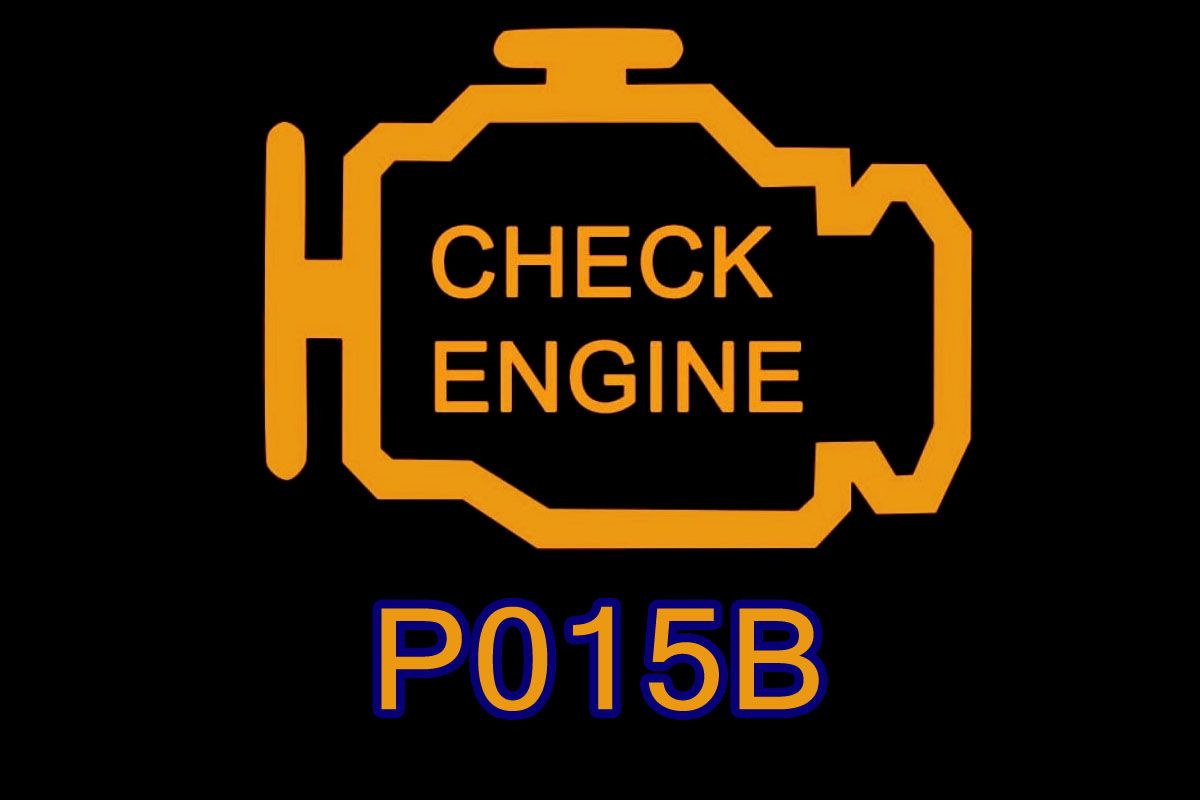
P015B O2 Sensor Delayed Response – Lean to Rich (Bank 1, Sensor 1)
P015B is an OBD-II diagnostic trouble code related to the upstream oxygen sensor on Bank 1. It means the engine control module (ECM/PCM) commanded or observed a change in the air-fuel mixture, but the oxygen sensor took too long to respond when the mixture moved from lean to rich.
This is a response-time problem, not simply an “oxygen sensor voltage is wrong” problem.
That distinction is important because the oxygen sensor may still be producing a signal. The problem is that the signal is not changing quickly enough for the ECM to consider the sensor response normal.
What Does P015B Mean?
The code can be broken down into three important parts:
Bank 1 means the side of the engine containing cylinder number 1.
Sensor 1 generally refers to the oxygen or air-fuel sensor located upstream of the catalytic converter.
Lean to rich delayed response means the ECM detected that the exhaust mixture changed from a lean condition toward a rich condition, but the sensor's response took longer than the calibrated limit.
In simple terms:
The engine changed the mixture, but the upstream O2 sensor was too slow to report that change.
The ECM uses this sensor to monitor combustion and control fuel delivery. If the sensor becomes sluggish, fuel control can become less precise.
Why Does the ECM Monitor O2 Sensor Response Time?
An oxygen sensor is not only evaluated by its voltage or signal level.
The ECM also monitors how quickly the sensor reacts to changes in exhaust oxygen concentration.
A healthy sensor should respond reasonably quickly when the air-fuel mixture changes.
The ECM can deliberately alter fuel delivery under certain operating conditions and observe how the sensor reacts.
If the mixture becomes rich but the sensor remains indicating lean for too long before responding, the ECM can determine that the sensor response is too slow and store P015B.
This is why simply checking whether the sensor produces a voltage is not enough.
What Does “Lean to Rich” Actually Mean?
When the combustion mixture is relatively lean, there is more oxygen remaining in the exhaust.
When the mixture becomes richer, less oxygen remains in the exhaust.
The upstream oxygen sensor detects this change.
During a lean-to-rich transition, the sensor should react as the oxygen concentration in the exhaust changes.
With P015B, the ECM believes the transition took too long.
That could be caused by the sensor itself, but it can also be caused by problems that prevent the exhaust mixture from changing as expected.
Bank 1 Sensor 1 Is Important
Sensor 1 is normally the sensor before the catalytic converter.
This sensor plays a major role in fuel control.
It is therefore different from the downstream sensor, which is primarily used to monitor catalytic-converter performance.
A common mistake is to replace the rear oxygen sensor because the vehicle has an O2-related fault.
P015B specifically points toward the Bank 1 upstream sensor and the conditions affecting its response.
However, exact sensor configuration varies between vehicle manufacturers.
Common Causes of P015B
Possible causes include:
-
Aging or sluggish upstream O2 sensor
-
Contaminated O2 sensor
-
O2 sensor heater problem
-
Damaged O2 sensor wiring
-
Poor electrical connection
-
Corroded connector terminals
-
Exhaust leak
-
Vacuum leak
-
Unmetered air entering the engine
-
MAF sensor problem
-
MAP sensor problem
-
Fuel pressure problem
-
Restricted fuel delivery
-
Fuel injector problem
-
EVAP purge problem
-
EGR-related problem
-
Engine misfire
-
Incorrect air-fuel mixture
-
Contaminated fuel
-
Excessive oil consumption
-
Coolant contamination of the sensor
-
Catalytic-converter or exhaust-flow problems
-
ECM software/calibration issue
The important lesson is that P015B is not proof that the O2 sensor itself has failed.
A Sluggish O2 Sensor Is a Common Cause
The oxygen sensor is a reasonable suspect, especially if it has high mileage or has been exposed to contamination.
Over time, the sensing element can become less responsive.
The sensor may still generate a signal, but its reaction to mixture changes becomes slower.
This is exactly the kind of failure that can produce P015B.
However, the sensor should be tested before replacement whenever practical.
The O2 Sensor Heater Can Matter
Most modern upstream oxygen sensors use an internal heating element.
The heater brings the sensor to its operating temperature quickly and helps maintain the correct operating temperature.
If the heater does not work correctly, the sensor may respond too slowly, especially during conditions where exhaust heat alone is insufficient.
Check for:
-
Heater-related trouble codes
-
Heater power supply
-
Heater ground/control
-
Wiring damage
-
Connector problems
-
Fuse problems where applicable
A sensor can therefore appear “slow” because it is not being heated correctly.
Can an Exhaust Leak Cause P015B?
Yes.
An exhaust leak upstream of or near the sensor can allow outside air to enter the exhaust stream.
That additional oxygen can alter the sensor's reading and make the ECM's expected mixture transition behave differently from the actual combustion event.
Potential leak locations include:
-
Exhaust manifold
-
Manifold gasket
-
Flex pipe
-
Upstream exhaust joints
-
Sensor mounting area
-
Cracked exhaust components
Even a relatively small leak can affect oxygen-sensor interpretation under certain operating conditions.
This is why an upstream exhaust leak should be ruled out before replacing the sensor.
Can a Vacuum Leak Cause P015B?
A vacuum or unmetered-air leak can create a genuinely lean mixture.
Possible sources include:
-
Intake manifold gasket
-
Vacuum hoses
-
PCV system
-
Brake-booster hose
-
Intake duct
-
Throttle-body gasket
-
EVAP system
-
Cracked intake components
The ECM may compensate for the lean condition by increasing fuel delivery.
If the mixture does not transition in the way the ECM expects during its diagnostic test, P015B can be triggered.
The MAF Sensor Can Be Involved
A faulty or contaminated Mass Air Flow (MAF) sensor can cause incorrect air-mass calculations.
If the ECM believes less or more air is entering the engine than actually is, fuel delivery will be affected.
This can alter oxygen-sensor response and potentially produce P015B.
Look for other MAF-related codes and examine live data.
A MAF problem should not be assumed simply because P015B is present, but it belongs on the diagnostic list when fuel-trim data also looks abnormal.
Fuel Delivery Problems Can Also Matter
P015B is a sensor response code, but the actual mixture entering the engine still matters.
A problem with fuel delivery can prevent the engine from achieving the commanded rich condition quickly enough.
Possible causes include:
-
Weak fuel pump
-
Restricted fuel filter
-
Low fuel pressure
-
Fuel-pressure regulator problem
-
Injector restriction
-
Injector electrical problem
-
Poor fuel volume
For example, if the ECM increases injector pulse width to create a richer mixture but fuel pressure or fuel volume is inadequate, the exhaust may not become rich as quickly as expected.
The O2 sensor may then appear to have a slow response even though the sensor itself is functioning correctly.
A Leaking Injector Can Also Complicate Diagnosis
An injector that leaks or delivers excessive fuel can disturb the air-fuel mixture.
Likewise, an injector that is partially restricted can cause a cylinder or group of cylinders to run lean.
If fuel-trim values are abnormal, injector operation should be considered alongside the O2 sensor.
P015B should therefore be diagnosed as a fuel-control system problem, rather than treating the sensor in isolation.
EVAP Purge Can Affect the Mixture
A purge valve that is stuck open can allow fuel vapors into the intake when the ECM does not expect them.
This can alter the mixture and fuel-trim behavior.
Depending on when the problem occurs, EVAP-related faults can complicate oxygen-sensor diagnostics.
If P015B appears alongside EVAP codes or abnormal fuel trims, the purge system deserves attention.
What Symptoms Can P015B Cause?
Some vehicles may store P015B without obvious drivability problems.
Possible symptoms include:
-
Check Engine Light
-
Rough idle
-
Hesitation
-
Poor acceleration
-
Increased fuel consumption
-
Unstable idle
-
Emissions-test failure
-
Engine running too rich or lean
-
Longer-term catalytic-converter stress
The severity depends on the underlying cause.
A slow sensor by itself may produce relatively mild symptoms.
A fuel-delivery or intake problem causing the slow response can produce much more noticeable drivability issues.
Start Diagnosis With Freeze-Frame Data
Before replacing anything, look at the conditions under which P015B was stored.
Useful information includes:
-
Engine RPM
-
Vehicle speed
-
Engine coolant temperature
-
Intake air temperature
-
MAF airflow
-
MAP pressure
-
Short-term fuel trim
-
Long-term fuel trim
-
O2 sensor signal
-
Air-fuel ratio sensor data where available
-
Fuel pressure where available
-
Throttle position
-
Engine load
This can reveal whether the code occurred during idle, cruise, acceleration, deceleration, or another operating condition.
Look at Fuel Trims
Fuel-trim information can help determine whether the engine has a broader mixture problem.
If fuel trims are strongly positive, the ECM is adding fuel because it believes the engine is running lean.
Possible causes include:
-
Vacuum leak
-
Unmetered air
-
MAF error
-
Low fuel pressure
-
Restricted injector
-
Exhaust leak
-
Incorrect sensor information
If fuel trims are strongly negative, the ECM is removing fuel because the mixture is richer than expected.
Possible causes include:
-
Excessive fuel pressure
-
Leaking injector
-
EVAP purge
-
Incorrect MAF/MAP information
-
Engine temperature-related problems
-
Other fuel-control faults
Fuel trims do not identify the cause by themselves, but they provide valuable context.
Observe the Sensor During a Controlled Mixture Change
One of the most useful tests is to observe how the upstream sensor responds when the mixture is intentionally changed.
The exact procedure depends on the engine and sensor type.
The technician may use scan-tool data, controlled enrichment/leaning, or manufacturer-specific diagnostic procedures.
The important measurement is response time.
The question is not merely:
“Does the sensor change?”
It is:
“Does the sensor change quickly enough when the mixture changes?”
That is the heart of P015B diagnosis.
Be Careful With Wideband Air-Fuel Sensors
Not every modern upstream sensor is a conventional narrowband O2 sensor.
Some engines use wideband air-fuel ratio sensors.
Their signal characteristics and diagnostic methods can be very different.
You should not assume that every upstream sensor should simply switch between approximately 0.1 V and 0.9 V.
That familiar voltage test applies to certain conventional narrowband sensors and is not a universal test for all oxygen or air-fuel ratio sensors.
Always follow the vehicle-specific wiring diagram and sensor specifications.
Inspect the Wiring Before Replacing the Sensor
The sensor is exposed to extreme exhaust temperatures, so its wiring deserves careful inspection.
Look for:
-
Melted insulation
-
Wires touching the exhaust
-
Chafing
-
Broken conductors
-
Corroded terminals
-
Loose connector pins
-
Water or oil contamination
-
Previous repair work
An electrical problem can interfere with sensor operation even when the sensing element itself is healthy.
Don't Ignore the Sensor Location
Bank 1 Sensor 1 operates in a very hot and chemically aggressive environment.
A sensor contaminated by:
-
Engine oil
-
Coolant
-
Excessive fuel
-
Silicone contamination
-
Certain fuel additives
can become slow or inaccurate.
If the sensor repeatedly becomes contaminated, replacing it without correcting the source of the contamination may simply cause P015B to return.
Can a Misfire Cause P015B?
Yes, a misfire can interfere with oxygen-sensor interpretation.
A misfiring cylinder can send unburned oxygen or fuel into the exhaust.
The O2 sensor may then report an exhaust condition that does not accurately represent the normal combustion mixture.
If P015B appears together with P0300, P0301, P0302, or other misfire codes, the misfire should be investigated rather than immediately replacing the oxygen sensor.
What About the Catalytic Converter?
The catalytic converter is generally not the first component to replace for P015B.
The code concerns the response of the upstream sensor and the air-fuel system.
A damaged or restricted catalytic converter can influence exhaust conditions, but there should be supporting evidence before blaming the converter.
P015B alone is not sufficient evidence for catalytic-converter replacement.
A Practical Diagnostic Sequence
A sensible diagnosis can follow this order:
-
Scan all modules and record all stored and pending codes.
-
Examine freeze-frame data for P015B.
-
Confirm that Bank 1 Sensor 1 has been correctly identified.
-
Check fuel trims and related live data.
-
Inspect the intake system for unmetered air.
-
Inspect the exhaust for leaks upstream of the sensor.
-
Check the O2 sensor wiring and connector.
-
Verify the sensor heater circuit where applicable.
-
Evaluate MAF/MAP data.
-
Check fuel pressure and fuel delivery if mixture data indicates a problem.
-
Observe the sensor's response during an appropriate controlled mixture change.
-
Check for misfire, EVAP, EGR, or other engine-management problems.
-
Replace the sensor only when the evidence supports sensor sluggishness or failure.
-
Clear the code and perform the appropriate drive cycle or diagnostic verification.
When O2 Sensor Replacement Makes Sense
Replacing Bank 1 Sensor 1 becomes reasonable when testing shows that:
-
The sensor is demonstrably slow
-
Heater operation is correct but response remains abnormal
-
Wiring and connector integrity are good
-
Intake and exhaust leaks have been ruled out
-
Fuel delivery is correct
-
MAF/MAP data is plausible
-
No significant misfire is present
-
The sensor is contaminated or aged
-
The manufacturer's diagnostic procedure confirms sensor failure
In that situation, replacing the sensor addresses the actual evidence rather than simply guessing from the trouble code.
P015B Does Not Mean “Bad O2 Sensor”
This is the most important diagnostic point.
P015B tells you that the Bank 1 Sensor 1 lean-to-rich response was too slow. It does not tell you exactly why.
The sensor may be aging.
But the sensor may also be reacting correctly to an engine that is not changing its mixture as commanded.
An intake leak, exhaust leak, fuel-pressure problem, injector problem, MAF issue, EVAP purge problem, heater fault, or misfire can all change the conditions under which the ECM evaluates sensor response.
Final Diagnosis
P015B – O2 Sensor Delayed Response – Lean to Rich (Bank 1, Sensor 1) indicates that the upstream oxygen/air-fuel sensor on Bank 1 did not respond quickly enough when the ECM detected a transition from a lean mixture toward a rich mixture.
The main diagnostic areas are:
-
Bank 1 Sensor 1 condition
-
Sensor heater operation
-
O2 sensor wiring and connector
-
Intake leaks
-
Exhaust leaks
-
MAF/MAP accuracy
-
Fuel pressure and delivery
-
Injector operation
-
EVAP purge
-
Misfires
-
Engine operating temperature
-
Sensor contamination
-
Manufacturer-specific sensor control strategy
The correct approach is to determine whether the sensor is actually slow or whether something else is causing the mixture transition to behave abnormally.
That distinction can prevent an unnecessary oxygen-sensor replacement and lead directly to the underlying fault.