TR
TR EN
EN

What Is a Tachometer? How Does It Work? What Are the Types?
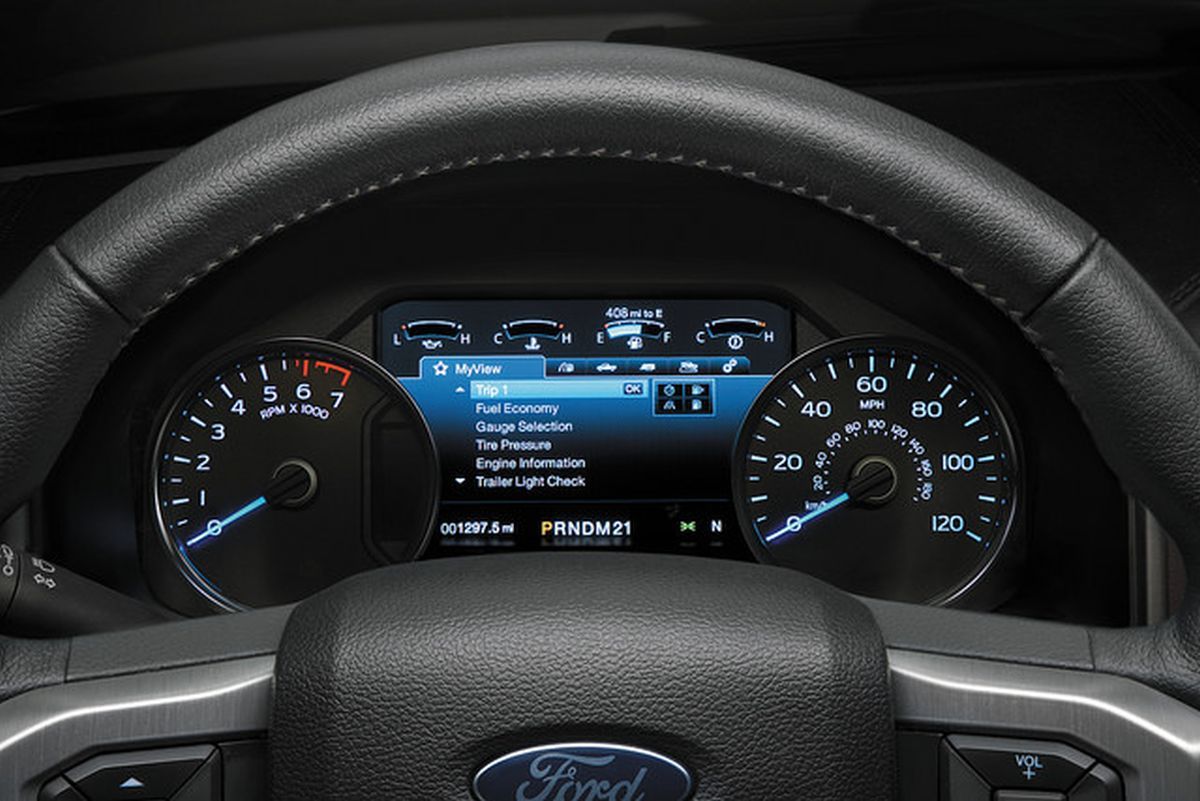
The tachometer, commonly called the RPM gauge, is an instrument that shows how fast an engine's crankshaft is rotating. The value displayed on the gauge is expressed in revolutions per minute (RPM).
For example, if the tachometer shows 2,000 RPM, the engine's crankshaft is rotating approximately 2,000 times per minute.
The tachometer is particularly useful when driving a vehicle with a manual transmission because it helps the driver determine when to shift gears. However, it is also important in automatic vehicles because it provides information about engine load, transmission behavior, and abnormal engine operation.
What Does RPM Mean?

RPM stands for revolutions per minute.
It indicates how many complete rotations a rotating component makes in one minute.
In a conventional piston engine, the tachometer generally displays engine crankshaft speed.
The RPM changes continuously depending on factors such as:
-
Accelerator position
-
Engine load
-
Selected gear
-
Vehicle speed
-
Transmission operation
-
Engine temperature
-
Fuel and ignition control
-
Idle control
At idle, a typical gasoline engine may operate somewhere around 600–900 RPM, although the correct value varies considerably between engines.
When the accelerator is pressed, engine speed increases. When the driver releases the accelerator or changes gear, RPM may decrease.
How Does a Tachometer Work?
Modern vehicle tachometers usually do not measure crankshaft rotation mechanically.
Instead, the engine control system determines engine speed electronically.
The ECU receives rotational-speed information from sensors such as the crankshaft position sensor. It can then calculate how quickly the crankshaft is rotating.
This information is transmitted through the vehicle's electronic network to the instrument cluster, where the RPM value is displayed.
The basic process can be summarized as:
Crankshaft rotation → Position/speed sensor → ECU → Instrument cluster → Tachometer display
Older vehicles may use different methods, including ignition-system signals or mechanically driven tachometers.
What Is the Relationship Between the Tachometer and the Crankshaft?
The crankshaft is directly connected to the pistons through the connecting rods.
As the pistons move up and down, they cause the crankshaft to rotate.
The tachometer uses information related to this rotation to determine engine speed.
This is why RPM increases when the engine is accelerated even if the vehicle itself is not moving.
For example, the engine can be at 3,000 RPM while the vehicle is stationary if the transmission is in neutral.
Why Is the Tachometer Important?
The tachometer gives the driver immediate information about engine speed.
This can help prevent unnecessarily high RPM and can also help the driver keep the engine within an efficient operating range.
For a manual transmission vehicle, the tachometer is especially useful for:
-
Choosing the right time to shift
-
Avoiding excessive engine speed
-
Preventing the engine from lugging
-
Maintaining a suitable RPM during acceleration
-
Controlling engine braking
It can also help identify abnormal behavior.
For example, if the engine RPM suddenly rises without a corresponding increase in vehicle speed, a transmission or clutch problem may be suspected.
What Are the Main Types of Tachometers?
Tachometers can be classified according to how they operate and how they display information.
Analog Tachometer
The analog tachometer is the traditional type found in many vehicles.
It uses a needle that moves across a numbered scale.
The driver reads the engine speed from the needle position.
Analog tachometers are easy to understand and provide a quick visual indication of engine speed.
Many vehicles use a scale such as:
0 – 1 – 2 – 3 – 4 – 5 – 6 – 7 – 8
Depending on the vehicle, these numbers may represent thousands of RPM.
For example, a needle pointing to 3 generally means approximately 3,000 RPM.
Digital Tachometer
A digital tachometer displays engine speed numerically rather than using a traditional needle.
For example, it may show:
850 RPM
or
2,450 RPM
Digital displays can provide more precise numerical information, although some drivers find an analog needle easier to interpret quickly.
Mechanical Tachometer
Mechanical tachometers were used in older vehicles and some industrial applications.
They can use a rotating cable connected to the engine or another rotating component.
The mechanical rotation is transmitted to the tachometer, which converts it into a speed indication.
This design is much less common in modern passenger cars because electronic measurement is more practical.
Electronic Tachometer
Electronic tachometers are the standard solution in modern vehicles.
They receive electrical or digital signals related to engine speed.
Depending on the vehicle architecture, the RPM information may originate from the crankshaft position sensor and be processed by the ECU before being transmitted to the instrument cluster.
Modern electronic tachometers can also be integrated into digital instrument panels.
Digital Instrument Cluster Tachometer
Many newer vehicles do not have a traditional physical tachometer.
Instead, the instrument cluster uses a digital display.
The tachometer may appear as:
-
A digital numerical value
-
A virtual analog gauge
-
A graphical RPM bar
-
Part of a customizable instrument display
-
A head-up display indication
The underlying engine-speed information is still generally obtained electronically.
What Is the Redline on a Tachometer?
The redline is the engine-speed range beyond which continued operation may cause excessive mechanical stress or damage.
It is usually shown as a red section near the upper end of the tachometer.
For example, a gasoline engine might have a redline around 6,000–7,000 RPM, while some performance engines are designed to operate safely at considerably higher speeds.
The exact redline depends on the engine.
Important components affected by very high RPM include:
-
Pistons
-
Connecting rods
-
Crankshaft
-
Valvetrain
-
Valve springs
-
Bearings
-
Timing components
The redline should not be interpreted as an RPM that the engine should regularly maintain. It represents an upper operating limit or warning range.
What Happens When the Engine Reaches the Redline?
Modern vehicles often have an electronic RPM limiter.
When the engine approaches or exceeds the programmed maximum speed, the ECU may temporarily reduce engine power by controlling fuel injection, ignition, throttle position, or other parameters.
This prevents the engine from continuously increasing in RPM.
However, an RPM limiter cannot protect against every type of mechanical damage.
A manual transmission can experience an extremely high-RPM mechanical over-rev if the driver selects an inappropriate lower gear. In that situation, the vehicle's wheels can force the engine to rotate faster than the electronic limiter can prevent.
What Is Idle RPM?
Idle RPM is the engine speed when the engine is running but the accelerator is not being pressed.
A typical modern gasoline engine may idle around 600–900 RPM, but there is no single correct value for every vehicle.
Idle speed depends on:
-
Engine design
-
Engine temperature
-
Air conditioning load
-
Electrical load
-
Automatic transmission operation
-
Emissions strategy
-
Cold-start conditions
A cold engine may intentionally idle at a higher RPM immediately after starting.
What Does a High Idle RPM Mean?
A tachometer that shows unusually high RPM at idle can indicate a problem, particularly if the engine has already warmed up.
Possible causes include:
-
Vacuum leak
-
Intake air leak
-
Throttle body problem
-
Idle-control problem
-
Coolant temperature sensor fault
-
Incorrect air-fuel mixture
-
Electronic throttle issue
-
PCV system problem
However, a temporarily elevated idle immediately after a cold start can be completely normal.
What Does an Unstable RPM Needle Mean?
If the tachometer needle repeatedly rises and falls while the engine is idling, the engine may have an unstable operating condition.
Possible causes include:
-
Ignition misfire
-
Vacuum leak
-
Dirty throttle body
-
Fuel-delivery problem
-
Faulty injector
-
Air-fuel mixture problem
-
Crankshaft or camshaft sensor issue
-
VVT problem
-
Charging-system problems
The tachometer itself may also be faulty, but engine operation should be evaluated first.
Why Does the RPM Increase but the Vehicle Does Not Accelerate?
This symptom is particularly important in manual-transmission vehicles.
If engine RPM rises rapidly while vehicle speed increases only slightly, the clutch may be slipping.
For example, the driver presses the accelerator in a higher gear and the tachometer suddenly climbs, but the vehicle does not accelerate proportionally.
A worn clutch disc, pressure plate, or related component can cause this behavior.
Automatic transmissions can also experience transmission slipping, although the mechanism is different.
Why Does RPM Drop When Changing Gear?
When a higher gear is selected, the engine generally needs to rotate more slowly at the same vehicle speed.
For example, after shifting from second to third gear, RPM normally decreases.
The exact amount depends on:
-
Gear ratios
-
Final-drive ratio
-
Tire diameter
-
Transmission type
-
Vehicle speed
This is why the tachometer is particularly useful for understanding how the engine and transmission are working together.
What Is the Difference Between a Tachometer and a Speedometer?
The two gauges measure completely different things.
The tachometer measures engine speed in RPM.
The speedometer measures vehicle speed, usually in km/h or mph.
A vehicle can therefore have:
-
High RPM and low road speed
-
Low RPM and high road speed
-
High RPM while stationary
-
Different RPM at the same road speed depending on the selected gear
For example, a manual-transmission vehicle may travel at the same road speed in fourth or fifth gear, but the engine RPM will be different.
Can a Faulty Tachometer Cause Engine Problems?
Normally, a defective tachometer does not directly cause engine damage.
The tachometer is primarily a display device.
However, if the underlying RPM signal is incorrect because of a sensor, ECU, wiring, or communication problem, the issue may affect more than the dashboard display.
For example, a crankshaft position sensor problem can affect engine operation itself while also causing an incorrect or zero RPM reading.
Why Does the Tachometer Suddenly Drop to Zero?
If the engine is still running but the tachometer suddenly falls to zero, the problem may involve the RPM signal.
Possible causes include:
-
Crankshaft position sensor
-
Sensor wiring
-
Electrical connection
-
ECU communication
-
Instrument cluster
-
CAN communication
-
Power or ground problem
If the engine also stalls when the tachometer drops to zero, the crankshaft position signal becomes an especially important area to investigate.
Why Does the Tachometer Not Move When Starting the Engine?
If the engine starts and runs normally but the tachometer remains at zero, the problem may be with:
-
Instrument cluster
-
RPM signal
-
Communication network
-
Crankshaft speed information
-
Wiring
-
ECU-related communication
If the engine does not start at all and the tachometer does not move during cranking, a crankshaft position sensor or its circuit may also be worth investigating.
However, this behavior varies between vehicle designs, so the absence of tachometer movement alone does not prove that the crankshaft sensor has failed.
Tachometer Behavior in Automatic Transmissions
In an automatic transmission vehicle, the tachometer can provide useful information about transmission operation.
During acceleration, the transmission may automatically change gears and the RPM may:
-
Increase
-
Drop during an upshift
-
Rise during a downshift
-
Remain relatively stable while cruising
A sudden RPM flare without corresponding acceleration can indicate possible transmission or torque-converter slip.
Some modern transmissions deliberately allow the engine speed to change in ways that may initially look unusual, so the vehicle's transmission strategy should also be considered.
Tachometer Behavior in Diesel Engines
Diesel engines generally operate at lower maximum RPM than many gasoline engines.
A diesel tachometer therefore typically has a lower redline.
Many diesel engines produce strong torque at relatively low RPM, making the tachometer useful for selecting an efficient operating range.
Turbocharged diesel engines can also have specific RPM ranges where torque and turbocharger response are strongest.
Tachometer and Fuel Economy
RPM has a direct relationship with engine operating conditions and therefore can influence fuel consumption.
In general, unnecessarily high RPM increases engine speed and can increase fuel consumption.
However, the lowest possible RPM is not always the most efficient.
Running an engine at excessively low RPM under heavy load can cause engine lugging, poor combustion efficiency, vibration, and increased mechanical stress.
The ideal RPM depends on the engine, transmission, load, and driving conditions.
Final Thoughts
The tachometer is the instrument that shows engine speed in revolutions per minute. Traditional vehicles commonly use an analog needle, while modern vehicles increasingly use electronic or fully digital displays.
Its information usually comes from the engine's electronic control system, with crankshaft-speed information playing a central role.
Beyond simply showing RPM, the tachometer can help the driver understand how the engine and transmission are behaving. Unusually high or unstable RPM, sudden RPM increases without acceleration, or a tachometer that suddenly drops to zero can provide valuable diagnostic clues.
A tachometer is therefore not just another dashboard gauge. It provides a real-time view of engine speed and can help the driver operate the vehicle more efficiently while also recognizing abnormal engine or transmission behavior.