TR
TR EN
EN

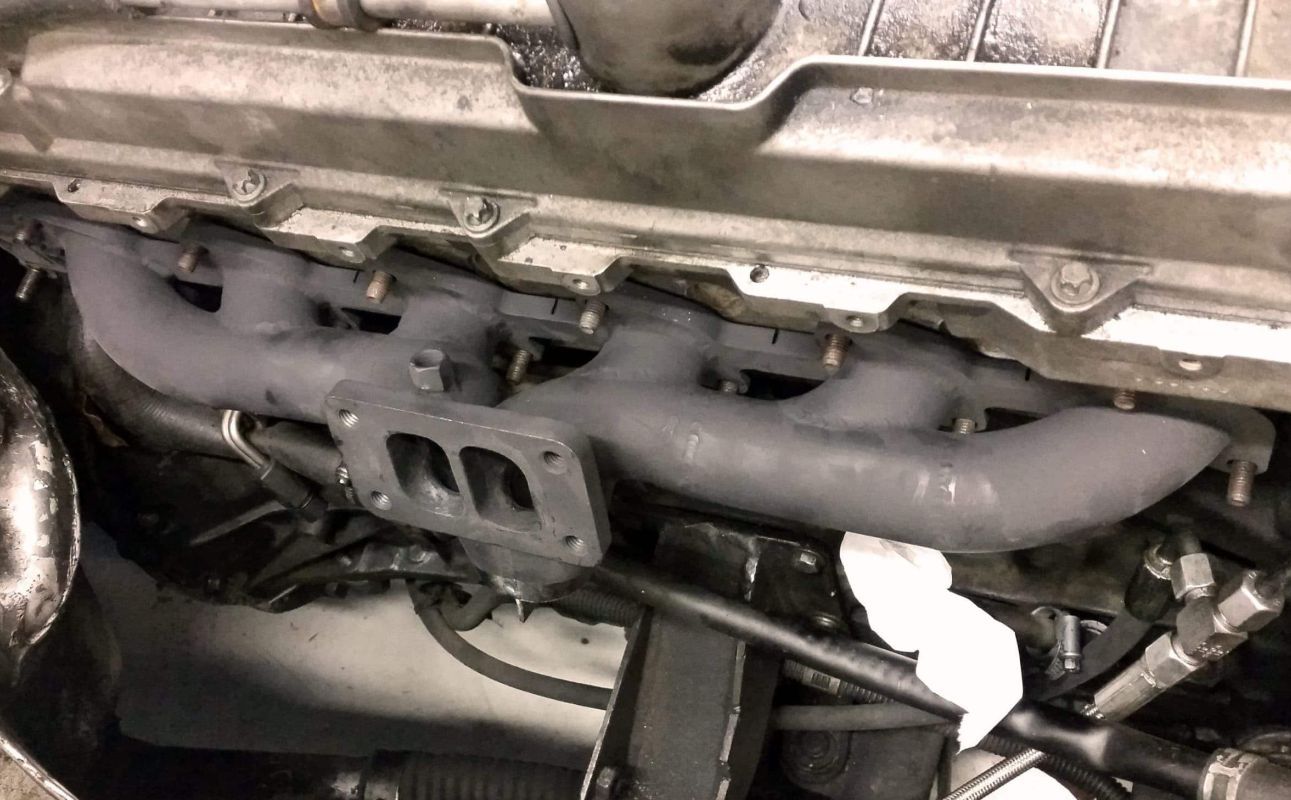
What Is an Exhaust Manifold? What Are the Causes of Failure and the Symptoms of an Exhaust Leak?
The exhaust manifold is one of the first components in an engine's exhaust system. It collects the exhaust gases produced by the cylinders and directs them toward the rest of the exhaust system, usually through the catalytic converter, turbocharger, or other exhaust components depending on the engine design.
Although the exhaust manifold is a relatively simple component, it operates under extremely high temperatures and repeated heating and cooling cycles. Over time, this can cause cracks, warping, gasket failure, broken studs, or other problems.
An exhaust manifold leak can affect engine performance, fuel economy, emissions, and even passenger safety if exhaust gases enter the cabin.
What Does an Exhaust Manifold Do?
Each cylinder produces exhaust gases when the air-fuel mixture burns.
The exhaust valves open and release these gases into the exhaust ports in the cylinder head. The exhaust manifold connects these individual ports and collects the gases into a common passage.
Its basic function is:
Engine cylinders → Exhaust manifold → Exhaust system
Depending on the engine, the exhaust manifold may direct the gases toward:
-
Catalytic converter
-
Turbocharger
-
Exhaust downpipe
-
Diesel particulate filter system
-
Other emissions-control components
The manifold must withstand very high temperatures while maintaining a reliable seal against the cylinder head.
Why Does the Exhaust Manifold Get So Hot?
Exhaust gases leaving the combustion chamber can reach very high temperatures, particularly under heavy engine load.
The manifold is therefore exposed to:
-
Extreme heat
-
Rapid temperature changes
-
Engine vibration
-
Thermal expansion and contraction
-
Exhaust pressure
-
Mechanical stress
When the engine is cold, the manifold contracts. As the engine warms up, it expands. This process happens repeatedly throughout the vehicle's life.
This repeated thermal cycling is one of the main reasons exhaust manifolds can eventually crack or warp.
Common Causes of Exhaust Manifold Failure
Thermal stress and cracking
One of the most common problems is cracking caused by repeated heating and cooling.
A crack may initially be very small and only produce a faint ticking or hissing noise. As the crack grows, the exhaust leak can become more noticeable.
Cast-iron manifolds are particularly susceptible to cracking after prolonged thermal stress, although other manifold materials can also develop cracks.
Warped exhaust manifold
The manifold can become distorted if exposed to excessive heat.
A warped mating surface may prevent the manifold from sealing properly against the cylinder head.
This can create an exhaust leak even if the manifold itself does not have a visible crack.
Failed exhaust manifold gasket
The gasket between the manifold and cylinder head provides an important seal.
Over time, the gasket can deteriorate because of:
-
High temperature
-
Thermal cycling
-
Incorrect installation
-
Surface distortion
-
Loose or damaged fasteners
A failed gasket can produce symptoms very similar to a cracked manifold.
Broken or loose manifold studs and bolts
The fasteners holding the manifold to the cylinder head are exposed to high temperatures and vibration.
They can loosen, stretch, corrode, or break.
If clamping force is lost, the gasket may no longer seal correctly.
A broken stud can therefore cause an exhaust leak even when the manifold and gasket are otherwise in good condition.
Excessive engine vibration
Abnormal engine vibration can place additional mechanical stress on the exhaust manifold and its mounting points.
Misfires, worn engine mounts, rough-running conditions, and other engine problems can increase vibration and potentially contribute to exhaust-system damage.
Excessive exhaust temperature
A serious engine-running problem can raise exhaust temperatures beyond normal levels.
Possible causes include:
-
Rich or lean combustion
-
Ignition misfire
-
Incorrect ignition timing
-
Fuel-system problems
-
Restricted catalytic converter
-
Turbocharger-related problems
If a manifold repeatedly fails, the cause of excessive heat should also be investigated.
Corrosion
Moisture, road salt, condensation, and environmental exposure can cause corrosion.
Rust can weaken the manifold, fasteners, and surrounding exhaust components.
What Are the Symptoms of an Exhaust Manifold Leak?
An exhaust manifold leak can produce several recognizable symptoms.
Ticking or tapping noise from the engine bay
A small exhaust leak can sound like a ticking, tapping, or puffing noise.
The sound is often more noticeable when the engine is cold because the metal components have contracted.
As the engine warms up and the manifold expands, the noise may become quieter.
This is a useful clue, but it is not exclusive to exhaust leaks. Valve-train noise, injector noise, and other engine sounds can sometimes be mistaken for a manifold leak.
Hissing or puffing sound
A larger leak may produce a hissing or rhythmic puffing noise.
Because exhaust gases leave the manifold under pressure, the leak can become particularly obvious when the engine is accelerated.
Exhaust smell under the hood
A leaking manifold can allow exhaust gases to escape into the engine compartment.
The smell may become noticeable around the front or side of the engine.
Exhaust gases should not normally be present in the engine bay in significant quantities, so this symptom should be taken seriously.
Exhaust smell inside the cabin
This is a more serious warning sign.
Depending on the vehicle's ventilation system and the location of the leak, exhaust gases can potentially enter the passenger compartment.
Carbon monoxide is especially dangerous because it is colorless and odorless.
If exhaust fumes are entering the cabin, the vehicle should be inspected immediately and unnecessary driving should be avoided.
Loss of engine performance
An exhaust manifold leak can affect engine operation, particularly when the leak is located close to an oxygen sensor or turbocharger.
On naturally aspirated engines, a leak may have a relatively small effect on performance if it is downstream of the relevant sensors.
On turbocharged engines, exhaust leakage before or around the turbocharger can be more significant because it can reduce the energy available to drive the turbine.
Possible symptoms include:
-
Poor acceleration
-
Reduced power
-
Slow turbocharger response
-
Increased turbo lag
-
Reduced boost pressure
Check Engine Light
A manifold leak can sometimes cause the Check Engine Light to illuminate.
This is particularly possible when the leak occurs upstream of an oxygen or air-fuel ratio sensor.
Outside air can be drawn into the exhaust stream during certain operating conditions, potentially affecting sensor readings.
The ECU may then detect an air-fuel mixture or oxygen-sensor-related condition.
However, a Check Engine Light does not automatically prove that the manifold is leaking.
Poor fuel economy
A leak can affect oxygen-sensor readings in certain circumstances and may influence fuel-trim corrections.
If the ECU interprets the exhaust signal incorrectly, it may alter fuel delivery.
Fuel economy can therefore be affected, although a manifold leak is only one of many possible causes of increased fuel consumption.
Visible soot around the manifold
A leaking exhaust joint can sometimes leave black carbon or soot deposits around the leak point.
This can be particularly useful when diagnosing a small leak.
A dark deposit around:
-
Manifold gasket
-
Crack
-
Flange
-
Stud area
-
Exhaust connection
can provide a clue about where exhaust gases are escaping.
Poor emissions performance
An exhaust leak can interfere with emissions-system operation.
If the leak occurs before an oxygen sensor, it may affect the sensor's readings and potentially cause fuel-trim or emissions-related problems.
A vehicle may consequently fail an emissions inspection depending on the severity and location of the leak.
How Does an Exhaust Manifold Leak Affect a Turbocharged Engine?
The location of the leak is particularly important on turbocharged engines.
The exhaust manifold supplies exhaust energy to the turbocharger turbine.
If there is a significant leak before the turbocharger, some exhaust gas escapes before reaching the turbine.
This can result in:
-
Reduced boost
-
Slow turbocharger response
-
Increased turbo lag
-
Reduced engine power
-
Unusual hissing or ticking noises
-
Higher exhaust-system temperatures in some conditions
A manifold leak on a turbocharged engine should therefore not be treated as a minor noise problem.
Can an Exhaust Manifold Leak Cause a Misfire?
It can contribute to a misdiagnosis of a misfire or, in certain situations, contribute to abnormal combustion control.
A leak near the exhaust port can alter exhaust pressure and oxygen-sensor readings.
However, if the engine has a genuine cylinder misfire, the ignition, fuel, compression, and timing systems should also be tested.
A manifold leak should not automatically be blamed for every misfire code.
Can an Exhaust Manifold Leak Damage the Catalytic Converter?
A leak itself does not automatically destroy the catalytic converter.
However, if the leak affects oxygen-sensor readings and causes incorrect fuel control, the resulting mixture condition can potentially affect catalytic-converter operation.
A separate engine misfire is an even greater concern because unburned fuel can enter the catalytic converter and cause excessive temperatures.
If a manifold repeatedly develops cracks or leaks, the underlying engine operating condition should therefore be investigated.
How Is an Exhaust Manifold Leak Diagnosed?
A proper diagnosis does not always require immediately removing the manifold.
Visual inspection
The manifold, gasket area, fasteners, and surrounding components should first be inspected.
Look for:
-
Cracks
-
Soot deposits
-
Discoloration
-
Broken studs
-
Loose fasteners
-
Damaged gaskets
-
Signs of excessive heat
Listen for the leak
Starting the engine from cold can make a small leak easier to hear.
The ticking or puffing sound may change as the manifold heats up and expands.
Care must be taken because the manifold and surrounding components become extremely hot.
Check oxygen-sensor data
On vehicles equipped with appropriate sensors and diagnostic equipment, live data can provide clues about abnormal exhaust oxygen readings.
The location of the suspected leak relative to the sensor is critical.
Smoke testing
A suitable smoke-testing procedure can sometimes help identify leaks in the exhaust system.
The exact method must be appropriate for the vehicle and exhaust system.
Exhaust pressure testing
Controlled pressure can sometimes be used to help locate small leaks.
The technician may then inspect the manifold and joints for escaping air or smoke.
Can an Exhaust Manifold Leak Be Seen Easily?
Not always.
Some cracks are extremely small and may only open when the manifold is hot.
A leak may therefore be difficult to see when the engine is cold.
Similarly, a gasket may leak from an area that is hidden behind the manifold or heat shield.
This is why listening, visual inspection, soot inspection, and appropriate testing may all be necessary.
Can an Exhaust Manifold Be Repaired?
The correct repair depends on the type and location of the damage.
A failed gasket can generally be replaced.
Broken studs or bolts can sometimes be extracted and replaced.
A cracked manifold may be repairable by welding in some cases, but welding is not always a permanent solution.
The repair may fail again if:
-
The manifold is severely warped
-
The material is badly damaged
-
Thermal stress remains
-
The underlying overheating problem has not been corrected
For a severely cracked or distorted manifold, replacement is often the more reliable solution.
Should the Exhaust Manifold Gasket Be Replaced?
If the manifold is removed, replacing the gasket is generally appropriate.
Reusing an old exhaust manifold gasket can result in another leak, particularly if the gasket has already been compressed or heat-damaged.
The mating surfaces should also be inspected for warping, cracks, and damage before reassembly.
Can You Drive With an Exhaust Manifold Leak?
The severity and location of the leak matter.
A very small leak may initially cause little noticeable performance loss, but continuing to drive indefinitely is not recommended.
The situation becomes more serious if:
-
Exhaust fumes enter the cabin
-
Engine performance is significantly reduced
-
The Check Engine Light is flashing
-
The turbocharger is affected
-
The engine compartment becomes excessively hot
-
The leak is large and getting worse
-
There are visible cracks or broken manifold components
The possibility of carbon monoxide entering the passenger compartment is the most important safety concern.
Exhaust Manifold Leak vs Exhaust Pipe Leak
The symptoms can overlap, but the location helps distinguish them.
An exhaust manifold leak is close to the engine and often produces a ticking or tapping sound from the engine bay.
An exhaust pipe leak farther downstream may produce more noticeable exhaust noise underneath the vehicle.
A leak before an oxygen sensor can also have a greater influence on engine-control readings than a leak farther downstream.
Exhaust Manifold vs Exhaust Manifold Gasket
The manifold and its gasket are separate components.
The manifold is the metal structure that collects exhaust gases.
The gasket seals the connection between the manifold and cylinder head.
Therefore, an exhaust leak does not automatically mean the manifold itself is cracked.
The gasket, fasteners, cylinder-head surface, or manifold mating surface may be responsible.
What Should Be Checked When a Manifold Fails Repeatedly?
Repeated manifold failure deserves additional investigation.
If a new manifold or gasket develops another leak shortly after installation, the technician should look for an underlying cause.
Important areas include:
-
Engine operating temperature
-
Cooling system condition
-
Fuel mixture
-
Ignition system
-
Misfires
-
Exhaust restriction
-
Engine mounts
-
Manifold alignment
-
Fastener torque
-
Cylinder-head mating surface
-
Turbocharger operation
Simply installing another manifold without investigating why the original failed may result in another failure.
Final Thoughts
The exhaust manifold collects exhaust gases from the engine cylinders and directs them into the vehicle's exhaust system. Because it operates under extreme heat and repeated thermal stress, it can eventually develop cracks, warping, gasket leaks, or broken mounting hardware.
Typical exhaust manifold leak symptoms include ticking or tapping noises, hissing or puffing sounds, exhaust smell, soot around the manifold, reduced engine performance, turbocharger response problems, increased fuel consumption, and sometimes a Check Engine Light.
However, these symptoms can also be caused by other exhaust, engine, or fuel-system problems.
The most important point is to identify the exact location and cause of the leak. A failed gasket, cracked manifold, broken stud, or excessive exhaust temperature requires a different repair approach. If exhaust fumes are entering the cabin, the problem should be treated as a safety issue and repaired without unnecessary delay.