TR
TR EN
EN

What Is VVT and What Is a Camshaft Actuator? What Are the Symptoms of Failure?
Modern engines do not always operate with a fixed valve timing. The engine control unit can change when the intake and exhaust valves open and close according to engine speed, load, temperature, and throttle position.
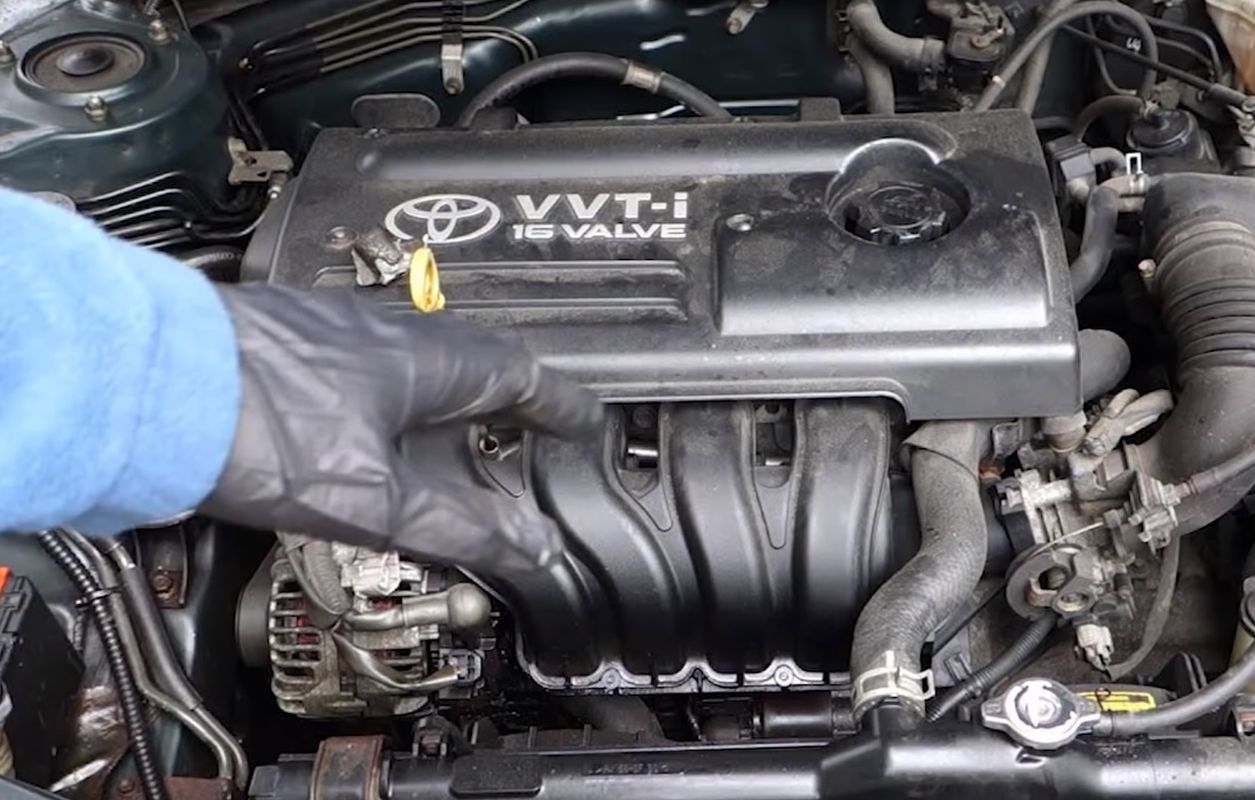
This system is generally known as VVT (Variable Valve Timing). One of the key components that makes this adjustment possible is the camshaft actuator, also called a camshaft phaser or variable camshaft timing actuator.
When the VVT system or camshaft actuator develops a problem, the engine may experience rough idle, loss of power, poor acceleration, increased fuel consumption, difficult starting, or abnormal noises. In some cases, the Check Engine Light will also illuminate.
What Is VVT?
VVT stands for Variable Valve Timing.
Its purpose is to change the camshaft position relative to the crankshaft while the engine is running. By changing this relationship, the engine can optimize valve timing for different operating conditions.
At low engine speeds, the engine may need one valve timing strategy, while at high RPM it may benefit from another.
The VVT system can adjust valve timing according to factors such as:
-
Engine RPM
-
Engine load
-
Throttle position
-
Engine temperature
-
Accelerator demand
-
Oil pressure
-
Driving conditions
The result can be improved torque, better high-RPM performance, reduced emissions, and improved fuel economy.
What Is a Camshaft Actuator?

The camshaft actuator is the mechanism that physically changes the position of the camshaft in relation to the crankshaft.
It is commonly mounted on the end of the camshaft and is often integrated into the camshaft timing gear or sprocket.
You may see several different names for the same general component:
-
Camshaft actuator
-
Camshaft phaser
-
VVT actuator
-
Variable valve timing actuator
-
Variable camshaft timing actuator
-
Camshaft timing gear
The exact terminology depends on the manufacturer.
The important point is that the VVT system is the overall system, while the camshaft actuator is one of the components that performs the timing adjustment.
How Does the VVT System Work?
The basic principle is relatively straightforward.
The engine control unit monitors engine operating conditions and determines the desired camshaft position.
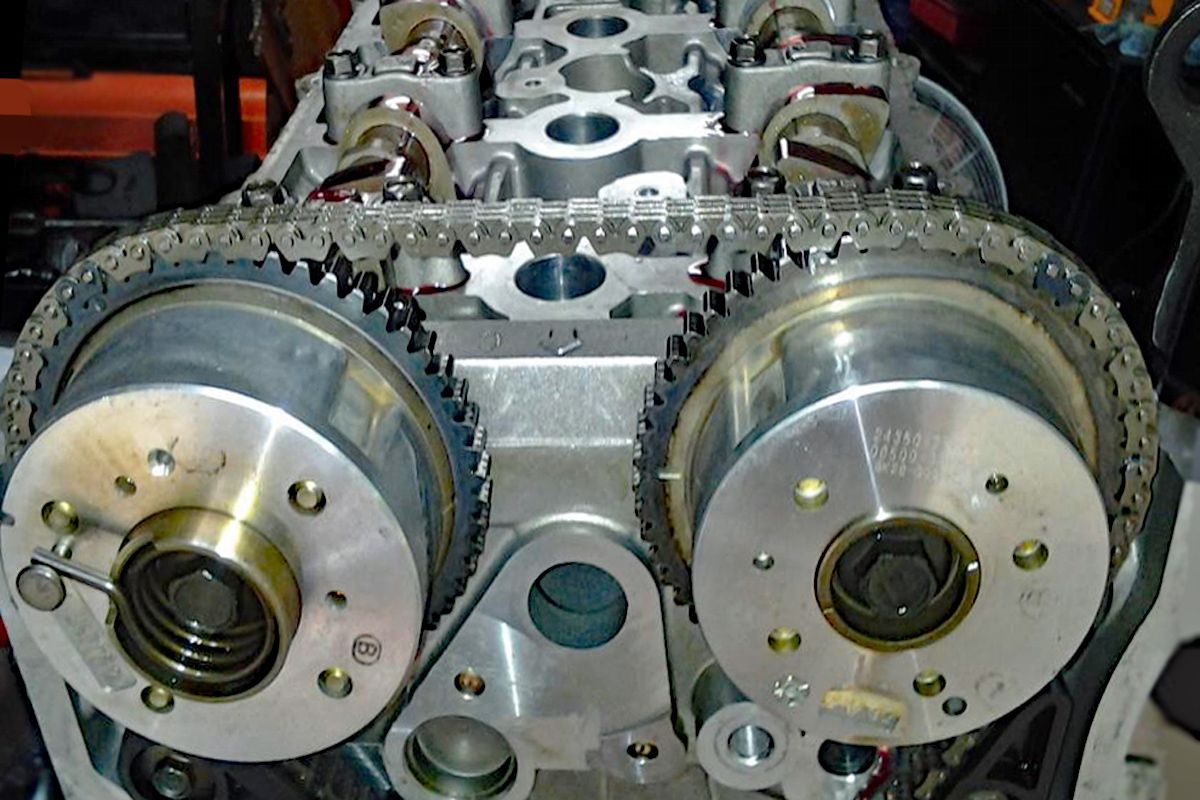
It then controls a VVT oil control solenoid. Engine oil is directed through specific passages into the camshaft actuator.
The oil pressure moves an internal mechanism inside the actuator, changing the camshaft's angular position.
The system continuously compares the desired camshaft position with the actual position reported by the camshaft position sensor.
In simplified form:
ECU → VVT solenoid → oil pressure → camshaft actuator → camshaft position
The camshaft sensor then provides feedback so the ECU can determine whether the requested adjustment actually occurred.
Why Is Engine Oil So Important for VVT?
VVT systems are highly dependent on clean engine oil and the correct oil pressure.
The camshaft actuator generally uses engine oil pressure to change its position. If the oil is dirty, too thick, too thin, contaminated, or at an incorrect level, VVT operation can be affected.
This means an engine with a VVT problem does not necessarily have a defective actuator.
Possible causes can include:
-
Low engine oil level
-
Incorrect oil viscosity
-
Old or contaminated oil
-
Sludge inside oil passages
-
Restricted oil passages
-
Low oil pressure
-
Faulty VVT solenoid
-
Damaged actuator
-
Wiring problems
-
Faulty camshaft position sensor
-
Timing chain or belt problems
This is one of the most important points when diagnosing VVT faults.
Symptoms of a Faulty Camshaft Actuator
A failing actuator can produce different symptoms depending on whether it is stuck, slow to respond, leaking internally, or unable to reach the commanded position.
Rough or unstable idle
One of the common symptoms is an unstable idle.
If the camshaft remains at an incorrect position, valve timing may not be appropriate for idle operation. The engine may shake, fluctuate in RPM, or feel as though it is close to stalling.
In severe cases, the engine may actually stall.
Loss of engine power
Incorrect camshaft timing can significantly affect cylinder filling.
The engine may feel weaker than normal, particularly during acceleration. Some vehicles experience the problem throughout the RPM range, while others show a noticeable loss of power only at certain engine speeds.
Poor acceleration
A VVT actuator that cannot reach the requested position may prevent the engine from optimizing valve timing during acceleration.
The driver may notice hesitation or a delayed response when pressing the accelerator.
Reduced fuel economy
When valve timing is not properly controlled, combustion efficiency can decrease.
Fuel consumption may increase even when there are no obvious drivability problems.
However, increased fuel consumption alone does not prove that the VVT actuator is faulty.
Check Engine Light
A VVT-related problem can trigger the Check Engine Light.
Depending on the vehicle and the specific fault, diagnostic codes may relate to:
-
Camshaft position
-
Camshaft timing
-
VVT performance
-
VVT solenoid operation
-
Camshaft/crankshaft correlation
A timing-related code should not automatically be interpreted as a defective actuator. The ECU may simply be reporting that the commanded and actual camshaft positions do not agree.
Hard starting
Incorrect camshaft timing can make starting more difficult.
This may be particularly noticeable during cold starts, although a severely malfunctioning VVT system can affect starting under other conditions as well.
Engine stalling
If the camshaft actuator becomes stuck in an unsuitable position, the engine may struggle to maintain stable combustion.
This can cause stalling, particularly at idle or when the engine returns to idle after acceleration.
Rattling or ticking noise
A defective camshaft actuator can sometimes produce a rattling noise, particularly during startup.
A worn actuator may have excessive internal movement, while insufficient oil pressure can also cause abnormal noise.
However, a rattling noise from the timing area can also be caused by a worn timing chain, chain tensioner, low oil pressure, or other mechanical components.
Engine performance changes at specific RPM
Some VVT problems are surprisingly specific.
The engine may run relatively normally at low RPM but lose power at higher RPM. In another vehicle, the opposite may occur.
This happens because the actuator may work correctly in one operating range but fail to reach the required position in another.
What Causes a Camshaft Actuator to Fail?
Camshaft actuators operate under continuous mechanical and thermal stress.
Several different problems can eventually affect their operation.
Dirty or degraded engine oil
This is one of the most important factors.
Sludge and deposits can restrict the small oil passages used by the VVT system. The actuator may then respond slowly or fail to move to the commanded position.
Incorrect oil viscosity
Using oil with a viscosity that does not match the manufacturer's specification can affect VVT operation.
Because the actuator depends on oil pressure and flow, oil viscosity can influence how quickly and accurately it responds.
Low oil level
If the engine oil level is too low, the VVT system may not receive the oil pressure or flow it requires.
Low engine oil pressure
A worn oil pump, excessive engine bearing clearance, internal leakage, or another lubrication problem can reduce oil pressure.
In such a case, replacing the VVT actuator without correcting the oil-pressure problem may not solve the issue.
Faulty VVT solenoid
The oil control solenoid controls the flow of oil to the actuator.
If the solenoid is blocked, electrically faulty, or mechanically stuck, the actuator may not receive the correct oil flow.
The actuator itself may therefore be perfectly functional.
Internal actuator wear
The internal locking mechanism or other moving parts can wear over time.
An actuator with excessive internal leakage or mechanical wear may fail to maintain the required camshaft position.
Timing chain or belt problems
A stretched timing chain, damaged timing components, incorrect installation, or a weak tensioner can cause camshaft timing problems that resemble a VVT actuator failure.
This distinction is critical because replacing the actuator will not repair a mechanically incorrect base timing condition.
VVT Solenoid vs Camshaft Actuator
These components are often confused.
The VVT solenoid controls oil flow.
The camshaft actuator uses that oil pressure to change camshaft position.
For example, if the solenoid is blocked, the actuator may not move correctly even though the actuator itself is in good condition.
Likewise, a defective actuator may receive the correct oil pressure but still fail to achieve the desired camshaft position.
Therefore, the two components should be tested separately during diagnosis.
How Is a VVT Actuator Diagnosed?
A proper diagnosis should start with the basics rather than immediately replacing expensive parts.
Check the engine oil
The oil level, condition, and specification should be verified first.
If the oil is heavily contaminated or the wrong viscosity has been used, correcting the lubrication system may resolve the VVT problem.
Scan for diagnostic trouble codes
A diagnostic scanner can reveal VVT-related fault codes.
The stored code provides an important direction for diagnosis, but it should not be treated as proof that a particular component has failed.
Check live data
Live camshaft data can be particularly useful.
A technician can compare:
-
Desired camshaft angle
-
Actual camshaft angle
-
Engine RPM
-
VVT command
-
Camshaft position
-
Crankshaft position
If the ECU commands a specific camshaft position but the actual position does not follow it, further testing is required.
Test the VVT solenoid
The solenoid should be checked electrically and mechanically.
Depending on the vehicle, this may involve checking resistance, power supply, control signals, movement, and oil passages.
Check oil pressure
If VVT operation is abnormal, engine oil pressure should be considered.
A low-pressure condition can create multiple VVT symptoms at the same time.
Inspect the timing system
If the VVT system appears unable to achieve the expected camshaft position, the timing chain, belt, tensioner, guides, and mechanical timing should also be inspected.
Can a VVT Actuator Be Cleaned?
In some cases, cleaning can help if the problem is caused by contamination or restricted oil flow.
However, cleaning is not a universal repair.
If the actuator has internal mechanical wear, excessive leakage, damaged locking components, or other physical damage, cleaning will not restore it.
The same applies to a VVT solenoid. A contaminated solenoid may sometimes be cleaned, but an electrically or mechanically damaged solenoid normally needs replacement.
Can You Drive With a Faulty VVT Actuator?
It depends on the severity of the problem.
A vehicle with a minor VVT performance issue may continue to run, but driving for an extended period is not recommended without diagnosis.
A more serious problem can cause:
-
Severe loss of power
-
Stalling
-
Difficult starting
-
Increased fuel consumption
-
Poor combustion
-
Timing-related engine damage in severe cases
If the engine is producing loud timing-area noises, repeatedly stalling, or showing severe performance loss, continued driving should be avoided until the cause is identified.
Does a Faulty VVT Actuator Mean the Timing Chain Is Bad?
No.
A VVT actuator and timing chain are different components.
An actuator can fail while the timing chain remains healthy. Likewise, a stretched chain or defective tensioner can create symptoms that appear to be caused by the VVT system.
This is why camshaft timing should be evaluated as a complete system.
VVT Failure and Engine Damage
VVT problems do not always cause immediate internal engine damage.
However, the risk depends on the underlying fault.
A simple VVT solenoid problem may mainly affect engine performance and emissions. On the other hand, a serious mechanical timing problem involving the timing chain, actuator, or related components can potentially cause the valve timing to become incorrect enough to create internal engine damage.
Interference engines are particularly sensitive to major timing errors because the pistons and valves can occupy overlapping areas of the cylinder at different points in the cycle.
Final Thoughts
VVT is the system that allows the engine to dynamically adjust valve timing, while the camshaft actuator is the mechanical component that changes the camshaft position.
A faulty actuator can cause rough idle, poor acceleration, loss of power, hard starting, increased fuel consumption, unusual timing-area noises, stalling, and Check Engine Light warnings.
However, these symptoms do not automatically mean that the actuator needs to be replaced.
Engine oil condition, oil pressure, VVT solenoid operation, wiring, camshaft sensors, timing chain or belt condition, and actual versus commanded camshaft position should all be considered.
The most accurate approach is to diagnose the entire VVT system rather than replacing the camshaft actuator based on a fault code or a single symptom.