TR
TR EN
EN

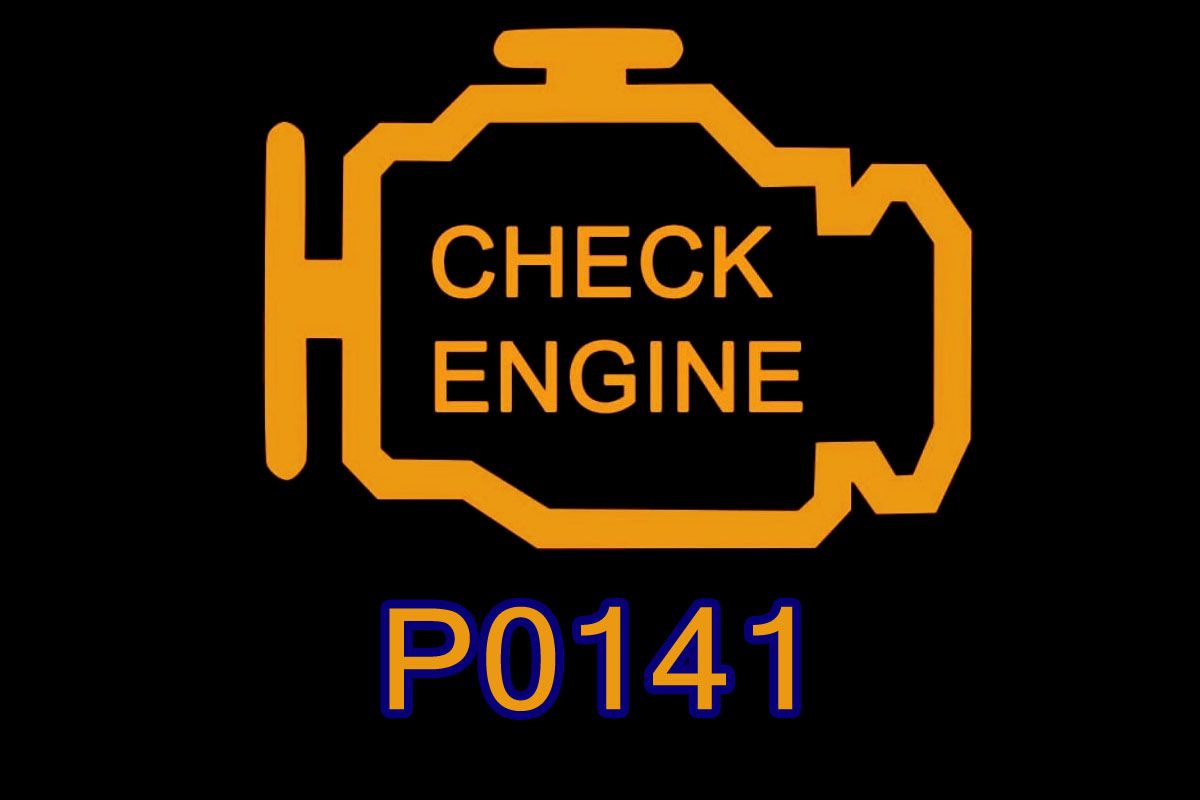
P0141 O2 Sensor Heater Circuit Malfunction (Bank 1, Sensor 2)
The oxygen sensor does not work simply because it is installed in the exhaust. It has to reach a specific operating temperature before its signal can be used reliably. That is why many modern O2 sensors contain an internal electrical heating element.
P0141 is set when the ECM detects a problem with the heater circuit of the Bank 1 Sensor 2 oxygen sensor.
This is an important distinction: P0141 is primarily a heater-circuit fault, not an O2 signal-voltage fault.
Bank 1 Sensor 2 is normally the oxygen sensor located after the catalytic converter.
Why Does the O2 Sensor Need a Heater?
The oxygen sensor needs to become hot enough for its sensing element to operate correctly.
Without a heater, the sensor depends mainly on exhaust heat. During a cold start, this can take some time.
The integrated heater accelerates this process.
The basic operating sequence is:
Cold engine → O2 sensor is cold → heater is energized → sensor reaches operating temperature → ECM can use the sensor information
The heater therefore helps the engine reach reliable emissions-control operation sooner, particularly after startup.
The downstream sensor also needs to reach its operating temperature before the ECM can properly evaluate its signal.
What P0141 Is Actually Monitoring
The ECM monitors the electrical circuit used to heat Bank 1 Sensor 2.
Depending on the vehicle, the ECM may monitor parameters such as:
-
Heater power supply
-
Heater current
-
Heater resistance
-
Heater control
-
Electrical response after the heater is commanded on
The exact monitoring strategy is manufacturer-specific.
If the ECM commands the heater and detects an electrical condition that does not match its expected behavior, it can store P0141.
This means the code does not necessarily identify which individual component has failed.
The problem could be the heating element itself, the wiring, the connector, a fuse, a relay, a control circuit or, less commonly, the ECM.
The Heater Is Separate From the O2 Signal
This is an easy distinction to miss.
An oxygen sensor can have multiple electrical circuits.
One part of the sensor is responsible for sensing oxygen in the exhaust, while another circuit operates the internal heater.
Therefore, a heater-circuit failure does not automatically mean the sensing element is defective.
For example, an O2 sensor could still produce a plausible signal once it becomes hot enough, while its heater is completely open.
Conversely, the heater could work correctly while the sensing element itself is damaged.
That is why P0141 should be approached as an electrical heater-system diagnosis.
Where Is Bank 1 Sensor 2?
The terminology identifies the sensor location.
Bank 1 = the engine bank containing cylinder number 1.
Sensor 2 = normally the oxygen sensor positioned downstream of the catalytic converter.
On many four-cylinder inline engines, there is only one bank, making Bank 1 Sensor 2 the rear/downstream O2 sensor.
On V-type engines, identifying Bank 1 correctly is more important because there are two cylinder banks.
Always confirm the sensor location with the manufacturer's service information rather than relying only on physical assumptions.
What Usually Causes P0141?
A failed heater element is one of the most common possibilities, but it is not the only one.
Open heater element
The heating element inside the O2 sensor can burn out or develop an internal open circuit.
When this happens, the heater cannot draw the expected current.
Blown fuse
Some vehicles protect the O2 heater supply with a fuse shared with other components.
A blown fuse can therefore disable the heater.
If the fuse has blown, however, replacing it without finding out why it failed is incomplete diagnosis.
Damaged wiring
The O2 sensor is usually installed close to the exhaust, where temperatures are high.
The harness can become:
-
Melted
-
Brittle
-
Chafed
-
Shorted
-
Broken
-
Pulled from its connector
Heat damage is particularly common around exhaust components.
Bad connector or terminal
A loose, corroded or damaged terminal can interrupt heater power or ground.
Connector problems are especially worth checking if the sensor or exhaust system has recently been serviced.
Poor power or ground
The heater requires an appropriate electrical supply.
High resistance in the power or ground path can prevent the heater from operating correctly even though the wiring appears intact.
Control-side problem
On some vehicles, the ECM controls the heater electronically rather than simply switching it directly on and off.
A problem with the control circuit can therefore generate P0141.
Incorrect replacement sensor
Not every oxygen sensor uses the same heater characteristics.
A replacement sensor with the wrong specification can create an electrical mismatch.
This is one reason the correct application-specific sensor should be used.
A Different Way to Diagnose P0141
Rather than immediately asking whether the oxygen sensor needs replacement, think of the heater as a simple electrical load.
The diagnostic question becomes:
Does the heater have the correct circuit conditions, and does it draw the expected current?
That gives a much clearer path.
First: Confirm the Code
Scan the vehicle and check whether P0141 is:
-
Current
-
Pending
-
Stored
-
Intermittent
Also look for additional codes.
Other O2 heater codes, battery-voltage codes or electrical-system faults can change the diagnostic direction.
If several unrelated heaters or sensors report electrical faults simultaneously, a common power supply, ground or charging problem becomes more interesting than several components failing at once.
Next: Inspect the Harness Before Testing the Sensor
Follow the Bank 1 Sensor 2 wiring from the sensor toward the main harness.
Look closely at places where the wiring passes near:
-
Catalytic converters
-
Exhaust pipes
-
Heat shields
-
Brackets
-
Moving components
Do not just look for completely broken wires.
A wire can be internally damaged while its insulation still looks acceptable.
Also inspect the connector for:
-
Corrosion
-
Bent terminals
-
Loose terminals
-
Water intrusion
-
Burn marks
-
Damaged locking tabs
Check the Fuse
If the vehicle uses a fuse for the O2 heater supply, verify it according to the wiring diagram.
A blown fuse is not necessarily the final diagnosis.
For example:
Heater short circuit → excessive current → fuse blows → heater stops operating → P0141
Replacing the fuse alone may simply cause it to blow again.
The circuit should be checked for the reason the fuse opened.
Measure the Heater Resistance
With the sensor disconnected and following the manufacturer's procedure, the resistance of the heater can be checked.
A heater showing an open circuit is strong evidence of an internal heater failure.
A resistance that is substantially outside the manufacturer's specification can also indicate a defective heater.
However, there is no single resistance value that applies to every O2 sensor.
Different sensor designs use different heater specifications.
Resistance Testing Is Not Always Enough
A heater can show a reasonable resistance with a multimeter and still fail under actual operating conditions.
This is because resistance testing is performed under relatively static conditions.
A more complete diagnosis can involve checking:
-
Heater supply voltage
-
Heater control
-
Actual heater current
-
Voltage drop
-
Circuit behavior when the heater is commanded on
Current measurement can be particularly useful because the ECM may detect a heater that is drawing too little or too much current.
Check Power and Ground Under Load
Finding voltage at a connector is not always proof that the power circuit is healthy.
A corroded terminal may show near-normal voltage with almost no load but experience a substantial voltage drop once the heater attempts to draw current.
This is why loaded testing and voltage-drop testing can be more informative than a simple voltage or continuity check.
The exact test points and expected values should come from the vehicle's wiring diagram and service procedure.
What If the Heater Has Power but Does Not Work?
If the correct power and control conditions are present but the heater does not operate as expected, the sensor's internal heater becomes a stronger suspect.
At this point, resistance and current measurements can help confirm the diagnosis.
If the sensor heater is internally open or outside the specified range, replacing the Bank 1 Sensor 2 O2 sensor is generally the appropriate repair.
What If There Is No Power at the Heater?
Then replacing the sensor may accomplish nothing.
The investigation should move toward the vehicle-side circuit.
Possible causes include:
-
Blown fuse
-
Failed relay
-
Open wire
-
Corroded connector
-
Poor terminal contact
-
Power supply problem
-
Ground problem
-
Control-side fault
The wiring diagram is essential because heater circuits are not identical between manufacturers.
Battery Voltage Can Matter
O2 heaters consume electrical power, particularly during cold operation.
If the vehicle has a serious charging-system or battery-voltage problem, heater operation can be affected.
If other electrical DTCs are present, check:
-
Battery condition
-
Charging voltage
-
Main grounds
-
Relevant fuses
-
Power distribution
A widespread electrical problem should be solved before condemning individual sensors.
Does P0141 Mean the O2 Sensor Is Bad?
Not automatically.
This is probably the most important point about the code.
P0141 identifies a problem with the Bank 1 Sensor 2 heater circuit.
The failed component could be:
-
The O2 sensor heater
-
Fuse
-
Wiring
-
Connector
-
Power supply
-
Ground
-
Heater control circuit
-
ECM
The sensor becomes the likely culprit only after the vehicle-side circuit has been verified.
Can You Drive With P0141?
Usually, P0141 does not produce an immediate catastrophic engine problem.
The vehicle may drive almost normally because the downstream O2 sensor is not generally the primary sensor used for immediate air-fuel control.
However, a failed heater can prevent the sensor from reaching operating temperature quickly enough for the ECM to perform its required monitoring.
This can increase emissions and cause emissions-related readiness or inspection problems.
If the vehicle has other symptoms or additional fault codes, those should be evaluated separately.
Does P0141 Cause Poor Fuel Economy?
It can, but this should not be assumed.
Because Bank 1 Sensor 2 is downstream of the catalytic converter, a heater failure does not necessarily cause a major change in fuel delivery.
If fuel consumption has increased significantly, look for additional causes such as:
-
Rich mixture
-
Faulty upstream O2/A/F sensor
-
MAF problem
-
Fuel-pressure problem
-
Injector leakage
-
Thermostat or coolant-temperature issue
-
Misfire
-
Mechanical engine problems
P0141 by itself does not prove that increased fuel consumption is caused by the downstream sensor heater.
Why the Location Near the Exhaust Matters
The sensor's location creates a difficult environment for its wiring.
The exhaust system can become extremely hot, and the harness must be routed carefully enough to avoid heat damage.
This makes wiring inspection especially valuable for P0141.
A technician may find that the sensor itself is perfectly functional but one heater wire has melted against a hot exhaust component.
In such a situation, replacing the sensor without repairing the wiring would not solve the underlying fault.
What About the Catalytic Converter?
P0141 is not a catalytic-converter failure code.
The sensor happens to be located after the catalytic converter, but the code concerns the sensor's heater circuit.
A catalytic converter can be physically damaged while P0141 is present, but the code itself does not establish that conclusion.
The converter should not be replaced simply because P0141 is stored.
A Useful Diagnostic Example
Suppose a vehicle arrives with P0141.
The technician disconnects Bank 1 Sensor 2 and measures the heater.
The heater is open circuit.
The vehicle-side power supply and wiring are tested and found to be correct.
In this situation, the evidence points strongly toward an internally failed O2 sensor heater.
Now consider a different vehicle.
The heater resistance is within specification, but there is no power reaching the sensor because a fuse is blown.
Replacing the O2 sensor would not address the cause.
An even different scenario could involve a melted harness near the catalytic converter.
The sensor might be completely healthy while the wiring creates the fault.
This is why the code should be treated as a starting point for electrical diagnosis, not a parts-replacement instruction.
After the Repair
Once the underlying fault has been repaired:
-
Clear the stored DTC.
-
Start the engine.
-
Allow the vehicle to operate under the conditions required by the manufacturer.
-
Monitor the Bank 1 Sensor 2 heater-related data where available.
-
Check whether P0141 returns.
-
Confirm that the relevant OBD monitor can complete.
A code disappearing immediately after clearing does not prove that the repair was successful. The system needs to go through the conditions under which the ECM performs the heater test again.
Final Perspective
P0141 is fundamentally an electrical heater-circuit diagnosis.
The Bank 1 Sensor 2 oxygen sensor contains a heater that helps the sensing element reach operating temperature quickly. When the ECM detects that this heater circuit is not behaving as expected, it stores P0141.
The most effective diagnosis is therefore to work through the circuit logically:
Sensor heater → connector → wiring → fuse/power supply → ground/control → ECM
If the sensor heater is open or electrically outside specification while the vehicle-side circuit is healthy, replacing the sensor makes sense. If the sensor is healthy, the problem must be found elsewhere in the circuit.
The important lesson is simple: P0141 does not mean “replace the O2 sensor.” It means “find out why the Bank 1 Sensor 2 heater circuit is not operating as expected.”