TR
TR EN
EN

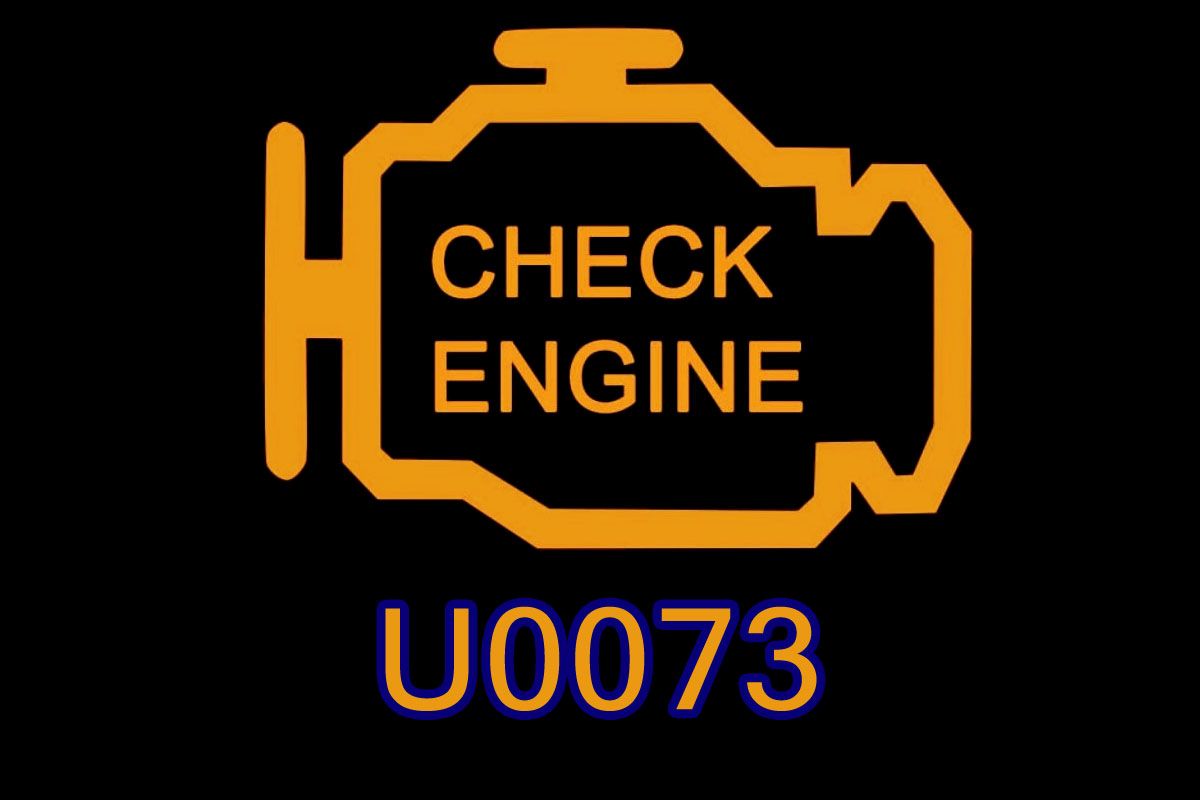
U0073 Control Module Communication Bus "A" Off
U0073 is one of those diagnostic trouble codes that can look much more serious than it actually is.
The code indicates that a vehicle control module has detected that Communication Bus "A" is not operating normally or has gone offline. In most modern vehicles, this bus is part of the communication network used by multiple electronic control modules to exchange information.
The critical point is that U0073 does not identify one specific failed module.
It is a network-level fault.
A damaged CAN wire, poor connector, weak power supply, bad ground, low system voltage, a shorted module, or even a communication problem elsewhere in the vehicle can potentially cause U0073.
What Does “Bus A Off” Mean?
Modern vehicles have several control modules that need to communicate with each other.
Depending on the vehicle, these can include:
-
Engine Control Module (ECM)
-
Transmission Control Module (TCM)
-
ABS/ESC module
-
Airbag/SRS module
-
Body Control Module (BCM)
-
Instrument cluster
-
Electric power steering module
-
Gateway module
-
HVAC module
-
ADAS and other driver-assistance modules
These modules exchange information through communication networks.
A common network is CAN (Controller Area Network).
Under normal conditions, CAN communication continuously carries messages between modules. If the network develops a serious electrical fault, communication can become corrupted or stop completely.
The term “Bus Off” has a specific meaning in CAN communication. A CAN controller that experiences too many transmission errors can automatically remove itself from the network and enter a bus-off state.
Therefore, U0073 is not simply saying:
“One module has failed.”
It is indicating a serious problem with communication on the relevant bus.
U0073 Is Different From a Normal Module Communication Code
There is an important distinction between U0073 and codes such as U0100 or U0101.
For example:
U0101 means communication with the TCM has been lost.
U0073 points toward a broader communication-bus problem.
If a vehicle has U0101 alone, you may concentrate initially on the TCM and its communication circuits.
If U0073 is present with several other communication codes, the investigation should move toward the network itself, shared power and grounds, gateway operation, and modules connected to the affected bus.
This difference can prevent unnecessary module replacement.
What Causes U0073?
There is no single universal cause.
Common possibilities include:
-
Damaged CAN-H wiring
-
Damaged CAN-L wiring
-
Short circuit between CAN wires
-
CAN wire shorted to ground
-
CAN wire shorted to battery voltage
-
Open communication circuit
-
Corroded connector
-
Loose terminal
-
Poor terminal tension
-
Water intrusion
-
Damaged wiring harness
-
Low battery voltage
-
Excessive voltage drop
-
Poor module ground
-
Failed relay or fuse
-
A control module that has internally failed
-
A module repeatedly resetting
-
Incorrect module programming
-
Aftermarket electrical equipment interfering with the network
-
Gateway/network configuration problems
-
Physical harness damage following vehicle repairs
The actual cause depends heavily on the vehicle's network architecture.
Why One Bad Module Can Affect the Entire Network
This is an important concept when diagnosing U0073.
Several modules can share the same communication bus.
If one module develops an internal electrical fault and begins interfering with the CAN network, other modules may also stop communicating correctly.
For example, a defective module could potentially:
-
Pull a CAN line toward an abnormal voltage
-
Generate excessive communication errors
-
Repeatedly reset
-
Flood the network with invalid messages
-
Interfere with normal bus operation
The result can be a vehicle with many apparently unrelated communication codes.
That does not necessarily mean ten different modules have failed.
There may be one network problem producing many secondary faults.
Symptoms You May Notice
U0073 can produce very different symptoms depending on which communication bus is affected.
Possible symptoms include:
-
Check Engine Light
-
Multiple warning lights
-
ABS warning
-
ESC warning
-
Transmission warning
-
Airbag warning
-
Power steering warning
-
Instrument cluster communication problems
-
Missing information on the dashboard
-
Incorrect gear display
-
Transmission entering limp mode
-
Reduced engine power
-
Cruise control becoming unavailable
-
Start/stop system becoming unavailable
-
Engine no-start
-
Intermittent stalling
-
Electronic accessories becoming unavailable
-
Several modules becoming inaccessible to the scan tool
Some vehicles may continue running despite U0073.
Others may become nearly undriveable if the affected bus carries information essential for engine, transmission, braking, or body control.
The Number of Communication Codes Matters
When U0073 appears, don't immediately clear it and scan only the engine computer again.
Perform a complete vehicle scan.
Look at the entire code set.
You may find something like:
-
U0073
-
U0100
-
U0101
-
U0121
-
U0140
The combination is much more informative than U0073 by itself.
If multiple modules complain about lost communication with one another, investigate the common network first.
If only one module reports a communication problem and all other systems operate normally, the diagnosis may be more localized.
Start With the Battery and Main Power Supply
Low voltage is an often-overlooked cause of communication faults.
Electronic modules need stable electrical power to operate their communication controllers.
A weak battery can cause a major voltage drop during engine cranking.
A poor battery terminal or ground connection can have a similar effect.
Check:
-
Battery condition
-
Battery terminals
-
Main chassis ground
-
Engine ground strap
-
Charging system
-
Cranking voltage
-
Module supply voltage
A low-voltage event can cause several modules to reset simultaneously.
That can leave a large number of U-codes behind.
However, don't automatically blame the battery simply because U0073 is present.
If the code repeatedly returns under normal voltage conditions, the communication network still needs to be investigated.
Inspect the Network Wiring
CAN wiring is usually routed throughout the vehicle.
That makes the harness vulnerable to:
-
Water
-
Heat
-
Vibration
-
Previous collision damage
-
Incorrect repairs
-
Rodent damage
-
Chafing
-
Pinching
-
Connector contamination
Pay particular attention to areas where recent work has been performed.
If U0073 appeared immediately after:
-
Engine removal
-
Transmission work
-
Dashboard removal
-
Body repair
-
Electrical installation
-
Module replacement
-
Battery replacement
-
Wiring repair
inspect the affected harnesses and connectors before assuming an unrelated module suddenly failed.
CAN-H and CAN-L Are Not Just Ordinary Wires
A CAN network normally uses a pair of communication conductors.
They work together to transmit differential signals.
The exact network configuration varies between manufacturers, but the important diagnostic principle is that both communication lines must be electrically healthy.
A problem with one conductor can be enough to disrupt communication.
Potential faults include:
-
Open circuit
-
Short circuit
-
Excessive resistance
-
Incorrect termination
-
Physical damage
-
Poor connector contact
-
Intermittent connection
The correct test points and expected values must come from the vehicle manufacturer's wiring diagram and diagnostic procedure.
Generic internet pinouts should not be trusted simply because the vehicle uses CAN.
Why a Simple Continuity Test Isn't Enough
A CAN wire can show continuity and still have a communication problem.
For example, a damaged terminal may make electrical contact when the vehicle is stationary but lose contact when the harness moves.
A partially broken conductor can also behave differently under vibration.
Other faults may involve:
-
High resistance
-
Poor terminal tension
-
Intermittent shorts
-
Network loading
-
Incorrect termination
-
Another module disturbing the bus
Therefore, network diagnosis should not consist solely of checking whether two wires “beep” with a multimeter.
Depending on the vehicle, voltage measurements, loaded testing, network resistance checks, and oscilloscope analysis may be appropriate.
A Faulty Ground Can Look Like a CAN Problem
Control modules need a reliable ground reference.
If a module ground becomes unstable, the module may behave unpredictably.
It may:
-
Reset
-
Stop communicating
-
Generate invalid CAN messages
-
Drop offline intermittently
-
Set multiple internal and communication codes
This is why checking module grounds is important when diagnosing U0073.
A ground can show low resistance with the ignition switched off and still have excessive voltage drop while the module is operating.
A loaded voltage-drop test can therefore be more useful than a simple resistance measurement.
Water Intrusion Is a Serious Possibility
Moisture is a common enemy of vehicle communication networks.
Depending on the vehicle, network-related connectors may be located:
-
Under the dashboard
-
Near the kick panels
-
Under seats
-
In the engine compartment
-
Near the battery
-
Inside fuse/relay areas
-
Near the transmission
-
Near body control modules
A small amount of moisture can create corrosion at terminals.
The problem may become intermittent at first and progressively worse later.
If U0073 appears together with strange electrical behavior after heavy rain, washing, flooding, or a leaking windshield/door seal, inspect for water intrusion.
Could an Aftermarket Device Cause U0073?
Yes, depending on how it is installed.
Aftermarket equipment can sometimes interact with vehicle wiring or communication networks.
Examples may include:
-
Remote-start systems
-
Alarm systems
-
Tracking devices
-
Audio equipment
-
Fleet-management hardware
-
LPG/CNG conversion electronics
-
Non-original diagnostic interfaces
-
Poorly installed accessories
This does not mean aftermarket equipment is automatically responsible.
The important clue is timing.
If U0073 began immediately after an electrical accessory was installed or modified, inspect that installation carefully.
What Happens When a CAN Module Goes Bus Off?
CAN controllers use error detection mechanisms.
When communication errors accumulate beyond certain limits, a controller can transition into a bus-off state.
This is a protective mechanism.
The module effectively removes itself from active communication rather than continuing to transmit potentially corrupted information.
Depending on the vehicle's architecture, the controller may later recover and attempt communication again.
This helps explain why some U0073 faults are intermittent.
A vehicle may work normally for several minutes, suddenly develop multiple warning lights, and then appear normal again after an ignition cycle.
The temporary recovery does not necessarily mean the problem is gone.
U0073 and Intermittent Faults
Intermittent network faults can be among the most difficult electrical problems to diagnose.
Consider a connector with poor terminal tension.
At rest, the connection is good.
During driving, vibration moves the harness.
The connection becomes unstable.
Communication errors increase.
A module enters a fault state.
The vehicle displays several warning lights.
The driver stops and restarts the vehicle.
The connection happens to recover.
The vehicle then appears normal.
A basic scan performed later may show only a stored U0073.
This is why freeze-frame information, event history, and reproducing the fault under controlled conditions can be extremely valuable.
Can U0073 Cause a No-Start?
It can, depending on the affected communication network and vehicle architecture.
Modern engines often require information from several modules before allowing normal operation.
If communication between the ECM, immobilizer/security system, transmission system, or other required modules is unavailable, the vehicle may refuse to start.
However, a no-start condition plus U0073 does not automatically mean the ECM has failed.
Check the complete communication network and determine which modules are actually online.
Can U0073 Cause Transmission Problems?
Yes, indirectly.
The transmission may depend on communication with:
-
ECM/PCM
-
TCM
-
ABS/ESC
-
Body modules
-
Selector or shift-control modules
If the relevant network goes offline, the transmission may lose information required for normal operation.
Possible results include:
-
Limp mode
-
Fixed gear
-
Incorrect gear indication
-
Delayed engagement
-
Loss of automatic shifting
-
No gear selection
-
Transmission warning
Again, this does not prove the transmission itself is mechanically damaged.
U0073 After Battery Replacement
A communication code appearing after battery replacement does not necessarily indicate a failed module.
During battery replacement, the vehicle can experience:
-
Voltage interruption
-
Temporary low voltage
-
Electrical spikes depending on the circumstances
-
Connector disturbance
-
Incorrect battery connection
-
Battery terminal problems
If several U-codes appeared immediately after battery service and disappear after clearing without returning, investigate the voltage event.
If U0073 returns repeatedly, continue with proper network diagnosis.
A Better Diagnostic Strategy
A technician should approach U0073 as a network problem first.
Start by documenting every code in every accessible module.
Then determine:
Is the entire vehicle network affected, or only part of it?
Next:
Which modules can communicate and which cannot?
Then:
Do the affected modules have correct power and ground?
After that:
Is the communication network electrically healthy?
Only after those questions are answered should individual modules be condemned.
A Practical U0073 Diagnostic Workflow
Step 1 – Perform a full scan
Record all current, stored, and history codes.
Step 2 – Identify communication patterns
Look for multiple U-codes and determine which modules are offline.
Step 3 – Check battery and charging voltage
Verify that low system voltage is not causing modules to reset.
Step 4 – Check relevant fuses and relays
Don't assume a fuse is good merely because it looks intact.
Step 5 – Verify module power and grounds
Perform appropriate loaded and voltage-drop tests.
Step 6 – Inspect connectors
Look for corrosion, water, bent pins, loose terminals, and damaged locks.
Step 7 – Inspect CAN wiring
Check for opens, shorts, high resistance, physical damage, and disturbed harnesses.
Step 8 – Evaluate the network
Use the manufacturer's CAN diagnostic procedure and, where appropriate, waveform testing.
Step 9 – Isolate a potentially disruptive module
If the evidence indicates that one module is interfering with the bus, follow the manufacturer's isolation procedure.
Step 10 – Consider software or module failure
Only after the external electrical and network causes have been eliminated.
Should the CAN Bus Be Repaired or the Module Replaced?
That depends entirely on the evidence.
If the CAN wiring is damaged, repair the wiring correctly.
If a connector has corrosion, repair the connector/terminals according to the manufacturer's procedure.
If a module has no power, repair the power supply.
If a module has a poor ground, repair the ground.
If one module is proven to be disrupting the network, then that module may need replacement.
If the network is healthy and the module has a confirmed internal failure, module replacement may be justified.
The important sequence is:
Network → power/ground → connectors/wiring → software/configuration → module.
Not the other way around.
Do Not Replace Every Module That Has a U-Code
This is one of the most expensive mistakes that can occur with U0073.
A single network problem can create several communication codes.
For example, a technician might see:
-
U0073
-
U0100
-
U0101
-
U0121
-
U0140
and conclude that the ECM, TCM, ABS module, and BCM have all failed.
That conclusion may be completely wrong.
One CAN network fault could potentially explain all of them.
The correct diagnosis looks for the common point shared by the affected systems.
What About Clearing U0073?
Clearing the code can be useful after a repair, but it is not a diagnostic repair itself.
If U0073 was caused by a temporary low-voltage event and does not return, the situation may be resolved.
If the network fault remains, the code will return.
After repairs, the vehicle should be rescanned and tested under the conditions in which the original fault occurred.
Where appropriate, confirm that all required modules are communicating normally.
Final Diagnosis
U0073 – Control Module Communication Bus "A" Off is a network-level communication fault.
It does not automatically mean the ECM, TCM, BCM, ABS module, or another control module has failed.
The most important clues are:
-
How many modules are affected
-
Which modules are inaccessible
-
Whether battery voltage is stable
-
Whether affected modules have proper power and ground
-
Whether CAN wiring and connectors are healthy
-
Whether another module is disrupting the network
-
Whether the fault is intermittent or permanent
A good diagnosis therefore starts with the communication network and its electrical foundations, rather than replacing expensive control modules.
The key rule with U0073 is simple:
When several modules suddenly stop communicating, look for the common network problem before blaming the individual modules.