TR
TR EN
EN

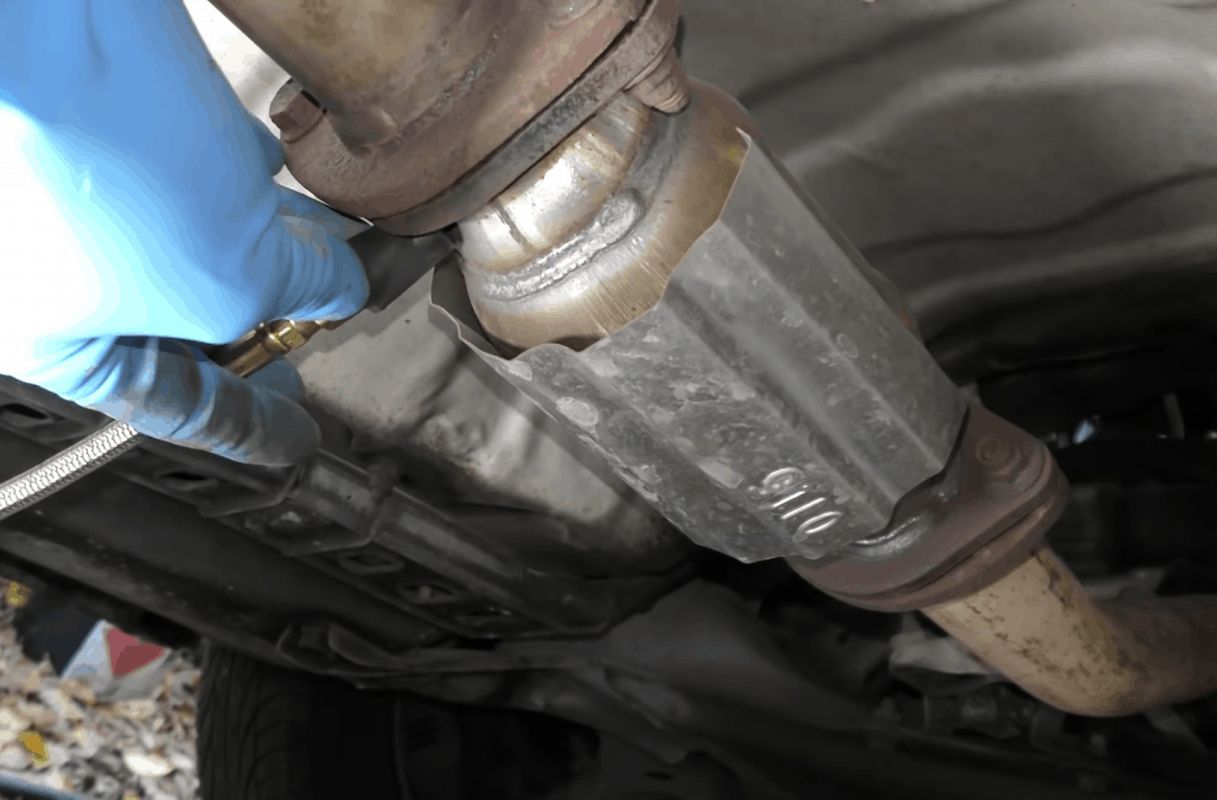
How Can You Tell If a Catalytic Converter Is Clogged? What Are the Symptoms?
A clogged catalytic converter can cause major engine performance problems because it restricts the flow of exhaust gases out of the engine. When exhaust gases cannot leave the cylinders efficiently, the engine struggles to breathe, especially as engine speed and load increase.
A partially restricted catalytic converter can be difficult to diagnose because the vehicle may drive almost normally at low speeds. As the restriction becomes more severe, however, acceleration becomes weaker, engine RPM may become difficult to increase, and the engine may eventually stall.
It is also important to remember that not every catalytic converter problem is a blockage. A converter can also suffer from contamination, physical damage, catalyst deterioration, or efficiency loss without creating a significant exhaust restriction.
What Does a Catalytic Converter Do?
The catalytic converter is part of the vehicle's exhaust and emissions control system.
Its main purpose is to convert harmful exhaust gases into less harmful compounds before they leave the exhaust system.
Depending on the engine and emissions system, the catalyst helps reduce pollutants such as:
-
Carbon monoxide (CO)
-
Unburned hydrocarbons (HC)
-
Nitrogen oxides (NOx)
Inside the catalytic converter is a honeycomb-like substrate coated with catalytic materials. Exhaust gases pass through this structure and undergo chemical reactions.
For the system to work correctly, exhaust gas must be able to flow through the converter.
If the substrate becomes damaged or melts, the passages can become restricted.
What Causes a Catalytic Converter to Become Clogged?
A catalytic converter usually does not become clogged simply because it is old. In many cases, another engine or fuel-system problem causes the catalyst to overheat or become contaminated.
Common causes include:
-
Severe or prolonged engine misfires
-
Excessive fuel entering the exhaust
-
Faulty fuel injectors
-
Ignition system problems
-
Incorrect air-fuel mixture
-
Excessive oil consumption
-
Coolant entering the combustion chamber
-
Contaminated catalyst material
-
Severe overheating
-
Physical damage to the catalyst substrate
One of the most important causes is engine misfire.
When a cylinder fails to burn the air-fuel mixture properly, unburned fuel can enter the exhaust. This fuel may ignite inside the catalytic converter and cause extremely high temperatures.
Over time, the catalyst substrate can melt or break apart.
The Most Common Symptoms of a Clogged Catalytic Converter
Loss of engine power
One of the strongest indications of an exhaust restriction is a noticeable loss of power.
The vehicle may feel normal during light driving but become increasingly weak when the engine needs to produce more power.
For example, you may notice poor performance when:
-
Accelerating onto a highway
-
Climbing a hill
-
Carrying a heavy load
-
Accelerating at high RPM
-
Driving at higher speeds
The engine is producing combustion gases, but those gases cannot exit efficiently.
Poor Acceleration
A restricted catalytic converter can make the engine feel as though it is being held back.
You may press the accelerator, but the vehicle may respond slowly.
In severe cases, pressing the accelerator harder does not produce significantly more acceleration.
This can sometimes be mistaken for:
-
Fuel pump failure
-
Clogged fuel filter
-
Turbocharger failure
-
Throttle body problems
-
Ignition problems
-
Transmission problems
The important clue is that engine performance often becomes significantly worse as engine load and RPM increase.
Engine RPM May Not Increase Normally
A severely restricted exhaust system can prevent the engine from reaching higher RPM.
The engine may rev normally when unloaded or at low RPM but struggle to increase speed under load.
In severe cases, the engine may appear to reach a certain RPM and then stop increasing despite additional throttle input.
This happens because exhaust gas cannot leave the cylinders efficiently.
Engine May Stall
A severely blocked catalytic converter can eventually cause the engine to stall.
As exhaust restriction increases, cylinder filling becomes increasingly difficult. The engine may struggle to maintain combustion, particularly under load.
Possible situations include:
-
Stalling during acceleration
-
Stalling after reaching higher RPM
-
Stalling when coming to a stop
-
Starting and then quickly dying
-
Becoming increasingly difficult to restart
A completely blocked exhaust system can make starting the engine extremely difficult or even impossible.
Engine Runs Normally at First but Loses Power After Driving
Some exhaust restrictions become more noticeable as the catalytic converter heats up.
The vehicle may start and drive normally when cold, but performance can deteriorate as the exhaust system reaches operating temperature.
Possible symptoms include:
-
Power gradually decreasing
-
Increasing hesitation
-
Engine struggling under load
-
Stalling after extended driving
This pattern can be a useful diagnostic clue.
However, it can also occur with fuel-delivery, ignition, or sensor problems, so further testing is necessary.
Check Engine Light
A catalytic converter problem can trigger the Check Engine Light.
A common example is P0420, which generally relates to catalytic converter efficiency being below the expected threshold.
However, a P0420 code does not automatically mean that the catalytic converter is physically clogged.
The ECU may be detecting reduced catalyst efficiency rather than exhaust restriction.
Possible causes include:
-
Worn catalytic converter
-
Exhaust leak
-
Oxygen sensor problems
-
Incorrect fuel mixture
-
Engine misfire
-
Oil or coolant contamination
A clogged converter can exist without immediately producing a catalyst-efficiency code, especially if the restriction is developing mechanically.
Increased Fuel Consumption
A restricted exhaust can affect engine efficiency and drivability.
The driver may need to use more throttle to maintain the same speed, which can increase fuel consumption.
However, increased fuel consumption is a very general symptom.
Problems with fuel injectors, oxygen sensors, MAF sensors, tire pressure, thermostat operation, and many other systems can produce the same result.
Therefore, fuel consumption should not be used alone to diagnose a blocked catalytic converter.
Unusual Exhaust Smell
A malfunctioning catalytic converter can sometimes produce an unusual exhaust smell.
Depending on the underlying problem, the exhaust may have a strong sulfur-like or rotten-egg smell.
This can occur when the catalyst is unable to process exhaust gases correctly.
However, a bad smell does not necessarily mean the converter is clogged. It can also indicate an incorrect air-fuel mixture or a damaged catalyst.
Excessive Heat Around the Catalytic Converter
A severely overloaded or damaged catalytic converter can become extremely hot.
Signs may include:
-
Excessive heat underneath the vehicle
-
Discoloration of nearby components
-
Burning smells
-
Heat damage to surrounding parts
-
Catalyst glowing red under severe conditions
A glowing catalytic converter is a serious warning sign.
It can indicate severe misfire, excessive fuel entering the exhaust, or a catalyst that is already damaged.
The underlying engine problem should be diagnosed before simply replacing the converter.
Rattling Noise From the Catalytic Converter
A catalytic converter with a broken internal substrate may produce a rattling or buzzing sound.
You may hear the noise:
-
At idle
-
During acceleration
-
When the engine speed changes
-
When tapping or moving the exhaust system
Broken catalyst material can sometimes move inside the housing.
As the substrate breaks apart, pieces can shift and eventually block the exhaust passages.
This means a rattling catalytic converter can eventually develop into an exhaust restriction.
Can a Clogged Catalytic Converter Cause Misfires?
Yes, a severe exhaust restriction can contribute to poor combustion and misfire-like behavior.
When exhaust gases cannot leave the cylinders properly, the engine cannot complete its normal intake and exhaust cycle efficiently.
This can result in:
-
Rough running
-
Poor acceleration
-
Unstable idle
-
Misfires
-
Reduced engine power
However, the opposite situation is also common: misfires can damage and clog the catalytic converter.
This distinction is important when diagnosing the problem.
If a converter is replaced without repairing the original misfire, the new converter can be damaged again.
How Can You Tell if the Catalytic Converter Is Actually Clogged?
Symptoms alone are not enough to confirm a blockage.
A proper diagnosis can include several tests.
Exhaust Backpressure Test
One of the most direct methods is to measure exhaust backpressure.
A pressure gauge can be connected to an appropriate exhaust-system test point, often through an oxygen sensor port.
The technician can then monitor exhaust pressure at idle and under increased engine speed.
Excessive backpressure can indicate a restriction in the catalytic converter or elsewhere in the exhaust system.
The exact acceptable pressure depends on the engine and manufacturer specifications, so there is no universal number that applies to every vehicle.
Vacuum Test
An engine vacuum gauge can sometimes help identify an exhaust restriction.
With a healthy engine, manifold vacuum should remain relatively stable under the appropriate test conditions.
If vacuum gradually drops as engine RPM is held steady, an exhaust restriction may be suspected.
This is not a definitive test by itself, but it can provide useful diagnostic information.
Compare Engine Performance With Exhaust Flow
A technician can evaluate whether exhaust flow is significantly restricted by examining engine behavior under load and comparing it with fuel, ignition, and sensor data.
If the engine runs normally at low load but loses power dramatically as RPM increases, exhaust restriction becomes more plausible.
However, fuel pressure and ignition performance should also be checked because they can produce similar symptoms.
Check Oxygen Sensor Data
Oxygen sensor data can provide useful information about the catalyst and the engine's air-fuel mixture.
On vehicles using conventional upstream and downstream oxygen sensors, the downstream sensor is often used to monitor catalytic converter performance.
However, oxygen sensor readings should not be interpreted in isolation.
A sensor problem, exhaust leak, incorrect fuel mixture, or wiring fault can produce abnormal readings.
Modern vehicles may also use wideband air-fuel ratio sensors and more sophisticated emissions monitoring strategies.
Inspect the Catalytic Converter Physically
If the converter is suspected of being physically damaged, it may need to be inspected.
Depending on the design, a technician may look for:
-
Broken substrate
-
Melted catalyst material
-
Discoloration
-
Signs of overheating
-
Internal rattling
-
Physical impact damage
If the substrate has collapsed internally, the restriction may be visible only after removing the converter or using appropriate inspection equipment.
Can an OBD Scanner Detect a Clogged Catalytic Converter?
An OBD scanner can provide important information, but it generally cannot simply display a message saying "catalytic converter clogged."
The scanner can show:
-
Diagnostic trouble codes
-
Oxygen sensor data
-
Fuel trims
-
Engine load
-
RPM
-
Misfire counts
-
Air-fuel ratio information
-
Catalyst monitoring data
Codes such as P0420 may indicate a catalyst efficiency problem, but they do not by themselves prove that the converter is blocked.
The scanner should therefore be used together with physical and mechanical tests.
Is P0420 the Same as a Clogged Catalytic Converter?
No.
This is a common misunderstanding.
P0420 generally indicates that catalyst efficiency is below the expected level.
The catalytic converter may be chemically degraded without being physically blocked.
Possible causes include:
-
Aging catalyst
-
Contamination
-
Oxygen sensor problems
-
Exhaust leaks
-
Incorrect air-fuel mixture
-
Engine misfires
A converter can therefore have a P0420 code and still allow exhaust gases to flow reasonably well.
Conversely, a physically restricted converter may cause severe performance problems even before a catalyst-efficiency code is stored.
Can a Clogged Catalytic Converter Be Cleaned?
There are many products and procedures marketed as catalytic converter cleaners.
These may sometimes help with minor contamination, but they cannot repair a converter with a melted or collapsed substrate.
If the internal honeycomb structure has physically deteriorated, chemical cleaning will not restore it.
A severely damaged or blocked catalytic converter generally needs to be replaced.
More importantly, the reason for the original catalyst damage must be identified.
Why Does a New Catalytic Converter Fail Again?
Replacing the converter without fixing the underlying engine problem is a common mistake.
A new converter can be damaged again if the vehicle continues to experience:
-
Misfires
-
Rich air-fuel mixture
-
Faulty fuel injectors
-
Excessive oil consumption
-
Coolant entering the combustion chamber
-
Ignition problems
-
Incorrect engine timing
-
Other conditions that overheat or contaminate the catalyst
For example, if an ignition coil is causing repeated misfires, replacing only the catalytic converter does not solve the actual problem.
Can a Clogged Catalytic Converter Damage the Engine?
A severe exhaust restriction can place considerable stress on the engine.
If exhaust gases cannot escape properly, engine breathing and combustion efficiency are affected.
This can result in:
-
Significant power loss
-
Excessive exhaust temperature
-
Poor combustion
-
Stalling
-
Increased engine stress
The longer the restriction remains, the greater the possibility of secondary problems.
A severely restricted exhaust system should therefore be diagnosed promptly.
Can You Drive With a Clogged Catalytic Converter?
Driving with a mild restriction may be possible temporarily, but it should not be ignored.
As the blockage becomes worse, the vehicle may suddenly lose power, especially during acceleration or highway driving.
A severe restriction can cause the engine to stall and may leave the vehicle unable to maintain speed safely.
If the catalytic converter is extremely hot, glowing red, or accompanied by severe misfires and major power loss, continued driving is not advisable.
Clogged Catalytic Converter vs. Bad Fuel Pump
These two problems can produce surprisingly similar symptoms.
Both can cause:
-
Poor acceleration
-
Loss of power
-
Hesitation
-
Difficulty reaching high RPM
-
Stalling
-
Poor performance under load
The difference is found through testing.
A fuel-pressure test can help determine whether the fuel system is maintaining adequate pressure. Exhaust backpressure testing can help determine whether the exhaust system is restricted.
Testing both systems can prevent replacing the wrong component.
Clogged Catalytic Converter vs. Clogged Fuel Filter
A clogged fuel filter can also cause the engine to lose power under heavy load.
The key diagnostic difference is that a fuel restriction affects fuel delivery, while a catalytic converter restriction affects exhaust flow.
Both problems may appear normal during light driving and become obvious during hard acceleration.
Fuel pressure, fuel flow, and exhaust backpressure testing can help distinguish between them.
Final Thoughts
A clogged catalytic converter can cause loss of power, poor acceleration, difficulty increasing engine RPM, hesitation, engine stalling, increased fuel consumption, unusual exhaust smells, excessive heat, and sometimes a Check Engine Light.
One of the most important clues is a vehicle that drives reasonably well at low speeds but becomes increasingly weak when the engine is under heavy load or operating at higher RPM.
However, symptoms alone cannot prove that the catalytic converter is blocked. Fuel delivery problems, ignition faults, turbocharger problems, sensor faults, and other exhaust restrictions can create very similar symptoms.
The most reliable diagnosis combines OBD data, fuel and ignition checks, exhaust backpressure testing, oxygen-sensor information, and physical inspection of the catalytic converter.
Most importantly, if the converter has melted or collapsed, simply replacing it is not enough. The reason it failed—especially misfire, excessive fueling, oil consumption, or coolant contamination—must also be corrected to prevent the replacement catalytic converter from suffering the same fate.