TR
TR EN
EN

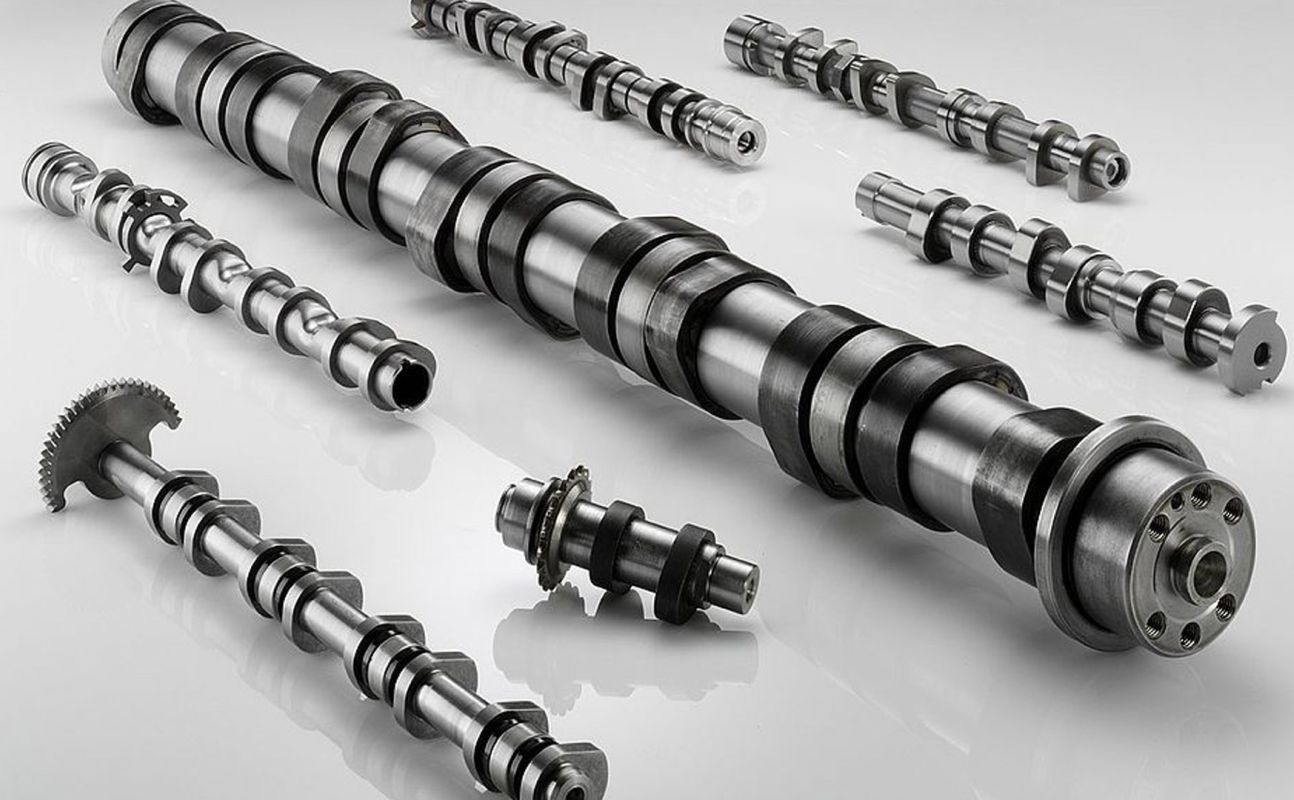
What Is a Camshaft? How Does It Work? What Are the Symptoms of Camshaft Failure?
The camshaft is one of the most important components in an internal combustion engine. Its primary job is to control when the intake and exhaust valves open and close.
The camshaft rotates in synchronization with the crankshaft. Its specially shaped cam lobes push the valve train components at precisely timed intervals, allowing the engine to draw in air, compress the mixture, release combustion gases, and complete each combustion cycle correctly.
A problem with the camshaft can therefore affect much more than engine noise. Depending on the type and severity of the fault, it can cause poor performance, rough running, misfires, starting difficulties, increased fuel consumption, or even serious engine damage.
What Does a Camshaft Do?

The camshaft controls the movement of the engine's valves.
During the four-stroke combustion cycle, the engine needs to perform four basic operations:
-
Intake
-
Compression
-
Power
-
Exhaust
The intake valves must open at the appropriate time to allow air or an air-fuel mixture into the cylinder. The exhaust valves must then open at the correct time to allow combustion gases to leave.
The camshaft makes this precise timing possible.
Its lobes are positioned according to the engine's valve timing requirements. As each lobe rotates, it pushes against the appropriate valve train component and causes the valve to open.
When the lobe rotates away, the valve closes under the action of the valve spring or the corresponding valve mechanism.
How Does a Camshaft Work?
The camshaft is mechanically connected to the crankshaft through a timing belt, timing chain, or gears, depending on the engine design.
In a typical four-stroke engine, the camshaft rotates at half the speed of the crankshaft.
This relationship is essential because the valves must open and close at precisely defined points during the four-stroke cycle.
For example:
-
The crankshaft rotates as the piston moves downward.
-
The camshaft rotates in synchronization with the crankshaft.
-
A cam lobe reaches the valve train.
-
The lobe pushes the valve mechanism.
-
The valve opens.
-
The lobe rotates away.
-
The valve closes.
This process happens continuously and extremely quickly while the engine is running.
What Is a Cam Lobe?

A cam lobe is the raised section of the camshaft responsible for moving a valve.
The shape of the lobe determines several important characteristics of valve operation, including:
-
When the valve begins to open
-
How far the valve opens
-
How long the valve remains open
-
How quickly the valve opens and closes
This is why camshaft design has a major influence on engine performance.
A camshaft designed for low-speed efficiency may have different characteristics from one designed for high-RPM performance.
Overhead Camshaft Designs
Modern engines commonly use overhead camshaft configurations.
SOHC — Single Overhead Camshaft
A single camshaft is located in the cylinder head and operates the valves.
DOHC — Dual Overhead Camshafts
Two camshafts are used, usually one for the intake valves and one for the exhaust valves.
DOHC designs allow engineers greater control over valve timing and are particularly common in modern multi-valve engines.
Camshaft and Crankshaft Relationship
The camshaft and crankshaft must remain precisely synchronized.
The crankshaft controls piston movement, while the camshaft controls valve movement.
If their relationship changes, the valves may open too early or too late relative to piston position.
This can cause:
-
Poor combustion
-
Loss of power
-
Misfires
-
Difficult starting
-
Increased emissions
-
Engine damage in interference engines
This is why a problem with the timing belt, timing chain, tensioner, or camshaft timing system can sometimes produce symptoms that initially appear to be a camshaft problem.
What Is Variable Valve Timing?
Many modern engines use Variable Valve Timing (VVT).
Instead of keeping the camshaft at one fixed position relative to the crankshaft, the engine control system can adjust camshaft timing according to operating conditions.
The system may alter valve timing depending on:
-
Engine RPM
-
Engine load
-
Throttle position
-
Coolant temperature
-
Engine oil pressure
-
Driving conditions
This allows the engine to balance performance, fuel economy, emissions, and drivability.
Depending on the design, systems may use components such as:
-
VVT solenoids
-
Camshaft phasers
-
Oil control valves
-
Camshaft position sensors
A fault in one of these components can sometimes produce symptoms similar to a camshaft problem.
What Are the Symptoms of Camshaft Failure?
A damaged or worn camshaft can produce several symptoms. The exact signs depend on whether the problem is mechanical, related to timing, or caused by another component monitoring camshaft position.
Poor engine performance
If the camshaft cannot control the valves correctly, the engine may not breathe properly.
You may notice:
-
Reduced acceleration
-
Loss of power
-
Weak response at higher RPM
-
Poor throttle response
-
Reduced overall performance
A damaged cam lobe, for example, may prevent a valve from opening far enough.
Rough Idle
A camshaft problem can cause unstable engine operation at idle.
If one or more valves are not operating correctly, cylinder filling and combustion may become inconsistent.
The engine may:
-
Shake at idle
-
Vibrate
-
Run unevenly
-
Have fluctuating RPM
-
Feel as though it is misfiring
However, rough idle has many possible causes, so the camshaft should not be blamed without further testing.
Engine Misfires
Valve timing is directly related to combustion.
If the camshaft or its timing is incorrect, the valves may not be in the correct position when combustion occurs.
This can result in misfires.
Depending on the problem, the ECU may store:
-
Cylinder-specific misfire codes
-
Camshaft timing codes
-
Camshaft position correlation codes
A flashing Check Engine Light accompanied by severe misfire should be treated as a serious condition because continued driving can damage the catalytic converter.
Difficult Starting or No-Start Condition
A significant camshaft timing problem can make the engine difficult or impossible to start.
If valve timing is substantially incorrect, the engine may not be able to complete the combustion cycle properly.
Possible symptoms include:
-
Extended cranking
-
Intermittent starting
-
Starting and immediately stalling
-
Complete no-start condition
A broken timing belt or severely damaged timing chain can cause this type of problem.
Check Engine Light
Camshaft-related problems frequently result in a Check Engine Light.
The ECU can compare information from the camshaft position sensor and crankshaft position sensor to determine whether the two shafts are correctly synchronized.
If the relationship is outside the expected range, the ECU may store a camshaft/crankshaft correlation fault.
However, an engine fault code referring to camshaft position does not necessarily mean that the camshaft itself is damaged.
Possible causes include:
-
Camshaft position sensor failure
-
Crankshaft position sensor problems
-
Timing chain stretch
-
Timing belt installation error
-
VVT actuator problems
-
VVT solenoid problems
-
Wiring faults
-
Low engine oil pressure
-
Incorrect mechanical timing
Unusual Noise From the Top of the Engine
A worn camshaft can produce abnormal mechanical noise from the upper part of the engine.
Possible sounds include:
-
Ticking
-
Tapping
-
Clicking
-
Grinding
-
Rhythmic knocking
A damaged camshaft lobe can change the way the valve train operates and create abnormal contact between components.
However, injector noise, lifters, rocker arms, timing chain components, and other parts can produce similar sounds.
The location and characteristics of the noise should therefore be carefully evaluated.
Increased Fuel Consumption
Incorrect valve timing can reduce combustion efficiency.
If the intake or exhaust valves are not operating at the correct time, the engine may not fill and empty the cylinders efficiently.
This can result in:
-
Increased fuel consumption
-
Reduced performance
-
Poor combustion
-
Increased emissions
Fuel consumption alone, however, is not enough to diagnose a camshaft problem.
Reduced Engine Power at Certain RPMs
A camshaft problem does not necessarily affect the engine equally at all speeds.
A worn cam lobe or incorrect valve timing may be particularly noticeable within a certain RPM range.
For example, the engine may feel reasonably normal at low RPM but lose power as engine speed increases.
This can happen because airflow requirements and valve timing become increasingly important at higher engine speeds.
What Causes Camshaft Failure?
Camshafts are designed to withstand significant mechanical loads, but lubrication and correct valve train operation are extremely important.
Possible causes of camshaft problems include:
-
Insufficient engine oil
-
Low oil pressure
-
Incorrect oil viscosity
-
Dirty or contaminated engine oil
-
Sludge buildup
-
Restricted oil passages
-
Excessive valve train wear
-
Worn cam lobes
-
Improper valve clearance
-
Damaged lifters
-
Worn rocker arms
-
Timing chain problems
-
Incorrect timing belt installation
-
VVT system problems
-
Overheating
-
Poor lubrication during engine assembly
In some engines, inadequate lubrication can cause rapid wear of the camshaft and its contact surfaces.
Can Low Engine Oil Damage the Camshaft?
Yes.
The camshaft and valve train depend on proper lubrication.
If the engine oil level is too low or oil pressure is insufficient, the camshaft and related components may not receive adequate lubrication.
This can increase friction and temperature and accelerate wear.
The consequences can include:
-
Cam lobe wear
-
Scoring
-
Metal debris in the oil
-
Lifter damage
-
Rocker arm wear
-
Increased valve train noise
A low-oil-pressure warning should therefore never be ignored.
Camshaft vs. Camshaft Position Sensor
These two components are often confused.
The camshaft is a mechanical component that physically controls valve operation.
The camshaft position sensor is an electronic sensor that monitors the camshaft's position and speed and sends this information to the ECU.
A vehicle can therefore have a camshaft position sensor fault while the camshaft itself is mechanically healthy.
Conversely, a mechanically damaged camshaft can sometimes cause abnormal sensor readings.
This distinction is extremely important during diagnosis.
How Is a Camshaft Problem Diagnosed?
A proper diagnosis usually combines electronic and mechanical testing.
A technician may start by checking:
-
Diagnostic trouble codes
-
Camshaft position data
-
Crankshaft position data
-
Camshaft timing values
-
VVT commanded position
-
VVT actual position
-
Engine oil level
-
Engine oil pressure
-
Timing chain or belt condition
If a mechanical problem is suspected, the valve cover may need to be removed for visual inspection.
The technician can then inspect:
-
Cam lobes
-
Camshaft journals
-
Rocker arms
-
Lifters
-
Valve springs
-
Oil passages
-
Signs of abnormal wear
Depending on the engine, additional tests such as compression testing or a leak-down test may also be useful.
Can a Worn Camshaft Be Repaired?
The answer depends on the engine and the severity of the damage.
Minor problems may sometimes be addressed by replacing related components or correcting the cause of poor lubrication.
However, a severely worn or damaged camshaft generally requires replacement.
It is also important to determine why the camshaft failed.
If the original cause was low oil pressure, blocked oil passages, or a damaged lifter, simply installing a new camshaft may result in the replacement part failing again.
Can a Camshaft Problem Damage the Engine?
Yes, depending on the failure.
A severely damaged camshaft can affect valve operation and potentially cause contact between valves and pistons in an interference engine.
Timing-related failures can be particularly serious.
A broken timing belt, failed timing chain, or incorrectly timed camshaft can allow the valves and pistons to move out of synchronization.
In some engines, this can result in bent valves and significant internal engine damage.
Can You Drive With a Bad Camshaft?
Driving with a suspected camshaft problem is generally not recommended until the cause has been identified.
A mild noise does not necessarily mean immediate catastrophic failure, but continuing to operate an engine with severe valve train problems can increase the damage.
The risk is higher if the vehicle has:
-
Severe engine misfires
-
Significant power loss
-
Abnormal mechanical noise
-
Low oil pressure
-
Difficult starting
-
Timing-related fault codes
-
A flashing Check Engine Light
If the engine is making loud mechanical noises or the oil pressure warning is illuminated, stopping the engine and investigating the problem is the safer approach.
Final Thoughts
The camshaft is responsible for controlling the opening and closing of the engine's valves and must remain precisely synchronized with the crankshaft.
A camshaft problem can produce loss of power, rough idle, misfires, difficult starting, increased fuel consumption, abnormal engine noise, and Check Engine Light warnings.
However, these symptoms do not automatically mean that the camshaft itself has failed. Timing chain or belt problems, VVT components, lifters, rocker arms, camshaft position sensors, wiring, and lubrication problems can produce very similar symptoms.
For this reason, camshaft-related fault codes and symptoms should be diagnosed as part of the entire valve timing system. Checking camshaft and crankshaft synchronization, oil pressure, VVT operation, sensor signals, and the mechanical condition of the valve train is essential before replacing expensive components.