TR
TR EN
EN

What Is a Vehicle Fuse Box? Fuse Box Failure and Its Symptoms
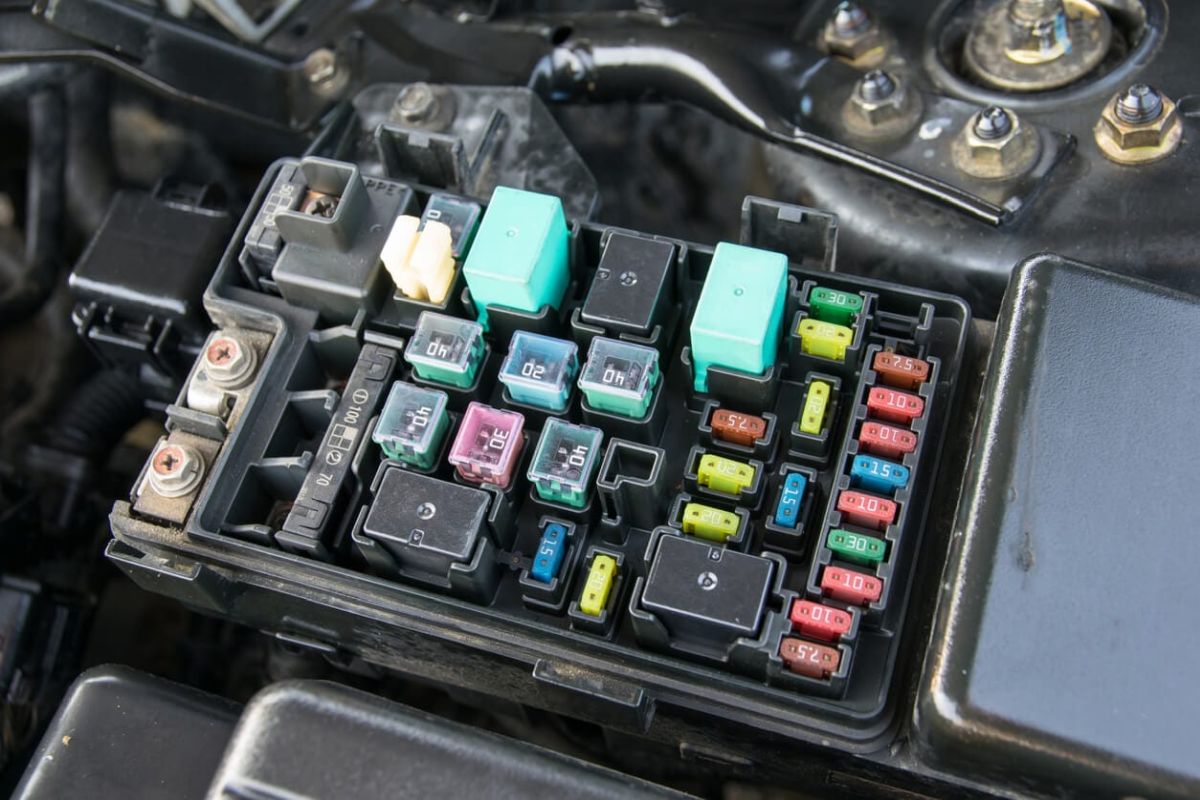
The fuse box is one of the most important parts of a vehicle’s electrical system. Although it is a relatively simple component, it protects many expensive and critical electrical circuits from short circuits, excessive current, and wiring damage.
Headlights, windshield wipers, power windows, interior lighting, fuel pumps, cooling fans, engine control modules, ABS systems, air conditioning, and many other components may receive their electrical protection through fuses located in one or more fuse boxes.
When a fuse blows, the problem may be limited to a single electrical function. However, if the fuse box itself, its terminals, internal connections, power supply, or wiring develops a fault, several unrelated electrical systems can begin to malfunction at the same time.
What Is a Vehicle Fuse Box?
A vehicle fuse box is an electrical distribution and protection unit that contains fuses and, depending on the vehicle, relays and electronic control circuits.
Its primary purpose is to distribute electrical power to different circuits while protecting those circuits from excessive current.
A fuse is designed to melt and open the circuit when current exceeds a specified limit. This prevents excessive current from overheating wires and potentially causing a fire or severe electrical damage.
Modern vehicles can have more than one fuse box. Common locations include:
-
Under the hood in the engine compartment
-
Inside the passenger compartment
-
Under the dashboard
-
Near the glove box
-
In the luggage or trunk compartment
-
Near the battery
The exact location and design vary significantly between vehicle manufacturers and models.
What Does the Fuse Box Do?
The fuse box performs several important functions within the vehicle's electrical system.
Electrical circuit protection
The most basic function is protecting wiring and electrical components against excessive current.
For example, if a component develops an internal short circuit, the corresponding fuse should blow before the wiring becomes dangerously hot.
Electrical power distribution
The fuse box distributes power from the battery, alternator, or vehicle power-management system to individual circuits.
Instead of running a separate unprotected power cable directly to every electrical component, manufacturers use protected distribution points.
Relay control
Many fuse boxes also contain relays.
A relay allows a relatively low-current control circuit to switch a higher-current load such as:
-
Cooling fans
-
Fuel pumps
-
Headlights
-
Horns
-
Heated windows
-
Blower motors
-
Air conditioning components
Some vehicles use separate relay boxes, while others integrate relays directly into the fuse box.
Integration with electronic modules
Modern fuse and power distribution units can do much more than simply hold fuses.
Some vehicles use intelligent fuse boxes or power distribution modules that contain electronic circuitry and communicate with other control modules over the vehicle network.
Fuse Box vs. Fuse
The fuse and fuse box are not the same thing.
The fuse is the individual protective device designed to open when excessive current flows.
The fuse box is the housing and electrical distribution assembly that contains fuses and, depending on the vehicle, relays, bus bars, connectors, and electronic control circuitry.
This distinction is important when diagnosing an electrical problem.
If one fuse keeps blowing, the fuse itself may be working correctly. The real problem could be a short circuit, damaged wiring, a failed motor, or another component downstream of the fuse.
Replacing the fuse repeatedly without finding the cause can create a serious safety risk.
Where Is the Fuse Box Located?
The location depends on the vehicle.
Many cars have an engine-compartment fuse box close to the battery. This box often protects systems that require relatively high current or are located in the engine compartment.
A second fuse box may be located inside the cabin. It commonly supplies circuits such as:
-
Interior lighting
-
Power windows
-
Central locking
-
Audio equipment
-
Instrument cluster
-
Heating and ventilation controls
-
Wipers
-
Accessory power outlets
-
Body control systems
Some vehicles also have additional power distribution units in the trunk or other areas.
The fuse box cover or owner's manual normally provides a fuse diagram showing the circuit protected by each fuse.
What Are the Symptoms of Fuse Box Failure?
A fuse box problem can produce many different symptoms depending on which circuit or internal connection is affected.
One of the most important clues is when several electrical systems fail simultaneously.
Common symptoms include:
-
Multiple electrical components stop working
-
Several unrelated fuses appear to have problems
-
Electrical functions work intermittently
-
Lights flicker or become unstable
-
The vehicle experiences random electrical failures
-
The engine may crank but not start
-
The engine may start and then stall
-
Fuel pump operation may be interrupted
-
Cooling fans may stop working
-
Power windows or central locking may stop working
-
Instrument cluster problems may appear
-
Multiple warning lights may illuminate
-
Diagnostic communication may be lost
-
Relays may click repeatedly
-
Fuses blow repeatedly
-
Burning or melted plastic may be visible
-
A fuse or terminal becomes unusually hot
-
Electrical systems work after hitting a bump and fail again later
-
Battery drain may occur
-
Some modules may repeatedly reset
Not every one of these symptoms means that the fuse box itself is defective. A proper diagnosis is necessary before replacing it.
Intermittent Electrical Problems Can Be a Major Clue
One of the most difficult fuse box problems to diagnose is an intermittent fault.
For example, the vehicle may operate normally for several days and then suddenly lose the headlights, dashboard, blower motor, or another electrical function.
The system may start working again after the vehicle cools down, after a bump, or after the ignition is cycled.
Possible causes include:
-
Loose fuse terminals
-
Poor electrical connections
-
Corrosion
-
Internal cracks in solder joints
-
Damaged bus bars
-
Heat-related expansion
-
Loose connectors
-
Water intrusion
-
Internal relay failure
-
Poor grounding
-
Wiring problems
Intermittent faults should not be ignored simply because the vehicle starts working again.
A Loose Fuse Can Cause Electrical Problems
A fuse must make a reliable electrical connection with its terminals.
If the fuse socket becomes loose, damaged, corroded, or overheated, electrical resistance can increase.
High resistance can generate heat.
This can create a dangerous cycle:
Poor connection → increased resistance → heat → terminal damage → even higher resistance
Eventually, the fuse holder or connector may melt.
In severe cases, replacing the fuse will not solve the problem because the socket itself has been damaged.
Signs of a Melted Fuse Box
A melted fuse box is a serious electrical problem.
Possible signs include:
-
Brown or black discoloration
-
Melted plastic
-
Burn marks
-
Deformed fuse slots
-
Loose terminals
-
A burnt electrical smell
-
Repeated fuse failure
-
Excessive heat around a fuse
-
Intermittent operation of the affected circuit
A fuse box should never be considered normal simply because the vehicle still operates.
A melted terminal indicates that excessive heat has already occurred and the underlying electrical problem needs to be investigated.
Can Water Damage a Fuse Box?
Yes.
Water intrusion is one of the common causes of electrical problems in vehicles.
Water can enter through:
-
Damaged seals
-
Windshield leaks
-
Sunroof drains
-
Door seals
-
Engine-compartment covers
-
Incorrectly installed accessories
-
Flooding
-
Pressure washing
-
Cracked housings
Moisture can cause corrosion on fuse terminals and connectors.
In vehicles with intelligent power distribution modules, water damage can also affect electronic circuits and communication networks.
This may produce strange symptoms that appear unrelated.
For example, a water-damaged power distribution unit may cause problems with lighting, central locking, wipers, engine starting, and communication with several control modules.
Can Corrosion Cause Fuse Box Problems?
Yes.
Corrosion increases electrical resistance and can interfere with the flow of current.
It may occur on:
-
Fuse terminals
-
Relay terminals
-
Electrical connectors
-
Ground connections
-
Power distribution terminals
-
Battery connections
-
Internal bus bars
Even relatively small amounts of corrosion can create intermittent electrical faults.
Corrosion is particularly important when a problem occurs after rain, washing, high humidity, or prolonged exposure to moisture.
Why Do Fuses Keep Blowing?
A repeatedly blown fuse should always be investigated.
The fuse is usually not the root cause.
The fuse may be protecting the circuit exactly as it was designed to.
Possible causes include:
Short circuit
A wire may be contacting the vehicle body or another electrical circuit.
Damaged wiring
Wiring can become damaged by heat, vibration, friction, rodents, previous repairs, or accidents.
Failed electrical component
Motors, solenoids, pumps, heating elements, and other components can develop internal short circuits.
Incorrect component
An aftermarket component may draw more current than the original circuit was designed to handle.
Incorrect fuse rating
Installing a fuse with a higher rating than specified can allow dangerous current levels to flow through the wiring.
Never install a larger fuse simply because the correct fuse keeps blowing.
Can a Bad Fuse Box Cause a No-Start?
Yes, depending on the vehicle.
The fuse box or power distribution unit may supply power to critical engine-management components.
Depending on the vehicle architecture, these may include:
-
Engine control module
-
Fuel pump
-
Ignition system
-
Injectors
-
Engine sensors
-
Main engine-management relay
-
Immobilizer-related circuits
-
Starter control circuits
If power to one of these systems is interrupted, the engine may crank without starting.
In other cases, the vehicle may not crank at all.
However, a no-start condition does not automatically indicate fuse box failure. Battery voltage, grounds, relays, wiring, immobilizer systems, starter circuits, and control modules must also be checked.
Can a Fuse Box Cause Multiple Warning Lights?
Yes.
Modern vehicles contain many interconnected control modules.
If a common power supply is interrupted, multiple modules may report communication or voltage-related faults.
The dashboard may then display several warning lights simultaneously.
For example, a vehicle could show warnings related to:
-
ABS
-
Electronic stability control
-
Airbags
-
Engine management
-
Transmission
-
Steering
-
Battery charging
-
Body electronics
This does not necessarily mean that all of these systems have failed.
A shared power supply, ground, or communication problem can sometimes create a large number of secondary fault codes.
Low Battery Voltage Can Look Like Fuse Box Failure
Before condemning a fuse box, battery and charging-system voltage should be checked.
Low voltage can cause control modules to reset, communication faults to appear, relays to behave incorrectly, and electrical components to malfunction.
Possible causes include:
-
Weak battery
-
Loose battery terminals
-
Corroded terminals
-
Poor ground connection
-
Alternator charging problem
-
Damaged battery cable
-
Excessive parasitic drain
This is why checking the vehicle's basic power supply should be part of the diagnosis.
Fuse Box and Relay Problems
A relay can fail even when its corresponding fuse is perfectly good.
Relay failure may cause a component to:
-
Stop working completely
-
Work intermittently
-
Remain permanently powered
-
Activate unexpectedly
-
Operate only when the vehicle is cold
-
Stop working when the relay becomes hot
Some fuse boxes contain removable relays, making diagnosis relatively straightforward.
However, some modern vehicles use integrated or solid-state power control instead of conventional removable relays.
In those cases, the diagnosis can be considerably more complex.
How Is Fuse Box Failure Diagnosed?
A professional diagnosis normally begins with the symptom rather than immediately replacing the fuse box.
The technician may perform several checks.
Check the fuses
Every relevant fuse should be checked for continuity and, more importantly, for proper voltage on the circuit.
A visual inspection alone is not always sufficient.
Check battery voltage
Battery voltage should be measured under appropriate conditions.
Charging voltage should also be checked with the engine running.
Check power and ground connections
A poor ground can create symptoms that look like a fuse box or control-module failure.
Voltage-drop testing is particularly useful for identifying high-resistance connections.
Inspect fuse terminals
The fuse itself may be good while the terminal holding it is damaged.
Technicians should look for:
-
Corrosion
-
Loose terminals
-
Heat damage
-
Discoloration
-
Melted plastic
-
Poor contact pressure
Check relays
Where conventional relays are used, their control and load circuits can be tested.
A relay should not simply be replaced without confirming that the circuit is correctly controlling it.
Check for short circuits
If a fuse continues to blow, the downstream circuit needs to be tested for excessive current or a short to ground.
Perform a diagnostic scan
A full vehicle scan can reveal communication and voltage-related fault codes.
This is especially important in modern vehicles because the fuse box may supply multiple control modules.
Voltage Drop Testing Is Very Useful
Voltage-drop testing can reveal resistance that may not be obvious during a basic continuity test.
A connection may appear electrically continuous while still having enough resistance to cause a major problem when current flows.
For high-current circuits such as blower motors, cooling fans, fuel pumps, and heated systems, voltage-drop testing can be particularly valuable.
A technician may compare voltage before and after a fuse, relay, connector, cable, or ground connection while the circuit is operating.
This helps identify where unwanted resistance exists.
Does a Bad Fuse Mean the Fuse Box Is Bad?
No.
This is one of the most important points in fuse box diagnosis.
A blown fuse usually means that excessive current passed through the circuit.
The fuse may have performed its job correctly.
The actual fault could be:
-
Shorted wiring
-
Failed motor
-
Failed pump
-
Damaged connector
-
Water intrusion
-
Incorrect accessory
-
Internal component failure
Replacing the entire fuse box because one fuse has blown can be an unnecessary and expensive repair.
Can a Fuse Box Be Repaired?
It depends on the design and the type of damage.
A simple problem such as a damaged terminal, loose connection, or corroded connector may sometimes be repaired.
However, repairability depends heavily on the manufacturer and the specific fuse box.
If the internal bus bars, circuit board, electronic power-control components, or molded connections are damaged, replacement may be more appropriate.
Modern intelligent power distribution modules can contain electronics that require programming or configuration after replacement.
Does a Replacement Fuse Box Need Programming?
Sometimes.
A basic passive fuse box may not require any programming.
However, modern vehicles may use an intelligent power distribution module or body electrical control unit that communicates with other modules.
After replacement, the vehicle may require:
-
Configuration
-
Coding
-
Software initialization
-
Variant programming
-
Module synchronization
-
Calibration
-
Security or immobilizer procedures
The exact procedure depends on the vehicle.
This is why installing a used electronic power distribution module is not always a simple plug-and-play repair.
Should You Use a Used Fuse Box?
A used fuse box can sometimes be a viable repair option, particularly for older vehicles with simple electrical architecture.
However, compatibility must be confirmed carefully.
Two units that look physically identical may have different:
-
Part numbers
-
Internal circuits
-
Relay configurations
-
Software
-
Vehicle configurations
-
Connector assignments
For electronically controlled power distribution modules, the correct part number and configuration are especially important.
Common Causes of Fuse Box Failure
Fuse boxes can last for many years, but several conditions can cause problems.
Common causes include:
-
Water intrusion
-
Corrosion
-
Excessive current
-
Short circuits
-
Overheated terminals
-
Loose connections
-
Poor-quality previous repairs
-
Incorrect fuse installation
-
Battery or alternator voltage problems
-
Electrical modifications
-
Aftermarket accessories
-
Rodent damage
-
Physical impact
-
Heat exposure
-
Internal electronic component failure
-
Aging of connectors and terminals
Aftermarket Accessories Can Create Fuse Box Problems
Incorrectly installed aftermarket equipment can place additional loads on factory electrical circuits.
Examples include:
-
LED lighting
-
Audio amplifiers
-
Dash cameras
-
Remote starters
-
Alarm systems
-
Parking sensors
-
Heated accessories
-
Additional USB chargers
-
Trailer wiring
Poor installation can cause short circuits, parasitic battery drain, voltage instability, or overloaded circuits.
Electrical accessories should be installed using appropriate fusing, wiring, connectors, and circuit protection.
Can a Fuse Box Cause Battery Drain?
Yes.
A faulty relay may remain energized when it should switch off.
A damaged power distribution module may also prevent certain circuits from entering their normal sleep state.
This can produce a parasitic drain that slowly discharges the battery.
However, battery drain can originate from many other components, including:
-
Interior lights
-
Infotainment systems
-
Body control modules
-
Alarm systems
-
Door modules
-
USB accessories
-
Aftermarket electronics
-
Faulty relays
-
Control modules that fail to enter sleep mode
A proper parasitic-draw test is necessary to determine the source.
Fuse Box Problems Should Not Be Ignored
Electrical faults can sometimes appear minor at first.
A flickering light or intermittent accessory may seem inconvenient rather than dangerous.
However, excessive resistance, overheating, or repeated short circuits can progressively damage electrical components and wiring.
A burning smell, melted plastic, smoke, or an unusually hot fuse or connector should be treated as a serious warning.
If there is evidence of electrical overheating, continued operation can increase the risk of further damage.
What Should You Do When a Fuse Blows?
First, identify which circuit the fuse protects.
Then determine why it failed.
If the replacement fuse immediately blows again, do not continue installing new fuses.
Never replace a fuse with a higher-rated fuse to prevent it from blowing.
The correct approach is to diagnose the circuit and identify the excessive-current condition.
For important circuits, professional electrical diagnosis is recommended.
Final Thoughts
The vehicle fuse box is much more than a plastic container filled with fuses. It is an important part of the vehicle's electrical power-distribution and protection system.
A simple blown fuse does not necessarily mean that the fuse box has failed. In many cases, the fuse is doing exactly what it was designed to do by protecting the circuit from excessive current.
On the other hand, damaged fuse terminals, corrosion, water intrusion, overheated connections, failed relays, internal electrical faults, and intelligent power-distribution module failures can create complicated symptoms.
When several electrical systems malfunction at the same time, electrical power supply, grounds, fuses, relays, connectors, and the fuse box should all be considered during diagnosis.
The most important rule is simple: never replace a fuse with a larger rating and never replace an expensive fuse box before identifying the actual cause of the electrical problem.