TR
TR EN
EN

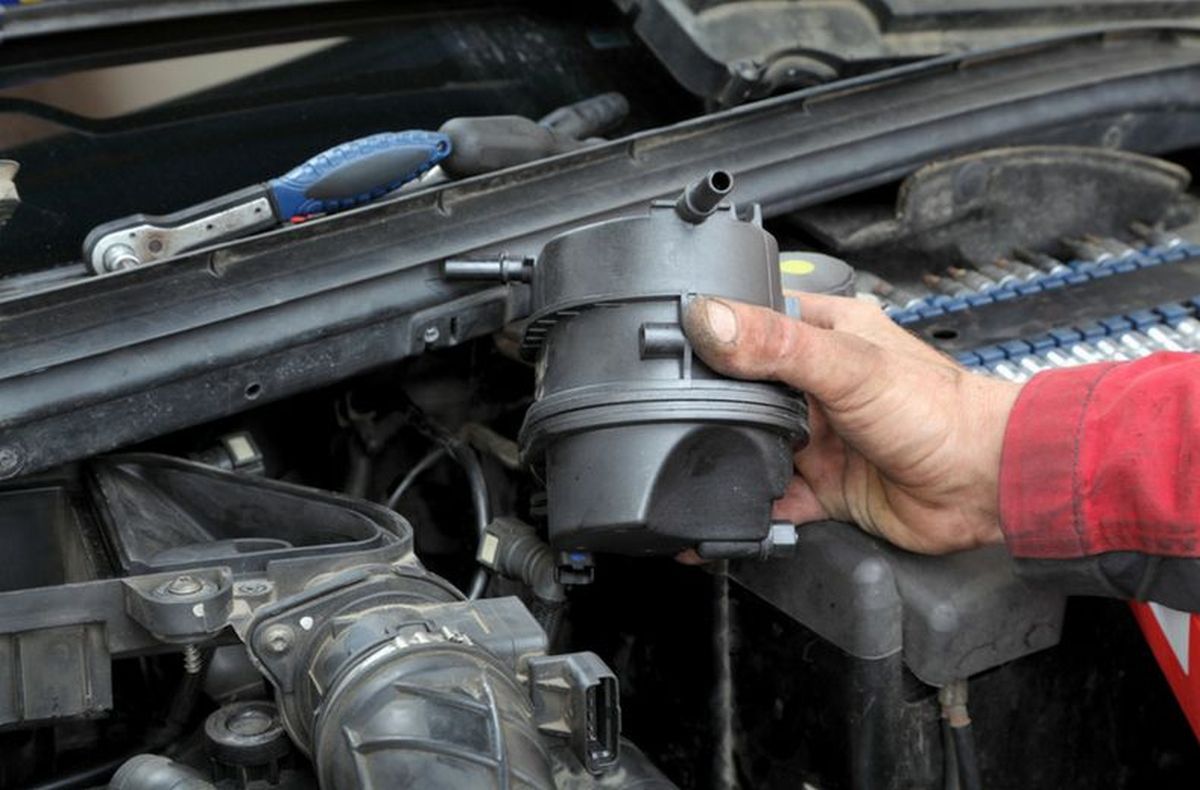
What Is a Fuel Filter? What Are the Symptoms of Fuel Filter Failure?
The fuel filter is an important part of a vehicle's fuel system. Its main job is to prevent dirt, rust, sediment, and other contaminants from reaching the fuel pump, injectors, and engine.
Although the fuel filter is a relatively simple component, a clogged or damaged filter can significantly affect engine operation. In severe cases, restricted fuel flow can cause starting problems, loss of power, engine hesitation, or even stalling.
The location, design, and replacement interval of the fuel filter vary depending on the vehicle and fuel system. Some vehicles use an easily replaceable external filter, while others have the filter integrated into the fuel tank's fuel pump module.
What Does a Fuel Filter Do?
Fuel can contain small amounts of contaminants even when it appears clean. Dirt can enter the fuel system during transportation, storage, refueling, or through contamination inside the fuel tank.
The fuel filter captures these particles before they reach sensitive fuel-system components.
Its main functions are:
-
Filtering dirt and sediment from the fuel
-
Protecting fuel injectors
-
Protecting the fuel pump
-
Maintaining proper fuel flow
-
Helping maintain consistent fuel pressure
-
Reducing the risk of injector blockage
-
Preventing contaminants from reaching the engine
A clean filter allows fuel to flow with minimal restriction. As contaminants accumulate, the filter gradually becomes more restrictive.

What Happens When a Fuel Filter Becomes Clogged?
A clogged fuel filter restricts the amount of fuel that can reach the engine.
At low engine loads, the vehicle may continue to operate normally because fuel demand is relatively low. However, when the driver accelerates hard or the engine operates at high RPM, fuel demand increases significantly.
If the filter cannot provide enough fuel, the engine may begin to show symptoms such as hesitation, poor acceleration, or loss of power.
This is why a partially clogged fuel filter can sometimes be difficult to notice during normal city driving but become obvious during highway acceleration or climbing a hill.
Common Symptoms of a Bad or Clogged Fuel Filter
Difficulty starting the engine
One of the possible symptoms is extended cranking before the engine starts.
If the filter is severely restricted, the fuel system may struggle to deliver sufficient fuel pressure during starting.
The engine may:
-
Take longer to start
-
Require several attempts
-
Start and immediately stall
-
Start normally when cold but struggle when hot
However, difficult starting has many possible causes, including a weak fuel pump, low battery voltage, injector problems, ignition problems, and fuel-pressure issues.
Engine hesitation during acceleration
A clogged filter may become noticeable when the driver suddenly presses the accelerator.
The engine needs more fuel during acceleration. If the fuel supply cannot keep up with demand, the engine may hesitate or respond slowly.
You may notice:
-
Delayed acceleration
-
A temporary loss of power
-
Jerking
-
Hesitation when pressing the accelerator
-
Poor response under heavy load
Loss of engine power
A restricted fuel supply can prevent the engine from receiving enough fuel, especially at high RPM or under heavy load.
The vehicle may feel relatively normal during gentle driving but become noticeably weaker during:
-
Hard acceleration
-
Highway driving
-
Uphill driving
-
High-speed operation
-
Towing or carrying heavy loads
This pattern is particularly useful during diagnosis because fuel starvation often becomes more obvious when fuel demand increases.
Engine Misfire
If the fuel supply becomes insufficient, the air-fuel mixture may become too lean under certain operating conditions.
This can result in:
-
Engine misfires
-
Rough running
-
Jerking
-
Reduced power
-
Poor acceleration
A Check Engine Light may also appear if the ECU detects repeated or severe misfires.
However, a misfire does not automatically indicate a clogged fuel filter. Spark plugs, ignition coils, injectors, fuel pressure, air leaks, sensors, and other components can also cause misfires.
Engine Stalling
A severely restricted fuel filter can contribute to engine stalling.
The engine may stall:
-
During acceleration
-
Under heavy load
-
At high RPM
-
After prolonged driving
-
When fuel demand suddenly increases
In some cases, the engine may restart after sitting for a short period and then stall again under load.
This pattern can also occur with a failing fuel pump or an electrical problem, so fuel pressure should be checked rather than replacing the filter based solely on the symptom.
Poor Fuel Economy
A restricted fuel filter can sometimes be associated with increased fuel consumption, but this is not one of the most specific symptoms.
When fuel delivery becomes abnormal, the engine management system may compensate for changing operating conditions. Poor acceleration may also cause the driver to use more throttle than normal.
However, increased fuel consumption is much more commonly associated with other problems, such as:
-
Faulty oxygen sensors
-
Dirty injectors
-
Incorrect fuel pressure
-
Air intake problems
-
Thermostat problems
-
Tire pressure
-
Driving conditions
Therefore, fuel consumption alone is not sufficient to diagnose a fuel filter problem.
Engine Surging
A partially restricted filter can sometimes cause unstable fuel delivery.
Under certain conditions, the engine may alternate between normal and insufficient fuel supply.
This can feel like:
-
Surging
-
Jerking
-
Uneven acceleration
-
Power coming and going
-
An inconsistent throttle response
The problem may become more noticeable when driving at a steady speed under load.
Fuel Pressure Problems
Fuel pressure is one of the most important parameters when diagnosing a suspected fuel filter restriction.
If the filter is severely clogged, fuel pressure may drop below the required level, particularly when fuel demand increases.
A technician may compare:
-
Specified fuel pressure
-
Actual fuel pressure
-
Fuel pressure at idle
-
Fuel pressure during acceleration
-
Fuel pressure under load
-
Pressure after the engine is switched off
If pressure is normal at idle but drops significantly under load, the fuel filter may be one possible cause. However, the fuel pump, pressure regulator, fuel lines, wiring, and other components must also be considered.
Check Engine Light May Come On
A clogged fuel filter does not necessarily trigger a Check Engine Light directly.
The ECU does not always have a sensor that can simply identify a "clogged fuel filter."
Instead, the ECU may detect the consequences of restricted fuel delivery.
For example, depending on the vehicle, the system may detect:
-
Low fuel pressure
-
Lean air-fuel mixture
-
Fuel pressure deviation
-
Misfires
-
Fuel pressure regulator problems
The resulting diagnostic trouble code can provide useful information, but it should be interpreted together with live data and physical testing.
What Causes a Fuel Filter to Become Clogged?
The most common cause is the gradual accumulation of contaminants.
Possible causes include:
-
Dirt in the fuel
-
Rust from the fuel tank
-
Sediment
-
Water contamination
-
Poor-quality fuel
-
Internal deterioration of the fuel tank
-
Long replacement intervals
-
Contamination during fuel-system repairs
In older vehicles, corrosion inside the fuel tank can be a significant source of debris.
A new filter can become contaminated again if the fuel tank itself contains excessive rust or sediment.
How Often Should a Fuel Filter Be Replaced?
There is no single replacement interval that applies to every vehicle.
Some manufacturers specify a fixed replacement interval, while others use long-life filters or integrate the filter into the fuel pump module.
The correct interval depends on:
-
Vehicle model
-
Engine
-
Fuel system design
-
Manufacturer recommendations
-
Fuel quality
-
Operating conditions
-
Filter design
Some modern vehicles may not have a separately serviceable fuel filter. In such cases, the filter may be integrated into the fuel pump assembly.
The vehicle manufacturer's maintenance schedule should therefore be checked before planning a replacement.
Petrol vs. Diesel Fuel Filters
Fuel filtration is particularly important in diesel engines.
Diesel fuel systems can be highly sensitive to contamination, and many diesel fuel filters also help separate water from the fuel.
A diesel fuel filter may therefore have additional features such as:
-
Water separation
-
Water-in-fuel sensor
-
Drain system
-
Fuel heater
A restricted diesel filter can cause significant power loss and may lead to starting problems.
Common-rail diesel systems operate at very high fuel pressures, making clean fuel and proper filtration especially important.
Can a Fuel Filter Cause a Car Not to Start?
Yes, a severely restricted fuel filter can contribute to a no-start condition.
If fuel flow is insufficient, the engine may crank normally but fail to start because the required fuel pressure cannot be achieved.
However, a no-start condition has many other possible causes.
Before replacing the fuel filter, technicians should consider:
-
Fuel level
-
Fuel pump operation
-
Fuel pressure
-
Injector operation
-
Ignition system
-
Crankshaft position signal
-
Engine immobilizer
-
Electrical power supply
-
Fuel pressure regulator
A fuel filter should not be blamed simply because the engine does not start.
Can a Fuel Filter Cause a Fuel Pump to Fail?
A severely restricted filter can increase the workload of the fuel pump because the pump has to overcome greater resistance to maintain fuel flow.
However, a fuel pump failure cannot automatically be attributed to the filter.
Fuel pump problems can also result from:
-
Electrical faults
-
Low voltage
-
Internal motor wear
-
Running frequently with a very low fuel level
-
Fuel contamination
-
Overheating
-
Mechanical wear
A clogged filter may contribute to fuel-system stress, but diagnosing the actual cause requires testing.
How Is a Fuel Filter Problem Diagnosed?
The first step is to identify whether the vehicle actually has a serviceable fuel filter and where it is located.
A technician may then perform several checks.
Fuel pressure testing
Fuel pressure is one of the most useful diagnostic tests.
The technician can determine whether pressure remains within specification under different operating conditions.
Live data analysis
On vehicles equipped with fuel pressure sensors, a diagnostic scanner can provide information such as:
-
Desired fuel pressure
-
Actual fuel pressure
-
Fuel pressure deviation
-
Engine RPM
-
Fuel trims
-
Engine load
Comparing requested and actual pressure can help determine whether fuel delivery is adequate.
Fuel flow testing
Pressure alone does not always tell the entire story. A system can sometimes show acceptable pressure under one condition but fail to provide sufficient fuel volume.
A fuel-flow test can therefore provide additional information.
Inspection of the filter
If the filter is externally accessible, its physical condition can be inspected.
A severely contaminated filter may contain:
-
Dirt
-
Rust particles
-
Sediment
-
Water
-
Dark or unusual fuel contamination
The filter should be handled carefully because fuel is flammable.
Should You Clean a Fuel Filter?
In most cases, a disposable fuel filter should not be cleaned and reused.
Once a filter has become heavily contaminated or restricted, replacement is normally the appropriate solution.
Attempting to clean a filter can:
-
Fail to remove all contaminants
-
Damage the filter material
-
Cause contamination to move deeper into the fuel system
-
Provide unreliable filtration afterward
The correct procedure depends on the type of filter and the manufacturer's design.
Can You Drive With a Clogged Fuel Filter?
Driving with a partially restricted fuel filter may be possible for some time, but it is not a good condition to ignore.
The vehicle may eventually experience:
-
Increasing power loss
-
Severe hesitation
-
Engine stalling
-
Starting problems
-
Reduced fuel pressure
-
Poor engine operation
If the engine stalls during acceleration or highway driving, the situation can also become a safety issue.
A severely restricted fuel system should therefore be diagnosed and repaired rather than continuously driven until the vehicle stops running.
Fuel Filter vs. Fuel Pump Problems
Fuel filter and fuel pump problems can produce very similar symptoms.
Both can cause:
-
Difficult starting
-
Loss of power
-
Hesitation
-
Stalling
-
Low fuel pressure
-
Poor high-RPM performance
This is why replacing the fuel pump immediately after seeing low fuel pressure is not always the correct approach.
A technician should evaluate the complete fuel-delivery system, including the filter, pump, electrical supply, pressure regulator, fuel lines, and injectors.
Fuel Filter vs. Dirty Fuel Injectors
Dirty injectors can also cause hesitation, poor acceleration, rough running, and misfires.
The difference is that an injector problem concerns the delivery of fuel into a specific cylinder or cylinders, while a severely restricted filter can affect fuel supply to the entire system.
Diagnostic data and fuel-pressure testing can help distinguish between these conditions.
Final Thoughts
The fuel filter protects the fuel system by preventing dirt, rust, sediment, and other contaminants from reaching sensitive components.
A clogged or restricted filter can cause difficult starting, hesitation, poor acceleration, loss of power, misfires, engine surging, stalling, and low fuel pressure. The symptoms are often more noticeable when the engine requires a large amount of fuel, such as during hard acceleration, high-speed driving, or uphill operation.
However, these symptoms are not exclusive to the fuel filter. A weak fuel pump, faulty pressure regulator, contaminated injectors, damaged wiring, restricted fuel lines, or problems elsewhere in the fuel system can produce similar results.
For this reason, the most reliable diagnosis involves checking fuel pressure and flow, examining live data, and evaluating the complete fuel-delivery system before replacing parts. A fuel filter is a relatively inexpensive component compared with many fuel-system parts, but replacing it should still be based on the vehicle's maintenance requirements and actual diagnostic findings.