TR
TR EN
EN

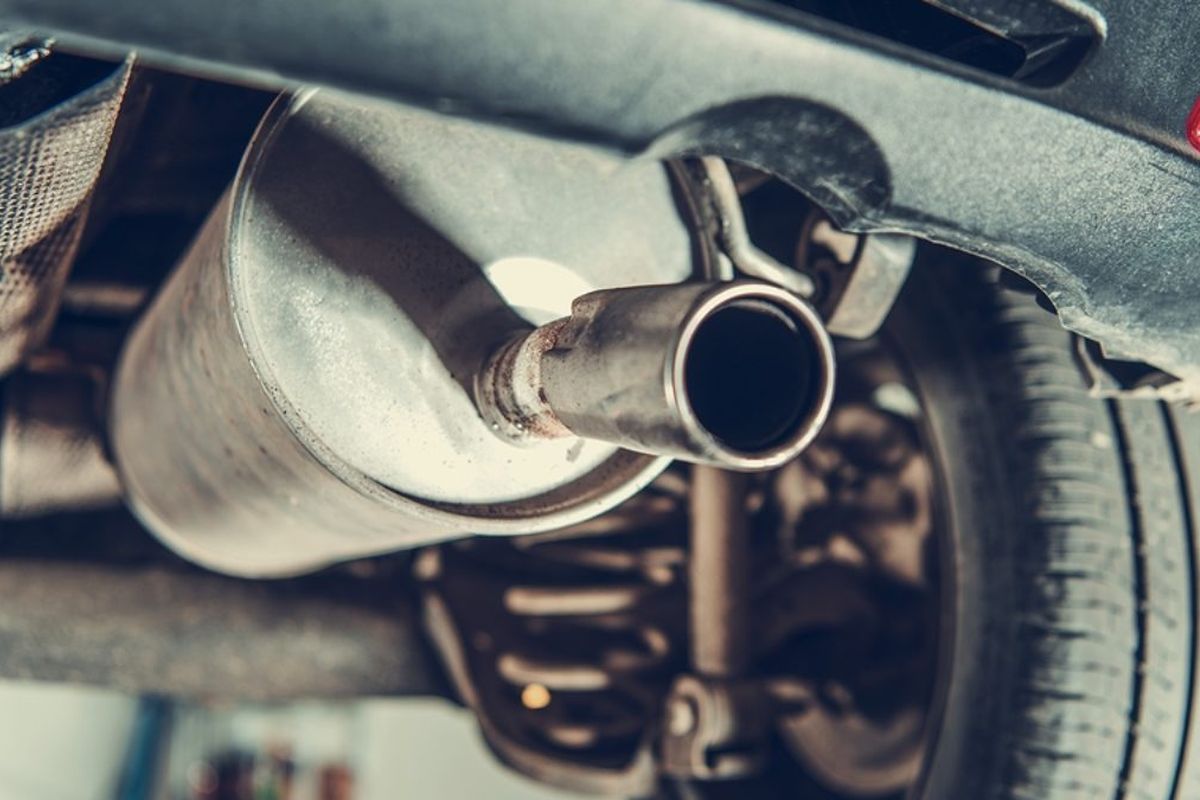
What Are the Symptoms of a Clogged Exhaust?
A clogged exhaust system can seriously affect engine performance because exhaust gases must leave the engine efficiently. When the exhaust flow becomes restricted, combustion gases cannot escape as they should, causing exhaust backpressure to increase.
The result can range from poor acceleration and reduced engine power to stalling, excessive heat, and even catalytic converter or engine damage.
A clogged exhaust does not always mean that the entire exhaust pipe is physically blocked. A collapsed catalytic converter, damaged muffler, clogged diesel particulate filter (DPF), or internally damaged exhaust component can all restrict exhaust flow.
What Does a Clogged Exhaust Mean?
During normal engine operation, combustion gases leave the cylinders through the exhaust valves and travel through the exhaust system.
A typical system may contain:
-
Exhaust manifold
-
Turbocharger on turbocharged engines
-
Catalytic converter
-
Oxygen sensors
-
DPF on many diesel engines
-
Gasoline particulate filter on some gasoline engines
-
Resonator
-
Muffler
-
Exhaust pipes
If one of these components becomes severely restricted, exhaust gases cannot flow freely.
The engine then has to work against increased exhaust backpressure.
This can prevent the engine from producing its normal power, especially at higher RPM.

Loss of Engine Power
One of the most noticeable symptoms of a clogged exhaust is a significant loss of power.
The vehicle may feel normal at low speeds but become increasingly weak as engine speed rises.
The driver may notice:
-
Poor acceleration
-
Weak response at high RPM
-
Difficulty climbing hills
-
Reduced top speed
-
Poor throttle response
-
Engine feeling as though it is "struggling to breathe"
This happens because the engine cannot efficiently expel exhaust gases.
Poor Acceleration
A restricted exhaust can make acceleration noticeably slower.
You may press the accelerator further, but the engine does not respond as expected.
On some vehicles, the problem becomes particularly obvious when trying to accelerate from higher RPM.
A partially restricted exhaust may allow normal driving under light load while causing severe power loss during hard acceleration.
Engine Cannot Rev Freely
A common characteristic of severe exhaust restriction is that the engine struggles to increase RPM.
For example, the engine may initially accelerate normally but then reach a certain RPM where power drops dramatically.
The engine may feel as though it has reached an artificial RPM limit.
This can sometimes be mistaken for:
-
Fuel starvation
-
Ignition failure
-
Turbocharger failure
-
Electronic throttle problems
-
Transmission problems
A restricted exhaust should therefore be considered when the engine repeatedly loses power at a particular RPM.
Engine Stalling
A severely restricted exhaust can eventually cause the engine to stall.
If exhaust gases cannot escape, fresh air cannot be exchanged efficiently through the cylinders.
This can become especially noticeable at idle or under load.
In extreme cases, the engine may start but immediately struggle and stall.
Difficult Starting
A severely clogged exhaust can also make starting difficult.
The engine needs to exchange intake and exhaust gases properly during the combustion cycle.
If exhaust flow is heavily restricted, the engine may struggle to breathe even while cranking.
Possible symptoms include:
-
Long cranking time
-
Engine starts and immediately stalls
-
Very weak idle
-
Poor throttle response immediately after starting
A completely blocked exhaust can make the engine extremely difficult or impossible to start.
Poor Fuel Economy
A restricted exhaust can increase fuel consumption.
When the engine cannot operate efficiently, the driver generally has to use more accelerator input to produce the same amount of power.
Depending on the vehicle and the underlying fault, the ECU may also make fuel-mixture corrections that further affect fuel consumption.
However, increased fuel consumption alone does not prove that the exhaust is clogged.
Check Engine Light
A clogged exhaust may trigger the check engine light, particularly when the restriction involves the catalytic converter or a particulate filter.
Possible fault codes can relate to:
-
Catalyst efficiency
-
Exhaust pressure
-
Oxygen sensor performance
-
Air-fuel mixture
-
Turbocharger boost
-
DPF pressure
-
DPF regeneration
However, a check engine light does not automatically mean that the exhaust is physically blocked.
For example, P0420 indicates catalyst efficiency below the expected threshold, not necessarily a clogged catalytic converter.
A catalytic converter can have poor efficiency without being physically blocked, while a restricted converter can sometimes exist without immediately producing P0420.
Excessive Exhaust Backpressure
The defining mechanical characteristic of a clogged exhaust is increased backpressure.
As restriction increases, pressure builds up in the exhaust system.
This can interfere with cylinder filling and reduce engine efficiency.
In severe cases, exhaust valves and other components can also be exposed to abnormal temperatures and pressures.
Excessive Heat
A restricted exhaust can cause unusually high temperatures.
When exhaust gases cannot escape efficiently, heat can accumulate in the exhaust manifold and other components.
This may result in:
-
Extremely hot catalytic converter
-
Glowing exhaust components under severe conditions
-
Excessive engine-bay temperature
-
Turbocharger temperature problems
-
Heat damage to nearby wiring or components
A catalytic converter that becomes visibly red-hot is a particularly serious warning sign.
Strong Burning or Sulfur Smell
A failing catalytic converter can sometimes produce a sulfur-like smell, often compared to rotten eggs.
This does not automatically mean that the exhaust is clogged.
It can indicate that the catalytic converter is being exposed to abnormal exhaust conditions, such as excessive unburned fuel.
A clogged or damaged catalyst may therefore be associated with unusual odors, but the odor alone cannot confirm a blockage.
Rattling From the Catalytic Converter
A catalytic converter can fail internally.
The ceramic substrate can crack, break apart, or partially collapse.
The broken material may produce a rattling sound when the vehicle is started, accelerated, or shaken.
If pieces of the substrate move into the exhaust path, they can restrict gas flow.
This creates a particularly important combination of symptoms:
Rattling + power loss + increasing restriction at higher RPM
In such a case, the catalytic converter should be inspected.
Can a Muffler Become Clogged?
Yes.
Although catalytic converter problems are often discussed when people mention a clogged exhaust, a muffler can also become internally damaged.
The internal baffles or other components can break apart or collapse.
Debris can then restrict exhaust flow.
A damaged muffler may produce:
-
Rattling
-
Increased exhaust noise
-
Reduced performance
-
Exhaust restriction
-
Unusual vibration
Therefore, the catalytic converter is not the only exhaust component that can cause a restriction.
Diesel Engines and DPF Blockage
Diesel vehicles have an additional potential source of exhaust restriction: the diesel particulate filter.
The DPF collects soot and periodically burns it off during regeneration.
If regeneration repeatedly fails, soot accumulation can become excessive.
A heavily loaded DPF can cause:
-
Reduced engine power
-
Limp mode
-
Increased fuel consumption
-
DPF warning light
-
Check engine light
-
Higher exhaust temperatures
-
Poor acceleration
-
Increased exhaust pressure
A DPF problem should be diagnosed differently from a conventional gasoline exhaust restriction.
Forced regeneration should not simply be performed without determining why the DPF became overloaded.
Can a Turbocharger Cause Symptoms Similar to a Clogged Exhaust?
Yes.
Turbocharged engines can develop very similar symptoms from problems such as:
-
Boost leaks
-
Wastegate faults
-
Variable-geometry turbocharger problems
-
Turbo actuator faults
-
Exhaust manifold leaks
-
Faulty boost sensors
For this reason, reduced power does not automatically mean the exhaust is clogged.
The intake and boost systems should also be checked.
How Does a Clogged Exhaust Affect a Turbocharger?
A turbocharger relies on exhaust-gas flow to drive its turbine.
A restriction downstream of the turbocharger can increase exhaust backpressure.
This can make it more difficult for exhaust gases to leave the engine and can negatively affect turbocharger operation.
Possible symptoms include:
-
Reduced boost
-
Slow acceleration
-
Excessive exhaust temperature
-
Turbocharger performance problems
-
Poor high-RPM performance
A turbocharger itself may still be mechanically healthy even though the engine has a serious power problem caused by exhaust restriction.
Can a Clogged Exhaust Cause Misfire?
It can contribute to unstable combustion, particularly when the restriction is severe.
Excessive exhaust backpressure can interfere with cylinder gas exchange and reduce the amount of fresh charge entering the cylinders.
The engine may then run poorly and misfire.
However, a misfire should not automatically be blamed on a clogged exhaust.
Ignition coils, spark plugs, injectors, fuel pressure, compression, valve timing, and intake leaks are all common causes of misfire.
Can a Clogged Catalytic Converter Damage the Engine?
A severe restriction can create significant mechanical and thermal stress.
Excessive exhaust backpressure can contribute to:
-
Loss of power
-
High exhaust temperatures
-
Poor combustion
-
Valve-related stress
-
Turbocharger problems
-
Increased engine operating temperature
A severely blocked system should therefore be repaired rather than driven indefinitely.
The longer the engine operates under severe restriction, the greater the risk of secondary damage.
How Is a Clogged Exhaust Diagnosed?
A proper diagnosis should measure or observe the restriction rather than relying only on symptoms.
Several methods can be used.
Exhaust backpressure test
A pressure gauge can be connected to an appropriate exhaust or oxygen-sensor port to measure exhaust pressure.
Excessive pressure under load can indicate a restriction.
Vacuum test
Engine manifold vacuum can be monitored while the engine is held at a steady elevated RPM.
A vacuum that progressively drops as RPM is maintained can be a useful indication of exhaust restriction.
However, the test must be interpreted correctly because other engine problems can produce abnormal vacuum readings.
Temperature comparison
On some catalytic converter problems, temperature measurements before and after the converter can provide useful information.
However, temperature alone does not always prove that a converter is clogged.
Scan-tool data
A diagnostic scanner can provide valuable information from:
-
Oxygen sensors
-
Fuel trims
-
Exhaust pressure sensors
-
DPF differential pressure
-
Engine load
-
RPM
-
Boost pressure
-
Airflow measurements
This data can help distinguish an exhaust restriction from a fuel, ignition, intake, or turbocharger problem.
Can You Tell If the Exhaust Is Clogged Without Removing It?
Often, yes.
A restriction can frequently be diagnosed using backpressure testing, vacuum testing, scan-tool data, or other non-destructive methods.
Removing the catalytic converter or cutting the exhaust should not be the first diagnostic step.
A proper test is preferable to replacing expensive components based only on symptoms.
Can a Clogged Exhaust Be Cleaned?
Sometimes, but it depends entirely on what is blocked.
A DPF with excessive soot may sometimes be restored through an appropriate regeneration or professional cleaning process, depending on its condition.
A catalytic converter with a melted or collapsed ceramic substrate generally cannot be restored by ordinary cleaning.
If the internal structure has broken apart or melted, replacement is usually required.
Most importantly, the reason for the original failure must also be corrected.
For example, if a catalytic converter melted because of a persistent engine misfire or excessively rich mixture, installing a new converter without repairing the engine problem can destroy the replacement as well.
Clogged Exhaust vs. Clogged Catalytic Converter
These terms are often used interchangeably, but they are not exactly the same.
A clogged exhaust means that exhaust flow is restricted somewhere in the system.
A clogged catalytic converter means that the restriction specifically occurs inside the catalytic converter.
The same applies to a DPF or muffler.
Therefore, diagnosing the exact location of the restriction is important before replacing any component.
Can an Exhaust Leak Be Mistaken for a Clogged Exhaust?
Yes.
An exhaust leak and exhaust restriction can produce some overlapping symptoms, but they are fundamentally different problems.
An exhaust leak allows gases to escape before reaching the end of the system.
A restriction prevents gases from leaving efficiently.
An exhaust leak often produces:
-
Hissing
-
Ticking
-
Exhaust odor
-
Increased noise
A restriction is more likely to produce:
-
Significant power loss
-
Poor high-RPM performance
-
Difficulty revving
-
High exhaust backpressure
-
Excessive exhaust temperature
A vehicle can even have both problems at the same time.
What Should You Do If You Suspect a Clogged Exhaust?
If the vehicle suddenly loses power, struggles to rev, or enters limp mode, avoid repeatedly forcing the engine to high RPM.
A severely restricted exhaust can generate considerable heat.
The vehicle should be diagnosed using appropriate exhaust-pressure, vacuum, temperature, and scan-tool tests.
Simply replacing the oxygen sensor or catalytic converter without identifying the actual cause can be expensive and may not solve the problem.
Final Thoughts
The most common symptoms of a clogged exhaust are loss of power, poor acceleration, difficulty increasing RPM, engine stalling, increased fuel consumption, excessive exhaust temperature, and sometimes a check engine light.
The catalytic converter is a common source of restriction, but it is not the only possibility. A damaged muffler, collapsed exhaust pipe, blocked DPF, or internally broken exhaust component can also restrict flow.
Most importantly, reduced engine power does not automatically mean the exhaust is clogged. Fuel delivery problems, ignition faults, turbocharger problems, intake restrictions, sensor faults, and electronic engine-control issues can produce very similar symptoms.
A proper diagnosis should confirm excessive exhaust restriction before expensive components are replaced.