TR
TR EN
EN

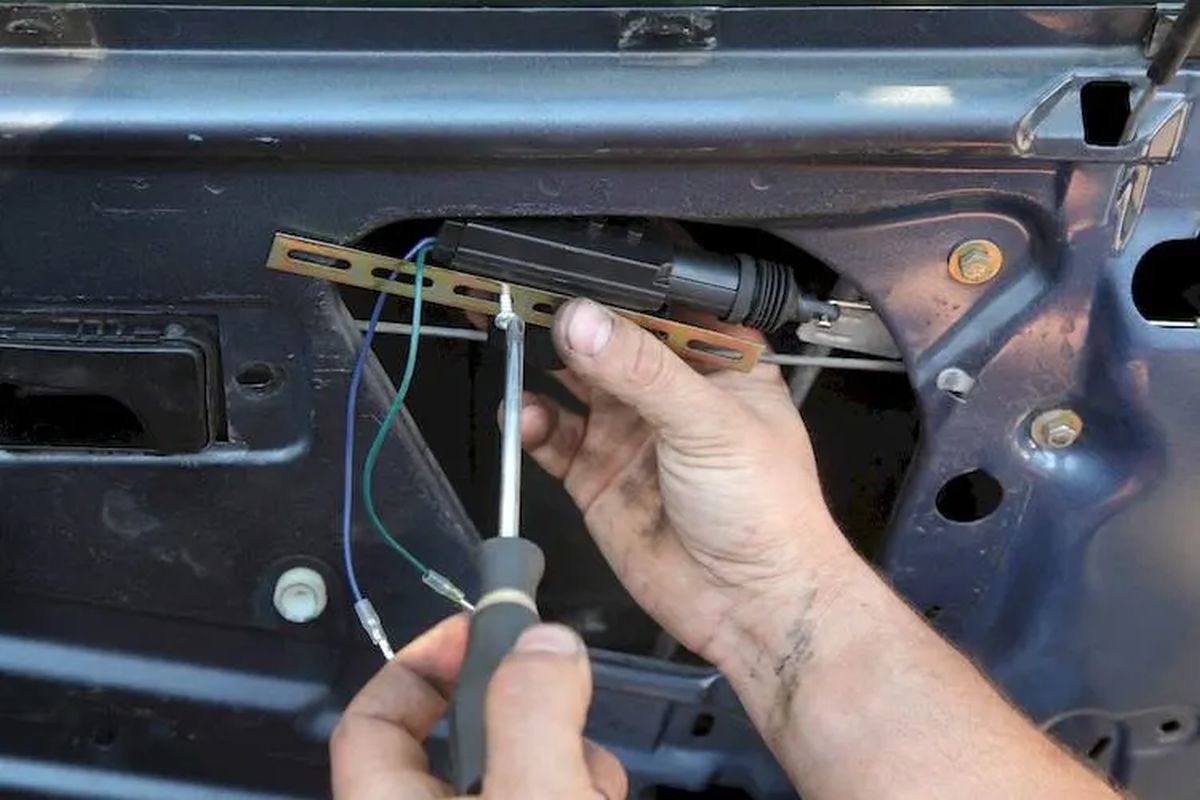
What Are the Symptoms of a Faulty Central Locking Motor?
The central locking system is one of the most frequently used convenience features in modern vehicles. It allows the driver to lock or unlock multiple doors, the trunk, and sometimes the fuel filler flap with a single button or remote control.
At the heart of many central locking systems are door lock actuators, commonly referred to as central locking motors. These small electric motors and actuator mechanisms move the locking mechanism when the vehicle receives a lock or unlock command.
When a central locking motor begins to fail, the symptoms can range from a single door refusing to lock to intermittent problems affecting the entire central locking system.
What Is a Central Locking Motor?
A central locking motor is an electrically operated actuator that physically moves a vehicle's door locking mechanism.
When you press the lock or unlock button on the key fob, the vehicle's body control module or central locking control unit sends an electrical command to the relevant actuator.
The actuator then moves the locking mechanism into the locked or unlocked position.
Depending on the vehicle, the actuator may be:
-
Integrated into the complete door lock assembly
-
Mounted separately from the mechanical lock
-
Controlled directly by a body control module
-
Connected to the vehicle through a door control module
Modern systems can also include position switches or sensors that tell the vehicle whether the door is actually locked or unlocked.
How Does the Central Locking System Work?
The basic operation is relatively simple.
When the driver presses the remote control or interior locking button, the signal is received by the vehicle's locking system.
The control module determines which locks need to move and sends an electrical command to the appropriate actuators.
The actuator's electric motor moves a gear mechanism, linkage, or latch mechanism.
Depending on the vehicle, the actuator may receive a short electrical pulse rather than continuous power.
The system can then monitor the lock position and determine whether the requested operation was completed successfully.
This is why a problem with a single actuator can sometimes produce a warning or unusual behavior even though the other doors continue to operate normally.

Common Symptoms of a Bad Central Locking Motor
A failing central locking motor can produce several recognizable symptoms.
One Door Does Not Lock or Unlock
This is one of the clearest signs of an actuator problem.
If all other doors operate normally but one particular door consistently refuses to lock or unlock, the actuator or door lock assembly should be inspected.
The mechanical linkage, wiring, connector, and door control module should also be checked before replacing the motor.
The Door Locks Intermittently
An actuator does not always fail completely.
A worn electric motor, damaged internal gear, poor electrical connection, or mechanical resistance can cause intermittent operation.
For example, the door may lock successfully several times and then fail without warning.
Intermittent operation is often an early indication that the actuator or its electrical circuit is deteriorating.
You Can Hear the Motor but the Door Does Not Lock
If you hear a clicking, buzzing, or motor-like sound when pressing the lock button but the door remains unlocked, the problem may be mechanical rather than electrical.
The actuator may be receiving power but failing to move the locking mechanism correctly.
Possible causes include:
-
Worn internal gears
-
Broken actuator components
-
Disconnected linkage
-
A sticking door latch
-
Excessive mechanical resistance
In this situation, replacing the electrical motor alone may not solve the problem if the complete lock mechanism is damaged.
The Central Locking Motor Makes an Unusual Noise
A healthy actuator normally operates quickly and relatively quietly.
A failing unit may produce:
-
Clicking
-
Grinding
-
Repeated buzzing
-
Slow motor sounds
-
A weak mechanical movement
A grinding noise can indicate worn internal gears, while repeated clicking may indicate that the actuator is attempting to move but cannot complete its operation.
The Door Locks Slowly
A door that takes noticeably longer than the others to lock or unlock may have an actuator that is becoming weak.
However, mechanical resistance can produce the same symptom.
Cold weather, dirt, corrosion, damaged linkage, or a stiff door latch can increase the load on the actuator.
Therefore, a slow lock should not automatically be diagnosed as a failed motor.
The Door Unlocks but Does Not Lock
A central locking actuator can develop a fault in which it operates in one direction but not the other.
For example, the door may unlock normally but fail to lock.
This can be caused by:
-
Internal actuator damage
-
Worn motor components
-
Electrical control problems
-
Wiring faults
-
A problem with the lock assembly
The exact electrical control strategy differs between vehicles, so both the actuator and its control circuit should be tested.
The Door Locks but Does Not Unlock
The opposite situation can also occur.
A door may lock normally but refuse to unlock electrically.
If the door can still be unlocked manually, this strongly suggests that the mechanical lock can move but the electrical actuator or its control circuit may have a problem.
If the lock is mechanically stuck as well, the latch and linkage should be inspected for physical damage or corrosion.
The Central Locking System Repeatedly Locks and Unlocks
A vehicle that repeatedly locks and unlocks itself can have several possible causes.
The problem may be related to:
-
A faulty door lock actuator
-
A defective door lock position switch
-
Damaged wiring
-
A faulty door latch
-
A body control module problem
-
A key fob problem
-
A door that is not being correctly recognized as closed
Modern vehicles may automatically lock or unlock doors when certain conditions are met, so the control strategy of the specific vehicle should be considered before identifying the actuator as the cause.
The Car Locks and Immediately Unlocks Again
This is another common complaint.
The vehicle may appear to lock, but immediately unlock one or all doors.
In many vehicles, this behavior occurs because the control system believes that one of the doors, the trunk, or another opening has not reached the expected position.
A faulty lock position switch inside the door lock assembly can therefore produce this symptom.
It does not necessarily mean that the electric motor itself has failed.
Central Locking Works From the Interior but Not From the Remote
If the interior locking button works correctly but the remote control does not, the door actuator may not be the problem.
Possible causes include:
-
Weak key-fob battery
-
Damaged key fob
-
Remote synchronization problem
-
Receiver problem
-
Body control module issue
-
Vehicle battery problems
If the interior switch operates the door normally, the actuator is more likely to be functional.
The remote-control system should therefore be diagnosed separately.
Central Locking Works From the Remote but Not From the Interior Button
The reverse situation can also occur.
If the remote locks and unlocks the vehicle correctly but the interior switch does not, the actuator is less likely to be the primary cause.
The interior switch, wiring, control module, or communication circuit should be checked.
Only One Door Has a Problem
When only one door is affected while all other doors operate normally, the diagnosis becomes more focused.
The technician should inspect:
-
Door lock actuator
-
Door lock assembly
-
Wiring between the body and door
-
Electrical connector
-
Door control module
-
Lock position switch
-
Mechanical linkage
The wiring inside the flexible rubber boot between the door and body deserves particular attention.
Repeated door movement can eventually fatigue and break wires.
Several Doors Stop Working at the Same Time
When multiple doors suddenly stop responding, it is less likely that several independent locking motors failed simultaneously.
In this situation, the problem may instead involve:
-
Vehicle battery voltage
-
Fuse
-
Central locking control module
-
Body control module
-
Power supply
-
Ground connection
-
CAN communication
-
Remote-control system
This distinction is important because replacing several actuators without checking the central electrical system can result in unnecessary repairs.
Can a Weak Vehicle Battery Cause Central Locking Problems?
Yes.
Central locking actuators require electrical power to operate.
A weak vehicle battery or unstable voltage can cause unusual locking behavior, particularly on vehicles with electronically controlled body systems.
Possible symptoms include:
-
Slow actuator movement
-
Intermittent locking
-
Multiple electrical warnings
-
Remote-control problems
-
Locks operating inconsistently
Battery voltage and charging-system operation should therefore be checked when several electrical systems begin behaving abnormally at the same time.
Can Cold Weather Affect the Central Locking Motor?
Yes.
Low temperatures can increase mechanical resistance inside door locks.
Water or moisture can also freeze inside the lock mechanism.
In such situations, the actuator may sound as though it is working but may not have enough force to move the frozen or stiff mechanism.
Repeatedly activating the lock while it is frozen can place additional stress on the actuator.
If the problem occurs only in very cold weather, the mechanical lock and door sealing system should be investigated before assuming that the motor has failed.
Central Locking Motor vs. Door Lock Assembly
These terms are sometimes used interchangeably, but they are not always the same thing.
In some vehicles, the electric motor can be replaced separately.
In many modern vehicles, however, the actuator is integrated into the complete door lock assembly.
If the internal motor, gears, switches, or latch mechanism is defective, the manufacturer may specify replacement of the complete assembly.
The correct repair procedure depends on the vehicle's design.
How Is a Central Locking Motor Diagnosed?
A proper diagnosis should begin by determining exactly what the vehicle is doing.
For example:
-
Does only one door fail?
-
Do all doors fail?
-
Does the lock work in one direction?
-
Does it work intermittently?
-
Can the door be operated manually?
-
Can the actuator be heard?
-
Does the problem occur from both the remote and interior switch?
These observations can significantly narrow down the possible causes.
The actuator's power supply and ground should then be checked.
Depending on the vehicle, a technician may also use a diagnostic scanner to communicate with the body control module and monitor door-lock commands and status information.
How Can the Wiring Be Checked?
The wiring between the vehicle body and each door is particularly important.
Because the door opens and closes thousands of times during the vehicle's life, wires inside the flexible rubber conduit can become fatigued.
A broken wire can cause:
-
Complete actuator failure
-
Intermittent locking
-
Remote-control problems
-
Door position sensor problems
-
Window or mirror problems
-
Multiple electrical faults in the same door
Therefore, if a central locking problem is accompanied by an electric window, mirror, speaker, or door sensor problem, the door wiring should be inspected carefully.
Can a Central Locking Motor Be Repaired?
Sometimes, but replacement is usually more practical.
An actuator may contain a small electric motor, gears, contacts, and position switches. Individual components may theoretically be repairable, but many manufacturers supply the actuator as part of a complete lock assembly.
If the internal gears are worn or the motor is damaged, replacing the appropriate actuator or lock assembly is generally more reliable than attempting an improvised repair.
How Long Does a Central Locking Motor Last?
There is no universal service interval for a central locking actuator.
Its lifespan depends on:
-
Number of lock cycles
-
Vehicle age
-
Climate
-
Door usage
-
Moisture exposure
-
Mechanical resistance
-
Quality of the actuator
-
Condition of the door lock mechanism
A frequently used driver's door may experience considerably more lock cycles than a rear passenger door.
Can You Drive With a Faulty Central Locking Motor?
Usually, a single faulty central locking motor does not affect the engine or drivetrain, so the vehicle may remain mechanically driveable.
However, the problem should not be ignored.
The most important issue is door security and proper locking.
If a door cannot be securely locked, the vehicle may be vulnerable to unauthorized access. More importantly, if a door cannot reliably latch or unlock, there can be a safety concern.
The mechanical condition of the door latch should therefore be confirmed.
What Should Be Checked Before Replacing the Central Locking Motor?
Before replacing an actuator, it is useful to check:
-
Vehicle battery voltage
-
Relevant fuses
-
Power supply
-
Ground connections
-
Door wiring
-
Electrical connectors
-
Door lock actuator
-
Lock assembly
-
Mechanical linkage
-
Door latch
-
Lock position switch
-
Interior locking switch
-
Key fob
-
Body control module
-
Diagnostic trouble codes
This prevents replacing a good actuator when the actual problem is a broken wire, poor connector, fuse, or control-module fault.
Final Thoughts
A faulty central locking motor can cause obvious problems such as one door refusing to lock or unlock, intermittent operation, unusual noises, slow locking, or a door that works in only one direction.
However, not every central locking problem is caused by the motor itself.
Broken door wiring, damaged connectors, mechanical lock problems, position switches, weak vehicle batteries, key-fob faults, fuses, and body control modules can all create similar symptoms.
If only one door is affected, the actuator and its local wiring are good places to start. If several doors stop working simultaneously, the vehicle's power supply, fuses, control modules, and communication network should be investigated before replacing multiple motors.
A correct diagnosis should therefore identify whether the problem is electrical, mechanical, or related to the vehicle's central locking control system. This approach saves unnecessary parts replacement and ensures that the locking system remains both reliable and safe.