TR
TR EN
EN

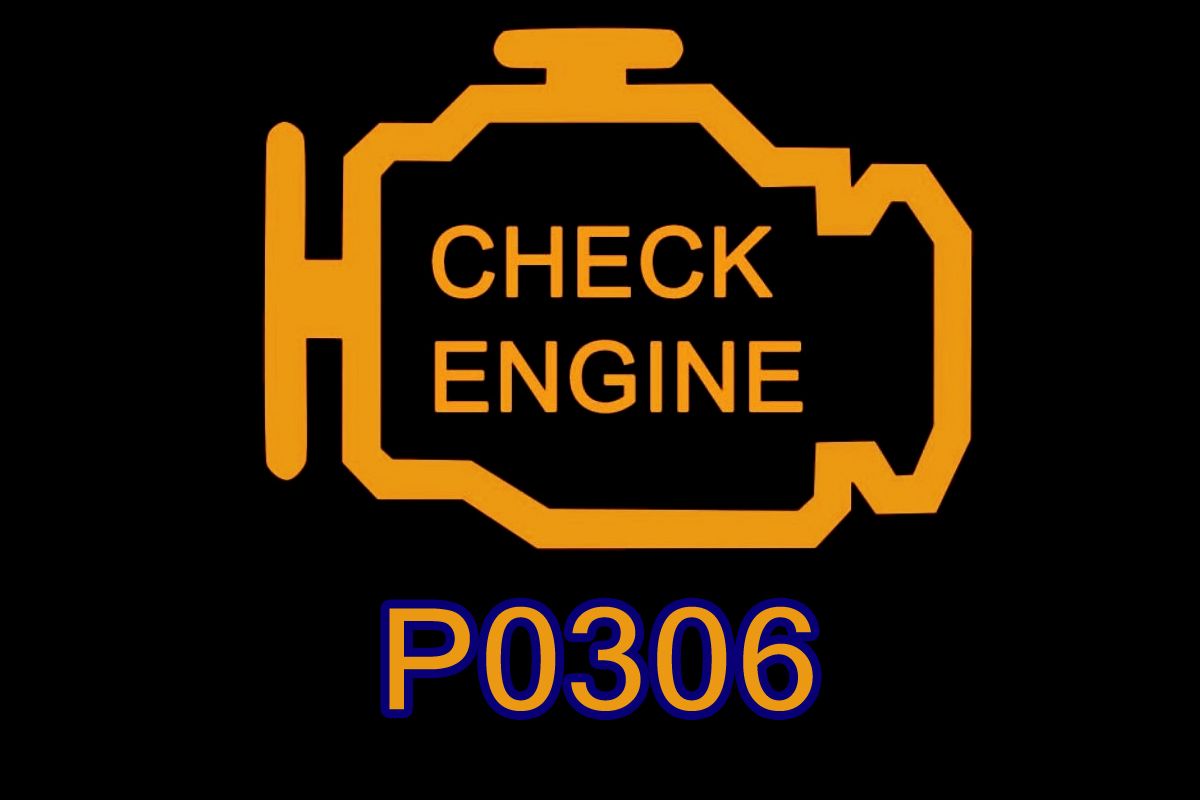
P0306 Cylinder #6 Misfire Detected
P0306 – Cylinder #6 Misfire Detected means the engine control module (ECM/PCM) has detected abnormal combustion in cylinder number 6.
The code tells you which cylinder is experiencing the misfire, but not what is causing it. The problem may be related to the ignition system, fuel injector, wiring, intake air, fuel pressure, compression, valve-train, or engine timing.
The ECM generally detects misfires by monitoring tiny changes in crankshaft rotational speed. When cylinder #6 fails to produce its expected combustion force, the crankshaft's acceleration pattern changes. If this variation exceeds the programmed threshold, the ECM stores P0306.
What Does P0306 Feel Like?
The symptoms depend on whether the misfire is occasional or continuous.
A mild intermittent misfire may barely be noticeable, while a severe misfire can make the engine shake considerably.
Common symptoms include:
-
Rough or unstable idle
-
Engine vibration
-
Hesitation during acceleration
-
Reduced engine power
-
Poor throttle response
-
Increased fuel consumption
-
Engine shaking under load
-
Difficult starting
-
Intermittent stalling
-
Check Engine Light
-
Flashing Check Engine Light during severe misfire
A misfire that appears only during acceleration is particularly important to investigate because ignition and fuel problems can become more apparent as engine load increases.
Common Causes of P0306
There is no single component responsible for P0306. Diagnosis should focus on determining what is different about cylinder #6 compared with the cylinders that are operating normally.
Spark plug
The spark plug is one of the first components worth checking.
Possible problems include:
-
Excessive electrode wear
-
Incorrect spark plug gap
-
Carbon fouling
-
Oil contamination
-
Fuel fouling
-
Cracked ceramic
-
Incorrect spark plug type
The condition of the #6 spark plug can also provide clues about what is happening inside the cylinder.
Ignition coil
On engines using individual ignition coils, a weak coil can cause P0306.
A coil may work perfectly at idle but fail when the engine is under heavy load. As cylinder pressure increases during acceleration, the ignition system needs more voltage to produce a reliable spark. A marginal coil can therefore cause an intermittent misfire that becomes much more obvious during acceleration.
Fuel injector
Cylinder #6 may not be receiving the correct quantity of fuel.
An injector can become restricted, electrically defective, or mechanically damaged. Its connector or wiring can also prevent proper injector operation.
Possible fuel-related causes include:
-
Clogged injector
-
Injector internal failure
-
Poor spray pattern
-
Injector wiring fault
-
Corroded connector
-
Open or short circuit
-
Low fuel pressure
-
Fuel-delivery problem
A simple injector resistance test is not always enough to prove that an injector is functioning correctly. An injector can have acceptable electrical resistance while still having a poor mechanical flow pattern.
Can a Bad Coil Cause P0306?
Yes.
If the engine has interchangeable individual ignition coils, a coil swap test can be a very effective diagnostic method.
Move the suspected coil from cylinder #6 to another cylinder and monitor the misfire codes.
For example, if P0306 disappears and the misfire is subsequently detected on the cylinder where the coil was installed, the misfire has followed the coil. That strongly suggests that the coil is defective.
This is much more useful than simply replacing the coil because it creates diagnostic evidence.
The exact cylinder and coil arrangement should always be confirmed with the vehicle's service information.
Inspect the Spark Plug From Cylinder #6
Removing the #6 spark plug and comparing it with the other plugs can reveal useful information.
A fuel-wet plug may indicate that fuel is entering the cylinder but combustion is not occurring correctly.
A heavily carbonized plug may suggest an ignition or mixture problem.
An oil-fouled plug can point toward oil entering the combustion chamber.
A damaged electrode or incorrect gap can directly cause an ignition misfire.
If the plug is replaced and the problem quickly returns, however, the spark plug was probably a symptom rather than the underlying cause.
Fuel Injector Diagnosis
If the ignition system is functioning correctly, the injector on cylinder #6 should be investigated.
Depending on the vehicle, useful tests may include:
-
Checking injector control signals
-
Measuring injector current waveform
-
Injector balance testing
-
Injector flow testing
-
Fuel-pressure testing
-
Checking fuel pressure under load
If all cylinders are affected, low fuel pressure becomes a stronger possibility.
If the misfire remains consistently on cylinder #6 while the other cylinders operate normally, a problem with the #6 injector, its wiring, or the cylinder itself becomes more interesting.
Wiring and Connector Problems
A P0306 diagnosis should not stop at the spark plug, coil and injector.
Electrical wiring can create intermittent misfires even when all major components are functioning correctly.
Inspect the wiring around cylinder #6 for:
-
Broken wires
-
Chafed insulation
-
Melted wiring
-
Corrosion
-
Loose terminals
-
Poor terminal tension
-
Oil contamination
-
Water intrusion
-
Damaged connectors
This is particularly important when the misfire occurs during acceleration. Engine movement can move the wiring harness and temporarily interrupt a weak connection.
A wiggle test while monitoring live misfire data can sometimes expose an intermittent wiring fault.
Could a Vacuum Leak Cause P0306?
Yes.
An intake leak near cylinder #6 can allow unmetered air into the engine and create a lean mixture.
The result may be a cylinder-specific misfire.
Potential sources include intake manifold gaskets, runner seals, vacuum connections and other intake components.
If the ignition system has been properly checked and the misfire remains on cylinder #6, an intake smoke test can be useful.
What If Cylinder #6 Has Low Compression?
If ignition, fuel and air supply are all functioning normally, the next step is to investigate the mechanical condition of cylinder #6.
Possible causes of low compression include:
-
Burned valve
-
Damaged valve seat
-
Worn piston rings
-
Damaged piston
-
Head-gasket failure
-
Valve-train malfunction
-
Camshaft problem
-
Excessive deposits affecting valve operation
A compression test should ideally be compared with the other cylinders rather than interpreted as an isolated number.
If cylinder #6 has significantly lower compression, a leak-down test can help determine where the pressure is escaping.
Air escaping through the intake can indicate an intake-valve problem. Air escaping through the exhaust can indicate an exhaust-valve problem. Air escaping into the crankcase can point toward piston or piston-ring problems.
Can Engine Timing Cause P0306?
Yes, although it should not be the first assumption when only cylinder #6 is misfiring.
Problems with the timing chain, timing belt, camshaft position, VVT system or cam/crank synchronization can affect combustion.
Timing-related problems often produce additional clues, such as:
-
Multiple misfire codes
-
Camshaft position codes
-
Crankshaft position codes
-
Cam/crank correlation codes
-
Poor starting
-
Reduced engine performance
-
Abnormal VVT data
If P0306 consistently affects only one cylinder, investigate cylinder-specific ignition, fuel, air and mechanical problems before assuming the entire engine's timing is incorrect.
Use Freeze-Frame and Misfire Data
The diagnostic scanner can provide valuable information about when P0306 occurred.
Look at:
-
Engine RPM
-
Engine load
-
Coolant temperature
-
Intake air temperature
-
Throttle position
-
Vehicle speed
-
Fuel trims
-
Misfire counters
The operating conditions are often as useful as the code itself.
For example, a misfire that occurs only during hard acceleration can point toward an ignition coil that breaks down under load or a fuel-delivery problem.
A misfire that is strongest at idle can make an intake leak or mixture problem more interesting.
A misfire that appears only when the engine is cold or hot can point toward a temperature-dependent ignition, fuel, wiring or mechanical problem.
P0306 With Other Trouble Codes
Always read all stored and pending codes before beginning the repair.
P0306 together with an ignition-coil circuit code can direct attention toward the relevant ignition circuit.
P0306 combined with fuel-pressure-related codes makes fuel delivery more important.
P0306 accompanied by camshaft, crankshaft or correlation codes raises suspicion of an engine timing or synchronization issue.
Multiple cylinder misfire codes can also indicate a problem affecting the engine as a whole rather than cylinder #6 alone.
This is why clearing P0306 and waiting to see whether it returns is usually not a complete diagnostic strategy.
Cylinder Numbering Must Be Confirmed
Do not assume where cylinder #6 physically sits.
Cylinder numbering varies between manufacturers and engine configurations. The location of cylinder #6 should be confirmed using the manufacturer's service information before testing or replacing cylinder-specific components.
This is especially important when performing coil or injector swaps.
What About the Catalytic Converter?
A severe misfire should be addressed quickly.
If cylinder #6 repeatedly fails to burn the air-fuel mixture, unburned fuel can enter the exhaust system. Excessive unburned fuel can cause the catalytic converter to overheat and become damaged.
A flashing Check Engine Light generally indicates a sufficiently severe misfire that continued operation can cause catalyst damage.
If the engine is shaking badly and the light is flashing, unnecessary driving should be avoided until the fault is diagnosed.
A Practical Diagnostic Order for P0306
A good diagnostic process can proceed from simple cylinder-specific checks to more advanced testing:
-
Scan all stored and pending DTCs.
-
Check freeze-frame information and misfire counters.
-
Inspect the cylinder #6 spark plug.
-
Test or swap the ignition coil if applicable.
-
Inspect coil and injector wiring.
-
Check injector operation.
-
Verify fuel pressure and fuel delivery when indicated.
-
Check for intake or vacuum leaks.
-
Compare cylinder #6 compression with the other cylinders.
-
Perform a leak-down test if compression is abnormal.
-
Investigate valve timing, VVT and cam/crank synchronization when supported by other evidence.
-
Consider an ECM/PCM problem only after the external causes have been eliminated.
P0306 Does Not Mean the Engine Needs Major Repair
The code itself does not indicate the severity or source of the problem.
A worn spark plug or defective ignition coil can produce P0306. So can an injector, wiring fault or intake leak. In more serious cases, the cause can be low compression, valve damage or another internal engine problem.
The important diagnostic principle is to follow the misfire rather than follow assumptions.
If moving the ignition coil moves the misfire, the coil becomes the primary suspect. If the misfire remains on #6, continue with the injector, wiring, air supply and mechanical tests. If the ignition and fuel systems are proven good but #6 still misfires, compression and leak-down testing become much more important.
Final Diagnostic Summary
P0306 – Cylinder #6 Misfire Detected means the ECM/PCM has detected abnormal combustion associated with cylinder #6.
It does not automatically mean that the spark plug or ignition coil is defective.
The correct diagnosis should consider the complete combustion process: spark, fuel, air, compression and timing.
Start with the cylinder-specific components that are easiest to test, then move toward fuel-pressure, intake and mechanical testing when the evidence requires it. Comparing cylinder #6 with a normally operating cylinder is often one of the most effective ways to find the actual fault.
And if the Check Engine Light is flashing or the engine is misfiring severely, the problem should not be ignored because continued operation can damage the catalytic converter.