TR
TR EN
EN

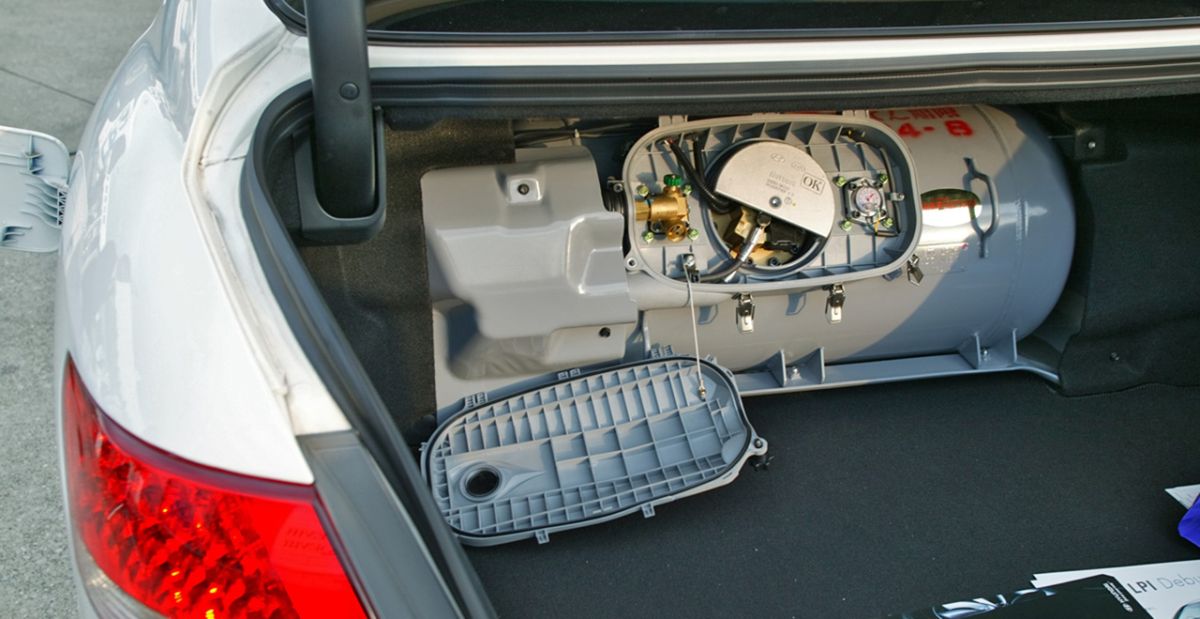
CNG Tanks
CNG stands for “Compressed Natural Gas.” It is a fuel alternative to gasoline and diesel and is commonly used in commercial vehicles, buses, trucks, and some passenger cars.
In CNG systems, natural gas is stored inside specially designed tanks under very high pressure. For this reason, CNG tanks are among the most important safety and durability components of the entire fuel system.
The purpose of a CNG tank is not simply to store gas. It must withstand high pressure, tolerate temperature changes, resist mechanical and environmental effects, and maintain its structural integrity throughout its specified service life.
How Does a CNG Tank Work?
A CNG tank stores natural gas in compressed form. During refueling, natural gas is transferred into the tank at high pressure.
Unlike LPG systems, where fuel is stored largely in liquid form, CNG is stored primarily as a gas under high pressure.
When the engine needs fuel, the high-pressure natural gas leaves the tank and passes through pressure-reducing and gas-control components before reaching the engine at the required pressure.
Therefore, a CNG system does not consist simply of a tank and a pipe leading to the engine. Tank valves, high-pressure lines, pressure regulators, filters, valves, and electronic control components also play important roles in safe operation.
Why Are CNG Tanks Designed to Withstand Very High Pressure?
Natural gas must be stored at high pressure so that a practical amount of fuel can be carried in a relatively compact tank.
Increasing the pressure allows more natural gas to be stored within the same tank volume. However, higher pressure also makes the mechanical strength of the tank extremely important.
For this reason, CNG tanks are not manufactured like ordinary fuel tanks. The material, manufacturing method, wall thickness, design pressure, and testing procedures are all selected according to the requirements of high-pressure gas storage.
A properly designed tank must not only withstand normal operating pressure but also meet the applicable safety and testing requirements.
Types of CNG Tanks
CNG tanks can be classified according to their construction and materials.
Fully metal tanks
Traditional CNG tanks can be manufactured from steel or suitable aluminum alloys. They can provide high mechanical strength, although steel tanks in particular can be relatively heavy compared with composite designs.
Metal-lined composite tanks
These tanks use a metal inner structure reinforced with composite materials. This design can reduce weight while maintaining the required pressure resistance.
Fully composite tanks
Composite tanks can provide significant weight savings. They can be particularly useful in applications where reducing vehicle weight is important.
When comparing tank types, however, weight should not be the only consideration. The tank's technical specifications, certification, installation requirements, and suitability for the vehicle are equally important.
What Materials Are Used in CNG Tanks?
The material used in a CNG tank has a direct effect on its strength, weight, and durability.
Steel tanks are known for their high mechanical strength. However, their relatively high density can increase the overall weight of the vehicle.
Aluminum alloys can provide a lower-weight alternative.
Composite materials such as carbon fiber and glass fiber can offer a high strength-to-weight ratio. This is one reason why composite construction has become increasingly important in modern CNG tank designs.
However, a lighter tank is not automatically a safer or better tank. Safety depends on the combination of material quality, design, manufacturing quality, testing, installation, and operating conditions.
Why Is the Information on a CNG Tank Important?
CNG tanks normally have important identification and technical information marked on the tank or provided with the relevant documentation.
Depending on the tank and applicable requirements, this information may include:
-
Tank manufacturer
-
Serial number
-
Manufacturing date
-
Tank type
-
Design pressure
-
Test information
-
Compliance or certification information
-
Service life or inspection requirements
This information is particularly important when purchasing a used CNG vehicle.
If the identity, age, or history of the tank cannot be established, its condition should not simply be assumed to be safe.
Do CNG Tanks Have a Service Life?
Yes.
CNG tanks are not designed for unlimited use. Their service life depends on the tank type, manufacturing standard, manufacturer's requirements, and applicable regulations.
A tank operating under high pressure is exposed to mechanical and environmental stresses over time. For this reason, it must be inspected at the required intervals and replaced when its approved service life has been reached.
The important point is that the tank's external appearance is not enough to determine its condition. Problems affecting the internal structure or material may not always be visible from the outside.
Why Is Corrosion Important for CNG Tanks?
Corrosion can be a serious safety concern, particularly with metal CNG tanks.
Surface corrosion and damage to protective coatings can gradually affect the condition of the tank material. This can be especially important for tanks installed underneath vehicles, where they may be exposed to road salt, water, mud, moisture, and stone impacts.
The tank and its surrounding area should therefore be inspected regularly.
Minor surface dirt and serious corrosion are obviously not the same thing. If there is any doubt about the condition of the tank, it should be evaluated by a qualified professional.
Impact Damage to CNG Tanks
CNG tanks installed on vehicles can be exposed to various mechanical forces.
Underbody tanks, in particular, may be affected by:
-
Stones and road debris
-
Hard objects on the road
-
Contact with curbs or the ground
-
Vehicle accidents
-
Incorrect lifting procedures
-
Damage during installation
If a CNG tank has experienced a significant impact, it should not simply be returned to service based on its external appearance.
This is particularly important for composite tanks. A seemingly minor surface impact can potentially affect deeper layers of the tank structure.
A tank that has suffered impact damage should therefore be inspected according to the appropriate procedures.
Can a CNG Tank Explode?
CNG tanks are specifically engineered to store natural gas safely under high pressure. However, like any high-pressure equipment, they are not completely risk-free.
Tank damage, incorrect installation, excessive heat, unsuitable components, manufacturing defects, or use beyond the approved service life can increase safety risks.
Therefore, instead of simply asking, “Can a CNG tank explode?”, it is more useful to consider whether the tank is properly manufactured, correctly installed, regularly inspected, and still within its approved service life.
CNG systems can also incorporate safety devices designed to respond to conditions such as excessive temperature or fire. The exact design and operation of these devices depend on the tank and vehicle system.
Is a CNG Tank the Same as an LPG Tank?
No.
CNG and LPG are different fuels, and they use different storage methods.
LPG is stored largely in liquid form inside the vehicle tank, while CNG is stored as compressed gas under high pressure.
As a result, CNG tanks and LPG tanks are not interchangeable.
Their operating pressures, materials, valves, connections, and safety requirements can be completely different.
Installing an LPG tank in a CNG system, or using a pressure vessel that is not approved for the CNG system, is not an appropriate or safe practice.
Where Are CNG Tanks Installed on Vehicles?
The location of CNG tanks depends on the vehicle's design.
Some vehicles have tanks installed in or around the luggage area, while others use underbody tanks. Commercial vehicles and buses may use several tanks installed in a dedicated area.
The installation process involves much more than simply attaching the tank to the vehicle.
The tank must be positioned and secured so that it is adequately protected from impacts, vibration, excessive exhaust heat, and other environmental conditions.
The mounting system is also extremely important. Incorrect or insufficient mounting can allow the tank to move during driving and place excessive loads on the tank and its connections.
How Are CNG Tanks Maintained?
CNG tank maintenance should not be treated like cleaning or inspecting an ordinary fuel tank.
Because these are high-pressure systems, users should not attempt to open, modify, repair, or otherwise interfere with the tank themselves.
During an appropriate inspection, technicians may examine:
Tank exterior
The tank is checked for corrosion, cracks, dents, impact damage, and other surface defects.
Tank mounting
The mounting points and securing components are inspected to ensure that the tank remains properly attached to the vehicle.
Valve and connections
The tank valve and high-pressure connections are checked for damage or signs of leakage.
High-pressure lines
Pipes and connections are inspected for abrasion, corrosion, deformation, or impact damage.
Tank identification
The manufacturing date, serial number, and relevant technical information are verified.
These inspections should be carried out by qualified personnel using appropriate equipment and procedures.
How Can a CNG Leak Be Detected?
A suspected CNG leak should always be taken seriously.
Natural gas itself is odorless, but an odorant is added for safety purposes so that leaks can be detected more easily.
If an unusual gas smell is noticed:
-
Avoid flames and anything that could create a spark.
-
Do not attempt to dismantle or loosen high-pressure connections.
-
Move to a safe location.
-
Contact a qualified CNG service or technician.
Trying to locate or repair a high-pressure CNG leak without the proper equipment and training can create additional hazards.
Can a CNG Tank Be Replaced?
Yes, but the replacement must be performed using an appropriate tank and the correct installation procedure.
The replacement tank must be compatible with the vehicle and the CNG system. Its pressure rating, capacity, connections, mounting requirements, certification, and physical dimensions all need to be considered.
It is not enough for a replacement tank to simply fit into the available space.
After replacement, the relevant connections and the system's leak-tightness should also be checked using appropriate procedures.
What Should You Check When Buying a CNG Tank?
When purchasing a new or used CNG tank, price and capacity should not be the only considerations.
Important points include:
-
Manufacturing date
-
Serial number
-
Tank type
-
Compliance and certification information
-
Approved service life
-
Physical damage
-
Corrosion
-
Previous usage history
-
Compatibility with the vehicle
-
Installation requirements
Extra caution is required when purchasing a used tank with an unknown history.
A tank that looks clean and undamaged from the outside is not necessarily a tank that is safe to use.
What Determines the Safety of a CNG Tank?
The safety of a CNG tank does not depend only on the tank itself.
A safe CNG system requires the tank, valve, high-pressure lines, pressure regulator, connections, refueling system, safety devices, and engine control system to work together correctly.
Installation quality is also just as important as the technical specifications of the tank.
Even a high-quality tank can become a safety concern if it is incorrectly installed, damaged, or connected to unsuitable equipment.
For this reason, CNG tanks should never be drilled, welded, cut, ground, or otherwise modified. Any operation that changes the pressure vessel's structure can create a serious safety risk.
Final Considerations About CNG Tanks
CNG tanks are safety-critical components designed to store natural gas under very high pressure. Their material, manufacturing standard, service life, corrosion condition, mounting system, and inspection history all need to be considered together.
This is especially important when purchasing a used CNG vehicle. The age and history of the tank should be verified whenever possible, and its safety should never be judged solely by its external appearance.
A properly manufactured tank, correct installation, appropriate inspection, and compliance with its service-life requirements are all essential for safe CNG operation.
Because CNG systems operate at very high pressure, tank inspection, replacement, and repair should always be treated as specialist procedures rather than routine DIY maintenance.