TR
TR EN
EN

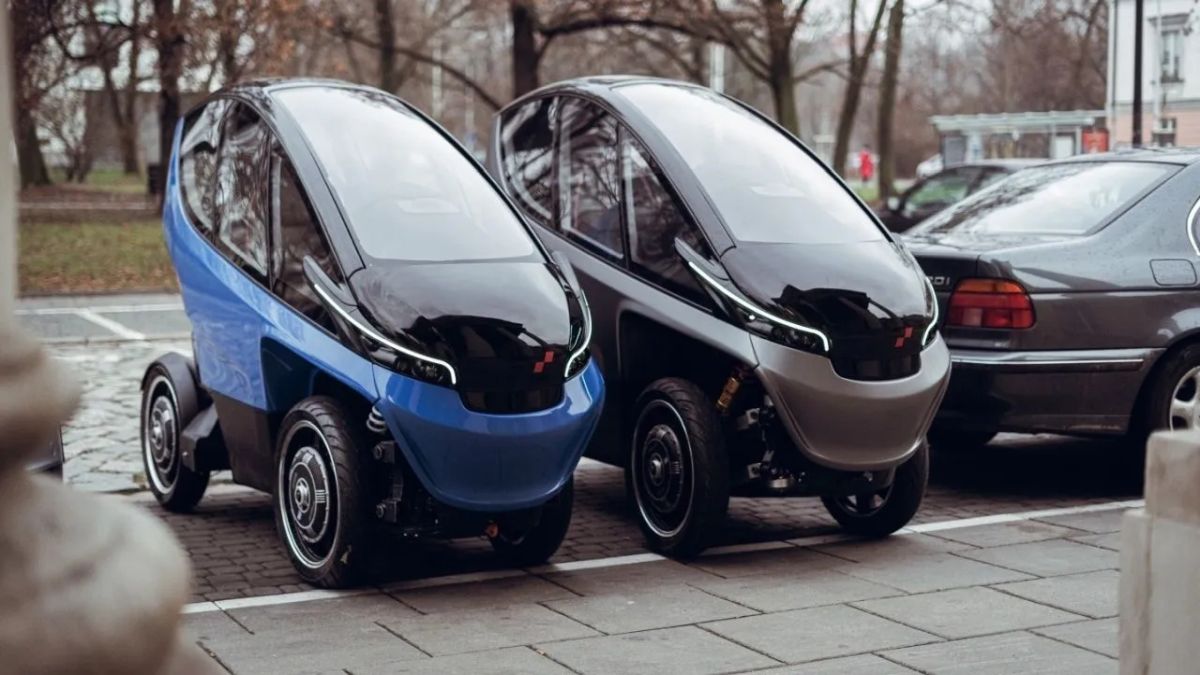
Are Mini Electric Vehicles Worth Buying?
Mini electric vehicles have become increasingly popular as urban transportation habits have changed. Their compact dimensions, low energy consumption, easy parking, and simple operation make them particularly attractive for short trips around town.
However, a mini electric vehicle should not simply be considered a smaller version of a conventional car. Its intended use, driving range, performance, safety equipment, charging requirements, and legal classification can be very different from those of a standard passenger car.
So the most important question before buying one is not simply “Is it cheap?” or “Is it electric?” but rather:
“Does this vehicle fit the way I actually use a car?”
What Is a Mini Electric Vehicle?
A mini electric vehicle is a small electrically powered vehicle generally designed for urban and short-distance transportation.
Depending on the model, it may have two seats or accommodate more passengers. Motor output, battery capacity, maximum speed, range, charging time, and equipment can vary considerably.
It is also important to distinguish between different vehicle categories. Not every small electric vehicle is legally classified in the same way as a conventional passenger car.
Before purchasing one, buyers should therefore check its vehicle classification, licensing requirements, registration requirements, insurance requirements, and the types of roads on which it can legally be used.
What Is the Biggest Advantage of a Mini Electric Vehicle?
The biggest advantage is usually its practicality in urban environments.
A mini electric vehicle can fit into parking spaces where a conventional car may struggle. Its small dimensions also make maneuvering through narrow streets and crowded areas easier.
Electric motors can also provide immediate torque at low speeds, making these vehicles responsive and easy to operate in stop-and-go traffic.
For short-distance urban transportation, the small size can become a major advantage rather than a limitation.
Are the Running Costs Really Lower?
One of the main attractions of electric vehicles is that they do not require gasoline or diesel fuel.
Mini electric vehicles can consume relatively little electricity, particularly during low-speed urban driving. However, “electric” does not mean that the vehicle costs nothing to operate.
Electricity still has a cost, and the overall ownership cost also includes:
-
Purchase price
-
Charging costs
-
Insurance
-
Tires
-
Maintenance
-
Battery-related expenses
-
Repairs
-
Registration and other vehicle-related costs
The financial advantage is generally more significant for drivers who cover relatively short urban distances and can charge the vehicle conveniently at home or at work.
Is the Range Enough?
The answer depends heavily on how the vehicle is used.
Many mini electric vehicles are designed primarily for short urban trips rather than long-distance travel. The range stated by the manufacturer should therefore not automatically be treated as the range that will be achieved in everyday driving.
Real-world range can be affected by:
-
Outside temperature
-
Heating and air conditioning
-
Driving speed
-
Hills and road conditions
-
Passenger and cargo weight
-
Tire pressure
-
Traffic
-
Battery age
-
Driving style
Cold weather can be particularly important because heating the cabin can consume a significant amount of electrical energy.
Instead of focusing only on the maximum advertised range, buyers should calculate whether the realistic daily range is sufficient for their regular route.
Are Mini Electric Vehicles Practical for City Driving?
For short trips to work, school, shopping areas, or nearby locations, a mini electric vehicle can make a lot of sense.
If the vehicle is used for only a few miles or kilometers each day, there may be little reason to use a large vehicle with a powerful engine and substantial fuel consumption.
Mini electric vehicles are particularly attractive when the driver faces:
-
Short daily trips
-
Heavy urban traffic
-
Limited parking space
-
Low annual mileage
-
Convenient charging at home or work
Under these conditions, their compact design and low energy consumption can be very useful.
Can You Take a Mini Electric Vehicle on Long Trips?
Not every mini electric vehicle is suitable for long-distance driving.
Range is only one part of the equation. Maximum speed, stability, charging infrastructure, passenger comfort, battery capacity, and the vehicle's legal classification also matter.
A small, lightweight vehicle can behave very differently from a conventional passenger car at higher speeds.
Therefore, buyers should distinguish between two completely different use cases:
“I will use it mainly around town.”
and
“I will regularly use it for long-distance travel.”
If frequent highway or intercity travel is required, a larger electric vehicle with a bigger battery and stronger high-speed capability may be a much better choice.
How Safe Are Mini Electric Vehicles?
The fact that a vehicle is electric does not automatically make it safe.
Safety levels can vary considerably between mini electric vehicles. The body structure, airbags, electronic stability systems, braking system, tires, seat belts, and crash protection should all be considered.
A compact and lightweight vehicle naturally has a different physical structure from a large passenger car. This becomes particularly important when the vehicle is used on roads where traffic speeds are high.
Before buying, it is worth checking for equipment such as:
ABS
Anti-lock braking helps prevent the wheels from locking under heavy braking and allows the driver to maintain better steering control.
ESC/ESP
Electronic stability control can help reduce loss of control and skidding in certain situations.
Airbags
Airbags are an important part of the vehicle's passive safety system.
Seat belts
Seat belts remain one of the most fundamental safety systems and should be properly integrated with the vehicle's seating design.
Crash protection
Electronic features are not enough. The physical structure of the vehicle and its crash protection should also be considered.
Battery Life Is One of the Most Important Issues
When buying a mini electric vehicle, the battery deserves at least as much attention as the electric motor.
The battery is often one of the most expensive components in an electric vehicle. Its usable capacity can decrease over time, which gradually reduces the vehicle's range.
Battery longevity can be affected by:
-
Operating temperature
-
Charging habits
-
Frequent fast charging
-
Battery chemistry
-
Charge cycles
-
Leaving the battery fully charged or deeply discharged for extended periods
-
Overall usage intensity
This is particularly important when buying a used mini electric vehicle.
A battery that still allows the vehicle to operate is not necessarily a healthy battery. What matters is how much usable capacity remains.
Can You Buy an Electric Vehicle Without Having a Convenient Charging Point?
Yes, but it can become a major inconvenience depending on how the vehicle is used.
Having a charging point at home or at work makes ownership considerably easier. The vehicle can be charged while parked and ready for the next day's journey.
If every charging session requires a trip to a public charging station, however, some of the convenience advantage of a small electric vehicle may disappear.
Before buying, it is therefore worth asking not only:
“Where can I charge it?”
but also:
“Where will I charge it every day?”
Does Charging Time Matter?
Yes.
Charging time depends on the battery capacity and the vehicle's charging system.
Some mini electric vehicles have relatively small batteries and can therefore be charged using a suitable household outlet or AC charging system within a reasonable period.
However, charging time is not determined solely by battery size. The vehicle's onboard charger also determines how much electrical power it can accept.
For this reason, buyers should check both battery capacity and charging power, rather than looking only at the advertised full-charge time.
Are Maintenance Costs Lower?
Electric vehicles can have fewer moving mechanical components than conventional internal-combustion vehicles.
A gasoline-powered vehicle may require maintenance of components such as:
-
Engine oil
-
Oil filter
-
Air filter
-
Fuel system
-
Spark plugs
-
Exhaust system
-
Turbocharger
-
Various engine components
An electric vehicle does not require many of these items, which can reduce routine maintenance requirements.
However, an electric vehicle is not maintenance-free.
Brakes, tires, suspension, steering components, air conditioning, the 12-volt electrical system, battery cooling systems, and electronic control systems may still require inspection or service.
Why Are Tires Important on a Mini Electric Vehicle?
The importance of tires can sometimes be overlooked because the vehicle itself is small.
However, tires are the only components directly connecting the vehicle to the road. Braking performance, cornering grip, wet-weather traction, and overall stability depend heavily on them.
Electric motors can deliver torque very quickly, even at low speeds. This makes proper tire selection and correct tire pressure particularly important.
Tire age, tread depth, pressure, and suitability for the weather conditions should all be checked regularly.
How Do Heating and Air Conditioning Affect Range?
This is an important issue that is often overlooked when buying a small electric vehicle.
In a conventional gasoline vehicle, cabin heating can make use of waste heat produced by the engine. An electric vehicle may need to use electrical energy to heat the cabin.
As a result, heating can have a noticeable effect on range, especially in cold weather.
Air conditioning also consumes electrical energy.
The effect can be more noticeable in a mini electric vehicle with a small battery because the energy required for climate control represents a larger percentage of the available battery capacity.
What Are the Disadvantages of Mini Electric Vehicles?
Mini electric vehicles have several limitations.
The biggest disadvantage is often their limited range and operating environment. A vehicle designed primarily for urban transportation may not be suitable for long journeys or high-speed roads.
Other potential disadvantages include:
-
Limited driving range
-
Long charging times on some models
-
Small luggage capacity
-
Limited passenger capacity
-
Low maximum speed on certain models
-
Varying resale value
-
Potentially expensive battery replacement
-
Limited service networks for some brands
-
Different levels of safety equipment between models
These disadvantages do not necessarily make mini electric vehicles bad choices. They simply mean that the vehicle must be matched to the right type of user.
Is a Used Mini Electric Vehicle Worth Buying?
It can be, but battery condition should be one of the first things checked.
A used electric vehicle may look excellent externally while having significant battery degradation.
Before purchasing a used mini electric vehicle, it is worth checking:
-
Battery health
-
Remaining usable capacity
-
Charging system
-
Electric motor
-
Electronic control units
-
Stored fault codes
-
Service history
-
Previous accident damage
-
Tire condition
-
Suspension and braking system
Ideally, the vehicle should be inspected by a technician who has experience with electric vehicles.
A diagnostic scan can also provide valuable information that cannot be obtained simply by driving the vehicle around the block.
Who Should Consider Buying a Mini Electric Vehicle?
Mini electric vehicles can be particularly suitable for people who:
-
Mainly drive short distances
-
Live and drive in urban areas
-
Have parking difficulties
-
Want low energy consumption
-
Have access to charging at home or work
-
Usually travel alone or with one passenger
-
Rarely need to travel long distances
For this type of usage, a mini electric vehicle can be a very practical transportation solution.
Who Should Avoid Buying One?
A mini electric vehicle may not be the right choice for someone who regularly drives long distances or frequently travels between cities.
It may also be unsuitable for families that need:
-
Several passenger seats
-
A large luggage compartment
-
High-speed highway capability
-
Long driving range
-
More extensive safety equipment
In these situations, a larger electric vehicle may provide a much better balance of range, comfort, practicality, and safety.
What Should You Check Before Buying?
Before buying a mini electric vehicle, the entire usage scenario should be considered rather than focusing only on the purchase price.
Ask yourself:
How far will I drive every day?
Your daily distance determines how much battery capacity you actually need.
Where will I charge the vehicle?
Having convenient home or workplace charging can make ownership much easier.
Which roads will I use?
Maximum speed, road conditions, and legal vehicle classification should all be considered.
What will the real-world range be in winter?
Manufacturer range figures should not be treated as guaranteed everyday figures.
Is there a reliable service and parts network?
This can be particularly important with lesser-known brands.
What is covered by the battery warranty?
The warranty period is important, but the conditions are equally important. Check whether the manufacturer specifies a minimum battery capacity or other conditions.
Does the vehicle have adequate safety equipment?
ABS, ESC, airbags, seat belts, and other safety features should be evaluated before purchase.
So, Are Mini Electric Vehicles Worth Buying?
Yes, but they are worth buying for the right type of user.
A mini electric vehicle should not be viewed as a conventional car that can perform every task on a smaller scale. Its strongest area is short-distance urban transportation.
If you mainly drive short distances, have difficulty finding parking, want low energy consumption, and have a convenient place to charge the vehicle, a mini electric vehicle can be a very practical choice.
On the other hand, if you regularly need long-distance travel, high-speed driving, a large cabin, substantial luggage capacity, or a more comprehensive safety package, a larger electric vehicle is likely to be a better solution.
Ultimately, the most important question is not “Is this mini electric vehicle good?” but “Is this vehicle suitable for the way I use my car?”
When the answer is yes, the compact dimensions, low energy consumption, easy parking, and simple urban operation can turn a mini electric vehicle into a surprisingly practical alternative to a conventional car.