TR
TR EN
EN

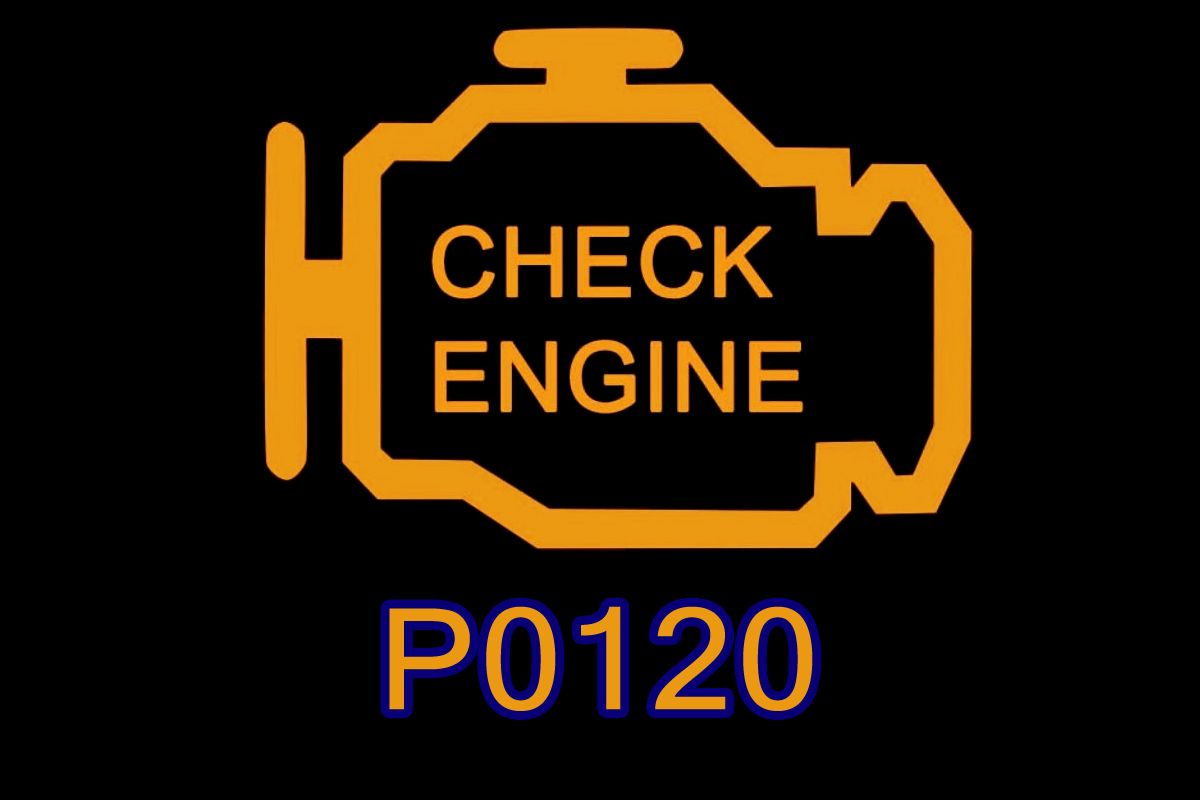
P0120 Throttle/Pedal Position Sensor "A" Circuit Malfunction
P0120 is an OBD-II diagnostic trouble code related to the Throttle/Pedal Position Sensor “A” circuit. Unlike codes that specifically identify a signal as too high, too low, or intermittent, P0120 is a broader circuit malfunction code. The engine control module (ECM/PCM) has detected a problem with the electrical signal or operation of the sensor circuit identified as “A.”
The code does not automatically mean that the throttle body or accelerator pedal must be replaced. The fault can originate from the sensor itself, wiring, connectors, power supply, sensor ground, reference voltage, or the mechanical/electronic throttle system.
What Does P0120 Mean?
The accelerator pedal and throttle system use position information to tell the ECM how much torque the driver is requesting and where the throttle is actually positioned.
Depending on the vehicle, the sensor identified as “A” may be associated with:
-
Throttle Position Sensor (TPS)
-
Accelerator Pedal Position (APP) sensor
-
An integrated throttle-body position sensor
-
One of several redundant position-sensor channels
The exact meaning of “A” is manufacturer-specific. It should not automatically be interpreted as “the first sensor” or “the accelerator pedal sensor.”
In modern electronic throttle systems, multiple position signals are normally used for safety and plausibility checking. The ECM compares these signals and expects them to follow specific relationships as the accelerator pedal and throttle plate move.
P0120 is set when the ECM determines that the “A” position-sensor circuit is malfunctioning or its signal is not behaving as expected.
How the Throttle/Pedal Position System Works
A typical electronic throttle system contains two related but separate position-monitoring areas.
The first is the accelerator pedal position system. When the driver presses the accelerator, APP sensors inside the pedal assembly produce electrical signals corresponding to pedal position.
The ECM receives these signals and calculates the driver's requested torque.
The second is the electronic throttle body. The ECM commands a throttle motor to open or close the throttle plate. Position sensors inside the throttle body report the actual throttle position back to the ECM.
A simplified sequence is:
Accelerator pedal → APP sensors → ECM → throttle actuator → throttle plate → TPS feedback → ECM
The ECM constantly monitors this process.
For example, if the driver gradually presses the accelerator, the pedal-position signals should change smoothly. The ECM then commands the throttle to respond, and the throttle-position feedback should also change in a predictable manner.
If one of the signals suddenly becomes invalid, stops changing, behaves inconsistently, or falls outside the expected electrical/functional range, P0120 may be stored.
P0120 Is Not the Same as “Low” or “High” Input
This distinction is important when diagnosing the code.
P0120 says “Circuit Malfunction.” It does not specifically state that the signal is electrically high or electrically low.
Therefore, a technician should not begin the diagnosis by assuming:
“P0120 means the TPS voltage is too low.”
That would be more appropriate for a code specifically identifying a low-input condition.
With P0120, the ECM may have detected a broader problem involving the sensor circuit or its expected operation.
Possible examples include:
-
Signal outside the expected operating range
-
Incorrect signal relationship between redundant sensors
-
Signal that does not change correctly with pedal/throttle movement
-
Electrical circuit fault
-
Open circuit
-
Short circuit
-
Reference-voltage problem
-
Sensor-ground problem
-
Implausible position information
-
Internal sensor failure
The exact detection criteria vary between manufacturers.
Common Symptoms of P0120
The symptoms depend heavily on the vehicle and how the ECM responds to the detected fault.
Possible symptoms include:
-
Check Engine Light
-
Poor accelerator response
-
Hesitation during acceleration
-
Reduced engine power
-
Throttle response delay
-
Unstable idle
-
Engine stalling
-
Difficulty accelerating
-
Engine entering limp or fail-safe mode
-
Limited maximum RPM
-
Limited vehicle speed
-
Automatic transmission shift abnormalities
-
Cruise control becoming unavailable
-
Engine starting but responding poorly to the accelerator
-
In some vehicles, the engine may not start
Some vehicles may continue to operate almost normally while the fault is intermittent. Others may immediately enter a reduced-power strategy.
Why the ECM Takes This Fault Seriously
Throttle and pedal position information is directly related to engine torque control.
On an older vehicle with a conventional mechanical throttle, pressing the accelerator physically opens the throttle plate through a cable or linkage.
Modern electronic throttle systems work differently. The accelerator pedal is essentially an electronic input device.
The ECM decides how much to open the throttle based on several factors, including:
-
Accelerator pedal position
-
Engine speed
-
Engine load
-
Vehicle speed
-
Engine temperature
-
Transmission status
-
Traction-control requests
-
Stability-control requests
-
Emissions requirements
-
Other torque-management commands
Because the ECM controls the throttle electronically, it needs reliable position feedback.
If the feedback becomes unreliable, the ECM may deliberately reduce throttle operation to prevent unpredictable acceleration.
Most Common Causes of P0120
There is no single component responsible for P0120. Diagnosis should follow the circuit rather than the name of the code.
Faulty throttle position sensor
A worn or internally damaged TPS can produce an incorrect or unstable position signal. A sensor may work correctly through most of its operating range but develop a dead spot or erratic output at a particular position.
Faulty accelerator pedal position sensor
On vehicles where the “A” circuit relates to the APP system, the pedal assembly can be responsible. Modern accelerator pedals often contain multiple internal sensors.
Damaged wiring
Wires running between the sensor, throttle body, pedal assembly, and ECM can become damaged by:
-
Engine vibration
-
Heat
-
Chafing
-
Previous repairs
-
Incorrect routing
-
Oil contamination
-
Water intrusion
-
Rodent damage
An intermittent open circuit can be particularly difficult to locate.
Loose or corroded connector
A connector may look physically intact while having poor terminal contact.
Corrosion, pushed-back terminals, excessive terminal tension, moisture, or contamination can cause an unstable signal.
Reference-voltage problem
Many position sensors use a regulated reference voltage supplied by the ECM.
If the reference voltage is missing or incorrect, the sensor cannot generate the expected signal.
However, if several sensors share the same reference circuit, a fault in one circuit can sometimes affect other sensors as well.
Sensor ground or return-circuit problem
A poor sensor ground can alter the signal seen by the ECM.
This is why checking only the sensor signal is insufficient. The reference and ground circuits must also be tested.
Throttle body problem
The throttle body can contain both the throttle actuator motor and position sensors.
An internal electronic fault can therefore produce P0120.
However, the presence of P0120 alone is not enough evidence to condemn the complete throttle body.
Mechanical throttle problem
On some systems, contamination or mechanical resistance around the throttle plate can affect the expected relationship between commanded and actual position.
A mechanical problem may therefore accompany an electronic fault, although a dirty throttle plate should not automatically be blamed for a circuit malfunction.
ECM/PCM fault
An ECM failure is possible but should normally be considered after the sensor, wiring, connector, power, ground, and reference circuits have been properly tested.
The Best Way to Diagnose P0120
A good diagnosis starts with data, not parts replacement.
Begin by scanning the vehicle and recording all stored and pending codes. Do not concentrate on P0120 if other codes are present. A power-supply, reference-voltage, communication, or related throttle code may provide important clues.
Next, examine the freeze-frame information if available.
Useful freeze-frame data can include:
-
Engine RPM
-
Vehicle speed
-
Engine load
-
Accelerator pedal position
-
Throttle position
-
Engine coolant temperature
-
Intake air temperature
-
Battery voltage
-
Other relevant sensor values
The purpose is to determine when the ECM detected the malfunction.
If the code was triggered during a particular pedal position or RPM, reproducing that condition can be much more useful than simply replacing a sensor.
Watch the Sensor Data While Moving the Pedal
One of the most useful tests is observing live data while slowly moving the accelerator pedal.
The position signal should normally change in a smooth and predictable manner.
Look for:
-
Sudden drops
-
Sudden spikes
-
Flat spots
-
Frozen values
-
Erratic movement
-
Values that jump without corresponding pedal movement
-
Incorrect correlation between redundant channels
Do not expect every vehicle to show identical percentages for its two pedal or throttle channels. Different manufacturers use different signal strategies.
The important question is whether the signals behave according to the manufacturer's specified relationship.
A sensor that looks normal at idle but suddenly drops out at a particular pedal position can be much easier to identify using live data than with a basic resistance test.
Test the Electrical Circuit
Once the scan data indicates a potential circuit problem, the next step is electrical testing.
Depending on the system, identify:
-
Sensor reference voltage
-
Sensor ground/return
-
Signal circuit
-
Power supply
-
Additional redundant signal circuits
The exact voltage specifications must come from the vehicle manufacturer.
There is no universal TPS or APP voltage value that applies to every vehicle.
A common mistake is to see a value such as approximately 5 volts or approximately 0.5 volts on another vehicle and assume the same value applies here. That can lead to an incorrect diagnosis.
Why Continuity Testing Is Not Enough
Checking a wire with an ohmmeter and finding continuity does not necessarily prove that the circuit is healthy.
A wire can show continuity while still having:
-
Excessive resistance
-
A partially broken conductor
-
A loose terminal
-
A poor crimp
-
A connection that fails under vibration
-
Voltage drop under load
For an intermittent P0120, this becomes particularly important.
A loaded circuit test and voltage-drop testing can reveal problems that a simple continuity test misses.
A wiggle test can also be useful: monitor the relevant live-data signal while carefully moving the wiring harness and connectors.
If the signal changes when the harness is moved, the wiring or terminal connection deserves close attention.
Check the Sensor Reference and Ground
If the sensor signal is incorrect, do not immediately replace the sensor.
First determine whether the sensor is receiving the correct electrical conditions.
For example:
Correct reference + correct ground + incorrect sensor output
This makes the sensor itself a stronger suspect.
But:
Incorrect reference voltage
The problem may be upstream in the reference circuit or another component sharing that circuit.
Likewise:
Poor sensor ground
The sensor may be perfectly functional but unable to produce a reliable signal.
This circuit-based approach prevents unnecessary replacement of expensive throttle assemblies.
Inspect the Throttle Body and Accelerator Pedal
The physical components should also be inspected.
Look for:
-
Damaged connectors
-
Bent terminals
-
Corrosion
-
Water contamination
-
Broken wiring near the component
-
Signs of previous repair
-
Throttle plate contamination
-
Mechanical binding
-
Damage to the accelerator pedal assembly
If the throttle body has been removed previously, pay particular attention to connector condition and harness routing.
If the accelerator pedal has been removed or replaced, verify that the connector is properly seated and that the wiring has not been stretched or damaged.
Can a Dirty Throttle Body Cause P0120?
A dirty throttle body can contribute to poor throttle behavior, unstable idle, or airflow-related problems.
However, P0120 specifically concerns the throttle/pedal position sensor “A” circuit.
Therefore, cleaning the throttle body should not automatically be considered a complete repair for P0120.
If the electrical signal remains incorrect after cleaning, the underlying electrical problem has not been solved.
Likewise, a throttle body that is physically dirty does not necessarily have a failed position sensor.
Can the Accelerator Pedal Cause P0120?
Yes, depending on the vehicle's circuit design.
Some electronic accelerator pedals contain multiple APP sensors. The ECM continuously compares their signals.
If one channel develops an internal fault, the ECM may detect a malfunction even though the pedal still physically moves normally.
A pedal sensor can also develop an intermittent fault that appears only at a particular position.
This is why observing APP live data while slowly moving the pedal can be extremely valuable.
Can Wiring Cause an Intermittent P0120?
Absolutely.
In fact, wiring and connector problems should remain high on the diagnostic list, particularly when:
-
The code is intermittent.
-
The vehicle works normally most of the time.
-
The fault appears over bumps.
-
The fault occurs during engine movement.
-
The problem appears during hard acceleration.
-
The signal suddenly jumps or disappears.
-
The wiring has recently been repaired.
Engine movement during acceleration can change the position of a damaged harness enough to temporarily interrupt the circuit.
P0120 and Limp Mode
Electronic throttle systems are designed with fail-safe strategies.
If the ECM cannot reliably determine accelerator or throttle position, it may limit engine torque.
Depending on the vehicle, this can produce:
-
Reduced throttle response
-
Fixed or limited RPM
-
Reduced engine power
-
Limited vehicle speed
-
Throttle opening restrictions
-
Warning messages
-
Deactivation of cruise control
This behavior does not necessarily mean that the throttle motor itself has failed.
It may simply be the ECM protecting the vehicle because it cannot trust the position feedback.
What Should Not Be Replaced Immediately?
A P0120 code alone is not sufficient justification to replace:
-
Accelerator pedal
-
Throttle body
-
TPS
-
ECM/PCM
-
Wiring harness
The correct component should be identified through testing.
For example, if the reference voltage and ground are correct but the sensor output does not follow the manufacturer's specification, the sensor becomes a strong suspect.
If the sensor output is correct at the component but incorrect at the ECM connector, the wiring becomes much more suspicious.
This distinction can save considerable time and money.
After Repair: Clear the Code and Verify the System
After repairing the actual fault, clear the diagnostic trouble code and perform the required verification procedure.
Some vehicles may require:
-
Throttle relearn
-
Accelerator pedal position relearn
-
Idle relearn
-
Throttle initialization
-
Manufacturer-specific adaptation
The procedure varies by vehicle.
A repair should not be considered complete simply because the Check Engine Light goes out.
The vehicle should be driven under appropriate conditions while monitoring the relevant data and checking whether P0120 returns.
P0120 Does Not Always Mean a Bad Sensor
This is the most important point when diagnosing this code.
P0120 identifies a malfunction involving the Throttle/Pedal Position Sensor “A” circuit, but the code itself does not identify which physical component has failed.
The actual problem could be the sensor, its reference voltage, ground, signal wiring, connector, throttle body, accelerator pedal, or another part of the control system.
The most reliable diagnostic path is therefore:
Stored code → freeze-frame → live position data → reference/ground verification → signal testing → wiring/connector testing → component diagnosis → relearn/verification
Following that sequence is much more reliable than replacing the throttle body or accelerator pedal based solely on the presence of P0120.