TR
TR EN
EN

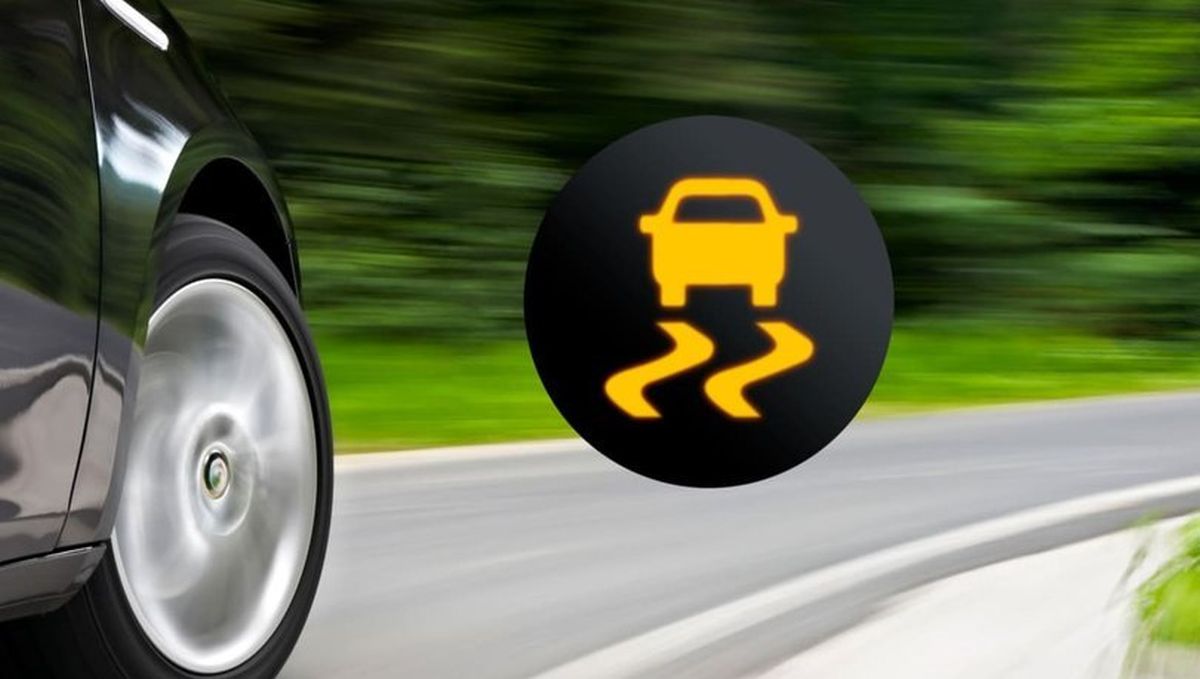
What Is the Electronic Stability Program (ESP)?
The Electronic Stability Program (ESP) is an active safety system designed to reduce the risk of skidding, loss of control, and vehicle instability during cornering or sudden maneuvers.
ESP is also known by different names depending on the manufacturer, including Electronic Stability Control (ESC), Vehicle Stability Control (VSC), Dynamic Stability Control (DSC), and Vehicle Dynamic Control (VDC).
The main purpose of ESP is to determine whether the vehicle is actually moving in the direction intended by the driver. If the system detects a significant difference between the driver's steering input and the vehicle's actual movement, it can selectively brake individual wheels and reduce engine torque to help stabilize the vehicle.
ESP is particularly useful during emergency maneuvers, sudden lane changes, fast cornering, and driving on wet, snowy, icy, or otherwise slippery roads.
How Does ESP Work?
ESP continuously monitors the driver's steering input and the vehicle's actual movement.
When the driver turns the steering wheel, the system calculates the direction in which the vehicle should be traveling. It then compares this expected movement with information from several sensors.
The system can monitor:
-
Steering angle
-
Individual wheel speeds
-
Vehicle rotation around its vertical axis
-
Lateral acceleration
-
Longitudinal acceleration
-
Engine torque
-
Throttle position
If the vehicle begins to behave differently from what the driver intended, ESP can intervene within fractions of a second.
Depending on the situation, it may apply the brakes to one or more individual wheels and request a reduction in engine torque.
The purpose is not simply to slow the vehicle down. The objective is to influence the vehicle's movement and help bring it back toward the driver's intended path.
Which Sensors Does ESP Use?
ESP depends on information from several sensors working together.
Steering angle sensor
The steering angle sensor determines how far and in which direction the steering wheel has been turned. This tells the stability-control system what the driver intends to do.
Wheel-speed sensors
The ABS wheel-speed sensors monitor the rotational speed of each wheel. They are also essential for ABS and traction-control functions.
If one wheel suddenly behaves differently from the others, the system can use this information to detect possible loss of traction.
Yaw-rate sensor
The yaw-rate sensor measures how quickly the vehicle is rotating around its vertical axis.
This is particularly important because ESP needs to know how the vehicle is actually turning, not just where the steering wheel is pointing.
Lateral acceleration sensor
This sensor measures the sideways acceleration acting on the vehicle, especially during cornering.
Longitudinal acceleration information
The system can also use information about acceleration and deceleration along the vehicle's longitudinal axis.
All of these signals are evaluated together to determine the vehicle's dynamic behavior.
How Does ESP Prevent a Skid?
One of the most important features of ESP is its ability to apply braking force independently to individual wheels.
For example, if a vehicle begins to rotate more than expected while entering a corner, ESP can selectively brake a particular wheel to influence the vehicle's rotational movement.
The system can also communicate with the engine ECU and request a reduction in engine torque.
This means that even if the driver is pressing the accelerator, the engine may temporarily produce less torque while ESP is actively correcting the vehicle's movement.
During intervention, the driver may notice:
-
Reduced throttle response
-
Temporary loss of engine power
-
A brief braking sensation
-
A flashing ESP/ESC warning light
These sensations can be completely normal when the system is actively intervening.
When Does ESP Activate?
ESP can activate whenever the vehicle approaches or exceeds its available stability limits.
Common situations include:
-
Driving through a wet corner
-
Snow-covered roads
-
Icy surfaces
-
Sudden steering movements
-
Rapid lane changes
-
Entering a corner too quickly
-
Excessive acceleration while cornering
-
Different traction levels under the left and right wheels
-
Emergency avoidance maneuvers
The system can be particularly useful when the road surface has different levels of grip.
For example, if the wheels on one side of the vehicle are on wet asphalt while the wheels on the other side are on a higher-grip surface, the vehicle may react differently from what the driver expects. ESP can detect this change and intervene when necessary.
What Is the Difference Between ESP and ASR?
ESP and ASR are closely related, but they do not have exactly the same purpose.
ASR (Anti-Slip Regulation) primarily controls wheelspin during acceleration.
ESP (Electronic Stability Program) focuses on the vehicle's overall directional stability and attempts to reduce the risk of skidding or loss of control.
For example, if the driven wheels spin when the driver accelerates on a slippery road, ASR may reduce engine torque or brake a spinning wheel.
If the rear of the vehicle begins to move outward during a corner, ESP can intervene by selectively braking individual wheels and reducing engine torque.
In modern vehicles, ASR, ABS, and ESP are often integrated into the same electronic control system.
What Is the Difference Between ESP and ABS?
ABS and ESP are also closely connected but perform different functions.
ABS primarily prevents the wheels from locking during braking.
ASR/TCS reduces excessive wheelspin during acceleration.
ESP/ESC monitors the vehicle's directional stability and helps reduce the risk of skidding.
These systems can share wheel-speed sensors, hydraulic components, and electronic control units.
As a result, a problem with a shared component can sometimes cause several warning lights to appear simultaneously.
Why Does ESP Brake Individual Wheels?
ESP does not normally apply the same braking force to all four wheels when correcting a stability problem.
Instead, it can selectively brake individual wheels.
This is important because applying braking force to a specific wheel can influence the vehicle's rotational movement.
For example, if the vehicle begins to rotate too much during a corner, selective braking can help counteract that unwanted movement.
The intervention takes place extremely quickly, often before the driver has enough time to consciously react.
The driver may simply notice a brief reduction in speed, a braking sensation, or a flashing stability-control warning light.
What Are the Benefits of ESP?
The main benefit of ESP is that it can provide electronic assistance when the vehicle approaches the limits of available traction and stability.
Depending on the vehicle, ESP can:
-
Reduce the risk of skidding
-
Help maintain directional stability
-
Detect differences in wheel traction
-
Apply individual wheel braking
-
Reduce engine torque
-
Work together with ABS and ASR
-
Assist during emergency maneuvers
-
Help stabilize the vehicle during sudden changes in direction
However, ESP cannot eliminate the physical limits of the vehicle.
Can ESP Prevent Every Accident?
No.
ESP is an important active safety system, but it cannot overcome the laws of physics.
For example, ESP may not be able to prevent loss of control when:
-
Vehicle speed is far too high for the road conditions
-
Tires have very little grip
-
Tires are severely worn
-
Tire pressures are incorrect
-
The road is covered with ice
-
The vehicle encounters standing water or severe aquaplaning
-
A steering maneuver is too aggressive
-
The available road surface provides almost no traction
ESP can help the driver maintain control, but it cannot create grip where none exists.
This is why good tires, correct tire pressure, appropriate speed, and smooth driving remain essential even in vehicles equipped with advanced stability control.
What Are the Symptoms of an ESP Fault?
When ESP detects a problem within its system or one of its supporting components, warning lights may appear on the instrument cluster.
Possible symptoms include:
-
ESP/ESC warning light remaining illuminated
-
ABS warning light
-
ASR or traction-control warning
-
Several electronic safety systems becoming unavailable
-
Traction control no longer operating
-
ESP failing to intervene when the vehicle loses traction
-
ESP activating unnecessarily
-
Abnormal wheel-speed information
-
Steering or stability-control warnings
It is important to distinguish between a flashing ESP light and a continuously illuminated ESP warning light.
A flashing light during acceleration or cornering can simply indicate that the system is actively intervening.
A warning light that remains continuously illuminated generally indicates that the system has detected a fault or that one of its functions has been disabled.
What Can Cause an ESP Fault?
There is no single component responsible for every ESP failure.
Several different problems can trigger an ESP warning.
Wheel-speed sensor failure
A faulty ABS wheel-speed sensor can provide incorrect information about wheel rotation and affect the operation of ESP.
Steering-angle sensor problems
If the system cannot correctly determine the steering wheel position, it cannot accurately compare the driver's intended direction with the vehicle's actual movement.
Yaw-rate sensor failure
Because the yaw-rate sensor measures the vehicle's rotational movement, a faulty signal can cause ESP to malfunction or become disabled.
Sensor calibration problems
Some sensors may require calibration after certain repairs.
For example, steering-system work, sensor replacement, suspension repairs, or alignment-related procedures can sometimes require recalibration depending on the vehicle.
Low battery voltage
A weak battery or unstable charging voltage can cause ABS/ESP modules to store faults.
Modern electronic control units can be sensitive to low system voltage, particularly during engine starting.
ABS hydraulic unit problems
The ABS hydraulic unit plays an important role in ESP intervention because it allows the system to control braking pressure at individual wheels.
An electrical or hydraulic problem in this unit can therefore affect ESP.
Wiring and connector problems
Broken wires, corrosion, water intrusion, loose connectors, or poor electrical contacts can interrupt signals from important ESP sensors.
CAN communication problems
The ESP module communicates with other control units, including the engine ECU and sometimes the transmission control module.
A CAN communication fault can prevent the stability-control system from receiving or sending the information it needs.
Can Tires Affect ESP Operation?
Yes. Tire condition and tire compatibility can affect the operation of ESP.
ESP relies partly on wheel-speed information. If the tires have significantly different rolling circumferences, the wheels can rotate at different speeds even when there is no actual loss of traction.
For this reason, drivers should pay attention to:
-
Correct tire size
-
Correct tire pressure
-
Matching tires on the same axle
-
Excessive differences in tread wear
-
Appropriate tire construction and specifications
-
Compatible tire sizes across the vehicle
Incorrect tire sizes or major differences in rolling circumference can potentially influence ABS, ASR, and ESP operation.
How Is an ESP Fault Diagnosed?
Proper ESP diagnosis usually requires more than scanning the engine ECU.
The ABS/ESP/ESC control module should also be scanned with an appropriate diagnostic tool.
Once fault codes are retrieved, the technician should determine under which conditions they were recorded and examine the corresponding live data.
Depending on the fault, diagnosis may include checking:
-
ABS/ESP fault codes
-
Individual wheel-speed data
-
Steering-angle sensor
-
Yaw-rate sensor
-
Acceleration sensors
-
ABS sensor wiring
-
Electrical connectors
-
Wheel bearings
-
Magnetic encoder rings
-
ABS hydraulic unit
-
Battery voltage
-
Alternator charging voltage
-
CAN communication
-
Tire sizes and pressures
-
Sensor calibration
The important point is that an ESP fault code does not automatically prove that the component named in the code is defective.
For example, a wheel-speed sensor-related fault can sometimes be caused by the sensor wiring, connector, wheel bearing, magnetic encoder, or an incorrect sensor signal rather than the sensor itself.
Replacing parts without confirming the actual cause can therefore lead to unnecessary repairs.
Can You Drive With an ESP Fault?
Whether the vehicle can be driven safely depends on the nature of the fault and which other systems have been affected.
If only the stability-control function has been disabled, the vehicle may still operate normally under favorable road conditions. However, it will no longer have the same electronic assistance when traction is lost.
The situation is more serious if the ESP warning appears together with:
-
ABS warning
-
Brake-system warning
-
ASR/traction-control warning
-
Multiple electronic safety-system warnings
In such cases, several safety functions may be unavailable.
Extra caution is particularly important on wet, snowy, icy, or loose surfaces.
Should ESP Be Turned Off?
For normal road driving, keeping ESP active is generally the safest choice.
Some vehicles have an ESP/ESC button that allows the driver to reduce or temporarily disable certain stability-control functions.
However, the exact operation varies between vehicles.
On some models, pressing the button only reduces ASR/TCS intervention while the main stability-control function remains active. Other vehicles may provide different levels of intervention depending on how long the button is pressed or which driving mode is selected.
Temporarily reducing traction control can sometimes help when a vehicle is stuck in deep snow or loose material and needs controlled wheelspin to move.
For normal road use, however, there is generally little reason to disable the system.
ESP and the Driver's Role
ESP is designed to assist the driver, not replace the driver.
Even the most advanced stability-control system cannot change the basic limitations of tires and road surfaces.
The driver remains responsible for choosing an appropriate speed, maintaining suitable tires and tire pressure, and adjusting driving style to weather and road conditions.
The real value of ESP is not that it can save a vehicle from every mistake. Its value is that it can detect the early signs of instability and react extremely quickly, often applying precise braking or reducing engine torque before the loss of control becomes severe.
That additional layer of electronic assistance can make a significant difference when the vehicle suddenly approaches the limits of available traction.