TR
TR EN
EN

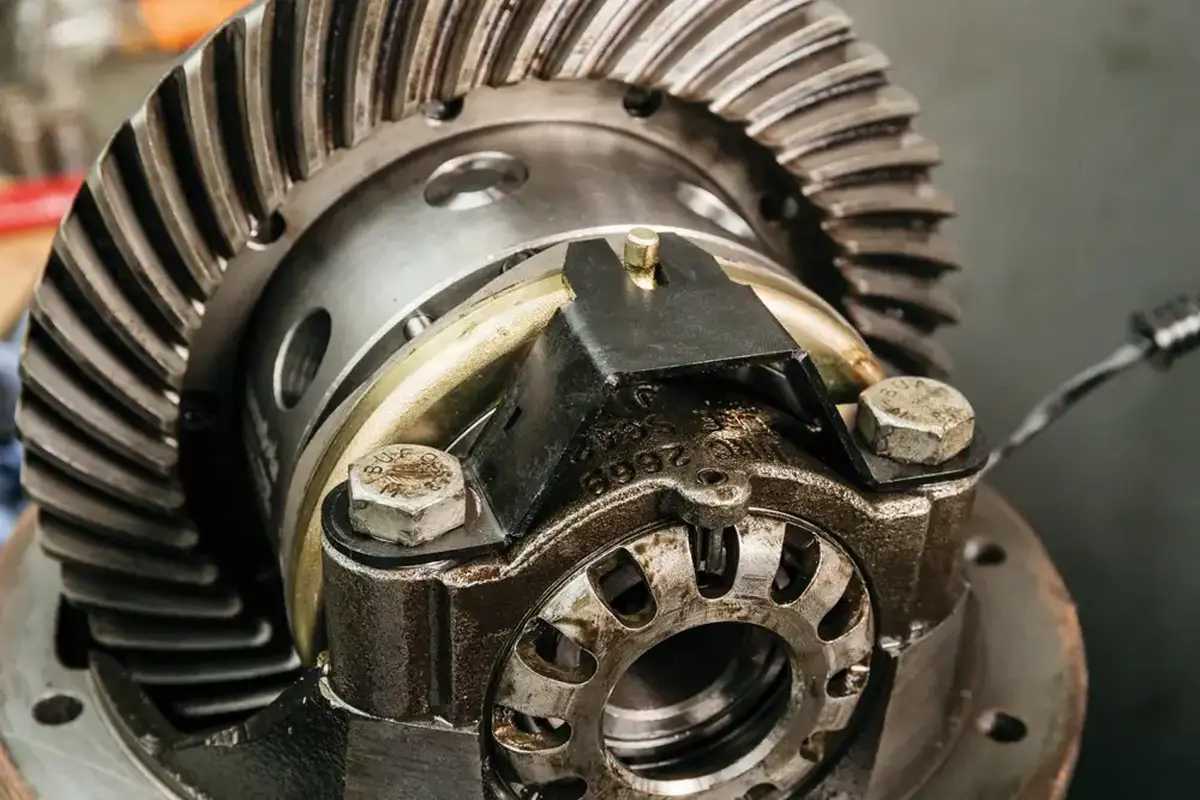
What Is the Electronic Differential Lock (EDL) System?
EDL (Electronic Differential Lock) is an electronic driving-assistance system designed to improve traction when one of the driven wheels begins to spin significantly faster than the other.
Despite its name, EDL does not normally lock the differential mechanically. Instead, it uses the vehicle's ABS braking system to apply controlled braking to the wheel that is spinning.
For example, if one driven wheel is on a slippery surface while the other has better grip, the slippery wheel may start spinning rapidly. EDL detects the difference in wheel speeds and applies braking force to the spinning wheel. This helps the open differential transfer more usable torque to the wheel with better traction.
Why Is EDL Needed?
An open differential allows the wheels on the same axle to rotate at different speeds, which is necessary when cornering.
However, an open differential can have a disadvantage when one wheel has very little traction.
Imagine a front-wheel-drive vehicle where:
-
One front wheel is on dry asphalt.
-
The other front wheel is on ice.
The wheel on the ice can begin spinning much more easily. Once this happens, the vehicle may have difficulty transferring useful engine torque to the wheel with better grip.
EDL helps by braking the spinning wheel.
This changes the operating conditions of the differential and allows the wheel with better traction to make better use of the available engine torque.
How Does EDL Work?
EDL relies heavily on the wheel-speed sensors used by the ABS system.
The control unit continuously monitors the rotational speed of the wheels.
If it detects a significant difference between the speeds of driven wheels, it evaluates whether the difference is consistent with wheel spin.
If the system determines that a wheel is spinning excessively, it can command the ABS hydraulic unit to apply braking pressure to that wheel.
The basic sequence is:
Wheel-speed monitoring → Detection of excessive wheel-speed difference → Brake intervention → Reduced wheel spin → Improved use of available traction
The exact control strategy varies between manufacturers and vehicle models.
Does EDL Actually Lock the Differential?
No, not in the conventional mechanical sense.
The name "Electronic Differential Lock" can sometimes be misleading because EDL does not normally lock the differential gears together.
Instead, it uses the braking system to simulate some of the traction benefits of a limited differential.
A mechanical differential lock physically changes how torque is distributed between the two outputs.
EDL uses brake intervention to influence the behavior of an open differential.
This distinction becomes particularly important during demanding driving conditions.
EDL vs. Traction Control (TCS)
EDL and TCS (Traction Control System) are closely related, and modern vehicles may use both as part of the same electronic chassis-control system.
EDL primarily addresses excessive speed differences between driven wheels by applying braking force to a spinning wheel.
TCS can use several strategies to reduce wheel spin, including:
-
Individual-wheel braking
-
Engine torque reduction
-
Throttle intervention
-
Ignition adjustment
-
Fuel or torque management
Depending on the vehicle, EDL may effectively operate as one of the functions within the broader traction-control system.
This is why drivers may not always see a separate EDL warning or indicator.
EDL vs. ABS
ABS and EDL can use the same wheel-speed sensors and ABS hydraulic hardware, but their objectives are different.
ABS primarily operates during braking and helps prevent the wheels from locking.
EDL primarily assists traction during acceleration by controlling excessive wheel spin.
The systems can therefore share important hardware while performing different functions.
A failure in the ABS system can also disable EDL because EDL depends on the same sensors and hydraulic control system.
How Does EDL Work on a Slippery Surface?
EDL is particularly useful when the driven wheels have different levels of grip.
Consider a front-wheel-drive car accelerating on a road where the left front wheel is on dry pavement and the right front wheel is on ice.
The right wheel can spin much faster because it has less traction.
EDL can:
-
Monitor the wheel-speed signals.
-
Detect the excessive speed difference.
-
Determine that wheel spin is occurring.
-
Apply controlled braking to the spinning wheel.
-
Reduce excessive wheel speed.
-
Help the differential make better use of the traction available at the other wheel.
The result can be improved acceleration and reduced wheel spin.
Is EDL Useful on Snow and Ice?
Yes, but its effectiveness depends heavily on the available tire grip.
EDL can be helpful when one wheel has significantly less traction than the other.
For example, if one wheel is on ice and the other is on a surface with better grip, braking the spinning wheel can help the vehicle move forward.
However, if both driven wheels are on extremely slippery ice, EDL cannot create additional traction.
This is an important limitation.
EDL can redistribute the way available traction is used, but it cannot manufacture grip that the tires and road surface do not provide.
Does EDL Operate All the Time?
No.
EDL does not continuously apply the brakes during normal driving.
It activates when the control system detects conditions that require traction intervention.
The system is generally more noticeable during:
-
Hard acceleration
-
Low-speed acceleration
-
Starting on slippery surfaces
-
Uneven traction between driven wheels
-
Snow or ice
-
Mud or loose surfaces
Because EDL uses the brakes, the control system also has to consider brake temperature and the duration of intervention.
Can EDL Overheat the Brakes?
Yes.
This is one of the main limitations of a brake-based electronic differential system.
When EDL repeatedly applies the brake to a spinning wheel, the brake disc and pad generate heat.
Extended wheel spin or repeated heavy intervention can therefore increase brake temperatures.
Depending on the vehicle, the system may reduce or temporarily stop its intervention when thermal limits are approached.
This is one reason why EDL should not be considered a direct replacement for a mechanical locking differential in demanding off-road or motorsport applications.
A mechanical differential lock does not rely on repeatedly converting engine power into brake heat.
Which Vehicles Use EDL?
EDL-type systems are commonly found on modern front-wheel-drive and all-wheel-drive vehicles.
The Volkswagen Group is particularly associated with the EDL terminology, although other manufacturers use different names for systems that operate according to similar principles.
A vehicle may have an electronic traction function that operates very similarly to EDL without actually using the EDL name.
In many modern vehicles, EDL, traction control, ABS, and ESC are integrated into a common electronic control architecture.
What Are the Symptoms of an EDL Problem?
Because EDL is usually integrated with ABS and ESC systems, an EDL problem may appear together with other electronic warnings.
Possible symptoms include:
-
ABS warning light
-
ESC/ESP warning light
-
Traction-control warning
-
Excessive wheel spin
-
Reduced traction on slippery surfaces
-
One driven wheel spinning excessively
-
Electronic traction systems being disabled
-
ABS/ESC fault messages
-
Reduced effectiveness of electronic stability systems
However, these symptoms do not necessarily mean that the EDL function itself has failed.
A fault in a wheel-speed sensor, wiring, ABS module, or vehicle power supply can also disable EDL.
What Can Cause an EDL Fault?
Several different problems can affect EDL operation.
Faulty wheel-speed sensor
A wheel-speed sensor is one of the most important components in the system.
If the sensor provides an incorrect signal, the control unit may not be able to determine accurately whether a wheel is spinning.
Damaged wiring or connectors
Broken wires, corrosion, loose terminals, or damaged connectors can interrupt the sensor signal.
ABS hydraulic unit problems
Because EDL can use the ABS hydraulic modulator to apply braking pressure, a hydraulic or electronic problem within the ABS unit can affect EDL.
ABS/ESC control-unit problems
A software, electronic, or communication problem in the control module can disable EDL and other related functions.
Low battery voltage
A weak battery, charging-system problem, or poor ground connection can cause ABS/ESC systems to generate faults.
Tire differences
Large differences in tire diameter, tread depth, or tire characteristics can affect wheel-speed calculations and traction-control operation.
Can Different Tires Cause EDL Problems?
Yes.
The electronic control system relies on wheel-speed information to determine whether a wheel is spinning.
If the tires on the same axle have significantly different rolling circumferences, the wheels can rotate at different speeds even when there is no actual loss of traction.
This can confuse the control system or cause unnecessary interventions.
Differences can result from:
-
Unequal tire sizes
-
Significant tread-depth differences
-
Incorrect tire pressure
-
Different tire types
-
Severely worn tires
-
Incorrect wheel or tire combinations
For vehicles equipped with sophisticated ABS, EDL, and ESC systems, maintaining appropriate and compatible tires is important.
How Is an EDL Fault Diagnosed?
An EDL problem should be diagnosed through the ABS/ESC system rather than by simply replacing parts.
A suitable diagnostic scanner should first be used to read fault codes from the ABS/ESC control unit.
The technician can then examine:
-
Individual wheel-speed sensor readings
-
Sensor wiring
-
Sensor connectors
-
ABS hydraulic unit
-
Battery voltage
-
Charging voltage
-
CAN communication
-
ABS/ESC live data
-
Tire sizes and condition
Live wheel-speed data is particularly useful.
For example, if one wheel suddenly reports a dramatically different speed while the others remain consistent, the technician can investigate whether the cause is genuine wheel spin or an incorrect sensor signal.
A wheel-speed sensor fault code does not always mean the sensor itself is defective. The problem may instead be caused by its wiring, connector, wheel bearing, magnetic encoder, or installation.
Can a Wheel Bearing Cause an EDL Fault?
Yes.
Many modern wheel bearings contain a magnetic encoder used by the ABS wheel-speed sensor.
If the encoder becomes damaged or contaminated, the sensor may produce an incorrect wheel-speed signal.
This can cause:
-
ABS faults
-
EDL faults
-
Traction-control faults
-
ESC faults
-
Incorrect wheel-speed readings
In such a case, replacing the sensor alone may not solve the problem.
The wheel bearing and encoder should also be inspected when the evidence points in that direction.
EDL vs. Mechanical Differential Lock
These two systems should not be considered identical.
A mechanical differential lock physically changes the behavior of the differential and can force or strongly bias torque distribution between the driven wheels.
EDL does not normally modify the differential mechanically.
Instead, it brakes the spinning wheel.
The main advantage of EDL is that it can provide traction assistance using hardware that the vehicle may already have for ABS.
The main disadvantage is that braking the spinning wheel generates heat.
A mechanical differential lock can therefore be more suitable for applications involving prolonged high-load traction demands.
EDL vs. Limited-Slip Differential (LSD)
EDL is also different from an LSD (Limited-Slip Differential).
An LSD uses a mechanical or electronically controlled differential mechanism to limit the speed difference between the driven wheels and influence torque distribution.
EDL uses the vehicle's braking system.
An LSD can therefore provide a more continuous mechanical method of managing torque distribution, while EDL provides electronic traction assistance through brake intervention.
Some vehicles can even combine a mechanical limited-slip differential with electronic traction-control functions.
Does EDL Improve Acceleration?
It can, particularly when one driven wheel has significantly less grip than the other.
Without traction assistance, an open differential can allow the low-grip wheel to spin excessively.
EDL can reduce this wheel spin and help the wheel with better traction make better use of the available engine torque.
The improvement is most noticeable when traction between the two driven wheels is uneven.
However, EDL does not automatically increase engine power.
It simply helps the available power reach the road more effectively when wheel spin is limiting acceleration.
Does EDL Prevent All Wheel Spin?
No.
EDL is not designed to eliminate all wheel spin under every condition.
Its intervention depends on factors such as:
-
Available tire grip
-
Engine torque
-
Vehicle speed
-
Wheel-speed difference
-
Brake temperature
-
System calibration
-
Road conditions
If both driven wheels have very little grip, EDL has limited ability to improve traction.
Likewise, if the engine produces more torque than the tires can transfer to the road, some wheel spin may still occur.
EDL and Tire Condition
The effectiveness of EDL depends directly on tire performance.
Good-quality tires with appropriate tread depth and correct pressure give the system a much better foundation to work with.
Poor or heavily worn tires can limit the benefit of EDL.
Important factors include:
-
Correct tire pressure
-
Adequate tread depth
-
Similar tire characteristics on the same axle
-
Correct tire dimensions
-
Appropriate seasonal tire selection
-
Proper wheel alignment
Electronic traction systems cannot compensate for severely inadequate tires.
Advantages of the EDL System
EDL provides several important benefits:
-
Helps reduce excessive wheel spin
-
Improves traction when wheel grip is uneven
-
Helps an open differential make better use of available traction
-
Uses existing ABS hardware in many applications
-
Provides electronic traction assistance without requiring a mechanical locking differential
-
Can be particularly useful during low-speed acceleration
-
Helps improve drivability on snow, ice, wet surfaces, and other low-grip conditions
Limitations of EDL
EDL also has clear limitations.
Because it relies on brake intervention, repeated or prolonged operation can generate significant heat in the braking system.
It also cannot overcome the physical limits of the tires.
If both driven wheels are on an extremely slippery surface, EDL cannot create additional grip.
For demanding off-road use, heavy towing, motorsport, or situations requiring prolonged high-load traction, a mechanical limited-slip or locking differential may provide advantages that a brake-based system cannot fully reproduce.
EDL and ESC Work Together
In modern vehicles, EDL rarely operates as a completely independent system.
It can be integrated with:
-
ABS
-
Traction control
-
ESC/ESP
-
Wheel-speed sensors
-
ABS hydraulic unit
-
Engine torque management
This integration allows the vehicle to use different strategies depending on the situation.
For example, the system may first reduce wheel spin through individual-wheel braking. If the situation requires additional intervention, it may also request a reduction in engine torque.
The result is a coordinated approach to maintaining traction and vehicle stability.
Why Is EDL Important?
The Electronic Differential Lock system is an important traction-assistance technology, particularly in vehicles equipped with open differentials.
By monitoring wheel speeds and applying controlled braking to a spinning driven wheel, EDL can help the vehicle make better use of the traction available at the opposite wheel.
It is important to understand that EDL is not a mechanical differential lock. It is a brake-based electronic system that works closely with ABS and traction-control functions.
When an EDL-related warning appears, the problem should not automatically be blamed on the EDL control unit. Wheel-speed sensors, wiring, connectors, wheel bearings, tire differences, battery voltage, ABS hydraulics, and communication problems can all affect the system.
A properly functioning EDL system, combined with suitable tires and a healthy braking system, can significantly improve traction in situations where the driven wheels have different levels of grip.