TR
TR EN
EN

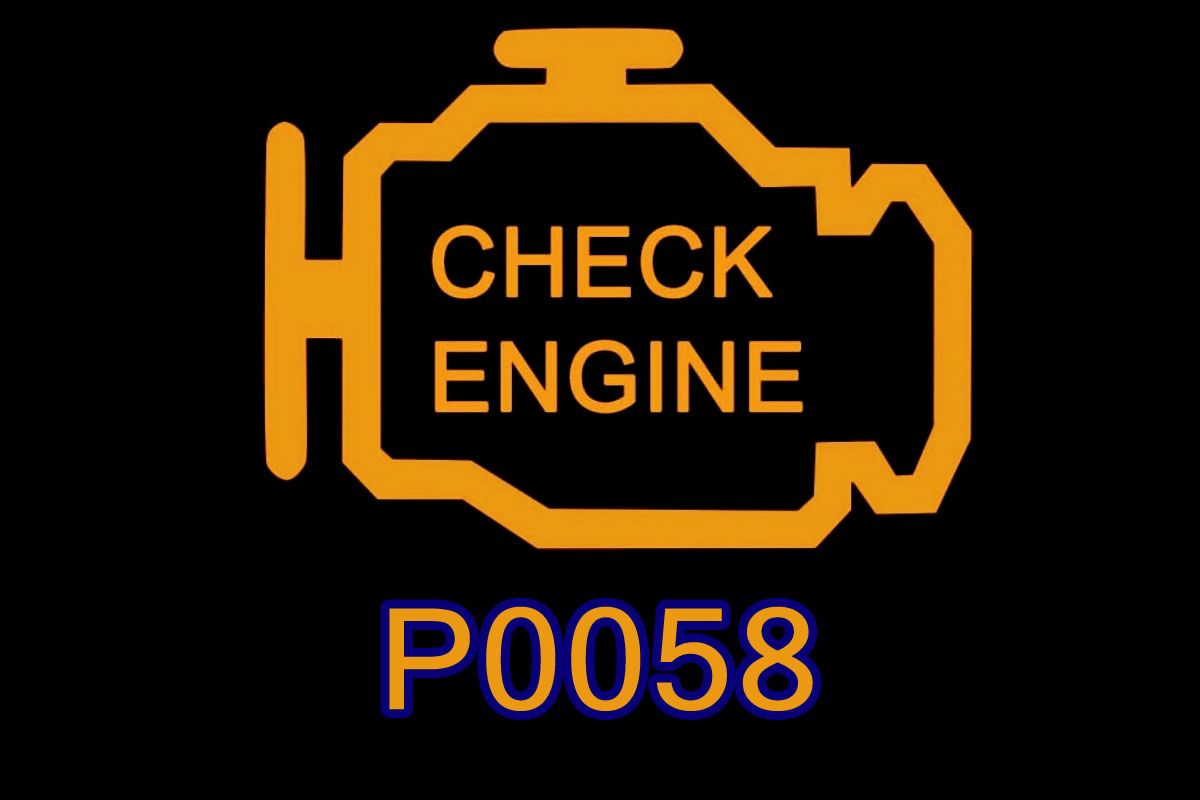
P0058 HO2S Heater Control Circuit High (Bank 2 Sensor 2)
The P0058 trouble code indicates that the engine control module (ECM/PCM) has detected an abnormally high electrical condition in the heater control circuit of the Bank 2 Sensor 2 oxygen sensor (HO2S).
This is primarily an electrical heater-control fault. The word “High” is especially important: it refers to the electrical condition of the heater control circuit, not high oxygen content, a rich mixture, high exhaust temperature, or high catalytic-converter temperature.
P0058 also does not automatically mean that the oxygen sensor itself has failed.
First, Identify Bank 2 Sensor 2
The code refers to a specific oxygen sensor.
Bank 2 is the cylinder bank that does not contain cylinder number 1.
Sensor 2 normally means the oxygen sensor located downstream of the catalytic converter.
Therefore, P0058 generally concerns:
Bank 2 → Sensor 2 → downstream oxygen sensor → heater control circuit
The exact sensor location and heater-control design can vary by manufacturer, so the vehicle-specific wiring diagram should be used before testing.
What Is the Oxygen Sensor Heater?
An oxygen sensor needs to reach a sufficiently high operating temperature before it can accurately perform its intended function.
The exhaust eventually heats the sensor, but waiting for exhaust heat would take too long, particularly after a cold start.
For this reason, modern oxygen sensors contain an electrical heating element.
The heater allows the sensor to reach operating temperature much faster.
Once the sensor is sufficiently hot, the ECM can use its signal as required by the vehicle's emissions-control strategy.
The heater circuit and the oxygen-sensing element are separate parts of the sensor.
Therefore, a heater-control fault does not automatically mean the sensing element itself is defective.
What Does "High" Mean in P0058?
This is where P0058 is often misunderstood.
“High” describes the electrical condition detected by the ECM in the heater control circuit.
It does not mean:
-
High oxygen concentration
-
Rich fuel mixture
-
High fuel pressure
-
High exhaust pressure
-
High coolant temperature
-
High catalytic-converter temperature
-
High engine RPM
The exact electrical reason for the high condition depends on the vehicle's circuit design.
Possible causes include a control wire shorted to battery voltage, an incorrect circuit condition, a wiring problem, a faulty heater or an ECM driver issue.
How the Heater Circuit Works
A simplified heater system can be thought of as:
Power supply → oxygen sensor heater → control circuit → ECM
However, the actual arrangement varies.
Some vehicles provide power to the heater and allow the ECM to control the ground side.
Others use different control strategies.
The ECM monitors the heater circuit to determine whether it is behaving as expected.
If the control circuit remains at an unexpectedly high electrical state, P0058 may be stored.
Common Causes of P0058
Control wire shorted to battery voltage
One of the important possibilities is a short between the heater control wire and a voltage source.
If the control wire is damaged and contacts a powered circuit, the ECM can detect an unexpectedly high condition.
This can happen because of:
-
Melted insulation
-
Chafed wiring
-
Incorrect previous repairs
-
Harness routing problems
-
Contact with another powered wire
Damaged oxygen sensor wiring
The wiring near the exhaust system operates in a very hot environment.
Heat can harden insulation, melt wiring or expose conductors.
The harness should be inspected carefully, particularly around the exhaust manifold, catalytic converter and heat shields.
Faulty oxygen sensor heater
The heater inside the B2S2 sensor can fail internally.
Depending on the failure mode and circuit design, an internal heater fault can cause abnormal electrical behavior in the control circuit.
The sensor should therefore be tested rather than automatically replaced.
Connector or terminal problem
A poor connector connection can create abnormal electrical behavior.
Check for:
-
Corrosion
-
Bent terminals
-
Loose terminals
-
Poor terminal tension
-
Water intrusion
-
Damaged connector housing
-
Heat damage
Incorrect sensor or wiring
An incorrectly specified replacement sensor can also create heater-circuit problems.
This is especially important if P0058 appeared shortly after oxygen sensor replacement.
The replacement sensor should have the correct electrical characteristics and connector for the vehicle.
Incorrect wiring repair
If the sensor wiring has previously been repaired, the wires may have been connected incorrectly.
A control wire connected to a power supply can create a high heater-control condition.
ECM heater-control driver problem
The ECM may contain the switching circuitry responsible for controlling the oxygen sensor heater.
An internal driver fault is possible, but it should generally be considered only after the wiring, sensor, connector and circuit have been tested.
What Symptoms Can P0058 Cause?
P0058 may produce surprisingly few drivability symptoms because it concerns the heater of a downstream oxygen sensor.
Possible symptoms include:
-
Check Engine Light
-
Increased emissions
-
Failed emissions inspection
-
Reduced fuel economy
-
Delayed sensor activation after cold start
-
Longer warm-up period for the sensor
-
Mild cold-start drivability problems
In many cases, the vehicle may drive normally and the driver may notice only the Check Engine Light.
If the vehicle has severe drivability symptoms, another fault may be present in addition to P0058.
Why Does Sensor 2 Matter?
Sensor 2 is normally positioned after the catalytic converter.
Its primary role is generally related to catalytic-converter and exhaust monitoring, although the exact strategy varies by manufacturer.
Because it is downstream, a heater problem may have less immediate effect on drivability than a similar problem involving an upstream sensor.
Nevertheless, the heater allows the sensor to reach operating temperature quickly, which is important for emissions monitoring.
P0058 Is Not a Rich-Mixture Code
A common misunderstanding is to see “high” and assume the engine is running rich.
That is incorrect.
P0058 does not mean the ECM has detected a high oxygen-sensor signal.
It specifically identifies a high electrical condition in the heater control circuit.
A vehicle could have a perfectly normal air-fuel mixture and still store P0058 because the heater circuit has an electrical fault.
Does P0058 Mean the Oxygen Sensor Is Bad?
Not automatically.
The sensor's heater element is certainly one possible cause, but the entire electrical circuit needs to be considered.
The fault may be caused by:
-
Oxygen sensor heater
-
Heater-control wiring
-
Short to voltage
-
Connector
-
Terminal problem
-
Incorrect sensor
-
Previous wiring repair
-
ECM control circuit
Replacing the sensor without checking the circuit can therefore leave the original fault unresolved.
How Should P0058 Be Diagnosed?
Start with a complete diagnostic scan.
Check whether there are additional codes involving:
-
Other oxygen sensors
-
Oxygen sensor heaters
-
Fuel mixture
-
Misfires
-
Battery voltage
-
Charging system
-
Exhaust system
-
ECM electrical circuits
Other codes can help determine whether P0058 is an isolated problem or part of a broader electrical fault.
Freeze-frame data should also be reviewed to see the conditions under which the code was detected.
Confirm the Exact Sensor
Before electrical testing, identify the correct Bank 2 Sensor 2 sensor using the vehicle's service information.
Do not assume the sensor based only on its physical position.
Multiple oxygen sensors can be located close together, and sensor numbering varies between different exhaust configurations.
Inspect the Wiring Near the Exhaust
The oxygen sensor harness deserves careful inspection.
Look for:
-
Melted insulation
-
Exposed wires
-
Wires touching exhaust components
-
Chafing
-
Pinched harness sections
-
Previous splices
-
Incorrect wire connections
-
Corroded terminals
If the control wire is touching a voltage source, that can explain the high circuit condition.
Check for a Short to Voltage
Because P0058 specifies a high control-circuit condition, testing for an unintended connection to battery voltage can be particularly useful.
The exact test procedure depends on the wiring design.
The technician should use the vehicle-specific wiring diagram to identify:
-
Heater power circuit
-
Heater control circuit
-
ECM connection
-
Ground/return path
Testing should be performed according to manufacturer procedures rather than relying on a universal pinout.
Test the Oxygen Sensor Heater
The heater element itself should also be evaluated.
Depending on the vehicle, testing may involve measuring heater resistance and checking its electrical behavior under the manufacturer's specified conditions.
There is no universal oxygen-sensor heater resistance value.
A value that is correct for one sensor may be completely incorrect for another.
The measured result must therefore be compared with the manufacturer's specification for the exact sensor.
Check Power and Control Separately
A heater circuit can have both a power side and a control side.
The technician should establish:
-
Whether the heater receives the required power
-
Whether the ECM control circuit behaves correctly
-
Whether there is an unintended short to voltage
-
Whether wiring resistance is excessive
-
Whether connector terminals are secure
-
Whether the heater itself is within specification
A simple continuity test is not always sufficient.
A circuit can have continuity and still have an electrical problem when it is operating under load.
What If P0058 Appears After Sensor Replacement?
This situation deserves special attention.
If the oxygen sensor was recently replaced, verify:
-
Correct sensor part number
-
Correct Bank 2 Sensor 2 position
-
Correct connector
-
Correct pin configuration
-
Correct wiring
-
No damaged terminals
-
Harness routed correctly
-
No contact with the exhaust
A sensor that physically fits the exhaust system is not necessarily electrically compatible with the vehicle.
Could a Blown Fuse Be Related?
Yes, depending on the circuit design.
A heater circuit may receive power through a fuse.
However, a blown fuse usually points toward a loss-of-power problem rather than being the direct explanation for a high control-circuit condition.
If a fuse is repeatedly failing, look for the underlying short or excessive current draw instead of repeatedly replacing the fuse.
Could Low Battery Voltage Cause P0058?
Low system voltage can interfere with heater operation and electrical diagnostics.
Battery and charging-system condition should therefore be checked if the vehicle has multiple unrelated electrical codes.
However, an isolated P0058 should not automatically be blamed on low battery voltage.
The heater control circuit still needs to be tested.
Does P0058 Mean the Catalytic Converter Is Bad?
No.
P0058 concerns the oxygen sensor heater-control circuit.
It does not directly diagnose catalytic-converter efficiency.
A faulty heater can prevent the downstream oxygen sensor from reaching its intended operating temperature quickly, but that does not mean the catalytic converter itself has failed.
The catalytic converter should only be investigated for replacement when separate testing indicates a catalyst problem.
Can an Exhaust Leak Cause P0058?
An exhaust leak can affect oxygen-sensor readings and may produce other emissions-related codes.
However, it does not normally explain a high electrical heater-control circuit.
For P0058, electrical testing of the heater circuit should be the priority.
Can P0058 Affect Fuel Economy?
It can, although the effect may be small.
Because Bank 2 Sensor 2 is normally downstream, the heater fault may have limited direct influence on fuel control.
However, the exact strategy varies by manufacturer, and the sensor's information can be used in emissions and diagnostic calculations.
If fuel economy has changed significantly, it is worth checking for additional faults rather than attributing everything to P0058.
Is P0058 a Serious Fault?
Usually, P0058 is not an immediate engine-damage emergency if the vehicle runs normally.
The vehicle may continue to operate with little noticeable change.
However, the fault should still be repaired because it can affect emissions-system operation and may cause the vehicle to fail an emissions inspection.
If there are additional symptoms such as severe misfire, flashing Check Engine Light, major power loss, strong fuel smell or stalling, those symptoms should be investigated promptly.
A Practical Diagnostic Route
A sensible diagnostic sequence is:
1. Scan all modules and engine codes.
Look for related oxygen-sensor, heater, electrical and engine-performance faults.
2. Identify Bank 2 Sensor 2.
Confirm its exact connector and wiring using vehicle-specific service information.
3. Inspect the harness.
Look for heat damage, exposed wires, shorts and incorrect repairs.
4. Inspect the connector.
Check terminals for corrosion, looseness, damage and poor contact.
5. Test the heater circuit.
Check the power and control sides according to the wiring diagram.
6. Check for a short to voltage.
Because P0058 specifies a high control condition, this is an important part of the diagnosis.
7. Test the heater element.
Measure resistance or perform the manufacturer's specified heater test.
8. Consider the ECM only after the rest of the circuit has been verified.
This prevents unnecessary ECM replacement.
Can You Drive With P0058?
If the vehicle drives normally and the Check Engine Light is steady, it is often possible to drive temporarily while arranging a repair.
However, do not assume P0058 explains severe drivability problems.
If you experience:
-
Flashing Check Engine Light
-
Severe misfire
-
Significant power loss
-
Engine stalling
-
Heavy smoke
-
Strong fuel odor
-
Overheating
the vehicle should be diagnosed promptly and continued driving may not be appropriate.
The Important Point About "High"
The most important thing to remember about P0058 is:
High does not mean high exhaust oxygen or a rich engine.
It means that the ECM has detected an unexpectedly high electrical condition in the Bank 2 Sensor 2 heater-control circuit.
That distinction prevents the wrong parts from being replaced.
Conclusion
P0058 HO2S Heater Control Circuit High (Bank 2 Sensor 2) indicates an abnormal high electrical condition in the heater-control circuit of the downstream oxygen sensor on Bank 2.
Possible causes include a short to voltage, damaged wiring, connector problems, an incorrect sensor, an internal heater fault or an ECM control-circuit problem.
The correct diagnosis requires identifying the exact sensor, inspecting the wiring and connectors, checking the heater circuit for unintended voltage, and testing the heater according to the manufacturer's specifications.
Most importantly, P0058 does not automatically mean the oxygen sensor or catalytic converter needs to be replaced. The electrical circuit should be diagnosed first to determine where the high condition is actually coming from.