TR
TR EN
EN

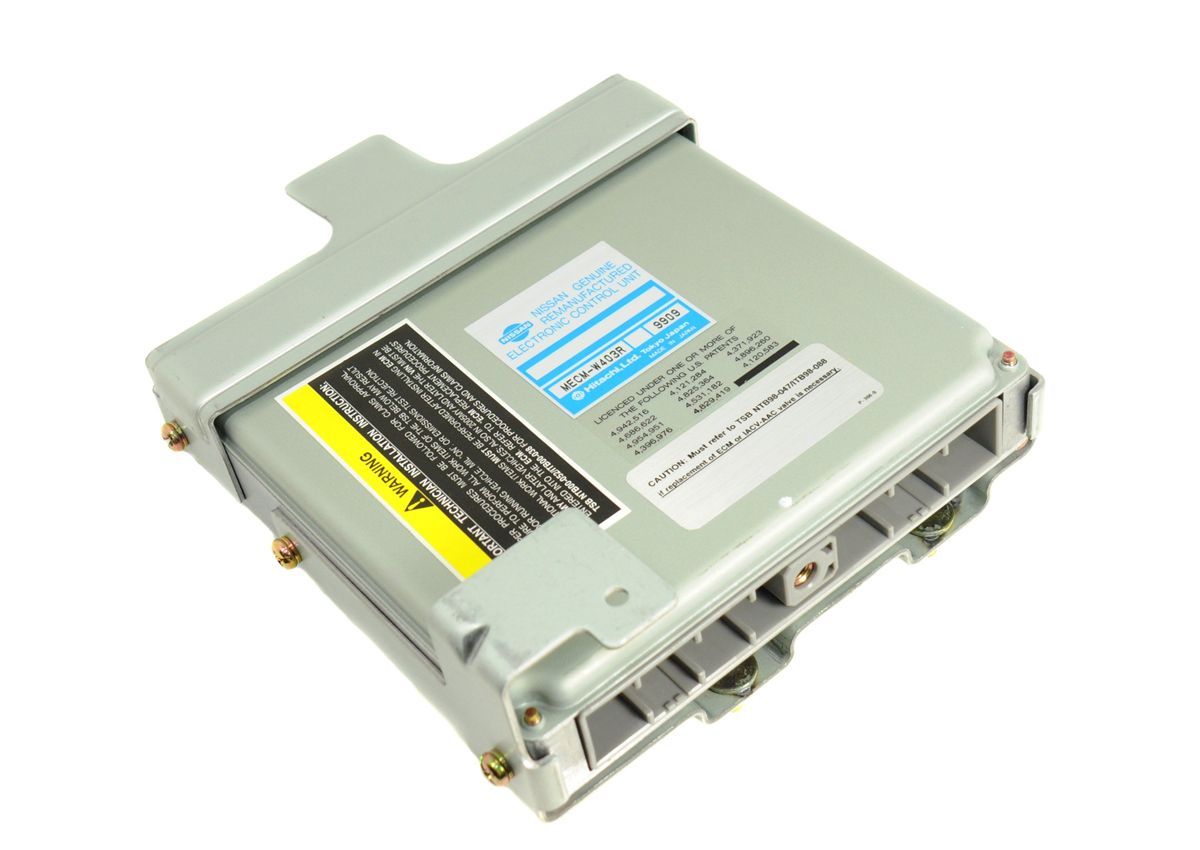
What Is an ECU? What Is Its Function? How Does It Work?
An ECU (Electronic Control Unit) is one of the most important electronic components in a modern vehicle. In simple terms, it is the computer that monitors engine operation, processes information from various sensors, and controls different components to keep the engine running efficiently, safely, and with low emissions.
In many vehicles, the unit responsible for engine management is also referred to as an ECM (Engine Control Module). In some applications, a PCM (Powertrain Control Module) manages both the engine and transmission-related functions.
Modern vehicles can contain many different electronic control units. The engine ECU is only one of them. Other modules may control the transmission, ABS, airbags, body electronics, climate control, steering, and other systems.
The basic operating principle of an ECU can be summarized as:
Sensors provide information → ECU processes the information → ECU controls actuators
This process happens continuously while the engine is running.
What Does an ECU Do?
The primary responsibility of an engine ECU is to control the engine according to its current operating conditions.
It constantly receives information such as:
-
Engine speed
-
Engine coolant temperature
-
Accelerator pedal position
-
Throttle position
-
Intake air temperature
-
Intake air pressure or airflow
-
Oxygen sensor readings
-
Fuel pressure
-
Crankshaft position
-
Camshaft position
-
Vehicle speed
-
Turbocharger pressure
-
Knock sensor signals
The ECU processes these signals and determines how the engine should operate.
For example, when the driver presses the accelerator pedal, the ECU does not simply open the throttle by the same percentage. It considers engine speed, engine load, airflow, temperature, throttle position, and other parameters before determining how much torque the engine should produce.
This is why modern engine management is much more sophisticated than a simple mechanical throttle or fuel-control system.
How Does an ECU Work?
The ECU's operation can be divided into three basic stages:
1. Receiving information
Sensors continuously send electrical signals to the ECU.
2. Processing information
The ECU's processor compares these signals with programmed control strategies and calibration values.
3. Controlling components
The ECU sends electrical commands to actuators such as fuel injectors, ignition coils, throttle motors, solenoid valves, and other components.
These three stages are repeated continuously while the engine is operating.
The ECU can make thousands of calculations in a very short period of time, allowing it to react to changing engine conditions almost instantly.
What Is Inside an ECU?
Although an ECU may look like a relatively simple electronic box from the outside, its internal electronics can be quite complex.
The main components include:
Microprocessor
The microprocessor is the computational center of the ECU. It processes sensor information and executes the software responsible for engine control.
Memory
Different types of memory are used to store software, calibration data, learned values, diagnostic information, and other parameters.
Input circuits
Sensor signals must be conditioned before they can be processed by the microprocessor. Input circuits convert and prepare these signals for the ECU's internal electronics.
Output driver circuits
The ECU uses output drivers to control components such as injectors, ignition coils, solenoids, relays, and electronic throttle motors.
Power supply circuits
The ECU receives electrical power from the vehicle's electrical system and converts it into the appropriate voltages required by its internal circuits.
How Does the ECU Use Sensor Information?
Sensors act as the ECU's information sources.
For example, the engine coolant temperature sensor tells the ECU how hot or cold the engine is. When the engine is cold, the ECU can modify fuel delivery, ignition timing, idle control, and other parameters according to the operating conditions.
As the engine reaches normal operating temperature, the control strategy changes.
The same principle applies to the accelerator pedal. When the driver presses the pedal, the pedal position sensors send information to the ECU. The ECU then compares this information with engine speed, load, airflow, temperature, and other parameters.
Therefore, a 50% accelerator pedal position does not necessarily mean the engine will produce 50% of its available power.
How Does the ECU Control Fuel Injection?
One of the ECU's most important functions in a gasoline engine is controlling the fuel injectors.
The ECU determines how long each injector should remain open. This is commonly referred to as injector pulse width.
The required injection time depends on many factors, including:
-
Engine speed
-
Engine load
-
Airflow
-
Intake pressure
-
Engine temperature
-
Fuel pressure
-
Oxygen sensor feedback
-
Throttle position
-
Operating conditions
When more fuel is required, the ECU can increase injector pulse width. When less fuel is required, it can reduce it.
In closed-loop operation, oxygen sensor feedback allows the ECU to make corrections to the air-fuel mixture.
How Does the ECU Control Ignition Timing?
In gasoline engines, the ECU also controls when the ignition system should produce the spark.
Ignition timing is extremely important. Igniting the air-fuel mixture too early or too late can negatively affect engine performance, fuel economy, emissions, and engine temperature.
The ECU determines ignition timing using information such as:
-
Engine speed
-
Engine load
-
Throttle position
-
Intake pressure
-
Engine temperature
-
Knock sensor feedback
-
Crankshaft and camshaft position
The knock sensor is particularly important because it allows the ECU to detect abnormal combustion and adjust ignition timing when necessary.
How Does the ECU Control the Throttle?
Most modern vehicles use an electronically controlled throttle system, often called electronic throttle control or drive-by-wire.
In a traditional mechanical throttle system, the accelerator pedal could be connected directly to the throttle plate with a cable.
In an electronic throttle system, the accelerator pedal usually contains position sensors. When the driver presses the pedal, these sensors send electrical signals to the ECU.
The ECU evaluates the pedal signal and other engine parameters before commanding the electronic throttle motor.
The throttle motor then moves the throttle plate to the requested position.
This means the accelerator pedal and throttle body are no longer simply connected by a mechanical cable. They are part of an electronically controlled system.
Because of this design, a problem with the accelerator pedal sensor, throttle position sensor, wiring, power supply, ground connection, throttle motor, or ECU output circuit can cause the vehicle to limit throttle operation or enter a fail-safe mode.
Does the ECU Only Control Fuel and Ignition?
No.
Modern engine control units can manage a large number of systems depending on the engine and vehicle design.
These may include:
-
Fuel injectors
-
Ignition coils
-
Electronic throttle
-
Idle control
-
Turbocharger control
-
EGR system
-
Variable valve timing
-
Fuel pump control
-
Cooling fan
-
EVAP system
-
Oxygen sensor control
-
Emissions systems
On diesel engines, the ECU can also manage high-pressure fuel injection, glow plugs, turbocharger control, EGR, diesel particulate filter functions, and other systems.
The exact functions vary between vehicle manufacturers, engine families, model years, and emissions standards.
Can an ECU Learn and Adapt?
Yes. Many modern ECUs use adaptive control strategies.
The ECU can store learned values and make corrections based on how the engine is actually operating.
For example, fuel trims can be adjusted according to oxygen sensor feedback. Over time, the ECU can compensate for certain changes in fuel delivery or engine operation within predefined limits.
Some components may also require relearning or adaptation after replacement.
However, resetting adaptations, updating ECU software, and reprogramming an ECU are different procedures.
Resetting learned values does not mean that the ECU has been reprogrammed.
What Are the Symptoms of an ECU Problem?
A genuine ECU problem can cause many different symptoms, depending on which internal circuit or function is affected.
Possible symptoms include:
-
Engine not starting
-
Unexpected engine stalling
-
Misfires
-
Loss of throttle response
-
Electronic throttle problems
-
Multiple unrelated fault codes
-
Injector control problems
-
Ignition control problems
-
Communication problems
-
Limp mode
-
Intermittent electrical faults
-
Implausible sensor readings
However, these symptoms do not automatically mean that the ECU itself is faulty.
A bad ground connection, damaged wiring, corroded connector, weak battery, charging-system problem, or faulty sensor can create symptoms that look very similar to an ECU failure.
What Causes an ECU to Fail?
ECUs are designed to operate for many years, but they can still be damaged.
Common causes include:
Water and moisture
Water entering the ECU housing can cause corrosion, short circuits, and damage to electronic components.
Excessive voltage
Abnormal voltage from the vehicle's charging system can damage sensitive electronic circuits.
Incorrect jump-starting
Connecting a battery or jump leads incorrectly can cause serious electronic damage.
Short circuits
A short circuit in a component controlled by the ECU can sometimes damage an ECU output driver.
Poor grounding
A poor engine or ECU ground can cause unstable sensor readings, communication problems, and other electronic faults.
Excessive heat
High temperatures over long periods can reduce the service life of electronic components.
Why Is ECU Software Important?
An ECU is not simply a hardware device. Its software determines how the engine should be controlled.
Fuel injection, ignition timing, throttle operation, turbocharger control, emissions management, diagnostic strategies, and safety functions are all influenced by ECU software and calibration.
Two vehicles may use similar ECU hardware but require different software or calibration because of differences in:
-
Engine configuration
-
Transmission
-
Emissions standard
-
Sensors
-
Injectors
-
Turbocharger
-
Vehicle equipment
-
Model year
-
Regional specifications
For this reason, installing or copying software from another vehicle is not automatically a correct solution just because both vehicles use the same engine family.
Compatibility must be confirmed before any programming operation is performed.
What Is an ECU Software Update?
Manufacturers sometimes release updated ECU software.
An update may be used to address:
-
Known software bugs
-
Drivability problems
-
Emissions-related issues
-
Diagnostic problems
-
Improved control strategies
-
Specific fault conditions
-
Compatibility with updated components
An ECU software update should not, however, be confused with repairing a physically damaged ECU.
If an ECU has a failed output driver, damaged circuit board, water damage, or another hardware problem, installing new software may not solve the problem.
How Is an ECU Diagnosed?
ECU diagnosis should not begin with replacing the ECU.
A proper diagnostic process normally starts by identifying the fault codes and the conditions under which they were recorded.
The technician may then check:
-
Battery voltage
-
Charging voltage
-
ECU power supply
-
ECU grounds
-
Fuses
-
Relays
-
Connectors
-
Wiring
-
Sensor signals
-
Actuator operation
-
CAN communication
-
Live data
-
Freeze-frame information
In more complicated cases, an oscilloscope may be required to examine sensor or actuator signals.
This is especially important with intermittent electrical faults. A simple multimeter test may show that a wire has continuity while failing to reveal a problem that occurs under vibration, heat, load, or movement.
Why Should You Not Replace the ECU Immediately?
An ECU is an expensive and highly integrated component. More importantly, many faults that appear to involve the ECU are actually caused by external components.
For example, suppose a throttle-related fault code is stored.
The problem could be caused by:
-
The throttle body
-
Throttle position sensors
-
Accelerator pedal sensors
-
Wiring
-
Connector terminals
-
Power supply
-
Ground connection
-
ECU input circuit
-
ECU output driver
Replacing the ECU without testing these possibilities can result in unnecessary expense while leaving the original problem unresolved.
The same principle applies to injectors, ignition coils, fuel pumps, solenoid valves, and other electronically controlled components.
A proper diagnostic process should establish whether the ECU is actually receiving the correct signals and whether it is producing the correct output before the ECU itself is blamed.
Can an ECU Be Replaced With One From Another Vehicle?
Replacing an ECU is not usually as simple as installing another unit and starting the engine.
Modern vehicles use electronic communication between the ECU and other control modules. Depending on the vehicle, the ECU may be linked to:
-
Immobilizer system
-
Key authentication
-
Body control module
-
Transmission control module
-
ABS/ESP system
-
Instrument cluster
-
Other vehicle networks
As a result, an ECU replacement may require programming, coding, configuration, immobilizer synchronization, or software flashing.
Even if two vehicles use the same engine, their ECUs may not be interchangeable without additional procedures.
What Is the Relationship Between the ECU and OBD-II?
OBD-II provides a standardized diagnostic interface that allows a scan tool to communicate with the vehicle's electronic control systems.
When the ECU detects an abnormal operating condition, it can store a DTC (Diagnostic Trouble Code).
The code can then be retrieved using an appropriate diagnostic scanner.
However, an OBD-II fault code does not necessarily mean that the component named in the code has failed.
For example, an electrical circuit fault can be caused by a damaged wire, poor connector, missing power supply, bad ground, or a control-module problem.
The fault code identifies an abnormal condition. Additional testing is required to determine its actual cause.
Is an ECU the Same as an ECM or PCM?
The terminology depends on the manufacturer and vehicle.
ECU means Electronic Control Unit and is a general term for an electronic control module.
ECM means Engine Control Module and normally refers specifically to the module responsible for engine management.
PCM means Powertrain Control Module and can refer to a module that manages both engine and transmission functions.
In everyday automotive discussions, ECU, ECM, and PCM are sometimes used interchangeably, but technically they can refer to different types of control units.
Can a Modern Engine Run Without an ECU?
A modern electronically controlled fuel-injected engine generally cannot operate normally without its engine control unit.
The ECU is responsible for controlling essential functions such as fuel injection, ignition, throttle operation, and numerous other systems.
Older carbureted engines were different because fuel delivery and engine control could be handled largely through mechanical and vacuum-operated systems.
Modern engines rely heavily on electronic control, making the ECU an essential part of the engine management system.
Why the ECU Is So Important
The ECU is much more than a simple computer inside the vehicle. It is the central control unit that continuously collects information, processes it, and adjusts engine operation according to changing conditions.
From the accelerator pedal and throttle body to fuel injectors, ignition coils, crankshaft sensors, turbocharger control, and emissions systems, a large part of modern engine operation depends on communication between sensors, the ECU, and actuators.
This is also why ECU-related problems require a systematic diagnostic approach. A fault code or unusual engine behavior should not automatically lead to ECU replacement. Power supply, grounds, wiring, connectors, sensors, actuators, communication lines, and ECU input/output circuits should be checked first. Only when the evidence points to the control unit itself should ECU repair, reprogramming, or replacement become the next step.