TR
TR EN
EN

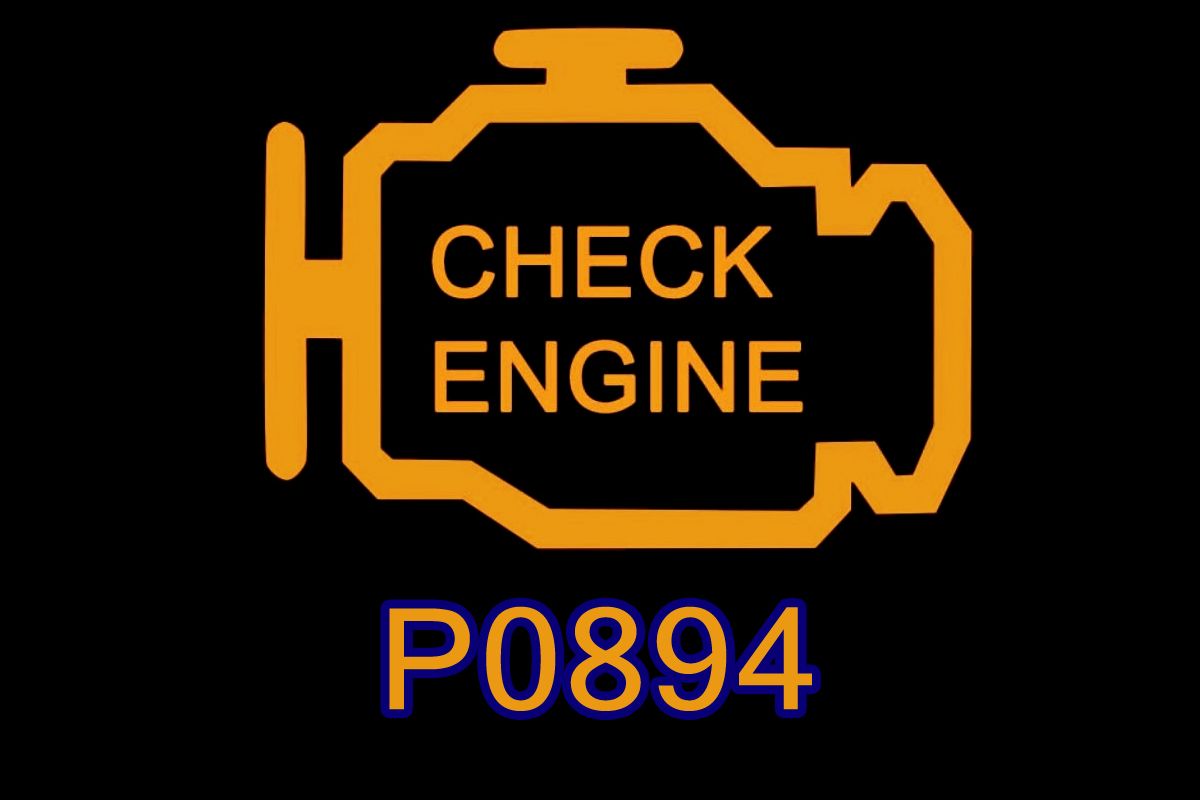
P0894 Transmission Component Slipping
The P0894 trouble code indicates that the transmission control system has detected slipping within a transmission component.
In practical terms, the transmission is being commanded to produce a certain amount of torque and a particular gear or clutch state, but the actual transmission behavior does not match what the control module expects.
The word “slipping” is important here. P0894 is generally associated with a difference between expected and actual transmission speed relationships. The transmission control module (TCM), or the engine/transmission control module in some vehicles, monitors input speed, output speed, gear selection, clutch operation, and other parameters. If these values indicate that a transmission component is not holding or transferring power as expected, P0894 may be stored.
This does not necessarily mean that the entire transmission is worn out. The actual cause can range from low or degraded transmission fluid to a hydraulic-control problem, clutch wear, a faulty speed sensor, valve-body problems, or an internal mechanical fault.
What Does “Transmission Component Slipping” Mean?
A transmission transfers engine torque through a combination of gears, shafts, clutches, brakes, bands, and hydraulic or electronic controls.
During normal operation, the transmission control system knows approximately how the input and output shafts should behave for a selected gear.
For example, if a particular gear is engaged, the relationship between transmission input speed and output speed should remain within an expected range.
If the input side is rotating faster than expected while the output side does not accelerate accordingly, the control system may interpret this as slip.
The same basic principle applies to automatic transmissions that use clutch packs.
A clutch pack must lock or hold when commanded. If the clutch is partially slipping instead of fully engaging, the transmission may detect an abnormal speed difference.
What Can Slip Inside an Automatic Transmission?
There is no single component that P0894 identifies as the failed part.
Depending on the transmission design, the slipping may involve:
-
Internal clutch packs
-
A torque converter clutch
-
Transmission bands on applicable designs
-
Planetary gear components
-
Hydraulic clutches
-
Internal shafts or related rotating components
The exact component associated with the code is manufacturer- and transmission-specific.
This is why a generic scan-tool description such as “Transmission Component Slipping” should not be interpreted as “replace the clutch” or “replace the transmission.”
The transmission needs to be diagnosed according to its specific design and control strategy.
Symptoms You May Notice With P0894
Transmission slipping can produce very noticeable driving symptoms.
The vehicle may exhibit:
Engine RPM rises without a corresponding increase in vehicle speed
This is one of the classic signs of transmission slip. The engine revs increase, but the vehicle does not accelerate as strongly as expected.
Delayed acceleration
The transmission may take longer to transfer engine torque to the wheels.
Harsh or abnormal shifting
A slipping clutch or hydraulic problem can cause the transmission to shift harder, softer, or at an unexpected point.
Flare during gear changes
Engine speed may briefly increase between gears because the previous clutch releases before the next clutch fully applies.
Transmission stuck in a gear
Some vehicles may enter a protective operating mode to prevent further transmission damage.
Poor reverse operation
Depending on which internal clutch or hydraulic circuit is affected, reverse may become weak, delayed, or unavailable.
Shuddering or vibration
A partially engaging clutch or torque-converter clutch can create vibration or shudder during certain operating conditions.
Burning transmission-fluid smell
Severe clutch slip generates heat. Excessive heat can overheat and degrade transmission fluid.
Reduced fuel economy
Slip represents a loss of mechanical efficiency, so more engine energy can be converted into heat instead of useful vehicle movement.
Why Transmission Fluid Matters
Transmission fluid does much more than lubricate components.
In an automatic transmission, fluid is also used to:
-
Operate hydraulic circuits
-
Apply clutch packs
-
Control valves
-
Lubricate gears and bearings
-
Remove heat
-
Protect friction materials
-
Transfer hydraulic pressure
If the fluid level is too low, the transmission may not develop the hydraulic pressure required to apply a clutch correctly.
The result can be clutch slip.
Low fluid can occur because of a leak, so simply adding fluid without finding the reason for the low level is not a complete repair.
Low Transmission Fluid
A low fluid level is one of the conditions that should be checked early.
Possible causes include:
-
External transmission leaks
-
Cooler-line leaks
-
Axle-seal leaks
-
Pan or gasket leaks
-
Drain-plug problems
-
Internal leakage
A transmission that is repeatedly operated with insufficient fluid can suffer serious internal damage.
The correct fluid-level checking procedure varies considerably between vehicles. Some transmissions require a specific fluid temperature, engine state, gear position, and leveling procedure.
There is therefore no universal method for checking automatic-transmission fluid.
Incorrect Transmission Fluid
Using the wrong fluid can also create transmission problems.
Modern automatic transmissions are designed around specific friction characteristics, viscosity, additive packages, and hydraulic behavior.
A fluid that appears physically similar may not provide the required friction characteristics for the transmission's clutch material.
This can contribute to:
-
Shift quality problems
-
Clutch engagement problems
-
Shudder
-
Slip
-
Overheating
Always use the fluid specification specified for that particular transmission.
Worn Internal Clutches
If the transmission has been slipping for a long time, the friction material inside one or more clutch packs may be worn.
A clutch pack contains friction and steel plates that are hydraulically applied against each other.
When fully engaged, the plates should transmit torque with very little relative movement.
If the friction material is worn or damaged, the clutch may not hold the required torque.
Under high engine load, the clutch can then slip.
This can create a cycle:
slip → heat → fluid degradation → friction damage → more slip
Once significant internal clutch damage has occurred, an electrical repair or fluid change alone may not restore the transmission.
Hydraulic Pressure Problems
Automatic transmissions depend on hydraulic pressure to apply internal clutches.
A pressure problem can therefore look like a mechanical slipping problem.
Possible causes include:
-
Weak transmission pump
-
Restricted fluid filter
-
Blocked hydraulic passage
-
Faulty pressure-control solenoid
-
Valve-body wear
-
Internal hydraulic leakage
-
Incorrect fluid level
-
Damaged seals
If a clutch receives insufficient pressure, it may not fully engage.
The clutch itself may still be physically capable of holding torque, but inadequate hydraulic pressure prevents it from doing its job correctly.
Valve Body Problems
The valve body directs transmission fluid to different hydraulic circuits.
Modern valve bodies can contain numerous valves and electronic solenoids.
Wear, contamination, sticking valves, or damaged passages can affect clutch application.
A valve-body problem can therefore cause:
-
Delayed engagement
-
Harsh shifts
-
Flare between gears
-
Slip
-
Incorrect line pressure
-
Multiple transmission-related fault codes
This is one reason it is important to scan the transmission for all stored and pending codes, not just P0894.
Transmission Shift Solenoid Problems
Electronic solenoids control hydraulic pressure and fluid routing in many modern transmissions.
A malfunctioning solenoid can cause a clutch to apply incorrectly or at the wrong pressure.
Depending on the fault, the transmission may produce other diagnostic codes related to:
-
Shift solenoids
-
Pressure-control solenoids
-
Transmission pressure
-
Gear-ratio errors
-
Speed sensors
-
TCM operation
If these codes are present alongside P0894, they may provide a much clearer direction for diagnosis.
Speed Sensor Problems Can Also Matter
The transmission control module needs accurate speed information to determine whether the transmission is behaving correctly.
Depending on the design, the system may monitor:
-
Transmission input speed
-
Intermediate shaft speed
-
Output shaft speed
-
Vehicle speed
If one of these sensors produces an incorrect signal, the TCM may calculate an apparent slip condition even when the mechanical transmission is not actually slipping in the way it initially appears.
This is why speed-sensor codes and live data should be checked before condemning internal transmission components.
Torque Converter Considerations
The torque converter is another possible source of abnormal speed behavior.
The torque converter transfers engine power to the transmission through fluid coupling and, under many driving conditions, a lock-up clutch.
When the lock-up clutch is commanded to engage, the difference between engine speed and transmission input speed should change in a predictable way.
A worn or malfunctioning torque-converter clutch can produce:
-
Shudder
-
RPM fluctuations
-
Lock-up problems
-
Excessive slip
-
Overheating
Whether the torque converter is actually implicated in P0894 depends on the particular transmission and manufacturer's diagnostic strategy.
Can P0894 Be Caused by the Engine?
Sometimes a transmission-related fault can be influenced by an engine problem.
The transmission controller depends on engine torque information and engine operating data.
An engine that produces unstable or unexpected torque can affect shift behavior.
For example, problems involving:
-
Engine misfire
-
Throttle control
-
Fuel delivery
-
Engine torque calculation
-
Airflow measurement
may complicate transmission operation.
This does not mean an engine fault should be assumed to be the cause of P0894. It means the complete powertrain should be considered when multiple codes are present.
How P0894 Is Properly Diagnosed
A good diagnosis starts with the question:
When does the transmission appear to slip?
Does it happen:
-
During a specific gear change?
-
Under heavy acceleration?
-
When the transmission is cold?
-
After it becomes hot?
-
During steady cruising?
-
When climbing a hill?
-
During torque-converter lock-up?
-
In reverse?
-
Only after extended driving?
The operating conditions can dramatically narrow the possibilities.
Start With a Complete Scan
Read all transmission and powertrain codes.
Record:
-
Stored codes
-
Pending codes
-
Freeze-frame information
-
Transmission temperature
-
Engine RPM
-
Vehicle speed
-
Selected gear
-
Commanded gear
-
Input speed
-
Output speed
-
Pressure-related data where available
If another transmission code appears before P0894, that code may be the primary fault while P0894 is a consequence.
Check the Transmission Fluid
Inspect the fluid level according to the manufacturer's procedure.
Then consider the fluid's condition.
Depending on the transmission, abnormal fluid may show signs such as:
-
Dark discoloration
-
Burnt odor
-
Excessive debris
-
Friction material
-
Metallic particles
Fluid condition can provide useful evidence, but fluid appearance alone cannot determine the exact internal failure.
Some transmissions naturally use fluid that becomes darker with service, while others have different characteristics.
Look for External Leaks
Inspect the transmission and surrounding areas for fluid leakage.
Pay particular attention to:
-
Transmission pan
-
Seals
-
Cooler lines
-
Transmission case
-
Axle areas
-
Electrical connector areas
A leak that has lowered the fluid level can be the beginning of a much larger transmission problem.
Monitor Commanded and Actual Gear
With suitable diagnostic equipment, compare the gear the TCM commands with what the transmission actually does.
If the module commands a gear but the speed relationship indicates that the transmission is not holding it correctly, the evidence for genuine slip becomes stronger.
This is much more useful than simply clearing P0894 and waiting to see whether it returns.
Monitor Input and Output Speed
The relationship between input and output speed is central to detecting transmission slip.
A technician can observe how these values behave during acceleration and gear changes.
If the transmission is commanded to lock a particular clutch arrangement but the speed relationship remains inconsistent with the expected gear ratio, the control system may identify a slipping condition.
However, incorrect sensor data can create a similar pattern, so the sensors and their signals must also be considered.
Perform a Pressure Test When Required
If the diagnostic evidence points toward a hydraulic problem, transmission line-pressure testing may be necessary.
A pressure test can help determine whether the transmission is producing the pressure required by its hydraulic circuits.
The test procedure and expected values are transmission-specific.
There is no single “normal transmission pressure” figure that applies to every vehicle.
Inspect the Valve Body and Solenoids if Indicated
If fluid level and condition are acceptable but hydraulic operation remains abnormal, the valve body and solenoids may need further investigation.
This should generally be based on diagnostic evidence rather than replacing components randomly.
A valve-body repair can sometimes resolve a slipping condition caused by hydraulic control problems without requiring complete transmission replacement.
When Internal Transmission Damage Becomes More Likely
Internal mechanical wear becomes increasingly suspicious when:
-
Slip is repeatable under load.
-
Fluid contains significant friction material or metal debris.
-
The transmission has persistent flare during a particular gear change.
-
Hydraulic pressure is correct but the clutch still cannot hold.
-
Input/output speed data confirms genuine slip.
-
The problem remains after external electrical and hydraulic faults are eliminated.
At that point, internal inspection or transmission overhaul may be necessary.
Can You Drive With P0894?
Driving with a transmission that is genuinely slipping is not recommended for an extended period.
A small amount of slip can quickly become a major problem because friction generates heat.
Continued driving may lead to:
-
Burnt clutch material
-
Fluid overheating
-
Valve-body contamination
-
Damage to other transmission components
-
Complete loss of drive
If the vehicle has severe slipping, delayed engagement, loss of reverse, strong burning odor, major shift problems, or suddenly loses drive, it is safer to stop driving and have the vehicle inspected.
Does P0894 Mean the Transmission Needs to Be Replaced?
Not necessarily.
A P0894 diagnosis can end in very different repairs depending on the underlying cause.
Possible repairs include:
-
Correcting transmission-fluid level
-
Repairing a fluid leak
-
Replacing contaminated or incorrect fluid when appropriate
-
Repairing wiring or connectors
-
Replacing a faulty speed sensor
-
Repairing a pressure-control solenoid
-
Servicing the valve body
-
Repairing hydraulic circuits
-
Replacing or rebuilding a damaged torque converter
-
Repairing internal clutch components
-
Rebuilding or replacing the transmission in severe cases
The correct repair depends on evidence from testing.
A Useful Way to Separate Electrical, Hydraulic, and Mechanical Causes
When diagnosing P0894, it helps to divide the possibilities into three groups.
Electrical and control
Look at the TCM, wiring, connectors, solenoids, speed sensors, power supply, grounds, and communication.
Hydraulic
Look at fluid level, fluid condition, pump operation, pressure, valve-body operation, seals, and internal hydraulic leakage.
Mechanical
Look at clutch packs, friction material, bands where applicable, gears, shafts, bearings, and the torque converter.
A fault in any one of these areas can ultimately produce the same basic symptom: the transmission does not transfer torque as expected.
P0894 Is a Symptom Code, Not a Parts List
The most useful way to interpret P0894 Transmission Component Slipping is as a warning that the transmission control system has detected an abnormal speed or torque relationship consistent with slipping.
The code does not tell you, by itself, whether the problem is a worn clutch, low fluid, a pressure-control problem, a valve body, a speed sensor, a solenoid, a torque converter, or another internal issue.
The best diagnosis combines the fault code with fluid condition, transmission temperature, input/output speed data, commanded gear, actual gear behavior, hydraulic pressure, and the symptoms experienced during driving.
If genuine slip is confirmed, addressing it early can be extremely important. A transmission that is only beginning to slip because of a hydraulic or control problem may sometimes be repairable before extensive internal friction damage occurs.