TR
TR EN
EN

What Is a Control Arm and Control Arm Bushing? What Are the Symptoms of Failure?
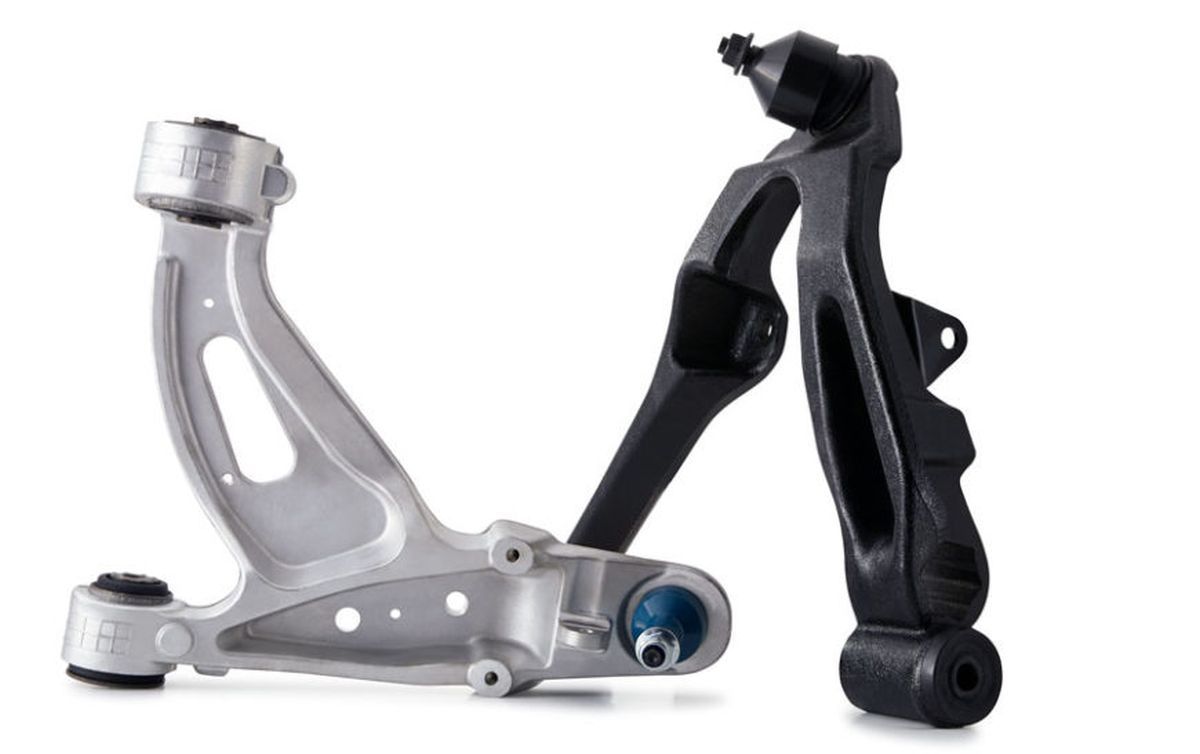
The control arm is one of the most important components of a vehicle's suspension system. It connects the wheel hub or steering knuckle to the vehicle's chassis and allows the wheel to move vertically while helping maintain its correct position.
The control arm bushing is a flexible rubber, polyurethane, or rubber-metal component installed between the control arm and the vehicle body or subframe. Its job is to allow controlled suspension movement while reducing vibration, noise, and harshness.
Control arms and their bushings work together. A worn bushing can affect wheel alignment, handling, braking stability, tire wear, and overall driving comfort.
What Is a Control Arm?
A control arm, also called a wishbone or A-arm depending on its design, is a suspension link that controls the movement of the wheel relative to the vehicle body.
Most passenger cars use one or more control arms on each wheel.

Depending on the suspension design, a control arm may connect:
-
The subframe or chassis
-
The steering knuckle
-
A ball joint
-
Other suspension links
Control arms are normally made from stamped steel, forged steel, cast aluminum, or other strong materials.
Their shape and mounting arrangement vary significantly between vehicles.
What Does a Control Arm Do?
The control arm has several important functions.
It helps keep the wheel in the correct position while allowing the suspension to move up and down.
During driving, the wheel encounters bumps, potholes, braking forces, acceleration forces, and cornering loads.
The control arm allows controlled movement while resisting unwanted movement in other directions.
A properly functioning control arm helps maintain:
-
Wheel alignment
-
Suspension geometry
-
Steering stability
-
Braking stability
-
Tire contact with the road
-
Predictable handling
A damaged or excessively worn control arm can therefore affect more than just ride comfort.
What Is a Control Arm Bushing?

A control arm bushing is a flexible mounting component that connects the control arm to the chassis or subframe.
It usually consists of rubber surrounding an inner metal sleeve.
The rubber allows a limited amount of controlled movement while isolating the vehicle body from suspension vibrations.
Some modern suspension systems use more sophisticated bushings designed to provide different stiffness characteristics in different directions.
This allows engineers to balance:
-
Ride comfort
-
Steering response
-
Noise isolation
-
Braking stability
-
Suspension movement
Why Are Control Arm Bushings Important?
The suspension cannot be completely rigid.
If the control arm were mounted directly to the chassis with no flexible element, road impacts and suspension movement would transmit much more vibration and noise into the vehicle.
The bushing provides controlled flexibility.
It also helps keep the control arm in its intended position.
When the bushing deteriorates, the control arm can move farther than designed.
This changes the suspension geometry and can produce symptoms that are sometimes mistaken for wheel alignment or tire problems.
What Are the Symptoms of a Faulty Control Arm or Bushing?
Common symptoms include:
-
Clunking or knocking noises
-
Steering that feels loose
-
Vehicle wandering
-
Pulling to one side
-
Steering instability during braking
-
Steering movement when accelerating
-
Uneven tire wear
-
Vibrations
-
Poor handling
-
Excessive suspension movement
-
Abnormal wheel alignment
-
Squeaking or creaking from the suspension
-
A feeling that the vehicle does not track straight
Not every symptom means that the control arm or bushing is defective.
Similar symptoms can be caused by ball joints, tie rods, stabilizer links, wheel bearings, shock absorbers, tires, steering components, or wheel alignment.
Clunking or Knocking From the Suspension
A clunking or knocking sound when driving over bumps is one of the most commonly associated symptoms.
If the control arm bushing has excessive play, the control arm may move against its normal position.
This can create a knocking sound when the suspension changes direction.
The noise may be more noticeable:
-
On potholes
-
Over speed bumps
-
On rough roads
-
During acceleration
-
During braking
-
When entering or leaving a driveway
-
During sudden steering inputs
However, suspension knocking is not specific to control-arm bushings.
A stabilizer link, ball joint, shock absorber mount, subframe mount, or other suspension component can produce a very similar sound.
Vehicle Pulls to One Side
A severely worn control arm bushing can allow the wheel position to change under braking or acceleration.
This may cause the vehicle to pull or steer slightly to one side.
For example, braking forces can cause a worn bushing to allow excessive control-arm movement.
The result may be a vehicle that feels unstable or requires steering correction.
However, pulling to one side can also be caused by:
-
Incorrect wheel alignment
-
Unequal tire pressure
-
Tire construction differences
-
Uneven tire wear
-
Brake problems
-
Steering-component wear
-
Wheel-bearing problems
The control arm should therefore be inspected rather than automatically replaced.
Steering Feels Loose or Unstable
A worn control arm bushing can affect steering precision.
The steering wheel may feel less responsive, particularly during:
-
Cornering
-
Braking
-
Acceleration
-
High-speed driving
-
Driving over uneven surfaces
The driver may feel that the vehicle needs frequent steering corrections.
In severe cases, the vehicle may feel as though it is moving slightly from side to side.
This happens because suspension geometry can change as the control arm moves under load.
Steering Wheel Moves During Braking
One particularly useful clue is a change in steering behavior during braking.
When the brakes are applied, significant forces act through the suspension.
If a control arm bushing has excessive movement, the wheel may change position under braking.
The driver may notice:
-
Steering wheel movement
-
Vehicle pulling
-
A vague steering sensation
-
Instability during hard braking
However, this symptom can also be caused by brake imbalance, worn ball joints, wheel bearings, tires, or other suspension problems.
Uneven Tire Wear
Control arm problems can contribute to abnormal tire wear because they can affect wheel alignment.
If the wheel changes position while the vehicle is moving, the tire may no longer maintain the intended contact angle with the road.
This can produce:
-
Inner-edge wear
-
Outer-edge wear
-
Feathering
-
Irregular tread wear
-
Rapid tire wear
A wheel-alignment check can identify abnormal toe, camber, or other geometry values.
However, an alignment measurement showing an incorrect value does not automatically prove that the control arm bushing is the cause.
A worn ball joint, bent suspension arm, damaged subframe, or other component can also change alignment.
Vibrations From a Worn Control Arm Bushing
A damaged bushing can sometimes contribute to vibration.
The vibration may become more noticeable during acceleration, braking, or over rough roads.
However, control-arm bushings are not the first component to suspect for every steering-wheel vibration.
Wheel imbalance, tire damage, brake-disc problems, wheel bearings, driveshafts, and other rotating components can produce similar sensations.
The operating conditions under which the vibration occurs are important diagnostic clues.
Squeaking or Creaking Noise
Rubber bushings can produce squeaking or creaking noises as they age.
Possible causes include:
-
Rubber deterioration
-
Cracking
-
Separation from the metal sleeve
-
Loss of lubrication where the design permits it
-
Contamination
-
Excessive movement
-
Incorrect installation
Some rubber bushings are designed to operate without lubrication.
Applying oil or grease to a bushing without knowing the manufacturer's requirements can actually damage certain rubber compounds.
What Causes Control Arm Bushing Failure?
Control arm bushings are wear components and eventually deteriorate.
Common causes include:
Age
Rubber gradually hardens and loses elasticity.
Heat
Repeated exposure to high temperatures accelerates rubber degradation.
Road salt and chemicals
Environmental exposure can contribute to deterioration.
Potholes and impacts
Severe impacts can overload the bushing or bend the control arm.
High mileage
Repeated suspension movement eventually causes wear.
Heavy loads
Frequent heavy loading can increase suspension forces.
Poor-quality replacement parts
Low-quality bushings may have different material characteristics or shorter service life.
Incorrect installation
Some bonded rubber bushings must be tightened at a specific suspension position. Tightening them with the suspension hanging when the design requires normal ride height can preload the rubber and shorten its life.
Can a Control Arm Bend?
Yes.
A control arm can bend after a severe impact with:
-
A pothole
-
Kerb
-
Road debris
-
Another vehicle
-
An accident
A bent control arm can change suspension geometry even if its bushing and ball joint appear intact.
Possible symptoms include:
-
Incorrect wheel alignment
-
Uneven tire wear
-
Vehicle pulling
-
Steering instability
-
Abnormal suspension geometry
A bent arm should normally be replaced rather than straightened unless the manufacturer specifically provides an approved repair procedure.
Can the Control Arm Ball Joint Fail?
Yes.
Many control arms incorporate a ball joint, while others use a separate ball joint.
The ball joint allows the steering knuckle to move relative to the control arm while maintaining a controlled connection.
A worn ball joint can cause:
-
Clunking
-
Steering play
-
Uneven tire wear
-
Vehicle wandering
-
Abnormal alignment
-
Vibration
-
Serious steering instability
A severely failed ball joint can potentially separate, resulting in loss of wheel control.
For this reason, ball-joint play should not be ignored.
Control Arm vs. Control Arm Bushing
These two components are related but not the same.
The control arm is the structural suspension link.
The bushing is the flexible mounting element that connects the control arm to the chassis or subframe.
A control arm can be structurally sound while its bushings are worn.
Likewise, the arm itself can be bent or damaged while its bushings remain relatively intact.
Some replacement control arms are supplied with new bushings and ball joints already installed.
In other designs, individual components can be replaced separately.
The correct repair depends on the vehicle and suspension design.
Can a Control Arm Bushing Be Replaced Separately?
Sometimes.
Some control arms are designed so that the bushing can be pressed out and replaced separately.
Other control arms are supplied by the manufacturer as complete assemblies.
Replacing the entire control arm may be preferable when:
-
The arm is bent
-
The ball joint is worn
-
Multiple components are deteriorated
-
The assembly is difficult to disassemble
-
The manufacturer specifies complete replacement
A new bushing installed into a damaged or bent control arm is not a proper repair.
Rubber vs. Polyurethane Control Arm Bushings
Replacement bushings are available in different materials.
Traditional rubber bushings generally provide a good balance between comfort, durability, and noise isolation.
Polyurethane bushings are stiffer and can reduce unwanted suspension movement.
However, increased stiffness is not automatically better.
Depending on the design, polyurethane can transmit more road vibration and noise into the cabin.
The correct bushing should match the vehicle's suspension design and intended use.
Can a Bad Control Arm Bushing Affect Wheel Alignment?
Yes.
A worn bushing can allow the control arm to move from its intended position.
This can alter suspension geometry, particularly under braking and acceleration.
A static alignment check may sometimes appear acceptable while the wheel position changes excessively under load.
This is one reason why a vehicle can continue to experience abnormal tire wear or unstable handling even after a basic alignment adjustment.
The suspension should be mechanically sound before final wheel alignment is performed.
Does a Faulty Control Arm Cause Tire Wear?
It can.
However, tire wear is not proof of a control arm failure.
Incorrect alignment, tire pressure, worn steering components, damaged suspension components, and driving conditions can all cause abnormal tire wear.
If unusual tire wear is present, the correct approach is to inspect:
-
Tires
-
Wheel alignment
-
Control arms
-
Bushings
-
Ball joints
-
Tie rods
-
Wheel bearings
-
Other suspension components
How Is a Control Arm Bushing Diagnosed?
A technician may inspect the suspension visually and mechanically.
The inspection can include checking for:
-
Cracked rubber
-
Torn rubber
-
Separation
-
Excessive movement
-
Metal-to-metal contact
-
Bent control arms
-
Ball-joint play
-
Loose mounting bolts
-
Abnormal alignment readings
A pry bar or suitable suspension-testing equipment may be used to assess excessive movement, but the technician must understand the normal movement designed into the bushing.
This is important because not every visible movement is a failure.
Some bushings are intentionally designed to flex in certain directions.
Can You Diagnose a Control Arm Bushing by Looking at It?
Sometimes, but not always.
A severely cracked or separated bushing may be obvious during a visual inspection.
However, early deterioration may not be visible.
The rubber can lose its stiffness or allow excessive movement without showing dramatic physical damage.
For this reason, diagnosis should consider:
-
Physical condition
-
Suspension movement
-
Alignment data
-
Road-test symptoms
-
Steering behavior
-
Tire wear
-
Other suspension components
Replacing a bushing solely because it has a small surface crack may not always be justified.
Can You Drive With a Bad Control Arm Bushing?
The answer depends on the severity of the failure.
A slightly deteriorated bushing may produce noise or reduced ride quality without creating an immediate loss of control.
A severely damaged or separated bushing is a different situation.
If there is excessive wheel movement, major steering instability, severe pulling, or a damaged control arm, continued driving can be dangerous.
The risk is particularly important during:
-
Emergency braking
-
High-speed cornering
-
Sudden lane changes
-
Driving over potholes
-
Heavy acceleration
If the suspension has significant play or the wheel alignment changes dramatically under load, the vehicle should be inspected before continued use.
Should Control Arms Be Replaced in Pairs?
Not necessarily.
Control arms do not always need to be replaced as a pair simply because one side has failed.
However, if one side has significant wear and the opposite side has similar age and mileage, the other side should be inspected carefully.
In some situations, replacing both sides can provide more consistent suspension behavior.
The correct decision depends on the condition of each component rather than an automatic rule.
Should the Wheels Be Aligned After Control Arm Replacement?
In many cases, yes.
Replacing a control arm or bushing can change suspension geometry.
Even if the replacement component is identical to the original, small differences in mounting position or component wear can affect alignment.
A wheel-alignment check is therefore often recommended after suspension repairs.
The exact procedure depends on the vehicle manufacturer's specifications.
Can a Control Arm Problem Cause a Knocking Sound When Turning?
It can, but this symptom has a wide range of possible causes.
A worn control arm bushing or ball joint may produce noise when the suspension is loaded during steering.
However, similar noises can come from:
-
Stabilizer links
-
Tie rods
-
Strut mounts
-
Wheel bearings
-
CV joints
-
Steering rack components
-
Subframe mounts
The exact conditions under which the noise occurs are important.
A noise only when turning at full lock, for example, may point toward a different component than a knock occurring when turning over a bump.
Does an OBD Scanner Detect Control Arm Problems?
Usually, no.
A conventional control arm, bushing, and ball joint are mechanical suspension components and normally do not have electronic sensors.
An OBD scanner therefore cannot directly tell you that a control arm bushing is worn.
However, modern vehicles may store ABS, ESC, steering-angle, or other chassis-related fault codes when a mechanical suspension problem indirectly affects wheel-speed or vehicle-dynamics measurements.
Such codes should not automatically be interpreted as proof of a control-arm failure.
Physical inspection remains essential.
Final Thoughts
The control arm and control arm bushing are fundamental parts of a vehicle's suspension system.
The control arm helps maintain the wheel's position while allowing controlled suspension movement, while the bushing provides flexible mounting, vibration isolation, and controlled movement.
Common symptoms of a worn or damaged component include clunking noises, loose steering, pulling, instability during braking, uneven tire wear, vibration, squeaking, and abnormal suspension movement.
However, these symptoms are not exclusive to control arms or bushings.
Ball joints, tie rods, stabilizer links, shock absorbers, wheel bearings, tires, brakes, subframe mounts, and wheel alignment can produce similar symptoms.
For that reason, a control arm or bushing should not be replaced simply because a particular noise or symptom appears. The suspension should be inspected as a complete system, and the actual source of excessive movement or abnormal geometry should be identified before parts are replaced.