TR
TR EN
EN

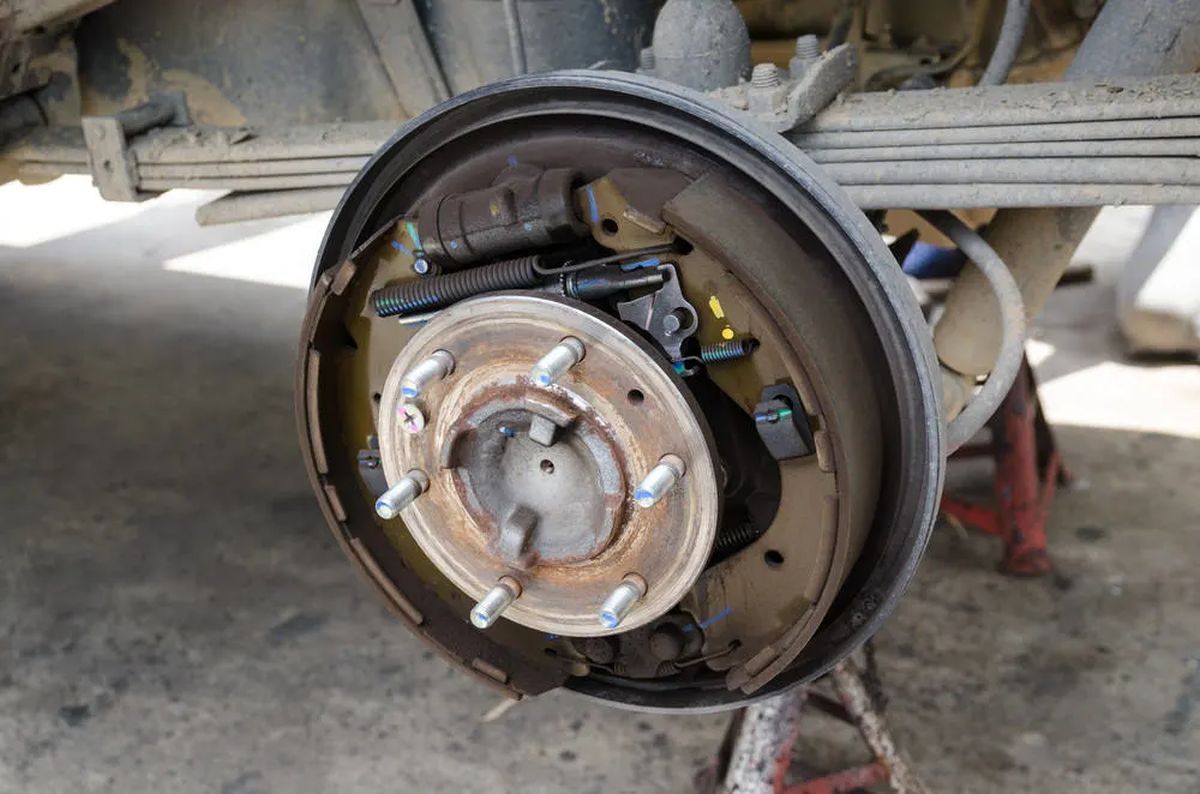
What Is a Drum Brake? What Are the Symptoms of Failure?
A drum brake is a mechanical braking system used on many vehicles, particularly on the rear axle of passenger cars and on some commercial vehicles. Unlike disc brakes, which use brake pads to clamp a rotating disc, drum brakes use brake shoes that press against the inside surface of a rotating brake drum.
The friction between the brake shoes and the drum slows the rotation of the wheel and allows the vehicle to stop.
Although drum brakes are often associated with older vehicles, they are still widely used in modern vehicles, especially on rear wheels of smaller and economy cars. They can also be incorporated into parking-brake systems.
How Does a Drum Brake Work?
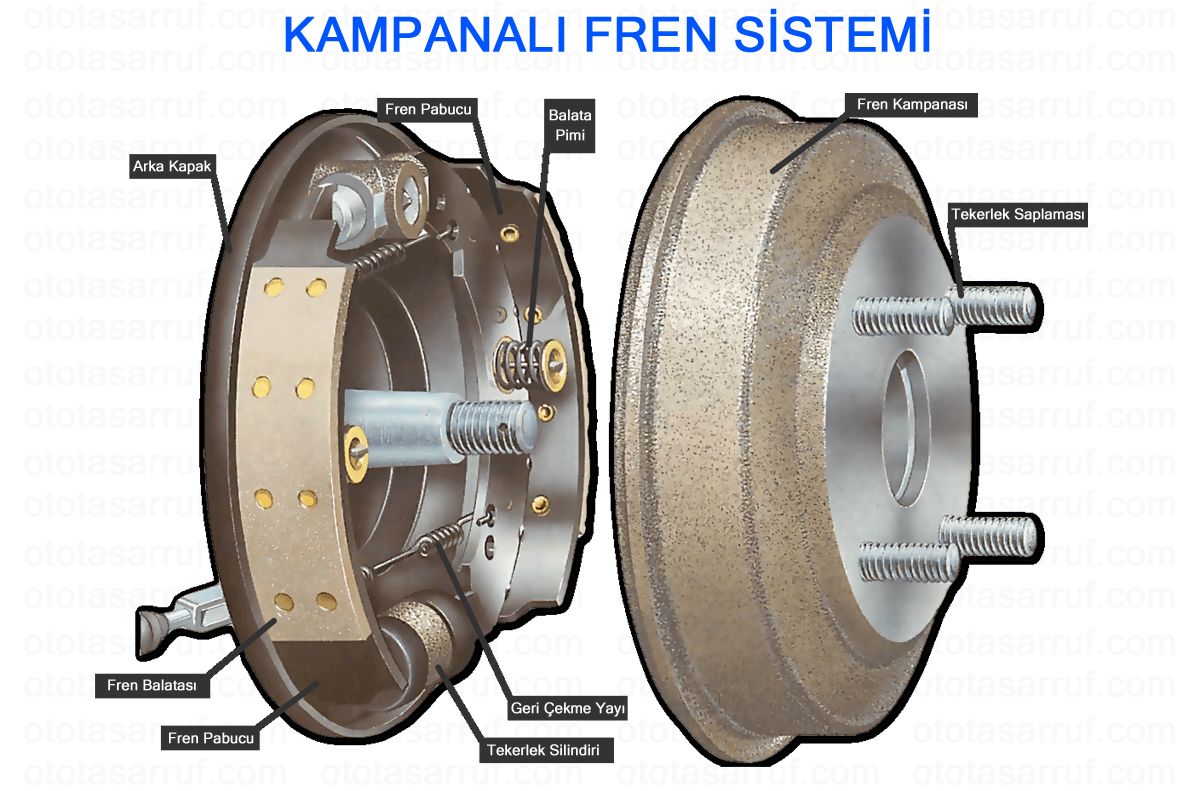
A typical drum brake system consists of several important components:
-
Brake drum
-
Brake shoes
-
Friction linings
-
Wheel cylinder
-
Return springs
-
Adjuster mechanism
-
Backing plate
-
Parking brake mechanism
-
Brake hardware
When the driver presses the brake pedal, hydraulic pressure is transmitted through the brake lines to the wheel cylinder.
The pistons inside the wheel cylinder move outward and push the brake shoes against the inner surface of the rotating drum.
Because the drum rotates together with the wheel, friction is created between the brake shoes and the drum.
This friction converts the vehicle's kinetic energy into heat, reducing wheel speed and slowing the vehicle.
When the brake pedal is released, return springs pull the brake shoes away from the drum so that the wheel can rotate freely again.

What Are the Symptoms of a Faulty Drum Brake?
Drum brake problems can produce several noticeable symptoms.
Common warning signs include:
-
Squealing or grinding noises
-
Scraping sounds from the rear wheels
-
Brake vibration
-
Vehicle pulling to one side during braking
-
Reduced braking performance
-
Excessive parking-brake travel
-
Brake pedal abnormalities
-
One rear wheel becoming excessively hot
-
Burning smell
-
Brake drag
-
Uneven brake shoe wear
-
Repeated wheel or drum overheating
-
Poor parking-brake holding ability
The symptoms depend on whether the problem involves the brake shoes, drum, wheel cylinder, springs, adjuster, parking-brake mechanism, or another part of the braking system.
Squealing or Grinding Noise
Noise is one of the most common signs of a drum brake problem.
A high-pitched squealing sound can be caused by vibration between the brake shoe lining and the drum.
However, grinding or harsh metallic scraping is more concerning.
Possible causes include:
-
Severely worn brake shoes
-
Damaged friction lining
-
Brake shoe hardware failure
-
Excessive drum wear
-
Foreign material inside the drum
-
Loose components
-
Brake shoe contact with an incorrectly positioned surface
A grinding noise should not be ignored because continued operation can damage the drum and other braking components.
Brake Shoes Become Worn
Brake shoes contain friction material that gradually wears away as the brakes are used.
As the lining becomes thinner, braking performance can decrease and the shoe may eventually become unable to operate correctly.
Worn brake shoes can cause:
-
Longer stopping distances
-
Reduced braking force
-
Noise
-
Uneven braking
-
Excessive parking-brake travel
Brake shoe wear should be checked according to the manufacturer's service procedure.
Unlike disc brakes, the friction material in a drum brake is enclosed inside the drum, so visual inspection is not always possible without removing the drum.
Excessive Parking-Brake Travel
A parking brake that has to be pulled much farther than normal can indicate a problem.
Possible causes include:
-
Worn brake shoes
-
Incorrect shoe adjustment
-
Stretched parking-brake cable
-
Faulty self-adjuster
-
Parking-brake mechanism problems
-
Incorrectly installed brake components
However, excessive parking-brake travel does not automatically mean that the cable needs to be tightened.
Many drum-brake systems use an automatic adjustment mechanism. If the shoes are not correctly adjusted, simply tightening the cable may hide the underlying problem rather than fixing it.
Vehicle Pulls to One Side During Braking
If the vehicle pulls left or right when braking, the braking force may not be equal between the wheels.
A drum brake can contribute to this problem if one side has:
-
A contaminated brake shoe
-
A seized wheel cylinder
-
Incorrect adjustment
-
Damaged friction material
-
A sticking mechanism
-
A damaged brake drum
However, pulling during braking can also be caused by front brakes, tires, suspension components, wheel alignment, or other problems.
The entire braking system should therefore be inspected rather than assuming that the rear drum brake is responsible.
One Rear Wheel Becomes Extremely Hot
A drum brake that remains partially applied can generate considerable heat.
A sticking brake shoe, seized wheel cylinder, damaged return spring, incorrect adjustment, or parking-brake mechanism problem can prevent the shoes from fully releasing.
Possible symptoms include:
-
One wheel becoming much hotter than the others
-
Burning smell
-
Reduced fuel economy
-
Vehicle feeling as if it is being held back
-
Smoke in severe cases
-
Premature brake wear
Driving with a dragging brake can cause serious overheating and damage.
Brake Drum Overheating
Drum brakes naturally become hot during braking, especially during repeated stops or downhill driving.
The problem occurs when the temperature becomes excessive because the brake remains partially applied or cannot dissipate heat properly.
Possible causes include:
-
Brake shoe dragging
-
Seized wheel cylinder
-
Incorrect adjustment
-
Parking-brake cable not releasing
-
Damaged return spring
-
Internal mechanical binding
-
Excessive braking load
Severe overheating can damage friction material and affect braking performance.
Brake Vibration or Pulsation
A drum brake can sometimes produce vibration or pulsation when the drum is no longer rotating evenly.
Possible causes include:
-
Excessive drum runout
-
Uneven drum surface
-
Excessive wear
-
Heat-related distortion
-
Improper machining
-
Rust or contamination
-
Improper seating of the drum
The driver may feel vibration through the brake pedal, body, or rear of the vehicle.
However, brake vibration is not automatically caused by a drum brake. Front disc runout, wheel problems, suspension wear, and tire issues can create similar symptoms.
Brake Pedal Feels Different
A change in brake pedal feel should always be taken seriously.
A soft or spongy pedal can indicate:
-
Air in the hydraulic system
-
Brake fluid problems
-
Hydraulic leakage
-
Wheel cylinder leakage
-
Other hydraulic system faults
A very hard pedal can have different causes, including problems with brake assist or other components.
A drum brake problem itself does not explain every abnormal brake-pedal condition.
Brake Fluid Leakage Inside the Drum
The wheel cylinder is located inside the drum assembly.
If its seals fail, brake fluid can leak onto the brake shoes.
This is particularly serious because brake fluid contaminates the friction material.
A contaminated brake shoe may:
-
Lose braking effectiveness
-
Produce unusual noise
-
Cause uneven braking
-
Create a pulling sensation
-
Become difficult to clean reliably
A leaking wheel cylinder normally needs to be repaired or replaced, and contaminated friction material may also require replacement.
Simply cleaning the visible fluid is not always an adequate repair.
What Causes Drum Brake Failure?
Several factors can cause drum brake problems.
Common causes include:
Normal wear
Brake shoes and drums gradually wear as the vehicle is driven.
Heat
Repeated heavy braking can generate significant heat and accelerate wear.
Corrosion
Vehicles that are exposed to moisture, road salt, or long periods of storage can develop corrosion inside the drum assembly.
Wheel cylinder failure
A leaking or seized wheel cylinder can cause either reduced braking or brake drag.
Return spring failure
Weak or broken springs may prevent the brake shoes from returning to their normal position.
Adjuster failure
A seized or malfunctioning adjuster can cause incorrect shoe-to-drum clearance.
Parking-brake mechanism problems
A sticking cable or mechanism can leave the brake partially applied.
Brake fluid contamination
Fluid leaking onto the friction material can significantly reduce braking performance.
Incorrect installation
Incorrectly installed shoes, springs, adjusters, or other hardware can cause abnormal braking behavior.
What Is a Self-Adjusting Drum Brake?
Many drum brake systems use a self-adjusting mechanism to maintain the correct clearance between the brake shoes and the drum.
As the friction material wears, the adjuster compensates for the increased distance between the shoe and drum.
If the adjuster becomes seized, contaminated, incorrectly installed, or damaged, the brake shoes may become incorrectly positioned.
This can result in:
-
Excessive parking-brake travel
-
Poor brake response
-
Uneven braking
-
Excessive shoe-to-drum clearance
-
Brake noise
The exact adjustment mechanism differs between vehicle manufacturers and brake designs.
Can a Drum Brake Cause Poor Braking?
Yes.
A drum brake that is severely worn, contaminated, incorrectly adjusted, or mechanically damaged can reduce braking performance.
However, the braking system is designed as a complete system.
Poor braking can also result from:
-
Worn front brake pads
-
Worn brake discs
-
Low brake fluid
-
Air in the hydraulic system
-
Brake fluid contamination
-
Faulty master cylinder
-
ABS problems
-
Tire problems
-
Brake booster problems
Therefore, reduced braking performance should be investigated across the entire braking system.
Drum Brake vs. Disc Brake
Drum brakes and disc brakes use different mechanical designs.
A disc brake uses a caliper to press brake pads against a rotating disc.
A drum brake uses brake shoes that press outward against the inside of a rotating drum.
Drum brakes have some advantages:
-
Relatively simple design
-
Good parking-brake integration
-
Lower manufacturing cost in some applications
-
Friction surfaces protected inside the drum
-
Useful mechanical self-energizing effect
Disc brakes generally offer advantages in heat dissipation and are commonly used on the front axle because the front brakes handle a large proportion of the vehicle's braking load.
Many vehicles therefore use disc brakes at the front and drum brakes at the rear.
Can a Drum Brake Become Stuck?
Yes.
A drum brake can become stuck or partially seized for several reasons.
Possible causes include:
-
Corrosion
-
Seized wheel cylinder
-
Broken return spring
-
Seized adjuster
-
Parking-brake cable corrosion
-
Brake shoe binding
-
Long-term vehicle storage
-
Contamination
-
Damaged hardware
A stuck drum brake may make the vehicle difficult to move.
The affected wheel may also become unusually hot after driving.
Why Does a Drum Brake Stay Applied?
If the brake does not release after the pedal is released, something in the mechanical or hydraulic system may be preventing the shoes from returning.
Possible causes include:
-
Seized wheel cylinder
-
Weak or broken return spring
-
Incorrect shoe adjustment
-
Sticking adjuster
-
Parking-brake cable that does not release
-
Corrosion
-
Damaged brake shoe hardware
-
Hydraulic pressure that is not being released correctly
A dragging brake should be diagnosed promptly because continuous friction can generate excessive heat.
How Are Drum Brakes Inspected?
A proper inspection usually requires removing the drum when the design allows it.
The technician can inspect:
-
Brake shoe thickness
-
Friction lining condition
-
Drum surface
-
Drum diameter
-
Wheel cylinder
-
Return springs
-
Adjuster mechanism
-
Parking-brake mechanism
-
Backing plate
-
Contamination
-
Corrosion
-
Mechanical movement
The drum's internal diameter should be compared with the manufacturer's maximum allowable specification.
A drum that exceeds its service limit should not simply be reused because the friction surface still appears acceptable.
Can Drum Brakes Be Resurfaced?
Some brake drums can be machined or resurfaced if the manufacturer permits it and the drum remains within the specified service diameter.
Resurfacing can remove:
-
Minor scoring
-
Surface irregularities
-
Rust
-
Uneven friction material deposits
However, machining a drum beyond its maximum allowable diameter is unsafe.
If the drum is severely worn, cracked, damaged, or outside the manufacturer's specification, replacement is normally required.
Do Both Rear Drum Brakes Need to Be Replaced Together?
Brake shoes are generally replaced as an axle set rather than replacing only one side.
This helps maintain similar friction characteristics and braking performance between the left and right wheels.
If one side has a problem, the opposite side should also be inspected carefully.
If a wheel cylinder has leaked and contaminated one brake shoe, the condition of the entire axle's friction components should be evaluated.
Can You Drive With a Faulty Drum Brake?
Driving with a known drum-brake problem can be dangerous.
A minor noise does not necessarily mean immediate brake failure, but problems such as:
-
Severe grinding
-
Significant pulling
-
Brake drag
-
Excessive overheating
-
Brake fluid leakage
-
Major reduction in braking performance
-
Abnormal brake pedal behavior
should not be ignored.
A brake that is overheating or leaking can deteriorate rapidly.
If braking performance is significantly reduced, the vehicle should not be driven until the braking system has been inspected and repaired.
Does an OBD Scanner Detect Drum Brake Problems?
An OBD scanner generally cannot directly determine whether a mechanical drum-brake component is worn.
However, modern vehicles may store ABS-related fault codes if there is a problem with:
-
Wheel-speed sensors
-
ABS hydraulic control
-
Electronic brake control
-
Stability-control systems
A mechanical problem such as a worn brake shoe, damaged drum, broken spring, or seized adjuster may not generate an OBD fault code at all.
This is why physical brake inspection remains essential.
Final Thoughts
A drum brake is a reliable braking design that remains widely used, particularly on the rear axle of many vehicles.
Its main components include the brake drum, brake shoes, wheel cylinder, springs, adjuster, and parking-brake mechanism.
Symptoms such as grinding noises, brake drag, excessive heat, poor braking, pulling to one side, excessive parking-brake travel, vibration, fluid leakage, or uneven brake shoe wear can indicate a problem.
However, these symptoms do not automatically identify a specific failed component.
A similar symptom can be caused by the brake shoe, drum, wheel cylinder, adjuster, springs, parking-brake mechanism, hydraulic system, ABS, or even tires and suspension components.
For this reason, a drum-brake problem should be diagnosed by inspecting the complete braking system, rather than replacing individual parts based solely on symptoms.