TR
TR EN
EN

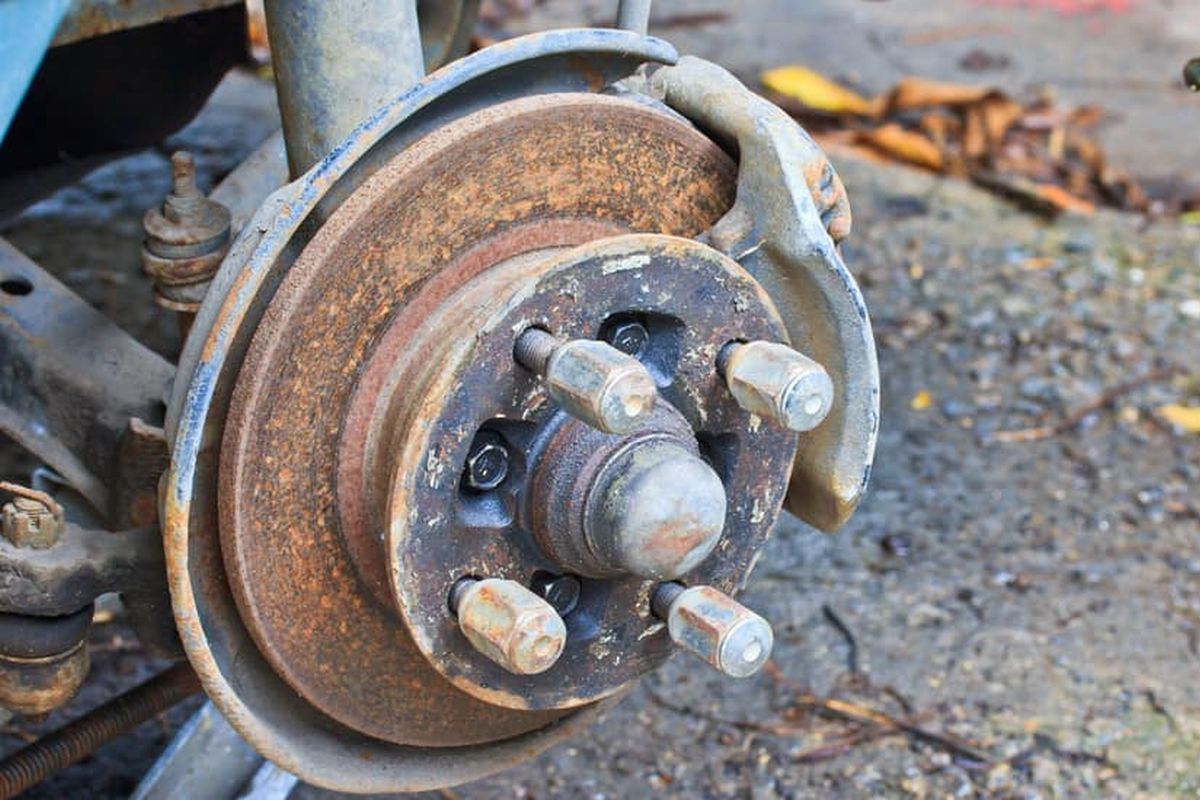
Why Do Brake Discs Rust?
Brake discs are exposed directly to moisture, oxygen, road salt, dirt, and changing temperatures. Because most brake discs are made from cast iron or other iron-based materials, surface rust can develop surprisingly quickly, especially when the vehicle has been parked for several hours or days.
In many cases, a thin layer of rust on the visible surface of a brake disc is completely normal. The brake pads usually remove this surface corrosion during the first few braking applications.
However, heavy rust, deep corrosion, pitting, or rust that remains on the braking surface can indicate a more serious problem.
What Causes Brake Discs to Rust?
The main reason brake discs rust is simple: iron reacts with oxygen and moisture.
Brake discs operate in an environment where exposure to these elements is unavoidable.
Common causes include:
-
Rain and humidity
-
Washing the vehicle
-
Condensation
-
Snow and ice
-
Road salt
-
Parking outdoors
-
Long periods without driving
-
Low-quality or heavily corroded discs
-
Brake pads not contacting the disc correctly
-
Seized brake components
-
Uneven pad wear
-
Vehicle storage
Unlike painted body panels, the friction surface of a conventional brake disc cannot simply be painted because the brake pads need direct contact with the disc.
Why Do Brake Discs Rust After Rain?
It is normal for brake discs to develop a thin orange or brown layer after rain.
When the vehicle is parked, the wet disc is exposed to oxygen. Surface oxidation can begin within a relatively short period.
This can sometimes happen overnight.
After the vehicle is driven, normal braking removes most of this light surface rust from the areas contacted by the brake pads.
For this reason, seeing orange discoloration on the discs after rain does not automatically mean that the brakes are faulty.
Why Do Brake Discs Rust When the Car Is Not Used?
A vehicle that sits unused for several days or weeks is much more likely to develop visible brake-disc corrosion.
During normal driving, the brake pads repeatedly clean the friction surfaces.
When the vehicle remains stationary, this cleaning process stops.
Moisture can remain on the disc, allowing corrosion to develop.
The longer the vehicle remains parked, the greater the possibility of:
-
Surface rust
-
Rust around the disc edges
-
Corrosion spots
-
Rust underneath the pad contact areas
-
Pitting in severe cases
Vehicles stored outdoors or in humid environments are particularly susceptible.
Is Surface Rust on Brake Discs Normal?
Yes, light surface rust is generally normal.
A brake disc may look rusty after the vehicle has been parked overnight, particularly after rain or washing.
If the rust disappears from the pad contact area after several normal braking applications, there is usually no reason for concern.
The important distinction is between temporary surface oxidation and persistent corrosion.
Light surface rust:
-
Usually disappears after braking
-
Does not normally affect braking performance
-
Is common on cast-iron discs
Severe corrosion:
-
May remain after repeated braking
-
Can create rough braking surfaces
-
Can cause vibration
-
Can contribute to uneven pad contact
-
May reduce braking performance
-
Can eventually require disc replacement
Why Do Brake Discs Rust More on the Outer Edge?
The outer edge of a brake disc often develops a visible rust ring.
This happens because the brake pads normally contact only a specific portion of the disc's friction surface. The outermost area is not swept by the pad.
As a result, the unused edge remains exposed to moisture and oxygen and can gradually develop rust.
A small rust lip around the outer edge can therefore be normal.
However, a very large or deeply corroded lip can indicate excessive disc wear and should be inspected.
Why Is the Center of the Brake Disc Rusty?
Depending on the brake-disc design, some areas of the disc are not contacted by the brake pads.
For example, the central hat section of a conventional brake disc may be exposed metal and can develop surface corrosion.
Some manufacturers apply protective coatings to these areas, while others leave them untreated.
Rust on the non-friction areas is generally less important than corrosion on the actual pad contact surface.
Can Brake Disc Rust Cause Vibration?
Severe corrosion can contribute to brake vibration, but rust itself is not always the direct cause.
If a vehicle remains parked for a long time, rust can develop underneath the brake pad contact areas.
When the vehicle is eventually driven, the pad may not remove the corrosion evenly.
This can contribute to an uneven friction surface.
Brake vibration can also be caused by:
-
Disc thickness variation
-
Disc runout
-
Uneven pad deposits
-
Hub runout
-
Corroded hub mounting surfaces
-
Loose wheel installation
-
Sticking brake calipers
-
Wheel-bearing problems
-
Suspension problems
Therefore, brake vibration should not automatically be diagnosed as "warped discs" or simply blamed on rust.
What Happens If a Car Is Parked for a Long Time?
Long-term parking can produce considerably more corrosion than normal daily use.
After weeks or months without movement, the discs may develop:
-
Heavy surface rust
-
Rust rings
-
Corrosion beneath the pads
-
Pitting
-
Rough friction surfaces
-
Sticking between pads and discs
-
Seized brake components
In severe cases, the brake pads may become partially bonded to the disc through corrosion.
This is one reason vehicles stored for long periods should have their braking system inspected before being returned to normal road use.
Can Washing a Car Cause Brake Disc Rust?
Yes, but this is normally harmless.
After washing the vehicle, water remains on the brake discs.
Because the discs are often made from untreated cast iron on their friction surfaces, a thin layer of rust can appear relatively quickly.
This does not mean that washing the vehicle damages the brakes.
The rust is normally removed when the brakes are used.
After washing, it is good practice to drive carefully and apply the brakes normally several times in a safe location so that moisture is removed and braking performance returns to normal.
Does Road Salt Make Brake Discs Rust Faster?
Yes.
Road salt accelerates corrosion because it increases the electrical conductivity of the moisture on metal surfaces.
This is particularly important in regions where roads are treated with salt during winter.
Salt can contribute to corrosion of:
-
Brake discs
-
Calipers
-
Brake lines
-
Brake hardware
-
Wheel hubs
-
Suspension components
-
Fasteners
Vehicles regularly driven in winter conditions may therefore require more frequent brake inspections.
Why Are Some Brake Discs More Rusty Than Others?
Not all brake discs corrode at the same rate.
Differences can result from:
-
Disc material
-
Manufacturing quality
-
Surface treatment
-
Protective coating
-
Vehicle usage
-
Parking conditions
-
Climate
-
Road salt exposure
-
Brake-pad contact pattern
-
Disc design
Some replacement discs have corrosion-resistant coatings on the hat and outer surfaces.
The friction surface, however, must remain suitable for brake-pad contact.
Can Coated Brake Discs Prevent Rust?
Coated brake discs can significantly reduce corrosion on the areas that do not need to contact the brake pads.
These coatings are commonly applied to areas such as:
-
Disc hats
-
Outer edges
-
Ventilation areas
-
Other exposed surfaces
However, no conventional coating can eliminate corrosion from the friction surface permanently because the brake pads must contact that area.
Coated discs can therefore reduce cosmetic and structural corrosion, but they do not make the brake disc completely rust-proof.
Can Rust on Brake Discs Be Removed?
Light surface rust normally removes itself through normal braking.
If the rust is more substantial, the correct solution depends on its severity.
A technician may inspect the disc for:
-
Surface condition
-
Disc thickness
-
Runout
-
Pitting
-
Cracks
-
Corrosion depth
-
Pad contact pattern
In some cases, machining may be possible if the disc remains within the manufacturer's specifications.
However, modern brake discs are often relatively thin, and machining a disc below its minimum allowable thickness is unsafe.
A heavily corroded or deeply pitted disc generally needs to be replaced rather than simply cleaned.
Should You Sand Rust Off Brake Discs?
Light surface rust on the friction surface usually does not require sanding.
Normal braking is generally the appropriate way to remove superficial oxidation.
Aggressively sanding or grinding the disc can alter its surface characteristics and thickness.
If the disc has severe corrosion, grooves, pitting, or uneven wear, the issue should be assessed properly rather than trying to restore it manually.
The brake disc is a safety-critical component, so improvised repairs are not recommended.
Can Brake Cleaner Remove Rust?
Brake cleaner can remove grease, oil, and some contaminants, but it is not a solution for serious brake-disc corrosion.
A brake cleaner may help clean a disc before installation or remove contamination from the braking surface.
It does not restore a disc that has deep rust, pitting, excessive wear, or structural damage.
The condition of the disc itself must be evaluated.
Can a Rusty Brake Disc Damage Brake Pads?
Heavy corrosion can contribute to accelerated or uneven brake-pad wear.
If the disc surface is heavily pitted or rough, the pad may not contact the disc evenly.
This can cause:
-
Uneven pad wear
-
Noise
-
Reduced braking efficiency
-
Vibration
-
Increased heat
-
Abnormal friction material transfer
If severe rust is present, simply installing new brake pads may not solve the problem.
The condition of the discs should be checked at the same time.
Can Brake Disc Rust Cause Brake Noise?
Yes.
Rust can contribute to temporary brake noise, especially after the vehicle has been parked overnight in wet conditions.
The first few brake applications may produce:
-
Scraping sounds
-
Light grinding noises
-
Squeaking
-
Metallic rubbing sounds
If the noise disappears after the rust is removed, it is usually not a serious problem.
Persistent noise requires further investigation because brake noise can also be caused by worn pads, damaged hardware, caliper problems, contamination, disc damage, or incorrect installation.
What If Rust Remains Only Under the Brake Pad?
Persistent rust patches underneath the pad contact area are more significant than rust on the unused edge of the disc.
Possible causes include:
-
Brake pad not making full contact
-
Incorrectly fitted brake pad
-
Seized caliper
-
Sticking slide pins
-
Uneven disc wear
-
Incorrect pad shape
-
Severe disc corrosion
-
Brake caliper piston problems
If a large part of the friction surface remains rusty after repeated braking, the brake system should be inspected.
Why Is One Brake Disc More Rusty Than the Other?
A significant difference between left and right discs can be a useful diagnostic clue.
For example, if one disc is clean while the other remains heavily rusty on the pad contact area, the brake on the rusty side may not be applying correctly.
Possible causes include:
-
Seized or sticking caliper
-
Sticking brake pad
-
Hydraulic problem
-
Parking-brake mechanism problem
-
Damaged brake hardware
-
Incorrect pad installation
However, the exact cause should be confirmed through inspection rather than assuming that the caliper is automatically faulty.
Can a Seized Brake Caliper Cause Rust?
Yes, but the relationship can work in different ways.
A caliper that does not apply properly can prevent the pads from contacting the disc with the required force, leaving areas of the disc rusty.
On the other hand, a caliper that does not release can keep the pads pressed against the disc, producing overheating and abnormal wear.
Therefore, a brake caliper problem can produce either insufficient contact or excessive contact, depending on the type of failure.
Is It Safe to Drive With Rusty Brake Discs?
It depends on the severity of the corrosion.
A light orange layer that develops after rain or washing is generally not a reason to stop driving.
However, driving should be avoided or minimized until inspection if the discs have:
-
Deep pitting
-
Large areas of persistent rust
-
Cracks
-
Severe grooves
-
Significant thickness loss
-
Severe vibration
-
Major braking imbalance
-
Unusual overheating
-
Grinding noises
-
Clearly reduced braking performance
Brake corrosion should never be judged solely by appearance.
How Can You Prevent Brake Disc Rust?
You cannot completely prevent normal surface rust on conventional iron brake discs, but you can reduce unnecessary corrosion.
Useful practices include:
-
Drive the vehicle regularly
-
Avoid leaving the car unused for very long periods
-
After washing, use the brakes normally to dry the discs
-
Keep the vehicle clean during winter salt exposure
-
Have brake components inspected periodically
-
Repair sticking calipers promptly
-
Check the parking-brake mechanism
-
Replace severely corroded discs
-
Store long-term vehicles under suitable conditions
If a vehicle will remain parked for an extended period, the manufacturer's storage recommendations should be followed.
Does Driving More Remove Brake Disc Rust?
For light surface rust, yes.
Normal braking generates friction between the pads and discs, which removes oxidation from the pad contact area.
However, driving more does not necessarily solve deep corrosion.
If the disc is heavily pitted, the rust may have physically damaged the friction surface.
In that situation, repeated driving should not be used as a substitute for inspection.
Brake Disc Rust on Electric and Hybrid Vehicles
Electric and hybrid vehicles can sometimes experience more visible brake-disc corrosion than conventional vehicles.
One reason is regenerative braking.
When the electric motor provides significant regenerative braking, the friction brakes may be used less frequently.
This means the brake pads may not clean the discs as often.
As a result, surface corrosion can become more noticeable.
Some vehicles use automatic brake applications or other strategies to keep the friction brakes functional, but the exact behavior depends on the vehicle.
Why Do Rear Brake Discs Sometimes Rust More?
Rear brakes often experience less braking load than front brakes because weight transfers toward the front during deceleration.
On some vehicles, the rear friction brakes may therefore operate less aggressively.
If the vehicle is driven gently or uses regenerative braking, the rear discs may receive even less friction-brake activity.
This can make surface corrosion more visible.
However, excessive rust on one rear disc or persistent rust on the pad contact area should still be investigated.
Final Thoughts
Brake disc rust is not always a sign of a brake failure.
A thin layer of surface rust after rain, washing, humidity, or overnight parking is normal for many conventional iron brake discs and is usually removed by normal braking.
The situation becomes more concerning when corrosion is deep, persistent, uneven, or accompanied by symptoms such as vibration, grinding, overheating, poor braking, or uneven pad contact.
The most important distinction is between normal surface oxidation and structural or friction-surface corrosion.
A rusty-looking brake disc should therefore not automatically be replaced, but severe corrosion should not be ignored either.
As with other brake problems, the correct approach is to inspect the complete braking system, including the discs, pads, calipers, wheel cylinders where applicable, parking-brake mechanism, wheel hubs, and hydraulic system.