TR
TR EN
EN

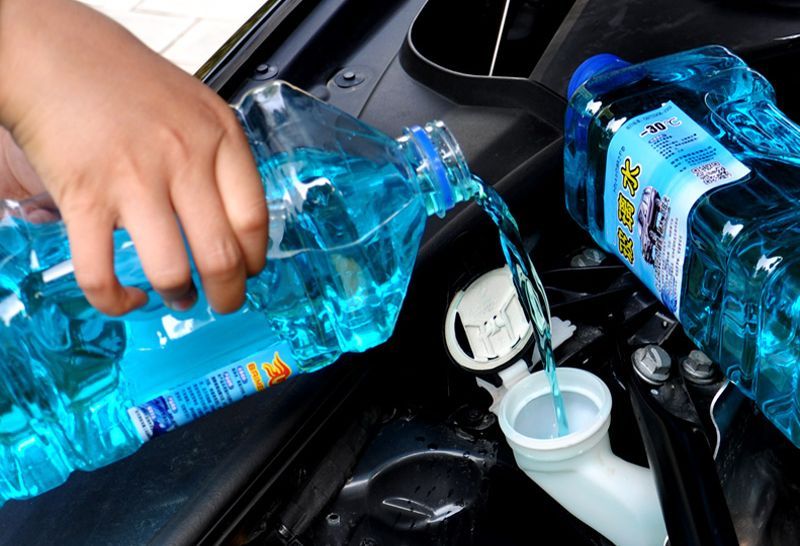
Antifreeze Windshield Washer Fluid and Wiper Use
Winter driving is not only about using winter tires. Snow, ice, road salt, mud, and freezing temperatures can quickly reduce visibility if the windshield is not kept clean.
This is why antifreeze windshield washer fluid and properly functioning wipers are particularly important during cold weather.
Using the wrong washer fluid or operating frozen wipers can also damage the wiper blades, washer pump, hoses, and other components of the windshield cleaning system.
What Is Antifreeze Windshield Washer Fluid?
Antifreeze windshield washer fluid is a specially formulated liquid designed to clean the windshield while remaining resistant to freezing at low temperatures.
Unlike plain water or summer washer fluid, winter washer fluid is formulated for cold-weather conditions.
Its main purposes are to:
-
Clean dirt from the windshield
-
Remove mud and road salt
-
Help remove oily film and other contaminants
-
Reduce the risk of freezing inside the washer system
-
Help keep washer hoses and nozzles functional in cold weather
-
Improve windshield cleaning during winter driving
It is important to remember that windshield washer fluid is not the same product as engine coolant antifreeze.
Windshield Washer Fluid Is Not Engine Coolant
The antifreeze used in the engine cooling system and windshield washer fluid have completely different purposes.
Engine coolant is designed to control engine temperature and protect the cooling system from freezing and corrosion.
Windshield washer fluid is designed for cleaning glass and operating through the washer pump, hoses, and spray nozzles.
For this reason, engine coolant should never be poured into the windshield washer reservoir.
Using the wrong product can leave residue on the windshield, affect visibility, and create problems for the washer system.
Can You Use Plain Water in Winter?
Using only water in freezing weather is not recommended.
Water can freeze inside:
-
The washer reservoir
-
Washer pump
-
Hoses
-
Spray nozzles
If the liquid freezes, the washer system may stop working when you need it most.
Frozen water can also expand and potentially damage components of the system.
For this reason, a proper winter-grade windshield washer fluid should be used whenever temperatures can fall below freezing.
What Temperature Can Antifreeze Washer Fluid Handle?
Not all winter washer fluids provide the same level of freeze protection.
Some products are designed for relatively mild winter conditions, while others are formulated to remain usable at much lower temperatures.
The temperature rating shown on the product should therefore be considered when choosing washer fluid.
If temperatures in your area regularly fall well below freezing, choose a product designed for those conditions rather than relying on a mild-weather formula.
Can Antifreeze Washer Fluid Freeze?
Yes.
"Antifreeze washer fluid" does not mean that the liquid can never freeze under any conditions.
Every product has a specified temperature range.
For example, a washer fluid designed for moderate freezing temperatures should not be expected to remain completely liquid during much more severe cold.
The freezing resistance can also be reduced if a concentrated product is diluted with too much water.
Be Careful When Using Concentrated Washer Fluid
Some washer fluids are sold ready to use, while others are supplied as concentrates that must be mixed with water.
If you are using a concentrate, follow the manufacturer's recommended mixing ratio.
Adding too much water can significantly reduce freeze protection.
Using a concentrate incorrectly does not necessarily provide better protection either. The correct mixture should be prepared according to the product instructions and the expected weather conditions.
Never Operate Wipers on a Frozen Windshield
One of the most common winter mistakes is turning on the windshield wipers while the blades are frozen to the glass.
Overnight, moisture can freeze between the rubber blade and windshield.
If the wipers are switched on in this condition, the result can be:
-
Torn wiper rubber
-
Damaged blade edges
-
Bent wiper arms
-
Excessive load on the wiper mechanism
-
Blown fuses
-
Damage to the wiper motor in severe cases
Before operating the wipers, make sure they are not frozen to the windshield.
How Should Ice Be Removed From the Windshield?
If the windshield is covered with ice, allow the vehicle's defrost system to warm the glass gradually.
An appropriate ice scraper can also be used when necessary.
A practical approach is to:
-
Start the vehicle according to normal operating procedures.
-
Activate the windshield defrost function.
-
Allow the glass to warm gradually.
-
Remove loosened ice with a suitable scraper.
-
Make sure the wiper blades are free before using them.
Do not try to force the wipers through a thick layer of ice.
Do Not Pour Boiling Water on the Windshield
Pouring boiling or extremely hot water over an ice-covered windshield is not recommended.
A large temperature difference between the glass and hot water can create thermal stress. If the windshield already has a small crack or stone chip, the risk of damage can be even greater.
Hot water can also quickly refreeze in very cold weather, creating another layer of ice.
Using the vehicle's defrost system and an appropriate ice scraper is a much safer approach.
When Should Wiper Blades Be Replaced?
There is no universal mileage figure that determines exactly when wiper blades must be replaced.
Their lifespan depends on:
-
Climate
-
Sun exposure
-
Temperature changes
-
Frequency of use
-
Windshield condition
-
Quality of the wiper blade
-
Exposure to dirt and road chemicals
However, replacement is recommended when the blades begin to show signs such as:
-
Leaving streaks
-
Skipping across the glass
-
Producing excessive noise
-
Leaving sections of the windshield uncleared
-
Having cracked rubber
-
Becoming hard or brittle
-
Producing a cloudy film after wiping
Worn wipers can become particularly problematic during winter because rain, snow, mud, and road salt can rapidly reduce visibility.
Do Not Force Frozen Wiper Blades Off the Glass
If the wiper blade is frozen to the windshield, do not pull it away aggressively.
This can damage the rubber or bend the wiper arm.
Avoid using sharp metal objects to separate the blade from the glass.
Instead, allow the ice to melt gradually using the vehicle's defrost system or an appropriate de-icing method.
What If Washer Fluid Does Not Spray?
If you activate the windshield washer and no fluid comes out, first check the fluid level.
If there is sufficient fluid in the reservoir, possible causes include:
-
Frozen washer fluid
-
Frozen washer nozzles
-
Frozen hoses
-
Blocked spray nozzles
-
A failed washer pump
-
An electrical problem
-
A disconnected or damaged hose
In extremely cold weather, the pump may run but no fluid may reach the windshield because part of the system is frozen.
Do Not Keep Running a Frozen Washer Pump
If the washer system is frozen, repeatedly activating the pump is not a good solution.
If the pump cannot move the frozen liquid, continuously operating it can place unnecessary load on the pump and electrical system.
Allow the system to thaw gradually instead.
If the vehicle can be moved into a warmer environment, this can help thaw the reservoir, hoses, and nozzles.
Do not try to force frozen nozzles open with sharp objects.
Can You Put Dishwashing Liquid in the Washer Reservoir?
Household dishwashing detergent is not an appropriate substitute for automotive windshield washer fluid.
It can:
-
Produce excessive foam
-
Leave residue on the glass
-
Affect visibility
-
Interfere with proper wiping
-
Behave differently at low temperatures
Automotive washer fluid is specifically formulated for the conditions inside a vehicle's windshield cleaning system.
Does Antifreeze Washer Fluid Protect Wiper Blades?
Winter washer fluid can help the wipers work more effectively by keeping the windshield clean and reducing the amount of dirt and contamination on the glass.
However, its primary purpose is not to extend the life of the wiper blades.
Wiper lifespan is affected by factors such as:
-
Rubber quality
-
UV exposure
-
Heat and cold
-
Ice
-
Dirt and sand
-
Windshield contamination
-
How often the wipers are used
Even the best washer fluid cannot prevent damage caused by operating a blade that is frozen to the windshield.
Do Not Use Wipers on a Dry, Dirty Windshield
Operating the wipers on a dry windshield can accelerate blade wear.
If the windshield is covered with mud, dust, salt, or sand, spray an appropriate amount of washer fluid before using the wipers.
This is particularly important during winter because road salt, mud, and other contaminants can accumulate quickly on the windshield.
Why Is Washer Fluid Level Important in Winter?
Winter conditions can increase washer fluid consumption.
Snow, road salt, mud, and dirty spray from other vehicles can make it necessary to clean the windshield more frequently.
Do not wait until the reservoir is completely empty.
Before a long journey, especially during winter, check the washer fluid level and top it up with a product suitable for the expected temperatures.
Keep the Washer Nozzles Clean
Washer nozzles can become partially blocked by dirt, wax, road salt, or other contaminants.
A partially blocked nozzle may produce:
-
Weak spray
-
Uneven spray pattern
-
Fluid reaching only part of the windshield
-
Reduced cleaning performance
If a nozzle is blocked, it should be cleaned carefully using an appropriate method. Avoid damaging the small openings with hard or oversized objects.
Rear Wipers Also Matter
On vehicles equipped with a rear windshield wiper, the same winter precautions apply.
Rear windows can accumulate:
-
Snow
-
Mud
-
Road salt
-
Water
-
Dirt
Do not operate a rear wiper if it is frozen to the glass.
Because rear visibility is particularly important when reversing or changing lanes, a damaged rear wiper should not be ignored.
Clean the Windshield From the Outside and Inside
Windshield visibility is affected by more than exterior dirt.
An oily film on the inside of the windshield can become particularly noticeable at night when headlights from oncoming vehicles create glare.
Cleaning the inside of the windshield periodically can therefore make a significant difference.
A clean windshield combined with properly functioning wipers provides much better visibility in rain, snow, and low-light conditions.
What Should You Check Before a Winter Journey?
Before a long trip in cold weather, it is worth checking the entire windshield cleaning system.
Make sure:
-
The washer reservoir is filled.
-
The fluid is rated for the expected temperatures.
-
The washer pump operates normally.
-
The spray nozzles are clear.
-
The wiper blades are not cracked or hardened.
-
The wipers are not frozen to the windshield.
-
The windshield is clean.
-
The defrost system works properly.
These checks take only a few minutes but can become extremely important if heavy snow or freezing rain begins during the journey.
Antifreeze Washer Fluid and Wiper Use: The Most Important Rules
Safe winter use of the windshield cleaning system can be summarized with a few simple rules:
Use winter-grade windshield washer fluid when temperatures can fall below freezing.
Never put engine coolant antifreeze into the washer reservoir.
Follow the correct dilution ratio for concentrated washer fluid.
Do not operate wipers that are frozen to the windshield.
Do not pour boiling water onto an ice-covered windshield.
Replace wiper blades when they become cracked, hardened, noisy, or ineffective.
Do not operate wipers unnecessarily on a dry and dirty windshield.
Keep the washer reservoir filled before long winter trips.
Do not force a frozen washer system or repeatedly run a pump that cannot move frozen fluid.
A properly maintained windshield washer system may seem like a small part of vehicle maintenance, but it has a direct effect on driving safety. During winter, clear visibility can make the difference between noticing a hazard early and seeing it only when there is no longer enough time to react.