TR
TR EN
EN

How to Drive a Car in Snowy Weather
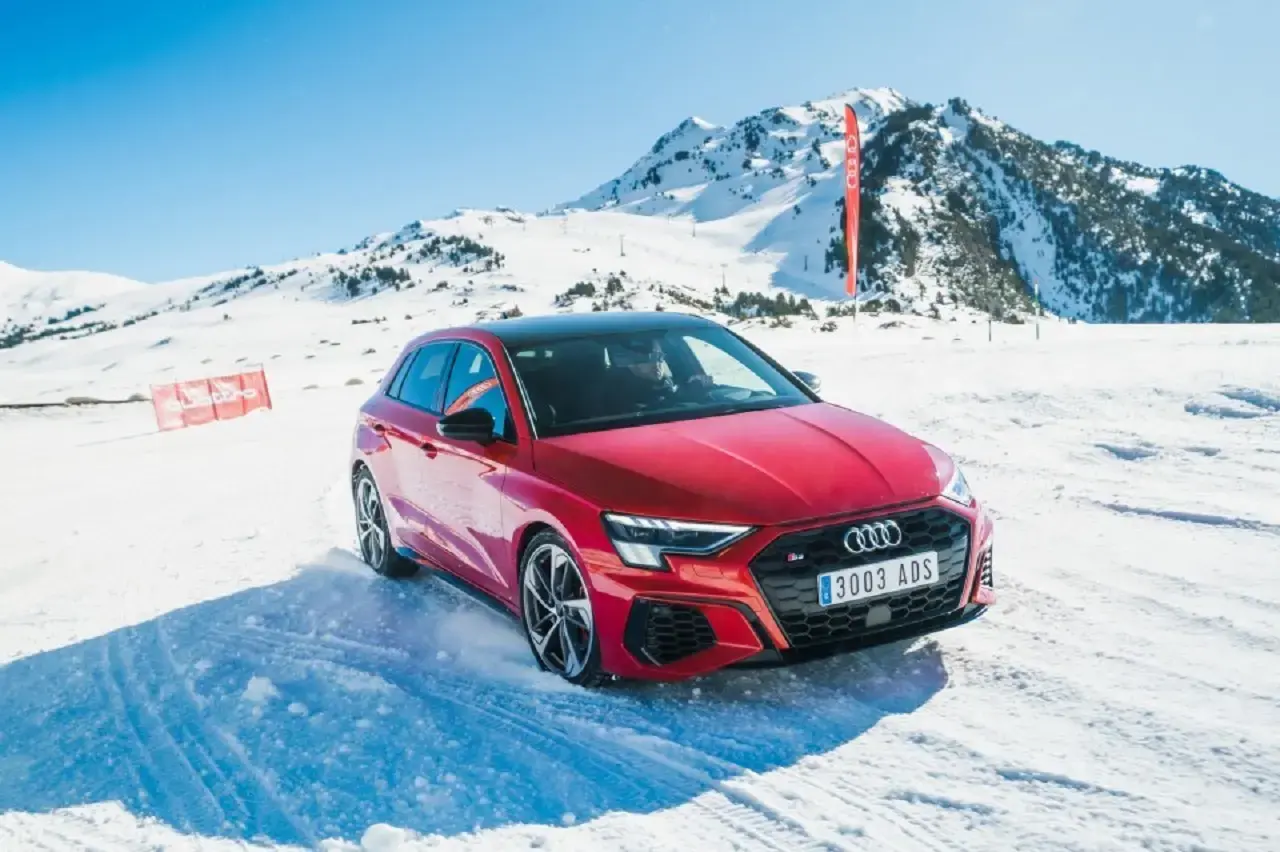
Driving in snowy weather requires more than simply installing winter tires. Snow, ice, reduced visibility, longer braking distances, and sudden changes in road grip can make even a familiar route much more difficult.
The key to safe winter driving is to reduce speed, increase following distance, make smooth inputs, and anticipate problems before they happen.
Prepare the Car Before Driving
Before setting off in snowy weather, give the vehicle a quick inspection.
Check that:
-
Winter tires are installed and have sufficient tread depth.
-
Tire pressures are correct.
-
Windshield washer fluid is suitable for freezing temperatures.
-
Wipers are working properly.
-
Headlights and brake lights are clean and functioning.
-
The windshield, mirrors, windows, roof, and lights are free from snow and ice.
-
The fuel level is sufficient for the planned journey.
-
The battery is in good condition, especially in very cold weather.
If the vehicle has been parked outside overnight, do not drive away with only a small section of the windshield cleared.
Snow and ice should be removed from all windows and mirrors so that visibility is not compromised.
Use Winter Tires
One of the most important factors in snowy conditions is tire selection.
Winter tires are designed to remain flexible at low temperatures and provide better grip than summer tires when temperatures fall significantly.
Their tread pattern and rubber compound are also designed to improve traction on cold, wet, snowy, and icy roads.
All-season tires can be useful in moderate winter conditions, but they should not automatically be considered equivalent to dedicated winter tires in severe snow and ice.
Even the best winter tire cannot eliminate the limitations created by ice.
Reduce Your Speed
Snow-covered roads can look relatively safe while offering much less grip than a dry road.
Driving at the normal speed you use in good weather can therefore be dangerous.
Reduce your speed according to:
-
Snow depth
-
Ice formation
-
Visibility
-
Road gradient
-
Traffic density
-
Tire condition
-
Temperature
-
Road maintenance
There is no universal "safe snow speed." A speed that feels acceptable on compacted snow may be completely inappropriate on black ice.
Increase the Following Distance
Stopping distances become much longer on snow and ice.
For this reason, leave significantly more space between your vehicle and the vehicle ahead.
The extra distance gives you more time to react if:
-
The vehicle ahead brakes suddenly.
-
Traffic slows unexpectedly.
-
Your tires lose grip.
-
You need to change direction.
-
Another vehicle slides into your lane.
Following another car too closely is particularly dangerous because you may have no room to compensate for the increased braking distance.
Brake Smoothly
Sudden braking can cause the tires to lose grip.
When approaching a junction, traffic light, pedestrian crossing, or stopped vehicle, begin slowing down earlier than usual.
Apply the brake progressively rather than waiting until the last moment.
If your vehicle is equipped with ABS and the system activates during emergency braking, keep firm pressure on the brake pedal and steer toward the safest available path.
Do not repeatedly pump the brake pedal in an attempt to imitate ABS.
Be Careful With the Accelerator
Aggressive acceleration is one of the easiest ways to lose traction on snow.
Applying too much throttle can cause the driven wheels to spin.
Instead:
-
Accelerate gently.
-
Use smooth pedal movements.
-
Avoid sudden throttle applications.
-
Allow the tires to find traction gradually.
If the vehicle begins to spin its wheels, reducing throttle input is usually more useful than pressing the accelerator harder.
How to Drive Around a Corner in Snow
Corners require particular attention because braking, steering, and acceleration forces are combined.
The safest approach is generally to reduce speed before entering the corner.
Once you are in the corner:
-
Keep your steering movements smooth.
-
Avoid sudden braking.
-
Avoid aggressive acceleration.
-
Maintain a controlled and predictable line.
Trying to brake heavily while turning on a slippery surface can make the vehicle more difficult to control.
What to Do If the Car Starts to Slide
The correct response depends on the type of skid and the vehicle's behavior, but the most important principle is to avoid panic.
If the vehicle begins to understeer and does not turn as much as expected, avoid adding excessive steering input. Reduce the accelerator smoothly and allow the front tires to regain grip.
If the rear of the vehicle begins to slide outward, look where you want the car to go and make controlled steering corrections appropriate to the direction of the skid.
Avoid sudden, exaggerated movements. Overcorrecting can cause the vehicle to swing in the opposite direction.
Electronic stability control can help correct certain types of instability, but it cannot overcome the laws of physics. Keep stability control enabled unless there is a specific reason to temporarily disable it, such as following the vehicle manufacturer's procedure when stuck in deep snow.
Use Snow Chains When Necessary
Winter tires are not always sufficient.
In areas with heavy snowfall, steep roads, mountain passes, or mandatory winter equipment requirements, snow chains or other approved traction devices may be necessary.
If chains are required, install them correctly and use them according to the vehicle and chain manufacturer's instructions.
Do not wait until the vehicle is already stuck on a steep, snowy road before learning how to install them.
Be Extra Careful on Bridges
Bridges can become icy faster than surrounding roads because cold air can circulate underneath them.
A road may appear merely wet before a bridge and become significantly more slippery once you reach it.
Approach bridges at a controlled speed and avoid sudden braking, acceleration, or steering movements.
Watch for Black Ice
Black ice is especially dangerous because it can be difficult to see.
It can form when temperatures are around or below freezing, particularly on:
-
Bridges
-
Shaded roads
-
Mountain roads
-
Areas near water
-
Road sections exposed to wind
-
Roads that appear wet but are actually frozen
If the temperature is near freezing and the road looks unusually shiny, assume that grip may be reduced.
Use Headlights in Snow
Heavy snowfall reduces visibility not only for you but also for other drivers.
Use the appropriate headlights and make sure they are not covered with snow or dirt.
Avoid relying excessively on high beams when visibility is poor, as reflected light from snow can make it harder to see.
If visibility becomes severely reduced, slow down and consider whether continuing the journey is safe.
Clear Snow From the Roof
Snow should not be left on the roof of the vehicle.
As the vehicle moves, snow can slide forward onto the windshield or backward onto vehicles behind you.
Large amounts of loose snow can also become dangerous when they fall onto the road.
Clear the roof, hood, trunk, windows, mirrors, and lights before driving.
Be Careful With Snow-Covered Road Markings
Heavy snow can completely hide lane markings, road edges, curbs, and obstacles.
Do not assume that the visible path between tire tracks is necessarily the correct lane.
Pay attention to:
-
Road signs
-
Delineator posts
-
Guardrails
-
Other vehicles
-
Road edges
-
Known road layout
On unfamiliar roads, reduce speed further because hidden obstacles may be difficult to identify.
Avoid Sudden Lane Changes
Changing lanes quickly on a slippery road can cause the tires to lose traction.
Before changing lanes, check the surrounding traffic carefully and make the maneuver gradually.
This is particularly important when snow has accumulated between lanes or when one lane has significantly better grip than another.
Be Careful When Going Downhill
Descending a snowy or icy hill can be more difficult than climbing it.
Reduce speed before the descent begins and maintain a controlled pace.
If your vehicle has an appropriate low gear or a manufacturer-recommended downhill driving mode, it can help manage vehicle speed without relying entirely on the brakes.
However, engine braking does not guarantee traction. The driven wheels can still lose grip if the road is extremely slippery.
What If the Car Gets Stuck in Snow?
If the vehicle becomes stuck, avoid immediately spinning the wheels aggressively.
Excessive wheelspin can dig the tires deeper into the snow and make recovery more difficult.
Instead:
-
Remove snow from around the driven wheels.
-
Clear a path in front of and behind the tires.
-
Keep the wheels as straight as possible initially.
-
Use gentle throttle.
-
Try to move the vehicle gradually.
-
Use approved traction aids if available.
If the vehicle has a traction-control system, follow the manufacturer's recommendations. Some vehicles may benefit from temporarily reducing traction-control intervention in specific deep-snow situations, while others should be left in their normal setting.
Keep the Fuel Tank From Getting Too Low
Long winter journeys can be unpredictable.
Traffic accidents, road closures, heavy snowfall, or traffic congestion can turn a short journey into a much longer one.
Keeping a reasonable amount of fuel in the tank gives you more flexibility if you become delayed.
This is particularly important on rural roads and mountain routes.
Carry Essential Winter Equipment
For longer trips, it is useful to carry basic emergency equipment such as:
-
Ice scraper
-
Snow brush
-
Gloves
-
Flashlight
-
Blanket
-
Drinking water
-
Phone charger or power bank
-
Warning triangle
-
Basic first-aid supplies
-
Appropriate traction equipment where necessary
In areas with severe winter conditions, additional emergency equipment may be appropriate.
Do Not Use Cruise Control on Slippery Roads
Cruise control is generally not appropriate when driving on snow, ice, or roads with significantly reduced traction.
If the tires suddenly lose grip, automatic throttle control can make the vehicle's response less predictable.
It is better to maintain direct control of the accelerator yourself and adjust speed according to changing road conditions.
AWD and 4WD Do Not Make a Vehicle Immune to Snow
All-wheel drive and four-wheel drive can provide a significant traction advantage when accelerating, especially on snow-covered roads.
However, they do not eliminate the need for winter tires.
The most important distinction is that AWD/4WD can help the vehicle put power down, while tires determine how effectively the vehicle interacts with the road.
A vehicle with AWD and unsuitable tires can still have serious problems with braking and cornering on ice.
Give Yourself More Time
One of the biggest mistakes in snowy weather is trying to drive as if the roads were dry.
Allow extra time for the journey instead of compensating for delays by driving faster.
A few extra minutes are far less important than maintaining control of the vehicle.
If weather conditions become severe enough that the road is unsafe, the safest decision may be to postpone the trip altogether.
The Most Important Rules for Snowy Driving
Safe winter driving comes down to a few basic principles:
Drive slower.
Leave more distance.
Brake earlier and smoothly.
Accelerate gently.
Avoid sudden steering movements.
Use proper winter tires.
Expect ice where you cannot easily see it.
Do not rely on AWD or electronic systems to overcome poor road conditions.
Snowy driving is primarily about maintaining a safety margin. The smoother your steering, braking, and acceleration inputs are, the more opportunity the tires have to maintain contact with the road.