TR
TR EN
EN

What Is Ceramic Coating? What Are Its Benefits?
Ceramic coating has become one of the most popular paint protection products in automotive detailing. It is often chosen by car owners who want to keep their vehicle looking glossy while making the painted surfaces easier to clean and more resistant to environmental contaminants.
Unlike traditional waxes and some sealants, a ceramic coating forms a more durable protective layer over the vehicle’s paint. However, it is important to understand what ceramic coating can actually do. It improves protection and appearance, but it does not make a car completely scratch-proof or immune to stone chips.
What Is Ceramic Coating?
Ceramic coating is a liquid protective product that chemically bonds with the vehicle’s paint surface and forms a thin, durable layer after curing. Many modern ceramic coatings are based on silica or silicon dioxide (SiO₂), although their exact chemical composition varies between manufacturers and product types.
Once properly applied and cured, the coating creates a smoother and more chemically resistant surface. One of its most noticeable characteristics is its hydrophobic behavior, which causes water to bead up and roll off the paint more easily.
The coating does not replace the original paint or act like a thick physical shield. Instead, it adds another protective layer to the surface.
What Does Ceramic Coating Protect Against?
Ceramic coating can provide additional resistance against several common environmental contaminants.
Water and moisture:
The hydrophobic surface makes it harder for water to remain on the paint. This can reduce water retention and make washing easier.
Dirt and road grime:
A properly coated surface is generally easier to clean because dirt has more difficulty bonding strongly to the paint.
Bird droppings:
Bird droppings can be acidic and may damage automotive paint if left on the surface for too long. Ceramic coatings can provide additional chemical resistance, but contaminants should still be removed as soon as possible.
Tree sap and insects:
Tree sap, insect remains, and similar contaminants can become difficult to remove when they remain on paint for extended periods. A ceramic coating can make the cleaning process easier and provide some additional resistance.
UV exposure:
Quality coatings can help protect the paint from long-term environmental exposure, including ultraviolet radiation. However, the coating should not be considered a permanent solution against paint aging.
Does Ceramic Coating Make the Car Scratch-Proof?
No.
This is one of the most common misunderstandings about ceramic coating.
A ceramic coating can provide some resistance against very light surface marks and contamination, but it does not make automotive paint immune to scratches. A sharp object, improper washing technique, abrasive dirt, or contact with another vehicle can still damage the paint.
The so-called self-cleaning or self-healing claims also need to be considered carefully. Some specialized products may have limited self-healing characteristics, but a conventional ceramic coating should not be treated as a self-healing protective film.
Ceramic Coating vs. Stone Chips
Ceramic coating and paint protection film (PPF) serve different purposes.
Ceramic coating is mainly intended to improve:
-
Gloss
-
Hydrophobic behavior
-
Chemical resistance
-
Ease of cleaning
-
Resistance to environmental contamination
-
General surface protection
PPF, on the other hand, is a physical polyurethane film that is much more suitable for protecting vulnerable areas from stone chips and direct impacts.
If the main concern is highway stone damage to the hood, front bumper, mirrors, or fenders, PPF generally provides a much higher level of physical protection than ceramic coating.
Some owners choose to use PPF on high-impact areas and ceramic coating on the rest of the vehicle.
Does Ceramic Coating Make the Paint More Glossy?
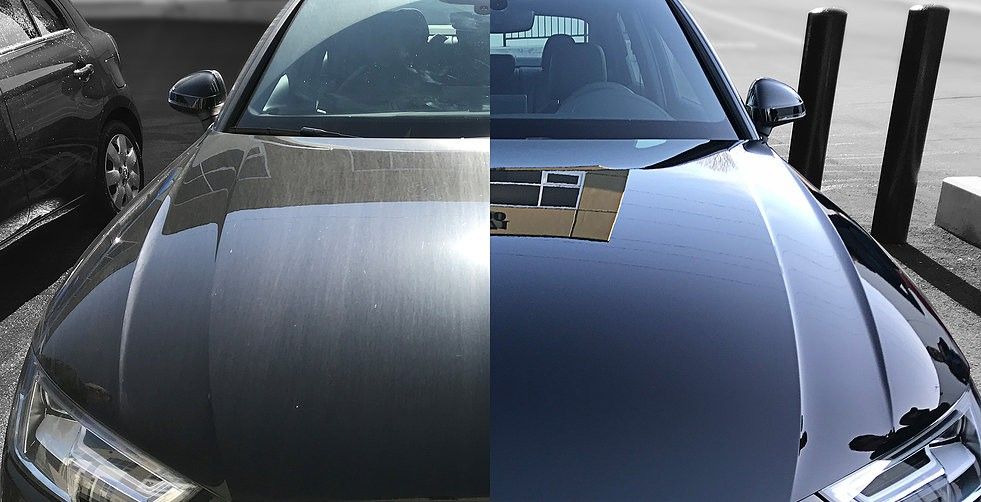
Yes, one of the most noticeable effects is usually an increase in visual gloss.
Because the coating creates a smooth surface, the paint can appear deeper, cleaner, and more reflective after application. However, the final appearance depends heavily on the condition of the paint underneath.
Ceramic coating does not hide serious scratches, oxidation, swirl marks, or paint defects.
If the paint already has significant imperfections, those defects may still be visible after coating.
Is Paint Correction Necessary Before Ceramic Coating?
Not always, but proper preparation is extremely important.
If a relatively new vehicle has clean and well-maintained paint, extensive polishing may not be necessary. However, many vehicles have washing marks, light scratches, oxidation, or other surface imperfections.
Before applying ceramic coating, professional detailers may perform:
-
Thorough washing
-
Iron contamination removal
-
Tar removal
-
Clay treatment when necessary
-
Paint inspection
-
Machine polishing or paint correction
-
Surface degreasing and preparation
The purpose of these steps is not only to make the vehicle look better. The coating also needs a properly prepared surface to bond effectively.
Applying a coating over contamination, wax, grease, or poorly prepared paint can negatively affect the result.
How Is Ceramic Coating Applied?
The application process is more demanding than simply spreading a product over the paint.
First, the vehicle is thoroughly washed and dried. Road grime, iron particles, tar, and other contaminants are removed from the paint.
The paint is then inspected under suitable lighting. If necessary, polishing is performed to remove or reduce surface defects.
After polishing, the surface must be properly prepared. Oils and polishing residues are removed with an appropriate panel-preparation product.
The ceramic coating is then applied to small sections of the vehicle. After a certain period, depending on the product, the excess coating is carefully leveled and wiped.
The vehicle must then remain undisturbed during the curing period recommended by the manufacturer.
Curing requirements vary considerably between products. Some coatings require protection from water for a specific period, while others may require additional curing conditions.
Can Ceramic Coating Be Applied to Glass and Wheels?
Yes, but the coating should be designed for the specific surface.
There are products specifically developed for:
-
Automotive paint
-
Exterior glass
-
Wheels
-
Plastic trim
-
Leather and interior surfaces
A paint coating should not automatically be assumed to be suitable for every material on the vehicle.
Wheel coatings, for example, are often designed to tolerate higher temperatures and brake dust. Glass coatings are formulated differently to provide hydrophobic behavior without negatively affecting visibility.
Using the correct product for the correct surface is important.
How Long Does Ceramic Coating Last?
There is no single lifespan that applies to every ceramic coating.
Durability depends on:
-
Product quality
-
Number of coating layers
-
Surface preparation
-
Application quality
-
Curing conditions
-
Washing methods
-
Chemical exposure
-
Environmental conditions
-
Frequency of use
Some consumer coatings may last significantly less than professional-grade coatings, while high-quality professional systems can remain effective for several years when properly maintained.
However, manufacturers' claimed durability should not be interpreted as a guarantee that the coating will provide identical protection throughout that entire period.
Does Ceramic Coating Require Special Maintenance?
Ceramic coating still needs regular maintenance.
The hydrophobic effect does not mean that the vehicle can simply be left dirty indefinitely. Contaminants should still be removed regularly.
A good maintenance routine usually includes:
-
Regular washing
-
Proper automotive shampoo
-
Clean microfiber wash equipment
-
Avoiding aggressive brushes
-
Avoiding automatic car washes with abrasive equipment
-
Removing bird droppings and tree sap quickly
-
Periodic inspection of the coating
Improper washing can create swirl marks even on a ceramic-coated vehicle.
The coating protects the surface, but it does not eliminate the need for careful washing.
Does Ceramic Coating Eliminate the Need for Wax?
In most cases, a properly functioning ceramic coating reduces or eliminates the need for conventional wax.
Ceramic coatings are designed to provide longer-lasting surface protection and hydrophobic properties than traditional waxes.
However, some coating manufacturers recommend specific maintenance products or ceramic-safe toppers. These products can be used to maintain the coating's hydrophobic behavior and appearance.
It is better to follow the maintenance recommendations of the coating manufacturer rather than applying random products over the coating.
Is Ceramic Coating Worth It?
For many car owners, ceramic coating can be worthwhile, especially if the vehicle is relatively new or the owner wants to maintain the paint's appearance for a long time.
It can be particularly useful for people who:
-
Wash their vehicle regularly
-
Want a high-gloss appearance
-
Drive frequently in dirty or dusty conditions
-
Want easier maintenance
-
Want additional resistance against environmental contaminants
-
Plan to keep the vehicle for several years
However, ceramic coating may not be the best choice for someone expecting complete protection from scratches, stone chips, or physical impacts.
What Matters Most During Ceramic Coating Application?
The quality of the preparation and application is at least as important as the coating itself.
A high-quality ceramic coating applied over poorly prepared paint may produce a disappointing result. Conversely, a properly prepared surface combined with a suitable coating can provide a significant improvement in appearance, water behavior, and ease of maintenance.
Ceramic coating is therefore best viewed as a paint protection and surface-maintenance solution, not as an invisible armor that makes the vehicle completely resistant to damage.