TR
TR EN
EN

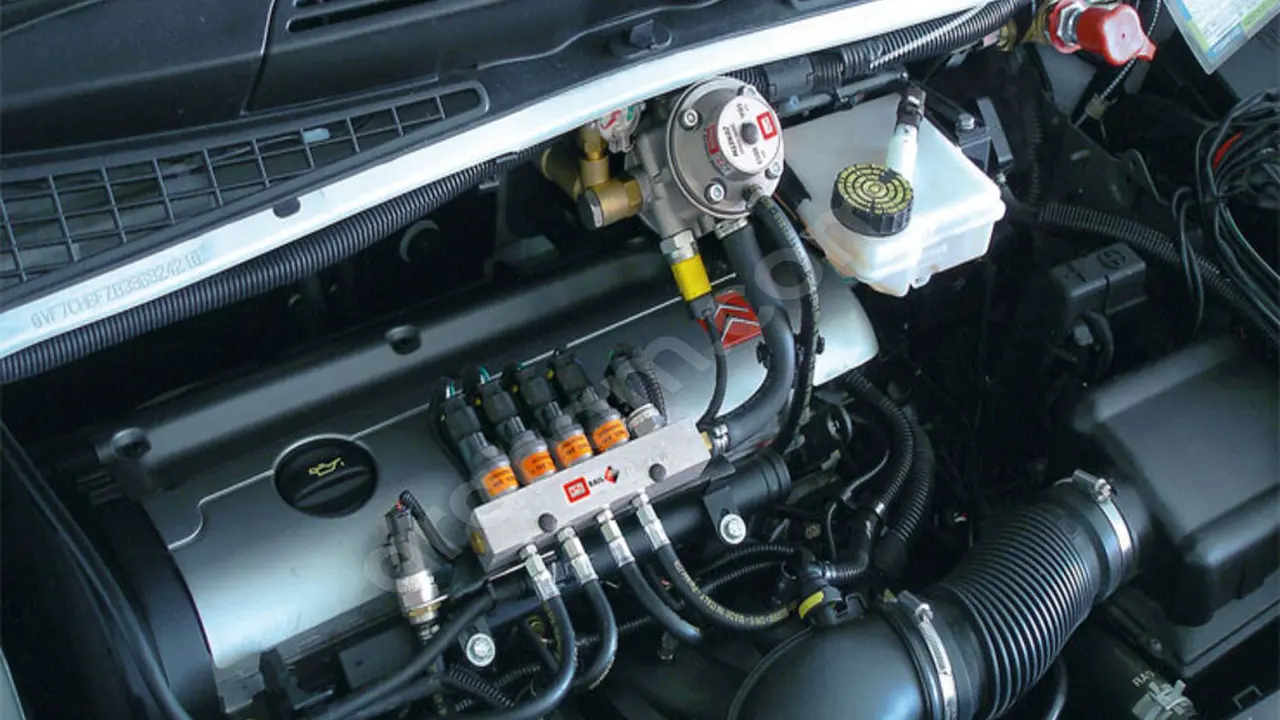
What Is a Sequential LPG System?
A sequential LPG system is an LPG conversion system designed primarily for gasoline engines with electronic fuel injection. It allows the engine to run on LPG while closely following the operating strategy of the original gasoline injection system.
The term “sequential” refers to the way LPG injectors operate. Instead of supplying LPG to all cylinders from a common point, the system uses individual LPG injectors to deliver fuel to each cylinder according to the engine's firing and injection sequence.
Compared with older mixer-type LPG systems, sequential systems can control the amount of fuel delivered to each cylinder much more precisely. This makes them particularly suitable for modern electronically controlled gasoline engines.
How Does a Sequential LPG System Work?
A sequential LPG system generally starts the engine on gasoline. Once the engine and LPG system reach the required operating conditions, the system switches to LPG.
The LPG ECU continuously evaluates information from the vehicle's original engine management system and various sensors.
Depending on the system and vehicle, this information may include:
-
Engine RPM
-
Engine coolant temperature
-
Throttle position
-
Gasoline injector pulse width
-
Oxygen sensor information
-
Manifold pressure
-
LPG pressure
-
LPG temperature
The LPG ECU uses this information to calculate how much LPG should be injected into each cylinder.
Instead of using a fixed fuel quantity, the system constantly adjusts LPG injection according to engine speed, load, temperature, and other operating conditions.
What Are the Main Components of a Sequential LPG System?
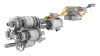
A sequential LPG system consists of several mechanical and electronic components working together.
LPG tank
The tank stores LPG in liquid form. Its capacity and shape depend on the vehicle and the available installation space.
Multivalve
The multivalve is mounted on the LPG tank and performs several important functions related to LPG filling, fuel outlet, level information, and safety.
Filling connection
This is the connection used to fill the vehicle's LPG tank.
LPG line
The LPG line carries fuel from the tank toward the engine compartment.
Reducer/regulator
The regulator reduces the high pressure of LPG coming from the tank and converts the fuel into a controlled gas pressure suitable for the engine.
It also uses engine coolant heat to help vaporize the LPG.
LPG filters
Filters help prevent dirt, oil residues, and other contaminants from reaching the LPG injectors. Depending on the system, separate liquid-phase and gas-phase filtration may be used.
LPG injectors
The LPG injectors deliver gaseous LPG into the intake ports or intake runners of the individual cylinders.
LPG ECU
The LPG ECU is the electronic control unit of the LPG system. It processes information from the gasoline ECU and various sensors and controls the LPG injectors.
Pressure and temperature sensors
These sensors monitor LPG pressure and temperature and provide the LPG ECU with information needed to calculate the correct injection quantity.
Why Is It Called a “Sequential” LPG System?
The most important characteristic of a sequential system is that LPG is injected into the cylinders individually and according to the engine's operating sequence.
For example, in a four-cylinder engine, the gasoline injectors operate according to a specific sequence. The LPG ECU follows the same basic strategy when controlling the LPG injectors.
This is different from older mixer systems, where LPG is introduced at a common point in the intake system.
Because each cylinder can receive fuel separately, sequential systems can provide much more precise fuel metering.
What Is the Difference Between Sequential and Mixer-Type LPG Systems?
Mixer-type LPG systems were widely used on older carbureted engines and vehicles with simpler fuel-control systems.
In a mixer system, LPG is introduced at a common point in the intake system and mixed with incoming air.
In a sequential system, individual LPG injectors are used to supply fuel to each cylinder.
This difference can have a noticeable effect on driving characteristics.
Sequential LPG systems generally offer:
-
More precise fuel control
-
Smoother idle operation
-
Better throttle response
-
Smoother switching between gasoline and LPG
-
Better control of emissions
-
Better compatibility with modern gasoline engines
For this reason, sequential systems have become much more common on electronically fuel-injected vehicles.
Can a Sequential LPG System Be Installed on Every Gasoline Engine?
No.
The fact that a system is described as “sequential” does not automatically mean it is compatible with every gasoline engine.
The engine's fuel injection technology is particularly important.
Many conventional multi-point fuel-injected gasoline engines can be converted to sequential LPG with a properly selected kit and correct calibration.
Direct-injection engines are different.
Engines using technologies such as FSI, GDI, TSI, and TFSI require LPG systems specifically designed for direct injection.
A conventional sequential LPG kit should not simply be installed on such an engine without checking compatibility.
The engine code, gasoline ECU, injector configuration, fuel pressure, and LPG system must all be evaluated.
Why Does a Sequential LPG Vehicle Start on Gasoline?
Most sequential LPG systems start the engine on gasoline.
The main reason is that gasoline is better suited to cold-start conditions, while the LPG system needs to reach its required operating temperature before switching.
Once the engine and LPG regulator reach the programmed conditions, the system can automatically switch to LPG.
The switching temperature and other parameters can be configured through the LPG ECU.
Therefore, switching to LPG after a few seconds or a few minutes can be completely normal. The exact timing depends on coolant temperature, outside temperature, engine conditions, and system calibration.
Does a Sequential LPG System Use the Gasoline Injectors?
In a conventional gaseous sequential LPG system, LPG is delivered to the engine through dedicated LPG injectors.
The gasoline injectors remain part of the original engine management system and their operation provides important information for the LPG control strategy.
The LPG ECU can monitor gasoline injector pulse widths and use this information to determine how much LPG the engine needs.
Some specialized systems operate differently, particularly systems designed for direct-injection engines. Their control strategies can be significantly more complex.
Does Sequential LPG Reduce Fuel Costs?
One of the main reasons drivers choose LPG is the potential reduction in fuel cost.
Because LPG is generally cheaper per liter than gasoline, the cost per kilometer can be lower when the vehicle is properly converted and calibrated.
However, LPG consumption in liters is not normally identical to gasoline consumption.
LPG has a different energy density from gasoline, so the same engine may consume more liters of LPG than gasoline under comparable conditions.
For this reason, it is more useful to compare cost per 100 kilometers rather than simply comparing liters per 100 kilometers.
Fuel consumption also depends heavily on LPG calibration, engine condition, driving style, traffic, and road conditions.
Does Sequential LPG Cause Power Loss?
A properly selected and correctly calibrated sequential LPG system can keep performance loss relatively small.
However, it would not be accurate to claim that there is never any difference between gasoline and LPG operation.
Performance can be affected by factors such as:
-
LPG injector capacity
-
Regulator capacity
-
LPG pressure
-
Fuel temperature
-
Air-fuel ratio
-
Ignition system
-
ECU calibration
-
Engine condition
If the LPG system does not have sufficient capacity, problems may become more noticeable at high RPM and high engine load.
For this reason, choosing the correct LPG components is particularly important for powerful and turbocharged engines.
Can Sequential LPG Be Installed on a Turbocharged Engine?
Yes, provided that the LPG system is properly matched to the engine.
Turbocharged engines can place greater demands on the fuel system because the turbocharger supplies additional air to the engine.
As boost pressure and engine load increase, the engine requires more fuel.
The LPG regulator and injectors must therefore have sufficient capacity to meet the engine's maximum fuel demand.
If the system is undersized, LPG pressure can drop under heavy load or the system may struggle to maintain the required air-fuel ratio.
For this reason, simply choosing an LPG kit based on engine displacement is not enough. Engine power, fuel demand, turbocharging characteristics, injector capacity, and regulator capacity should all be considered.
Can Sequential LPG Cause Valve Damage?
The effect of LPG on valves and valve seats depends largely on the engine design and operating conditions.
Some engines are more sensitive to valve-seat wear when operated on LPG, while others can run on LPG for many years without significant valve-related problems.
Factors that can influence valve and valve-seat wear include:
-
Valve and valve-seat material
-
Engine operating temperature
-
Engine load
-
High-RPM operation
-
LPG calibration
-
Air-fuel mixture
-
Engine design
For this reason, it is not correct to say that every LPG vehicle automatically needs a valve lubrication or valve protection system.
However, additional valve protection may be recommended for certain engines that are known to be more sensitive to valve-seat recession.
Does a Sequential LPG System Require Maintenance?
Yes.
An LPG system requires regular inspection and maintenance just like other fuel-system components.
Important components to check include:
-
LPG filters
-
Regulator
-
LPG injectors
-
LPG pressure
-
Fuel connections and leaks
-
Hoses and fittings
-
Electrical connections
-
LPG ECU calibration
-
Engine ignition system
If LPG filters are not replaced when necessary, the injectors can become contaminated and fuel delivery can become unstable.
The regulator can also change in performance over time. As internal components such as diaphragms age, LPG pressure may become unstable.
What Are the Symptoms of a Sequential LPG System Problem?
Problems with a sequential LPG system can appear in several different ways.
Common symptoms include:
-
Rough idle on LPG
-
Poor throttle response
-
Hesitation during acceleration
-
Misfire under load
-
Switching from LPG back to gasoline
-
Difficulty switching to LPG
-
Increased LPG consumption
-
Check Engine Light
-
LPG pressure-related faults
-
Injector-related misfires
-
Loss of power at high RPM
-
Poor operation when the engine is hot or cold
However, these symptoms do not automatically mean that the LPG system itself is defective.
For example, worn spark plugs, weak ignition coils, vacuum leaks, MAF or MAP sensor problems, oxygen sensor issues, gasoline fuel-system problems, or mechanical engine problems can become more noticeable when the engine is running on LPG.
Therefore, replacing LPG injectors immediately is not always the correct diagnostic approach.
Why Is LPG Calibration Important?
A good LPG system is not defined only by the quality of its components. Calibration is equally important.
The LPG ECU must be calibrated according to the engine's actual operating characteristics.
Incorrect calibration can cause:
-
Lean air-fuel mixture
-
Rich air-fuel mixture
-
Increased fuel consumption
-
Reduced performance
-
Misfires
-
Check Engine Light
-
Increased thermal stress under certain operating conditions
For this reason, simply checking whether the engine runs smoothly at idle is not enough after an LPG conversion.
The system should also be evaluated under different RPM and load conditions.
What Are the Advantages of a Sequential LPG System?
The main advantage of a sequential LPG system is its ability to control fuel delivery in a way that closely follows the operating strategy of a modern gasoline engine.
Important advantages include:
-
More precise fuel metering
-
Individual cylinder fuel delivery
-
Smoother engine operation
-
Smoother gasoline-to-LPG transition
-
Better compatibility with modern electronic fuel injection
-
Potentially lower fuel costs
-
Good drivability when correctly calibrated
-
Suitable system options for many turbocharged engines
However, these benefits depend heavily on proper component selection, installation, and calibration.
Are There Any Disadvantages to Sequential LPG?
Yes.
Sequential systems are more advanced than simple mixer systems and contain more mechanical and electronic components. As a result, installation and maintenance can be more expensive.
Diagnosis can also be more complicated because several different problems can produce similar symptoms.
For example, unstable LPG pressure, a defective injector, a sensor problem, poor wiring, or incorrect ECU calibration can all cause hesitation or misfire.
For this reason, proper measurements and diagnostic testing are generally more useful than replacing parts based only on symptoms.
What Should You Consider When Choosing a Sequential LPG System?
The LPG kit should not be selected based only on brand or price.
The most important consideration is compatibility with the engine.
Important points include:
Engine compatibility: The kit should be compatible with the engine code and injection system.
Injector capacity: LPG injectors must be capable of supplying enough fuel at maximum engine load.
Regulator capacity: The regulator must be capable of maintaining stable LPG pressure under the engine's maximum fuel demand.
Installation quality: Injector placement, hose length, vacuum connections, wiring, and fuel lines should be installed correctly.
Calibration: Proper software calibration is just as important as the hardware.
Service support: Replacement parts, maintenance, diagnostics, and technical support should be available.
A reasonably priced LPG kit installed and calibrated by a skilled technician can perform better than an expensive system that has been poorly installed.
Is Sequential LPG the Same as Direct-Injection LPG?
No.
These systems can have significantly different operating strategies.
Conventional sequential LPG systems are generally used with port fuel-injected gasoline engines, where fuel is injected into the intake port.
Direct-injection engines such as FSI, GDI, TSI, and TFSI require LPG systems specifically developed for direct-injection technology.
In these engines, the gasoline injectors, fuel pressure, ECU strategy, and injection timing are different from those of conventional port-injected engines.
Therefore, a standard sequential LPG kit should not automatically be considered suitable for a direct-injection engine.
The engine code and injection technology should be checked before selecting an LPG system.
A sequential LPG system can be an effective way to reduce fuel costs on a compatible gasoline vehicle, but the quality of the conversion depends on much more than the brand of the LPG kit. Injector and regulator capacity, installation quality, engine condition, and especially correct calibration all have a major influence on how well the system performs.