TR
TR EN
EN

What Is an Oxygen Sensor? What Are the Symptoms of Oxygen Sensor Failure?
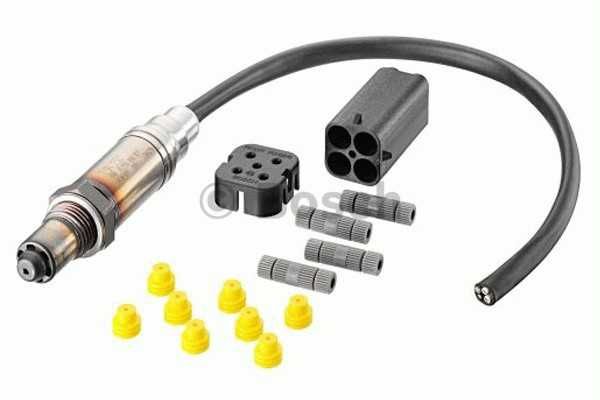
An oxygen sensor is an important component of a modern engine management system. It measures the amount of oxygen present in the exhaust gases and sends this information to the engine control unit (ECU).
The ECU uses this information to determine whether the air-fuel mixture is too rich or too lean and adjusts fuel injection accordingly.
Because of this, an oxygen sensor problem can affect much more than emissions. Depending on the type and location of the sensor, a failure can contribute to increased fuel consumption, poor engine performance, unstable idle, higher emissions, and even catalytic converter damage.
How Does an Oxygen Sensor Work?

During combustion, the amount of oxygen remaining in the exhaust provides valuable information about how the engine is operating.
If the mixture is too rich, meaning there is more fuel than required for the available air, the amount of oxygen remaining in the exhaust is generally low.
If the mixture is too lean, meaning there is too much air compared with the amount of fuel, more oxygen may remain in the exhaust.
The oxygen sensor detects these changes and sends an electrical signal to the ECU.
The ECU then compares this information with data from other sensors and adjusts fuel injection to maintain the desired air-fuel ratio.
Where Is the Oxygen Sensor Located?
Oxygen sensors are installed in the exhaust system.
Depending on the engine and exhaust design, they may be located:
-
In or near the exhaust manifold
-
Between the exhaust manifold and catalytic converter
-
Before the catalytic converter
-
After the catalytic converter
Modern vehicles commonly have more than one oxygen sensor.
The sensor located before the catalytic converter generally plays an important role in air-fuel mixture control.
The sensor located after the catalytic converter is commonly used to monitor catalytic converter performance.
Therefore, not every oxygen sensor on a vehicle has exactly the same function.
Are Oxygen Sensors and Lambda Sensors the Same Thing?
In everyday automotive terminology, the terms oxygen sensor and lambda sensor are often used for the same component.
Lambda describes how closely the air-fuel mixture is operating relative to the theoretically ideal mixture.
Generally:
-
Lambda 1: Approximately stoichiometric mixture
-
Lambda below 1: Rich mixture
-
Lambda above 1: Lean mixture
The exact signal characteristics depend on the type of sensor being used.
Narrowband and Wideband Oxygen Sensors
Not all oxygen sensors operate in the same way.
Narrowband oxygen sensors
Traditional oxygen sensors are generally narrowband sensors. They are mainly designed to indicate whether the air-fuel mixture is on the rich or lean side of the target range.
Wideband oxygen sensors
Wideband sensors are more sophisticated and can provide much more detailed information about the air-fuel mixture over a wider operating range.
They are commonly used in engines where more precise fuel control is required.
For this reason, there is no universal rule such as "an oxygen sensor should always produce this exact voltage." The correct diagnostic method depends on the sensor technology and the vehicle's engine management system.
What Are the Symptoms of a Bad Oxygen Sensor?
The symptoms of oxygen sensor failure can vary considerably from one vehicle to another.
The result depends on the sensor's location, the type of sensor, the engine management strategy, and how the ECU responds when the sensor signal becomes unreliable.
Common symptoms include the following.
Check Engine Light
One of the most common signs is the illumination of the Check Engine Light.
The ECU continuously monitors oxygen sensor signals and their electrical circuits. If the signal is outside the expected range, responds too slowly, becomes inactive, or the heater circuit develops a problem, the ECU may store a diagnostic trouble code.
However, a fault code related to an oxygen sensor does not automatically mean that the sensor itself is defective.
Possible causes can include:
-
Damaged wiring
-
Corroded connectors
-
Exhaust leaks
-
Vacuum leaks
-
Fuel system problems
-
MAF or MAP sensor problems
-
Injector problems
-
Ignition problems
-
A defective oxygen sensor
Proper diagnosis is therefore important before replacing the component.
Increased Fuel Consumption
A faulty oxygen sensor can cause incorrect fuel corrections.
If the ECU receives inaccurate information about the exhaust oxygen level, it may not be able to maintain the desired air-fuel mixture properly.
In some cases, this can result in excessive fuel consumption.
However, increased fuel consumption alone is not proof of an oxygen sensor failure.
Problems with fuel pressure, injectors, spark plugs, ignition coils, the thermostat, air intake system, tire pressure, brakes, or driving conditions can also increase fuel consumption.
Rough or Unstable Idle
An incorrect air-fuel mixture can affect the way the engine operates at idle.
Possible symptoms include:
-
Fluctuating idle speed
-
Engine vibration
-
Rough idle
-
Occasional hesitation
-
Unstable engine speed
However, many other problems can produce the same symptoms, so the oxygen sensor should not automatically be blamed.
Poor Acceleration
If fuel control is affected, the engine may feel less responsive.
The driver may notice:
-
Slower throttle response
-
Hesitation during acceleration
-
Reduced low- or mid-range performance
-
An engine that feels less responsive than normal
The severity depends on the nature of the fault and the ECU's strategy for dealing with the failed sensor.
Engine Misfire or Hesitation
Incorrect fuel correction can contribute to unstable combustion.
The engine may hesitate, stumble, or appear to misfire.
However, an important distinction must be made here.
An oxygen sensor is not the most direct cause of every misfire. Spark plugs, ignition coils, injectors, fuel pressure, compression, intake leaks, and other engine problems can produce similar symptoms.
Therefore, replacing an oxygen sensor simply because the engine is misfiring is not a reliable diagnostic method.
Increased Exhaust Emissions
One of the primary reasons oxygen sensors are used is to help the ECU control combustion and emissions.
If the air-fuel mixture is not controlled correctly, emissions can increase.
A vehicle that suddenly fails an emissions test may therefore require inspection of the oxygen sensor system as well as the entire fuel and air management system.
Unusual Exhaust Odor
A rich mixture can cause a noticeable fuel-like odor from the exhaust.
This can happen when the engine is receiving more fuel than necessary.
However, this symptom does not automatically identify the oxygen sensor as the cause.
A leaking or malfunctioning injector, excessive fuel pressure, or another fuel-system problem can produce similar symptoms.
Catalytic Converter Damage
The oxygen sensor and catalytic converter are closely related.
If the engine continuously operates with an excessively rich mixture, unburned fuel can enter the exhaust system.
This can increase catalytic converter temperature and potentially damage the catalyst.
For this reason, ignoring an oxygen sensor-related problem for a long period can sometimes turn a relatively manageable engine-control problem into a much more expensive exhaust-system repair.
Does an Oxygen Sensor Failure Always Increase Fuel Consumption?
No.
This is an important point.
Modern ECUs are designed to detect sensor problems and can use backup strategies when a sensor becomes unreliable.
Depending on the failure, the vehicle may:
-
Increase fuel consumption noticeably
-
Show only a Check Engine Light
-
Have minor drivability symptoms
-
Enter a fail-safe or fallback strategy
-
Continue to drive almost normally
The exact behavior depends on the sensor, the engine management system, and the type of failure.
Why Do Oxygen Sensors Fail?
Oxygen sensors operate in a very demanding environment.
They are exposed to high exhaust temperatures, combustion by-products, and continuous thermal cycling.
Common causes of failure include:
-
Normal aging
-
Excessive exhaust temperature
-
Oil contamination
-
Coolant contamination
-
Long-term rich operation
-
Certain chemical contaminants
-
Exhaust leaks
-
Damaged wiring
-
Corroded connectors
-
Oxygen sensor heater failure
If an engine is burning oil or coolant is entering the combustion chamber, installing a new oxygen sensor without fixing the underlying engine problem may result in another sensor failure.
What Is the Oxygen Sensor Heater?
Many modern oxygen sensors contain an integrated electrical heating element.
The heater allows the sensor to reach its operating temperature more quickly after the engine starts.
This is important because the ECU needs reliable oxygen sensor information as soon as possible.
A problem with the heater circuit can be caused by:
-
A blown fuse
-
Damaged wiring
-
A poor electrical connection
-
A defective heating element
-
A power supply problem
-
An ECU control problem
Therefore, the sensor's sensing element may still be functional even though the oxygen sensor system has a heater-related fault.
Common Oxygen Sensor OBD-II Trouble Codes
Many OBD-II codes are associated with oxygen sensors.
Examples include:
-
P0130: O2 Sensor Circuit Malfunction
-
P0131: O2 Sensor Circuit Low Voltage
-
P0132: O2 Sensor Circuit High Voltage
-
P0133: O2 Sensor Circuit Slow Response
-
P0134: O2 Sensor Circuit No Activity Detected
-
P0135: O2 Sensor Heater Circuit Malfunction
There are many other oxygen sensor-related codes covering different sensor banks, sensor positions, heater circuits, response times, and signal conditions.
The important point is that an OBD-II code identifies a monitored condition or circuit. It does not necessarily identify the physical component that must be replaced.
For example, an "O2 Sensor Circuit Low Voltage" code does not automatically prove that the oxygen sensor itself is defective.
The cause could be the sensor, wiring, connector, exhaust leak, air-fuel mixture, or another engine-management problem.
How Is an Oxygen Sensor Tested?
One of the most useful diagnostic tools is an OBD scanner capable of displaying live data.
The engine should normally be at operating temperature when the sensor is evaluated.
The technician can examine:
-
Oxygen sensor signal behavior
-
Sensor response
-
Fuel trims
-
Engine coolant temperature
-
MAF/MAP data
-
Lambda or air-fuel ratio information
-
Other related sensor readings
The exact interpretation depends on whether the vehicle uses a narrowband or wideband sensor.
For this reason, simply checking whether an oxygen sensor produces a particular voltage is not an appropriate universal test method.
What Are STFT and LTFT?
Fuel trim data can be particularly useful when diagnosing an oxygen sensor-related problem.
STFT, or Short-Term Fuel Trim, represents the ECU's short-term adjustment to fuel delivery.
LTFT, or Long-Term Fuel Trim, represents longer-term correction learned by the ECU.
If fuel trims are significantly positive, the ECU may be adding fuel because it detects or calculates a lean condition.
If fuel trims are significantly negative, the ECU may be removing fuel because it detects or calculates a rich condition.
However, abnormal fuel trims do not automatically mean the oxygen sensor is faulty.
They can also be caused by:
-
Vacuum leaks
-
Intake leaks
-
Incorrect MAF readings
-
Low fuel pressure
-
Excessive fuel pressure
-
Injector problems
-
Exhaust leaks
-
Engine mechanical problems
Fuel trims should therefore be interpreted together with the rest of the live data.
Why Can an Exhaust Leak Cause an Oxygen Sensor Problem?
This is one of the most commonly overlooked issues.
If there is an exhaust leak before the oxygen sensor, outside air can enter the exhaust stream.
The sensor may then detect additional oxygen and report conditions that appear leaner than they really are.
The ECU may respond by adding fuel.
This means the oxygen sensor itself can be perfectly functional while the system still produces an oxygen-sensor-related problem.
This is why checking the exhaust system is an important part of diagnosis.
Can an Oxygen Sensor Be Cleaned?
Some vehicle owners attempt to clean oxygen sensors in an effort to restore their operation.
However, oxygen sensors contain sensitive measuring elements, and contamination or internal deterioration cannot always be reversed by cleaning.
If the sensing element or heater has been physically or chemically damaged, cleaning will not restore the sensor.
Using random chemicals or aggressive cleaning methods can also damage the sensor.
If a sensor is confirmed to be defective, replacement with the correct sensor is generally the appropriate solution.
When Should an Oxygen Sensor Be Replaced?
There is no single replacement mileage that applies to every vehicle.
Oxygen sensor service life depends on:
-
Engine design
-
Sensor technology
-
Operating temperature
-
Fuel quality
-
Oil consumption
-
Coolant contamination
-
Combustion condition
-
Exhaust temperature
-
Driving conditions
Some vehicles may operate for many years without an oxygen sensor problem, while others may experience premature failure because of an underlying engine or fuel-system issue.
The sensor should therefore be replaced when its failure has been properly confirmed or when the manufacturer's maintenance procedure specifically calls for replacement.
Oxygen Sensor vs. MAF and MAP Sensor
These sensors are sometimes confused because they all influence engine management.
The MAF sensor measures the amount of air entering the engine.
The MAP sensor measures intake manifold absolute pressure.
The oxygen sensor measures oxygen-related conditions in the exhaust after combustion.
In simple terms:
MAF/MAP = information about incoming air
Oxygen sensor = information about combustion/exhaust oxygen
The ECU combines these and other inputs to determine how the engine should be fueled.
A problem with one sensor can also affect the values reported by another sensor, which is another reason why replacing parts based only on one abnormal reading can lead to unnecessary repairs.
How Can You Tell if an Oxygen Sensor Is Actually Bad?
The most reliable diagnosis combines several pieces of information rather than relying on one symptom.
A proper diagnostic process can include:
-
Reading all stored and pending OBD-II codes
-
Checking live oxygen sensor data
-
Examining STFT and LTFT
-
Checking the sensor heater circuit
-
Inspecting wiring and connectors
-
Checking for exhaust leaks
-
Checking for intake or vacuum leaks
-
Evaluating MAF/MAP readings
-
Checking fuel pressure and injector operation
-
Checking ignition and engine condition
The goal is to determine whether the oxygen sensor is actually producing an incorrect signal or whether the sensor is correctly reporting a problem created elsewhere in the engine.
Why Oxygen Sensor Diagnosis Matters
The oxygen sensor may be a relatively small component, but it plays an important role in modern engine management.
A problem with the sensor or its circuit can contribute to poor fuel economy, unstable idle, hesitation, increased emissions, engine performance problems, and catalytic converter damage.
At the same time, an oxygen sensor-related fault code should never be treated as automatic proof that the sensor needs to be replaced.
The most reliable approach is to evaluate the sensor's live data together with fuel trims, wiring, heater operation, exhaust leaks, intake conditions, fuel delivery, and overall engine operation. This helps prevent unnecessary parts replacement and makes it much more likely that the actual cause of the problem will be found.