TR
TR EN
EN

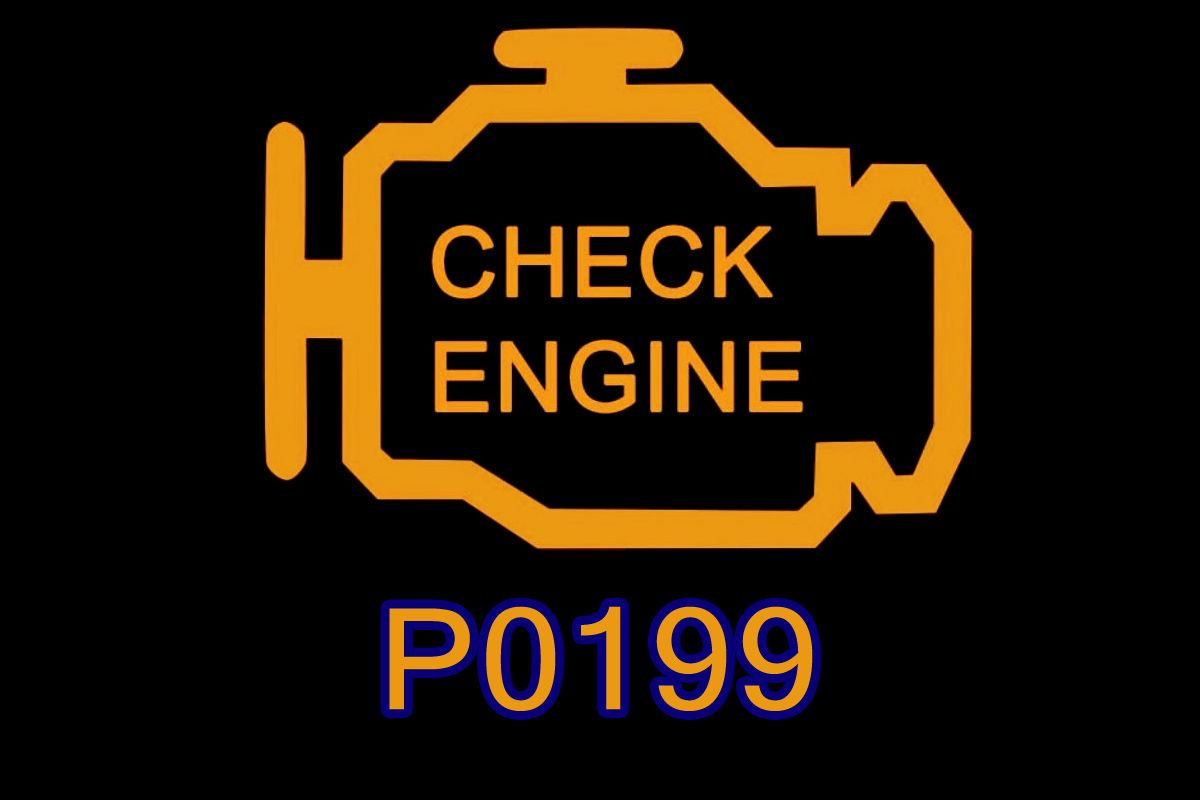
P0199 Engine Oil Temperature (EOT) Sensor "A" Circuit Intermittent / Erratic
P0199 is an OBD-II diagnostic trouble code that indicates the engine control module (ECM) has detected an intermittent or erratic signal from the Engine Oil Temperature (EOT) Sensor “A” circuit.
Unlike a simple high-input or low-input code, P0199 is primarily about signal consistency.
The ECM expects the oil temperature sensor to produce a smooth and believable temperature signal as engine conditions change. If the signal suddenly disappears, jumps to an unrealistic value, or fluctuates without a corresponding change in oil temperature, the ECM can store P0199.
This does not automatically mean the EOT sensor itself is defective.
The sensor, connector, wiring, reference circuit, sensor ground, or ECM can all potentially be involved.
What Is the Engine Oil Temperature Sensor?
The Engine Oil Temperature sensor measures the temperature of the engine oil and sends this information to the ECM.
The ECM can use oil temperature information for several purposes, depending on the engine design, including:
-
Fuel and ignition strategy
-
Cold-start control
-
Engine protection
-
Variable valve timing
-
Oil-pressure-related calculations
-
Thermal management
-
Emissions control
-
Cooling-fan strategy
-
Transmission or engine torque management on some applications
The exact role of the EOT sensor varies between manufacturers.
The sensor is commonly a thermistor, meaning its electrical resistance changes as temperature changes.
In many designs, the ECM supplies a reference voltage and monitors the voltage returning from the sensor.
What Does “Intermittent / Erratic” Mean?
This part of P0199 is particularly important.
The ECM is not simply saying:
“The oil temperature is too high.”
It is saying that the electrical signal from the sensor is not behaving consistently.
For example, imagine the engine oil is gradually warming from 70°C to 90°C.
The EOT signal should generally change progressively.
If the ECM suddenly sees a signal corresponding to an extremely cold oil temperature and then immediately jumps back to 90°C, the actual oil temperature obviously has not changed that quickly.
That type of electrical inconsistency can trigger P0199.
Common Symptoms of P0199
The symptoms can vary considerably because the fault may be intermittent.
Possible symptoms include:
-
Check Engine Light
-
Intermittent Check Engine Light
-
Irregular engine operation
-
Poor cold-start behavior
-
Reduced fuel economy
-
Hesitation
-
Reduced performance
-
Incorrect engine protection strategy
-
Variable valve timing problems on applicable engines
-
Cooling-system behavior that seems unusual
-
Limp mode in some vehicles
Sometimes the driver may notice almost nothing apart from the Check Engine Light.
That is because the ECM may temporarily substitute a calculated or default oil-temperature value when the sensor signal becomes unreliable.
Why an Intermittent EOT Signal Matters
Engine oil temperature changes relatively slowly compared with many other engine parameters.
That makes the signal particularly useful for plausibility checks.
If the ECM sees:
80°C → 82°C → 84°C → 150°C → 83°C
within a very short period, the 150°C reading may not represent the actual oil temperature.
The engine oil cannot normally change temperature that dramatically in a fraction of a second.
The ECM therefore has reason to suspect an electrical or sensor problem.
Common Causes of P0199
Several problems can create an intermittent EOT sensor signal.
Faulty EOT sensor
The sensor itself can develop an internal intermittent fault.
Its resistance may suddenly change even though the oil temperature remains stable.
Loose connector
A connector that is not fully secured can briefly interrupt the sensor circuit as the engine vibrates.
Corroded terminals
Moisture and contamination can increase electrical resistance and cause an unstable signal.
Damaged wiring
The EOT wiring may be exposed to:
-
Engine heat
-
Oil contamination
-
Vibration
-
Chafing
-
Previous repairs
-
Harness movement
A wire that is partially broken can behave normally most of the time and then open momentarily.
Poor sensor ground
If the sensor uses a dedicated or shared ground/reference circuit, a poor connection can cause the signal to fluctuate.
Reference-voltage problem
Problems affecting the sensor's reference voltage can produce abnormal readings.
If several sensors show strange behavior at the same time, investigate the shared reference circuit.
ECM problem
An ECM input circuit fault is possible, but it is generally much less common than a sensor, connector, or wiring problem.
Where Is the EOT Sensor?
The location varies significantly by engine.
The sensor may be installed:
-
In the engine block
-
In an oil passage
-
Near the oil filter housing
-
In the oil pan
-
In another location where it can accurately measure engine oil temperature
Some engines may integrate the sensor into another component or use a combined sensor assembly.
Because the location is application-specific, the manufacturer's service information should be used to identify the correct sensor.
Start With the Scan Tool
Before replacing the sensor, scan the vehicle and record all codes.
Look for additional faults involving:
-
Engine coolant temperature
-
Intake air temperature
-
Fuel temperature
-
Oil pressure
-
Reference voltage
-
Sensor circuits
-
ECM power supply
-
Low system voltage
Multiple sensor codes can point toward a common electrical problem.
For example, if several sensors supplied by the same reference circuit are producing intermittent faults, replacing only the EOT sensor may not solve the problem.
Look at Live EOT Data
Live data is one of the most useful tools for diagnosing P0199.
With the engine cold, compare the EOT reading with other temperature sensors, such as:
-
Engine coolant temperature
-
Intake air temperature
After the vehicle has been sitting overnight, these temperatures should generally be reasonably close to one another because the engine compartment has had time to approach ambient temperature.
A major discrepancy can indicate a sensor or circuit problem.
Watch the Signal While the Engine Warms Up
The EOT reading should generally change progressively as the oil warms.
It should not randomly jump between implausible temperatures.
For example, a pattern such as:
45°C → 48°C → 51°C → 49°C → 120°C → 52°C
would be suspicious.
The oil did not realistically heat to 120°C and immediately return to 52°C.
An erratic live-data signal like this strongly suggests an electrical or sensor problem.
Check the Connector Before Replacing the Sensor
The connector should be inspected carefully.
Look for:
-
Corrosion
-
Oil contamination
-
Water intrusion
-
Loose terminals
-
Bent terminals
-
Damaged seals
-
Broken locking mechanisms
-
Wiring damage immediately behind the connector
An intermittent connector can be particularly difficult to diagnose because the vehicle may operate normally most of the time.
Perform a Wiggle Test
Because P0199 specifically describes an intermittent or erratic signal, a harness movement test can be extremely useful.
With the appropriate live data being monitored, carefully move the EOT sensor wiring and connector.
If the temperature reading suddenly changes while the harness is moved, there is strong evidence of an electrical connection problem.
The wiring should receive particular attention near:
-
The sensor
-
Engine brackets
-
Oil-filter housing
-
Hot components
-
Harness retaining points
-
Areas where the engine harness moves
Test the Sensor's Resistance
If the EOT sensor is a thermistor, its resistance should change according to temperature.
The exact resistance values are manufacturer-specific.
Do not use a generic resistance chart as a definitive specification.
Instead, compare the measured resistance with the manufacturer's temperature/resistance data.
An intermittent sensor may require testing at different temperatures because it can behave correctly when cold and become unstable when hot.
A Cold Sensor Test Can Miss the Problem
This is an important point with P0199.
Imagine that the EOT sensor works perfectly at 20°C.
You test it in the workshop and everything appears normal.
After the engine reaches operating temperature, an internal connection expands and intermittently opens.
The ECM then sees an erratic oil-temperature signal.
A cold resistance test would not necessarily reveal the fault.
This is why intermittent temperature-sensor problems should be tested under realistic temperature conditions whenever possible.
Check the Reference and Signal Circuits
If the sensor itself appears normal, test the electrical circuit.
Depending on the design, this may involve checking:
-
Reference voltage
-
Sensor ground
-
Signal voltage
-
Wiring continuity
-
Voltage drop
-
Short to ground
-
Short to voltage
The exact test points depend on the vehicle's wiring diagram.
There is no single signal voltage that applies to every EOT sensor.
Look for a Shared Sensor Reference Problem
Modern engines can have multiple sensors supplied by a common reference-voltage circuit.
If the reference circuit is disturbed, several sensors can produce abnormal readings.
This is why a complete scan is so important.
If P0199 appears together with codes for other sensors using the same reference supply, investigate the shared circuit before replacing individual sensors.
Could Oil Level Cause P0199?
Low engine oil level is important to address, but it does not normally explain an electrical intermittent EOT sensor circuit fault by itself.
Check the oil level and condition because correct oil level is essential for engine operation and temperature control.
However, if the EOT signal itself is electrically unstable, the sensor circuit still needs to be tested.
Could Engine Oil Overheating Cause P0199?
Extremely high oil temperature can certainly produce unusual engine behavior, but P0199 specifically concerns the intermittent or erratic electrical signal from the EOT sensor.
If the oil temperature is genuinely high, other diagnostic information should normally support that condition.
If the scan data suddenly changes from a normal temperature to an implausible value and then immediately returns, the electrical signal is much more suspicious than actual oil temperature.
P0199 vs. Other EOT Sensor Codes
The different EOT-related codes can point toward different electrical conditions.
P0199 is specifically associated with an intermittent or erratic EOT sensor signal.
That means the diagnosis should focus heavily on:
-
Intermittent wiring
-
Connector problems
-
Sensor internal intermittency
-
Signal instability
-
Reference-voltage instability
-
Harness movement
-
Temperature-dependent electrical faults
The fault may disappear before the vehicle reaches the repair shop.
Can P0199 Affect Engine Performance?
It can.
The ECM may use oil temperature as part of several calculations.
If the signal becomes unreliable, the ECM may substitute a default value or modify certain control strategies.
Depending on the vehicle, this can influence:
-
Engine operation
-
Fuel strategy
-
Variable valve timing
-
Thermal management
-
Engine protection
Some vehicles may simply illuminate the Check Engine Light, while others may enter a reduced-performance strategy.
A Practical Diagnostic Example
Imagine a vehicle arrives with an intermittent P0199.
The EOT sensor is checked while the engine is cold and its resistance appears normal.
The connector also looks clean.
The vehicle is then started and monitored through the scan tool.
As the engine warms, the EOT reading rises normally.
After several minutes, the reading suddenly jumps from 78°C to an implausible temperature and immediately returns.
The technician gently moves the EOT harness.
The same jump occurs.
Closer inspection reveals that the wiring is rubbing against a metal bracket. Several conductor strands are damaged internally.
The sensor itself is good.
The intermittent P0199 was caused by the harness.
Another Possible Scenario
A different vehicle produces the same code, but the wiring remains stable during a wiggle test.
The sensor is then monitored while the engine reaches full operating temperature.
The signal becomes erratic only when the sensor becomes hot.
The sensor's resistance is measured at different temperatures and compared with the manufacturer's specifications.
The sensor's resistance suddenly changes abnormally at high temperature.
In this situation, replacing the EOT sensor would be the appropriate repair.
This demonstrates why testing is more important than guessing from the code.
Could the ECM Be Faulty?
Yes, but this should be considered only after the sensor and external circuit have been verified.
A faulty ECM input circuit could potentially interpret a correct EOT signal incorrectly.
Before blaming the ECM, confirm:
-
Sensor resistance
-
Reference voltage
-
Sensor ground
-
Signal integrity
-
Wiring condition
-
Connector condition
-
Voltage drop
-
ECM connector condition
An ECM replacement should not be the first response to P0199.
How Should P0199 Be Repaired?
The correct repair depends on the test results.
Possible repairs include:
-
Replacing the EOT sensor
-
Repairing damaged wiring
-
Replacing the sensor connector
-
Repairing loose terminals
-
Correcting a poor sensor ground
-
Repairing a reference-voltage problem
-
Repairing an ECM connector
-
Repairing or replacing the ECM if an internal input-circuit fault is confirmed
After the repair, clear the code and monitor the EOT signal through a complete warm-up cycle.
The signal should change smoothly and remain stable.
Final Diagnosis
P0199 – Engine Oil Temperature (EOT) Sensor “A” Circuit Intermittent / Erratic means the ECM has detected an unstable or inconsistent electrical signal from the engine oil temperature sensor circuit.
The sensor may be faulty, but the most important areas to investigate are:
-
EOT sensor
-
Sensor connector
-
Wiring harness
-
Reference voltage
-
Sensor ground
-
Signal circuit
-
ECM connector
-
ECM input circuit
Because P0199 specifically describes an intermittent/erratic condition, dynamic testing is especially valuable.
The most effective diagnostic approach is:
Scan all codes → check freeze-frame data → compare cold EOT data with other temperature sensors → monitor EOT during warm-up → inspect the connector → perform a wiggle test → test sensor resistance → verify reference and signal circuits → evaluate the ECM only after the external circuit is proven good.
The key lesson is simple:
P0199 is often a connection or wiring problem hiding behind a temperature-sensor code.
A sensor that works perfectly on the workbench can still produce P0199 if its connector or wiring intermittently loses electrical contact while the vehicle is being driven.