TR
TR EN
EN

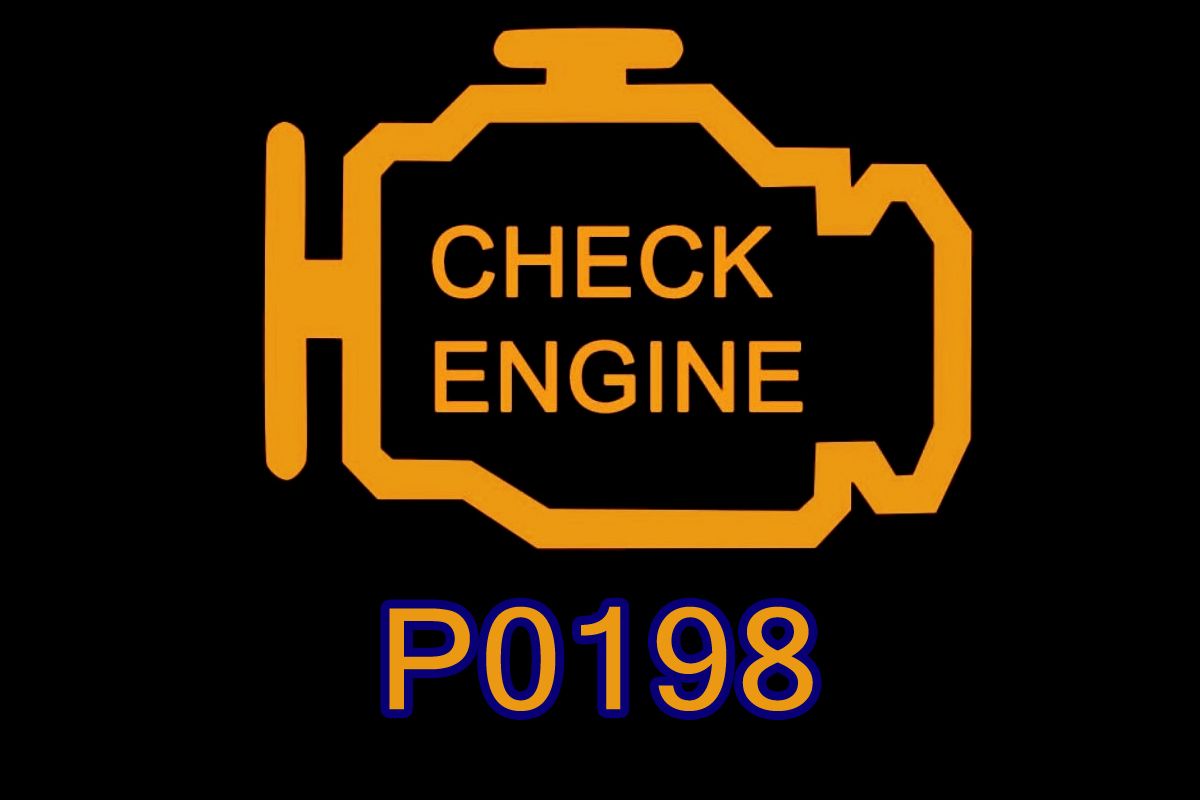
P0198 Engine Oil Temperature (EOT) Sensor "A" Circuit High Input
P0198 is an OBD-II diagnostic trouble code that indicates the engine control module (ECM/PCM) has detected an excessively high electrical input signal from the Engine Oil Temperature (EOT) Sensor “A” circuit.
The EOT sensor measures the temperature of the engine oil and sends that information to the ECM. The control module uses the oil-temperature signal to understand the engine's thermal condition and, depending on the vehicle, may use it for fuel control, ignition strategy, cooling-fan operation, emissions management, transmission-related calculations, or engine protection.
The important word in P0198 is “High Input.”
This does not necessarily mean that the engine oil itself is too hot.
It means the electrical signal coming from the EOT sensor circuit is higher than the ECM expects.
That distinction is extremely important when diagnosing this code.
What P0198 Actually Means
The EOT sensor is commonly a thermistor whose electrical resistance changes as engine oil temperature changes.
The ECM supplies a reference voltage to the sensor circuit and monitors the resulting signal voltage.
As the sensor resistance changes with temperature, the signal sent back to the ECM changes as well.
If the ECM sees a voltage that is abnormally high, it can interpret the condition as an EOT sensor circuit problem and store P0198.
A simplified representation is:
EOT sensor → temperature-dependent resistance → signal voltage → ECM
If the circuit becomes open or the sensor resistance becomes abnormally high, the signal voltage can rise toward the reference voltage.
That is one of the reasons an open circuit can produce a “High Input” code.
High Input Does Not Mean High Oil Temperature
This is one of the most common misunderstandings surrounding P0198.
P0198 does not directly mean:
“The engine oil is overheating.”
Instead, it means:
“The electrical signal from the EOT sensor circuit is higher than the expected range.”
Actual oil overheating can certainly be a separate problem, but P0198 itself is primarily an electrical signal diagnosis.
For example, a broken EOT sensor wire could cause the ECM to see a high signal even when the engine oil temperature is completely normal.
What Is the Engine Oil Temperature Sensor?
The Engine Oil Temperature sensor measures the temperature of the engine's lubricating oil.
Depending on the vehicle, the sensor may be installed:
-
In the engine block
-
In the oil pan
-
Near an oil passage
-
In an oil filter housing
-
In another location exposed to engine oil
Its exact location varies considerably between engines.
The sensor provides information that can help the ECM determine whether the engine oil is cold, warming up, or operating at high temperature.
Some vehicles use oil temperature information for sophisticated engine-management and protection strategies.
Common Causes of P0198
Several problems can produce an EOT sensor “A” circuit high-input condition.
Open circuit in the EOT wiring
This is one of the most important possibilities.
If the signal wire is broken or disconnected, the ECM may see a voltage close to its reference voltage.
The result can be P0198.
The break may occur:
-
Near the sensor
-
Inside the engine harness
-
At a connector
-
Near a wiring junction
-
Where the harness rubs against another component
Faulty EOT sensor
The sensor itself may develop an internal electrical failure.
Its resistance may no longer change correctly with temperature.
In some cases, the internal circuit can become effectively open.
Poor sensor connector
A loose or corroded connector can interrupt the sensor circuit.
Possible problems include:
-
Corrosion
-
Bent terminals
-
Loose terminals
-
Water intrusion
-
Oil contamination
-
Damaged connector housing
-
Poor terminal tension
Signal wire disconnected
A disconnected signal wire can cause the ECM to see an abnormally high voltage.
This can happen after previous engine work if the harness has been disturbed.
Reference-voltage problem
The EOT sensor circuit may share reference-voltage architecture with other sensors.
A problem affecting the reference circuit can potentially create unusual sensor readings.
If several unrelated sensor codes appear at the same time, this possibility deserves attention.
Ground or sensor-return problem
A problem with the sensor's return circuit can alter the voltage seen by the ECM.
ECM/PCM fault
A control-module problem is possible, although it is generally much less common than a sensor, connector, or wiring fault.
The ECM should not be replaced simply because P0198 remains present.
Symptoms of P0198
The symptoms depend on the vehicle's strategy and how incorrect the oil-temperature signal has become.
Possible symptoms include:
-
Check Engine Light
-
Incorrect oil-temperature reading
-
Poor fuel economy
-
Rough running
-
Difficult starting
-
Reduced engine performance
-
Cooling fan operating unexpectedly
-
Changes in idle behavior
-
Reduced engine power
-
Emissions-related problems
-
Engine protection or limp mode
Some vehicles may exhibit very few noticeable symptoms.
This is because the engine may continue operating using substitute or default temperature values when the EOT signal becomes unreliable.
Why the ECM Cares About Oil Temperature
Engine oil does much more than lubricate moving parts.
Its temperature affects:
-
Viscosity
-
Lubrication characteristics
-
Friction
-
Hydraulic operation
-
Engine protection
-
Thermal management
The ECM can use oil temperature as an additional indication of the engine's operating condition.
During a cold start, engine oil is relatively thick.
As temperature increases, viscosity decreases.
The control system can use this information alongside coolant temperature, intake temperature, engine speed, load, and other parameters to determine the engine's operating state.
P0198 vs. Actual Engine Oil Overheating
These conditions should not be confused.
P0198:
The EOT sensor circuit is reporting an abnormally high electrical input.
Actual oil overheating:
The engine oil temperature has genuinely become excessive.
A vehicle can have P0198 while its oil temperature is perfectly normal.
Likewise, an engine can experience genuinely excessive oil temperature without P0198 being the cause.
If the vehicle is also showing signs of overheating, low oil pressure, unusual engine noise, or an oil-temperature warning, the mechanical condition of the engine must be investigated separately.
Start With the Scan Tool
The first step should be to scan the vehicle and look at all available data.
Do not focus exclusively on P0198.
Check for:
-
Stored DTCs
-
Pending DTCs
-
Freeze-frame data
-
EOT sensor live data
-
Coolant temperature
-
Intake air temperature
-
Engine RPM
-
Battery voltage
The live EOT reading can be particularly revealing.
If the engine has been sitting overnight and the EOT reading shows an extremely high temperature, that would be suspicious.
The oil temperature should generally be reasonably consistent with other temperature sensors when the engine is cold and has been sitting for a sufficient period.
Compare EOT Temperature With Coolant Temperature
This can be a very useful diagnostic clue.
When the engine has been completely cold for several hours, the EOT temperature and engine coolant temperature should generally be in a similar range.
If the coolant temperature appears reasonable but the EOT sensor reports an implausibly high temperature, the EOT circuit becomes suspicious.
For example, if the engine is cold but the scan tool reports an extreme oil temperature, the problem is more likely to be related to:
-
EOT sensor
-
Wiring
-
Connector
-
Reference circuit
-
Sensor return circuit
rather than genuine oil temperature.
The exact expected temperature relationship depends on ambient conditions and how long the vehicle has been sitting.
Inspect the EOT Sensor Connector
Locate the EOT sensor using the manufacturer's service information.
Then inspect the connector carefully.
Look for:
-
Broken connector housing
-
Corroded terminals
-
Bent pins
-
Loose terminals
-
Oil contamination
-
Water intrusion
-
Damaged wiring
-
Terminals pushed backward
Because the sensor is located near engine oil, contamination can be particularly relevant.
A connector that has been exposed to oil or heat over a long period may develop poor electrical contact.
Inspect the Wiring
Trace the EOT sensor harness away from the sensor.
Pay attention to locations where the wiring:
-
Touches the engine
-
Passes near exhaust components
-
Is exposed to high temperatures
-
Is tightly bent
-
Has been repaired previously
-
Can rub against brackets
-
Can be damaged by engine movement
An open circuit is particularly important with P0198.
A broken signal wire can cause the ECM to interpret the input as excessively high.
Testing the EOT Sensor
The EOT sensor should be tested according to the manufacturer's specifications.
Many EOT sensors are thermistors whose resistance changes according to temperature.
The technician can compare the sensor's resistance with the specified value at a known temperature.
As the sensor temperature changes, its resistance should change in a predictable manner.
However, the exact resistance curve is not universal.
Different vehicles use different sensors and calibration strategies.
Therefore, generic resistance values found online should not be assumed to apply to every EOT sensor.
Check for an Open Circuit
Because P0198 represents a high-input condition, an open circuit deserves special attention.
Depending on the sensor design, the ECM may interpret an open signal circuit as an extremely high temperature or another implausible sensor condition.
The technician should check:
-
Signal-wire continuity
-
Connector terminal contact
-
Sensor resistance
-
Circuit resistance
-
Shorts to voltage
-
Shorts to ground
-
Reference voltage where applicable
Testing should follow the manufacturer's wiring diagram.
Why a Broken Wire Can Create a “High” Signal
This can seem counterintuitive.
If a sensor circuit is designed around a reference voltage, the ECM monitors the voltage returning through the sensor.
Under normal conditions, the sensor's resistance alters that voltage.
If the signal wire becomes disconnected, the sensor may no longer influence the circuit.
The ECM can then see a voltage approaching the reference level.
The result is a high-input condition.
Therefore:
High sensor input ≠ necessarily high physical temperature
This principle applies to many automotive thermistor-based sensor circuits.
Check Other Sensor Codes
The presence of other sensor-related DTCs can change the diagnostic direction.
If P0198 appears by itself, the EOT sensor and its individual wiring are logical starting points.
If P0198 appears together with several unrelated sensor codes, investigate common electrical components such as:
-
Reference-voltage supply
-
Sensor grounds
-
ECM power supply
-
Engine harness
-
Wiring junctions
Several sensors failing simultaneously is often more suspicious for a common electrical problem than for multiple independent sensor failures.
Could Low Engine Oil Cause P0198?
Low engine oil is not normally the direct electrical cause of P0198.
P0198 concerns the EOT sensor circuit.
However, low oil level can cause genuinely elevated oil temperatures under certain operating conditions because insufficient oil can reduce the system's ability to absorb and distribute heat.
Therefore, the engine's oil level and condition should still be checked.
If the oil level is extremely low, the issue should be addressed immediately regardless of whether P0198 is caused by the sensor circuit.
Could the Oil Actually Be Too Hot?
Yes, but P0198 alone does not prove it.
If the vehicle has symptoms suggesting genuine oil overheating, investigate the mechanical side as well.
Possible causes of excessive oil temperature can include:
-
Low engine oil level
-
Incorrect oil viscosity
-
Severe engine load
-
Cooling-system problems
-
Oil cooler problems
-
Internal engine friction
-
Turbocharger-related heat
-
Restricted oil flow
The correct diagnosis requires actual temperature information and manufacturer-specific specifications.
P0198 on Turbocharged Engines
Turbocharged engines can place significant thermal demands on engine oil.
The oil may be responsible for lubricating and cooling the turbocharger, depending on the design.
Consequently, oil temperature can be an important parameter in modern turbocharged engines.
However, a high-input P0198 still needs to be diagnosed as an electrical sensor-circuit fault unless independent evidence proves that the oil is genuinely overheating.
Can P0198 Cause Limp Mode?
It can, depending on the vehicle.
If the ECM considers oil-temperature information unreliable, it may substitute a default value or modify certain operating strategies.
Some vehicles may reduce engine performance to protect the engine.
Others may continue operating with only the Check Engine Light illuminated.
The response is manufacturer-specific.
Is P0198 Serious?
P0198 should not be ignored, even if the vehicle appears to drive normally.
The code may represent nothing more than a broken sensor wire, but the ECM may also be receiving incorrect information about the engine's thermal condition.
The situation becomes more urgent if there are additional symptoms such as:
-
Oil-temperature warning
-
Low oil-pressure warning
-
Engine overheating
-
Unusual engine noise
-
Severe power loss
-
Burning-oil smell
-
Smoke
-
Limp mode
If an oil-pressure warning is illuminated, that is a separate and potentially more serious condition that should be addressed immediately.
Can You Drive With P0198?
If the vehicle is operating normally and there are no oil-pressure or overheating warnings, a short trip for diagnosis may sometimes be possible.
However, prolonged driving should not be recommended simply because the vehicle still runs.
The driver should monitor for:
-
Oil-pressure warnings
-
Engine temperature warnings
-
Loss of power
-
Unusual engine noises
-
Burning smells
-
Smoke
If any of these appear, stop operating the vehicle and investigate the cause.
How P0198 Is Repaired
The correct repair depends on the diagnostic findings.
Possible repairs include:
-
Replacing the EOT sensor
-
Repairing an open signal wire
-
Repairing damaged wiring
-
Replacing a damaged connector
-
Repairing corroded terminals
-
Restoring the sensor reference circuit
-
Repairing the sensor return/ground circuit
-
Correcting a shared reference-voltage problem
-
Repairing an ECM circuit when conclusively diagnosed
-
Replacing or programming the ECM in rare cases
After the repair, the code should be cleared and the EOT sensor data monitored again.
The temperature reading should be plausible when the engine is cold and should change progressively as the engine and oil warm up.
A Useful Diagnostic Check After Repair
One of the simplest ways to confirm the repair is to observe the EOT data from a cold engine.
After the vehicle has been sitting long enough to reach ambient temperature, the EOT reading should generally be reasonable compared with other temperature sensors.
Then start the engine and monitor the reading.
The oil temperature should normally change progressively rather than remaining fixed at an implausible value.
If the reading immediately jumps to an extreme temperature or remains electrically implausible, the circuit still requires investigation.
P0198 vs. P0197 and P0196
The related EOT sensor codes help illustrate the difference:
P0196 – Engine Oil Temperature Sensor “A” Circuit Range/Performance
The sensor signal is outside the expected operating range or does not behave as expected.
P0197 – Engine Oil Temperature Sensor “A” Circuit Low Input
The ECM detects an abnormally low electrical input.
P0198 – Engine Oil Temperature Sensor “A” Circuit High Input
The ECM detects an abnormally high electrical input.
These codes do not necessarily mean that the physical oil temperature is respectively normal, low, or high.
They primarily describe the electrical signal being received by the ECM.
Final Takeaway
P0198 – Engine Oil Temperature (EOT) Sensor “A” Circuit High Input means the ECM has detected an excessively high electrical signal from the EOT sensor circuit.
It does not automatically mean the engine oil is overheating.
An open signal wire, disconnected connector, faulty EOT sensor, wiring damage, reference-circuit problem, or sensor-ground issue can all produce this code.
The most effective diagnosis is to check the live EOT reading, compare it with other temperature readings when the engine is cold, inspect the sensor and connector, test the wiring for opens and shorts, and verify the sensor's resistance or signal according to the manufacturer's specifications.
Only after the sensor and external circuit have been proven healthy should an ECM problem be considered.