TR
TR EN
EN

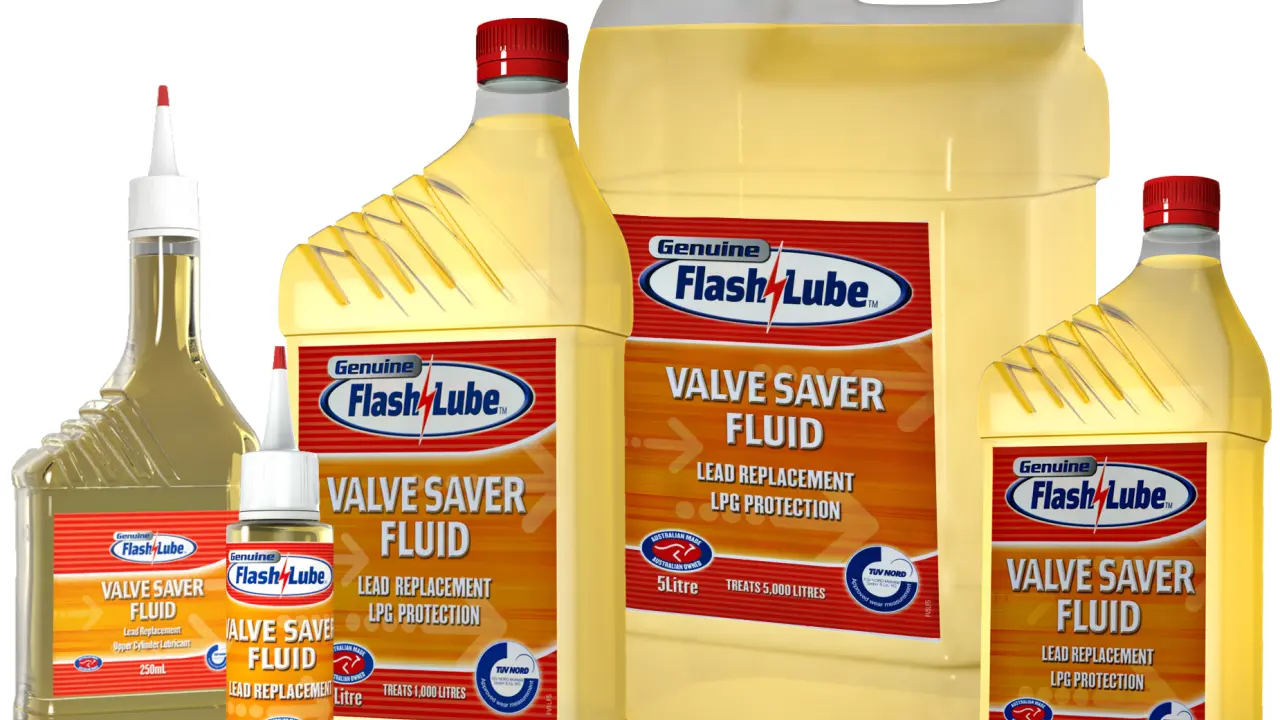
What Is the Flashlube Valve Lubrication System?
Flashlube is a valve protection system designed to help reduce valve and valve-seat wear in certain gasoline engines running on LPG or CNG.
The basic principle is to deliver a specially formulated Flashlube fluid into the engine's intake system at a controlled or predetermined dosage. The purpose is to provide additional protection for valves and valve seats, particularly in engines that may be more sensitive to wear during long-term operation on LPG or CNG.
Flashlube is commonly considered for engines where valve-seat wear may be a concern during extended gas-fuel use.
Why Is Flashlube Used?
LPG and CNG engines operate under combustion conditions that differ from gasoline operation. In some engines, long-term use of gaseous fuels can increase the risk of wear affecting the exhaust valves and valve seats.
This does not apply to every engine.
Factors such as:
-
Valve design
-
Valve-seat material
-
Operating temperature
-
Compression ratio
-
LPG/CNG calibration
-
Driving conditions
-
Engine load
-
Overall engine condition
can influence valve wear.
The purpose of Flashlube is to help reduce this wear in engines where additional valve protection may be beneficial.
How Does Flashlube Work?
A Flashlube system generally consists of a special additive reservoir and a dosing mechanism.
While the engine is running, Flashlube fluid is delivered into the intake system at a controlled rate. The fluid then travels with the incoming air into the engine's cylinders.
The exact operating principle depends on the specific Flashlube kit. Some applications use simple vacuum-operated dosing systems, while more advanced electronic systems can control the dosage according to engine operating conditions.
Therefore, not all Flashlube systems should be considered identical.
Where Does Flashlube Fluid Go?
Flashlube fluid is introduced into the intake system according to the installation method of the particular kit.
The goal is to allow the fluid to reach the combustion chambers together with the incoming air.
Flashlube fluid should not be added to:
-
Engine oil
-
Engine coolant
-
The LPG tank
-
The gasoline fuel tank
The fluid remains in its dedicated reservoir and is delivered through the Flashlube dosing system.
How Does Flashlube Help Protect Valves?
The main purpose of Flashlube is to provide additional protection against valve and valve-seat wear.
In some LPG or CNG engines, exhaust valves and valve seats operate under demanding thermal conditions. Long-term operation under these conditions can contribute to valve-seat wear in susceptible engines.
Flashlube fluid is designed to help reduce this wear when supplied in the correct amount.
However, an important distinction must be made:
Flashlube is not a valve repair system.
If a valve is already burned, a valve seat is severely worn or compression has already been lost, Flashlube cannot repair the mechanical damage.
Does Every LPG Vehicle Need Flashlube?
No.
It is not correct to say that every LPG-equipped vehicle must have a Flashlube system.
Some engines are well suited to LPG operation and may not require additional valve protection.
Other engines can be more sensitive to valve and valve-seat wear when operated on gaseous fuels for long periods.
For this reason, the decision should be based on the specific engine rather than simply on the fact that the vehicle uses LPG.
Which Engines May Benefit More From Flashlube?
Flashlube can be more relevant for engines known to be sensitive to valve and valve-seat wear.
It may be worth considering in vehicles with:
-
High annual mileage
-
Long-term LPG operation
-
Frequent high engine loads
-
Extended highway driving
-
Heavy loads or towing
-
An engine design known to be more sensitive to valve-seat wear
However, having a turbocharged engine, a high-mileage engine or an LPG conversion does not automatically mean that Flashlube is required.
Can Flashlube Be Used on Turbocharged Engines?
Yes, Flashlube can be used on suitable turbocharged engine applications when the system is correctly selected and installed.
Turbocharged engines can experience higher cylinder pressures and thermal loads under boost, making correct LPG calibration particularly important.
Flashlube may provide additional protection where valve-seat wear is a concern.
However, not every turbocharged LPG vehicle requires Flashlube. The engine's valve and valve-seat design is more important than the presence of a turbocharger itself.
Does Flashlube Reduce Fuel Consumption?
No.
Flashlube is not a fuel-saving system.
Its purpose is not to:
-
Reduce fuel consumption
-
Increase engine power
-
Increase turbo boost
-
Improve acceleration
-
Increase horsepower
The system is intended to provide additional protection for valves and valve seats in suitable engines.
Therefore, a significant reduction in LPG consumption should not be expected simply because Flashlube has been installed.
Does Flashlube Increase Engine Power?
No.
Flashlube is not a performance upgrade.
It does not directly increase engine horsepower or torque.
Its purpose is to help protect the engine during long-term LPG or CNG operation rather than to change its performance characteristics.
Does Flashlube Replace Proper LPG Calibration?
Absolutely not.
This is particularly important.
Installing Flashlube does not compensate for an incorrectly calibrated LPG system.
The LPG system still needs:
-
Correct gas pressure
-
Proper injector selection
-
Correct injector operating times
-
Accurate fuel mapping
-
Correct air-fuel mixture
-
Healthy oxygen sensors
-
A properly functioning ignition system
-
A correctly operating regulator
Incorrect LPG calibration can create unfavorable combustion conditions regardless of whether Flashlube is installed.
For example, an excessively lean mixture should be diagnosed and corrected rather than being treated simply by increasing or adding valve-protection fluid.
Does Flashlube Eliminate the Need for Valve Adjustment?
No.
If the engine requires periodic valve-clearance inspection or adjustment, those procedures are still necessary.
Flashlube does not prevent valve clearance from changing over time.
This is particularly important on engines with mechanically adjustable valves. The manufacturer's recommended inspection and adjustment schedule should continue to be followed.
Should Valve Clearances Still Be Checked?
Yes.
Using Flashlube does not eliminate the need to monitor valve clearances.
If the engine requires periodic valve-clearance checks, they should be performed according to the maintenance schedule.
This can be especially important on LPG engines that are known to be more sensitive to valve-seat wear.
If valve clearance gradually decreases over time, this can be an important indication that valve-seat wear or another mechanical problem should be investigated.
How Much Flashlube Fluid Is Used?
The amount of Flashlube fluid consumed depends on the particular kit, dosing method and engine operating conditions.
With simple vacuum-operated systems, correct adjustment of the dosing rate is particularly important.
If too little fluid is delivered, the system may not provide the intended level of protection.
If too much fluid is delivered, it can lead to unnecessary consumption and potentially undesirable changes in engine operation.
The dosing rate should therefore be adjusted according to the requirements of the specific Flashlube system.
What Happens If the Flashlube Reservoir Runs Empty?
When the Flashlube reservoir becomes empty, the system can no longer deliver the protective additive.
The vehicle may continue to operate normally on LPG, depending on the system design, but the additional protection provided by Flashlube will no longer be available.
For this reason, the fluid level should be checked regularly.
Electronically controlled systems may provide a low-fluid warning, while simpler systems may require the driver to check the reservoir manually.
Can Another Additive Be Used Instead of Flashlube?
The fluid specified for the particular Flashlube system should be used.
Random additives should not simply be poured into the reservoir.
Different products can have different chemical compositions, viscosity and dosing characteristics.
For this reason, it should not be assumed that every valve-protection additive will work correctly with every Flashlube system.
Can Flashlube Fluid Be Added to Engine Oil?
No.
Flashlube fluid is not an engine oil additive.
It should never be poured into engine oil.
It should also not be added to the cooling system, LPG tank or gasoline fuel tank.
Flashlube should only be used through its intended dosing system.
Can Flashlube Repair Existing Valve Damage?
No.
This is one of the most important limitations of the system.
If the engine already has problems such as:
-
Burned valves
-
Severe valve-seat wear
-
Low compression
-
Valve leakage
-
Damaged valves
-
Cylinder-head problems
mechanical diagnosis and repair are required.
For example, if an LPG engine develops persistent misfires together with low compression, installing Flashlube will not repair the underlying mechanical problem.
The cause must first be identified and repaired.
Is Running an LPG Vehicle Without Flashlube Harmful?
There is no universal answer.
It is not correct to say that every LPG engine will be damaged if Flashlube is not installed.
Some engines can operate on LPG for very high mileage without an additional valve lubrication system.
Other engines may be more susceptible to valve-seat wear after long-term LPG operation.
Therefore, Flashlube should be evaluated according to the specific engine, its design and its operating conditions.
What Is the Difference Between Flashlube and ValveCare?
Flashlube and Prins ValveCare have a similar overall purpose: providing additional protection against valve and valve-seat wear in suitable engines operating on LPG or CNG.
However, their systems and dosing technologies are not identical.
Flashlube offers different solutions depending on the application, including vacuum-operated and electronically controlled dosing systems.
Prins ValveCare is designed as an electronically controlled system that is integrated with Prins LPG/CNG installations.
Therefore, these systems should not simply be considered interchangeable products.
The appropriate system should be selected according to the vehicle, engine and LPG/CNG conversion system.
How Is Flashlube Installed?
The installation method depends on the Flashlube kit being used.
A typical system may include:
-
Additive reservoir
-
Dosing mechanism
-
Intake connection
-
Delivery hose
-
Necessary fittings
Electronically controlled versions may also include electronic control components and additional sensors or connections.
The dosing point in the intake system is important because the additive needs to be introduced correctly into the engine's airflow.
Incorrect hose routing, an unsuitable connection point or incorrect dosing can prevent the system from working as intended.
How Should Flashlube Be Maintained?
Flashlube maintenance mainly involves checking the fluid level and confirming that the dosing system is operating correctly.
Check the fluid level
The reservoir should not be allowed to remain empty.
Inspect the hoses
Look for cracks, loose connections or leaks.
Check the dosing rate
The system should deliver the correct amount of fluid.
Inspect the connections
Electronically controlled systems should have their wiring and electrical connections checked when necessary.
Maintain the LPG system separately
Using Flashlube does not eliminate the need for LPG filter replacement, regulator maintenance, injector inspection, gas-pressure checks or LPG calibration.
Is Flashlube Really Necessary?
Whether Flashlube is necessary should be determined according to the engine.
It can be considered as an additional protective measure for engines known to be more sensitive to valve and valve-seat wear and that are expected to operate on LPG or CNG for many years.
On the other hand, automatically installing Flashlube on every LPG vehicle is not technically justified.
The best approach is to consider the engine's LPG compatibility, valve and valve-seat design, expected mileage, operating conditions and the quality of the LPG installation and calibration.
What Is the Main Purpose of Flashlube?
Flashlube can be summarized as a valve protection and additive dosing system designed to help reduce valve and valve-seat wear in certain gasoline engines operating on LPG or CNG.
Its purpose is not to increase engine power, reduce fuel consumption or repair existing mechanical damage.
When correctly selected and installed on an engine where additional valve protection is appropriate, Flashlube can be a useful preventive measure for long-term gas-fuel operation.
However, correct LPG calibration, proper gas pressure, healthy injectors, regular maintenance and appropriate valve-clearance checks remain essential. Flashlube should be considered an additional protection system, not a replacement for proper engine and LPG system maintenance.