TR
TR EN
EN

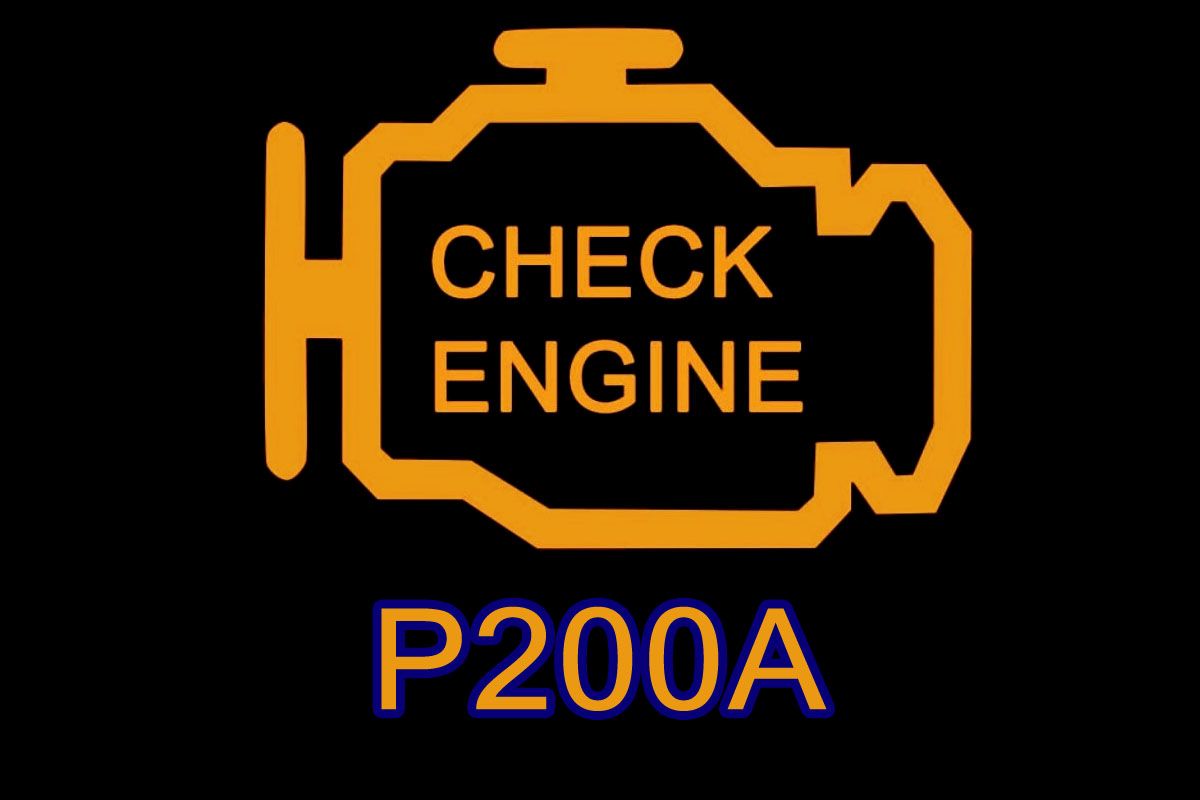
P200A Intake Manifold Runner Performance (Bank 1)
The P200A Intake Manifold Runner Performance (Bank 1) trouble code indicates that the engine control module has detected a problem with the operation or performance of the intake manifold runner system on Bank 1.
The intake manifold runner system changes the effective length or airflow path inside the intake manifold. By changing the airflow path according to engine speed and load, the system can improve air velocity, torque, combustion efficiency, emissions, and sometimes fuel economy.
When P200A is stored, the ECU has determined that the runner system is not behaving as expected. This does not automatically mean that the intake manifold itself is defective. The problem can be mechanical, electrical, vacuum-related, carbon-related, or caused by the actuator or position feedback system.
What Is an Intake Manifold Runner?
Inside some intake manifolds are movable passages or flaps called intake manifold runners.
The purpose is to control how air enters the cylinders under different operating conditions.
At one engine speed, the ECU may command the runners into one position to increase air velocity and improve low-speed torque. At another speed or load, it may move them to another position to allow greater airflow.
Depending on the engine design, the system may use:
-
Electric runner actuator
-
Vacuum actuator
-
Vacuum solenoid
-
Mechanical linkage
-
Position sensor
-
Integrated actuator and position sensor
-
Internal intake manifold flaps
The exact arrangement differs considerably between engines.
What Does P200A Mean?
P200A specifically refers to runner performance on Bank 1.
The word "performance" is important.
This is not necessarily an electrical open or short circuit. Instead, the ECU has detected that the commanded runner position and the actual or expected system behavior do not agree.
For example, the ECU may command the runner actuator to move, but the position feedback may indicate that it did not reach the expected position.
Alternatively, the actuator may reach the requested position but the engine's airflow response may not match what the ECU expects.
Possible situations include:
-
Runner stuck open
-
Runner stuck closed
-
Runner moving too slowly
-
Runner not reaching the commanded position
-
Excessive mechanical resistance
-
Carbon deposits restricting movement
-
Damaged linkage
-
Faulty actuator
-
Incorrect position feedback
-
Vacuum supply problem
-
Wiring or connector problem
What Is Bank 1?
Bank 1 refers to the side of the engine containing cylinder number 1.
On an inline four-cylinder engine, there is normally only one cylinder bank, so Bank 1 represents the entire engine.
On a V6 or V8 engine, Bank 1 is one side of the engine and Bank 2 is the opposite side.
The exact cylinder numbering and runner configuration should always be confirmed using the manufacturer's service information.
Symptoms of P200A
The symptoms can range from almost unnoticeable to significant drivability problems.
Common symptoms include:
-
Check Engine Light
-
Reduced engine performance
-
Poor low-speed torque
-
Hesitation during acceleration
-
Uneven acceleration
-
Rough idle
-
Poor fuel economy
-
Increased emissions
-
Engine response that changes noticeably at certain RPM
-
Reduced power at high engine speed
-
Limp or reduced-power mode
-
Difficulty reaching higher RPM
-
Intake manifold actuator noise
Some vehicles may continue to drive almost normally because the ECU can compensate for a runner system that is stuck in one position.
Other engines are more dependent on runner movement, so the performance difference can be substantial.
Common Causes of P200A
There are several possible causes, and the correct diagnosis depends heavily on the engine design.
Carbon and deposit buildup
One of the most common mechanical problems is contamination inside the intake manifold.
Oil vapors from the crankcase ventilation system, combined with exhaust gases on engines equipped with EGR, can contribute to deposits.
Over time, deposits can accumulate around the runner flaps and prevent them from moving freely.
The actuator may operate, but the internal mechanism can become restricted.
Stuck or damaged runner flap
The runner itself can become stuck because of carbon deposits, mechanical wear, corrosion, or damage.
In some engines, the internal flap mechanism can develop excessive play or become disconnected from the external actuator.
Faulty runner actuator
An electric actuator may develop an internal electrical or mechanical failure.
A vacuum-operated actuator can also fail because of a damaged diaphragm or insufficient vacuum.
A defective actuator may cause the ECU to command movement without obtaining the expected result.
Vacuum leak or insufficient vacuum
On vacuum-controlled systems, the actuator depends on an appropriate vacuum supply.
A cracked vacuum hose, leaking connection, faulty vacuum solenoid, or insufficient vacuum can prevent the runner mechanism from moving correctly.
This is particularly important because the actuator itself may be perfectly functional.
Position sensor problem
Some intake manifold runner systems have a position sensor that tells the ECU where the runner mechanism actually is.
If the sensor produces an incorrect signal, the ECU may believe that the runner is in the wrong position even when the mechanical mechanism is functioning.
The sensor may be integrated into the actuator rather than being a separate component.
Wiring and connector problems
Electrical faults can occur in:
-
Actuator power supply
-
Ground circuit
-
Control circuit
-
Position sensor wiring
-
Connector terminals
Corrosion, broken wires, loose terminals, water intrusion, or damaged harnesses can all interfere with runner operation.
Intake manifold mechanical damage
The manifold itself can develop a mechanical problem.
For example, internal runner components or linkage may wear, break, or become disconnected.
In some designs, the runner mechanism is integrated into the intake manifold and may not be separately serviceable.
How Is P200A Diagnosed?
The most important mistake to avoid is replacing the intake manifold immediately after seeing P200A.
A systematic diagnosis is much more reliable.
Start by scanning for additional codes
Check all stored and pending DTCs.
Codes related to the runner actuator, position sensor, vacuum system, MAF/MAP sensors, EGR, or engine performance can provide valuable clues.
The freeze-frame data can also show the engine speed, load, temperature, and other conditions when P200A was detected.
Inspect the intake manifold and actuator
Look for:
-
Broken linkage
-
Loose actuator
-
Damaged mounting points
-
Oil contamination
-
Vacuum hose damage
-
Electrical connector problems
-
Corrosion
-
Signs of mechanical binding
A visual inspection can sometimes reveal the problem immediately.
Command the actuator
If the diagnostic scanner supports an active test, command the intake runner actuator through different positions.
Observe whether the mechanism moves smoothly and whether the actual position follows the commanded position.
If the actuator moves only partially, moves slowly, or does not move at all, further testing is necessary.
Check the position feedback
Where a position sensor is fitted, compare commanded and actual runner position using the scan tool.
A mismatch can help distinguish between an actuator/mechanical problem and a feedback problem.
The exact signal characteristics are manufacturer-specific, so there is no universal voltage value that applies to every vehicle.
Check the vacuum system
For vacuum-operated runner systems, inspect the vacuum hoses and control solenoid.
A vacuum pump may be used to determine whether the actuator can hold vacuum and move correctly.
If the actuator moves when vacuum is applied directly but does not move when commanded by the vehicle, the vacuum supply or control system deserves attention.
Can Carbon Buildup Cause P200A?
Yes.
Carbon buildup can interfere with runner movement and is an important possibility, particularly on engines that accumulate substantial intake deposits.
The deposits may restrict the flap mechanism enough that the actuator cannot move it through its complete range.
However, carbon buildup should not simply be assumed because P200A is present.
A faulty actuator, position sensor, vacuum system, wiring problem, or damaged linkage can produce the same DTC.
P200A and the Intake Manifold
P200A does not automatically mean that the complete intake manifold must be replaced.
The appropriate repair depends on how the runner system is constructed.
On some engines, the actuator can be replaced separately.
On others, the actuator and position sensor are integrated.
On some designs, the runner mechanism is part of the intake manifold and the manufacturer may specify replacement of the complete manifold.
Therefore, the vehicle-specific repair procedure is important before purchasing parts.
Can a Bad MAF Sensor Cause P200A?
A MAF sensor problem can potentially contribute to incorrect airflow calculations, but it should not automatically be blamed for P200A.
The ECU may use airflow information to evaluate whether the engine is responding correctly to runner commands.
If MAF data is implausible, the calculated airflow response may not match expectations.
However, the MAF sensor should be tested based on its actual data and related codes rather than replaced simply because P200A appears.
The same principle applies to the MAP sensor.
P200A vs Intake Air Leak
An intake air leak can sometimes produce symptoms that resemble a runner problem.
A cracked intake hose, manifold gasket leak, PCV problem, or other uncontrolled air entry can affect airflow calculations and engine performance.
However, an intake leak is not the same fault as an intake manifold runner performance problem.
If fuel trims, MAF/MAP data, or other DTCs indicate an air leak, that issue should be diagnosed separately.
Can P200A Cause Poor Fuel Economy?
Yes.
The runner system is designed to optimize airflow under different operating conditions.
If it remains in an incorrect position, the engine may not achieve the intended airflow characteristics.
This can contribute to:
-
Lower combustion efficiency
-
Reduced torque
-
Increased throttle demand
-
Poor fuel economy
-
Increased emissions
The effect varies by engine. Some vehicles show almost no noticeable fuel economy change, while others can be more sensitive to runner position.
Can P200A Cause Loss of Power?
Yes.
The effect depends on where the runners are stuck and what engine operating range is affected.
If the runners remain in a position intended for low-speed operation, high-RPM airflow may be restricted.
If they remain in a high-speed position, low-speed airflow characteristics may be less favorable.
As a result, the driver may notice poor torque, hesitation, or reduced power in a particular RPM range rather than across the entire operating range.
Is P200A a Mechanical or Electrical Code?
It can involve either.
This distinction is important.
P200A is a performance code, meaning the ECU has detected abnormal runner-system operation. The underlying problem can be:
-
Mechanical
-
Electrical
-
Vacuum-related
-
Sensor-related
-
Airflow-related
A runner that is physically stuck is a mechanical problem even though the ECU detects it electronically.
Likewise, an actuator position sensor or wiring problem can cause P200A even when the runner mechanism itself moves freely.
Can You Drive With P200A?
If the engine runs normally and the Check Engine Light is steady, the vehicle may remain drivable for a limited period.
However, the problem should not be ignored.
Continued driving with an improperly functioning intake runner system can result in:
-
Poor performance
-
Increased fuel consumption
-
Increased emissions
-
Further actuator or linkage damage
-
Additional engine management codes
If the vehicle enters limp mode, experiences severe power loss, stalls, develops severe misfires, or shows other serious engine symptoms, it should be inspected promptly rather than driven normally.
How Is P200A Repaired?
There is no single repair for P200A.
Depending on the diagnosis, the repair may involve:
-
Cleaning intake manifold deposits
-
Repairing or replacing the runner actuator
-
Repairing a vacuum hose
-
Replacing a vacuum control solenoid
-
Repairing wiring
-
Cleaning or repairing electrical connectors
-
Replacing a runner position sensor
-
Repairing damaged linkage
-
Replacing the intake manifold
-
Correcting an airflow-related problem
-
Performing manufacturer-required adaptations or calibration
After the repair, the runner system should be tested again to confirm that commanded and actual operation agree.
A Practical Diagnostic Sequence
A useful approach is to follow the fault from the outside toward the intake manifold rather than immediately removing components.
Start with the stored codes and freeze-frame data. Then inspect the actuator, wiring, connectors, vacuum lines, and visible linkage. If the system supports an active test, command the runner through its operating range and monitor position feedback.
If movement is restricted, determine whether the problem is caused by deposits or mechanical damage. If movement is normal but the ECU still reports incorrect performance, investigate the position sensor and airflow data.
Only after these checks should the intake manifold itself be considered for replacement.
Final Considerations
P200A Intake Manifold Runner Performance (Bank 1) means that the engine control system has detected abnormal operation of the intake manifold runner system on Bank 1. It is a performance-related fault, so the code alone cannot tell you whether the actuator, runner mechanism, position sensor, vacuum system, wiring, or intake manifold is responsible.
Carbon deposits and mechanically stuck runners are important possibilities, but electrical and control problems must also be considered.
The best diagnosis combines actuator operation, actual runner position, vacuum or electrical tests, wiring inspection, airflow data, and the vehicle manufacturer's specifications. Replacing the intake manifold or actuator without determining why the runner system is not achieving the expected position can easily result in unnecessary expense.