TR
TR EN
EN

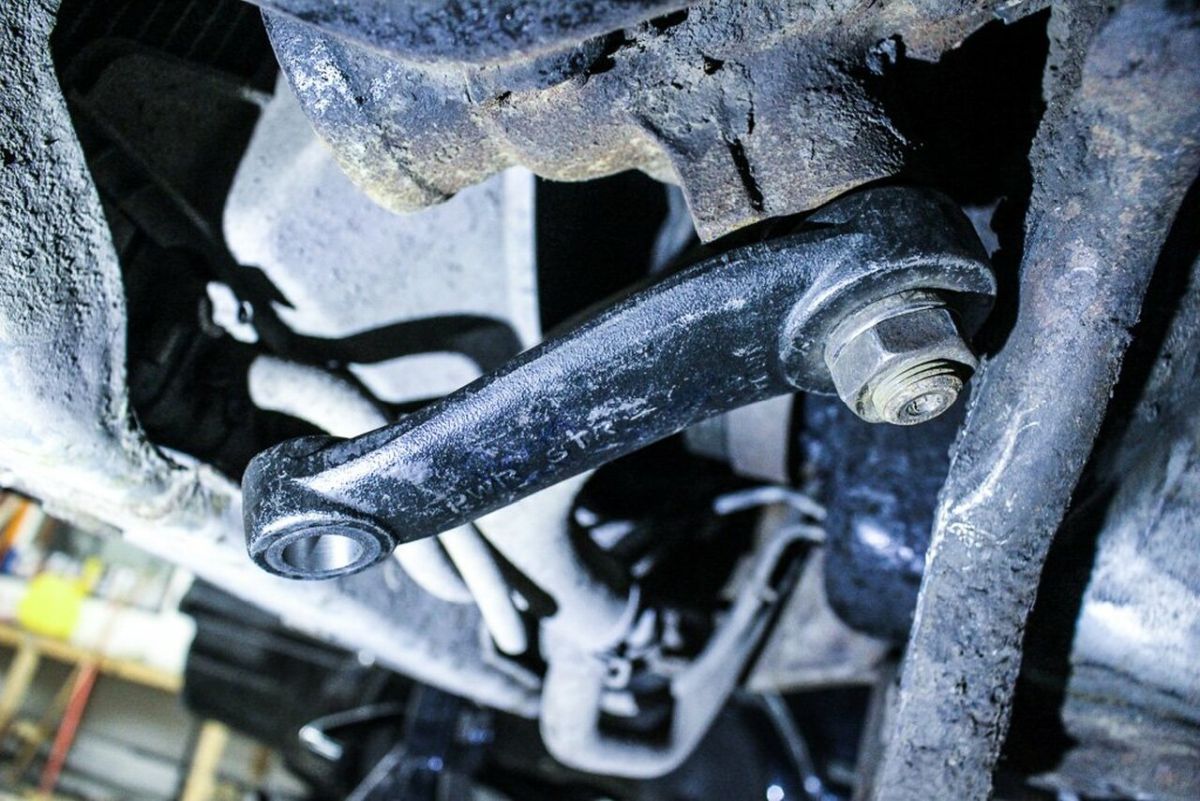
What Is a Pitman Arm? What Are the Symptoms of Failure?
The Pitman arm is an important component of the steering system used primarily on vehicles equipped with a recirculating-ball steering box.
It transfers the steering movement produced by the steering gearbox to the steering linkage. In simple terms, the Pitman arm acts as the mechanical link between the steering gearbox and the rest of the steering system.
Pitman arms are particularly common on older vehicles, pickup trucks, SUVs, commercial vehicles, and heavy-duty vehicles that use a steering box rather than a rack-and-pinion system.
Because the Pitman arm is directly involved in steering control, excessive wear or damage should not be ignored.
What Does a Pitman Arm Do?
When the driver turns the steering wheel, the steering gearbox converts the rotational movement of the steering shaft into movement of the steering linkage.
The Pitman arm is attached to the output shaft of the steering gearbox.
As the steering gearbox rotates the Pitman arm, the arm moves through an arc. This movement is transferred to the center link, drag link, or other steering linkage, depending on the vehicle design.
The basic steering sequence can be summarized as:
Steering wheel → steering shaft → steering gearbox → Pitman arm → steering linkage → steering knuckles → front wheels
The exact arrangement varies between vehicles.

Where Is the Pitman Arm Located?
The Pitman arm is mounted directly to the output shaft of the steering gearbox.
The steering gearbox is generally located in the front section of the vehicle, although its exact position varies depending on the chassis and steering design.
The Pitman arm usually extends downward or outward from the gearbox and connects to a steering linkage component.
It can therefore be found underneath the vehicle rather than inside the engine compartment.
Because the steering system carries significant mechanical loads, the Pitman arm is normally a strong forged or cast metal component.
What Are the Symptoms of a Bad Pitman Arm?
A worn Pitman arm can produce several steering and handling symptoms.
Common signs include:
-
Excessive steering play
-
Loose or vague steering
-
Vehicle wandering
-
Difficulty maintaining a straight line
-
Delayed steering response
-
Uneven steering feel
-
Clunking or knocking from the steering system
-
Steering wheel movement without an immediate change in direction
-
Abnormal tire wear
-
Poor return-to-center behavior
-
Steering instability over bumps
-
Excessive movement at the steering linkage
However, these symptoms do not automatically mean the Pitman arm itself has failed.
Several other components in a steering-box system can produce almost identical symptoms.
Excessive Steering Wheel Play
One of the most noticeable symptoms can be excessive steering wheel movement.
The driver may turn the steering wheel several degrees before the front wheels respond significantly.
This can make the vehicle feel loose or imprecise.
However, excessive steering play can originate from many locations, including:
-
Pitman arm
-
Pitman arm joint
-
Idler arm
-
Center link
-
Drag link
-
Tie rods
-
Steering gearbox
-
Steering shaft joints
-
Wheel bearings
-
Steering knuckles
The steering gearbox itself may also require adjustment or may have internal wear.
Therefore, replacing the Pitman arm without checking the complete steering system can result in an incorrect repair.
Vehicle Wandering or Drifting
A worn steering linkage can make it difficult to maintain a straight path.
The vehicle may feel as though it requires constant steering corrections.
On a highway, the driver may notice that the vehicle:
-
Wanders from side to side
-
Requires frequent steering corrections
-
Feels unstable in crosswinds
-
Responds slowly to steering inputs
-
Does not maintain a straight line easily
A worn Pitman arm can contribute to these symptoms, but tire pressure, wheel alignment, suspension components, steering gearbox adjustment, and other steering joints must also be considered.
Steering Wheel Feels Loose
A Pitman arm connection with excessive play can make the steering feel loose.
The steering wheel may feel disconnected from the front wheels.
This can be particularly noticeable when changing direction quickly.
A small amount of steering movement is normal, especially on vehicles with traditional steering boxes, but excessive free play is not.
The acceptable amount depends on the vehicle manufacturer's specifications.
Clunking or Knocking Noise
A worn Pitman arm joint or related steering linkage can produce a clunking, knocking, or popping sound.
The noise may become more noticeable when:
-
Turning the steering wheel
-
Driving over rough roads
-
Braking
-
Accelerating
-
Changing direction
-
Moving from forward to reverse
The noise can sometimes be caused by a loose or worn connection rather than the Pitman arm itself.
Other steering components can make nearly identical sounds.
Can a Bad Pitman Arm Cause Tire Wear?
It can contribute indirectly.
If excessive play in the steering linkage allows the wheel position to change while driving, steering geometry can become inconsistent.
This can contribute to abnormal or uneven tire wear.
However, tire wear is not enough to identify a faulty Pitman arm.
Other possible causes include:
-
Incorrect wheel alignment
-
Worn tie rods
-
Worn ball joints
-
Damaged control-arm components
-
Incorrect tire pressure
-
Wheel bearing problems
-
Bent steering or suspension components
-
Worn idler arm
If tire wear and loose steering occur together, the entire steering and suspension system should be inspected.
What Causes Pitman Arm Failure?
Pitman arms are generally designed to withstand substantial loads, but they can eventually wear or become damaged.
Common causes include:
Normal wear
The arm itself may be durable, but its ball-joint-style connection or attached steering components can develop play over time.
High mileage
Repeated steering movements and road impacts gradually increase wear in the steering linkage.
Poor road conditions
Potholes, rough roads, and severe impacts can place substantial loads on the steering system.
Corrosion
Severe corrosion can weaken metal components or make mounting and connection areas unreliable.
Loose fasteners
Improperly tightened mounting hardware can allow movement and damage the connection.
Accident damage
A collision or severe impact can bend or deform the Pitman arm or associated steering components.
Worn steering linkage
Sometimes the Pitman arm appears to be the source of the problem when the actual wear is in the connected steering joint.
Pitman Arm Ball Joint Wear
Some Pitman arm designs incorporate a ball-and-socket type connection, while others connect to a separate drag link or center link.
If the joint wears, clearance develops between the components.
That clearance can result in:
-
Steering play
-
Clunking
-
Delayed steering response
-
Wandering
-
Uneven steering behavior
A damaged dust boot can accelerate joint wear by allowing dirt and moisture to enter.
Can a Pitman Arm Bend?
Yes.
Although Pitman arms are strong, severe impacts can bend or deform them.
Possible causes include:
-
Large pothole impacts
-
Collision damage
-
Off-road impacts
-
Incorrect installation
-
Severe steering component failure
A bent Pitman arm can alter the steering geometry and may cause unusual steering behavior.
A visibly bent arm should not simply be straightened and reused unless the manufacturer specifically permits such a repair.
In most situations, a damaged steering component should be replaced with the correct part.
How Is a Pitman Arm Diagnosed?
Diagnosis should begin with a complete steering-system inspection.
A technician can inspect the Pitman arm for:
-
Excessive movement
-
Damaged joints
-
Cracked or bent metal
-
Corrosion
-
Loose mounting hardware
-
Damaged dust boots
-
Abnormal movement at the gearbox output shaft
The steering wheel may also be moved slightly from side to side while the technician observes the steering linkage.
This can help identify where steering movement is being lost.
However, the vehicle-specific inspection procedure is important because some components can appear to move normally when unloaded but develop excessive movement under operating loads.
Pitman Arm vs Idler Arm
The Pitman arm and idler arm are often confused because they work together in many steering-box systems.
The Pitman arm is attached to the steering gearbox output shaft and actively transfers steering movement into the steering linkage.
The idler arm supports the opposite side of the center link or related linkage and allows it to move while maintaining its position.
Both components can develop play and cause similar symptoms.
Therefore, a vehicle with loose steering should normally have both inspected.
Pitman Arm vs Tie Rod
A tie rod connects the steering linkage to the steering knuckle.
Its job is to transfer steering movement directly to the wheel assembly.
The Pitman arm is located closer to the steering gearbox and acts as the gearbox's mechanical output connection.
A worn tie rod can produce symptoms very similar to a worn Pitman arm, including:
-
Steering play
-
Clunking
-
Wandering
-
Uneven tire wear
-
Delayed steering response
This is why the entire steering linkage should be checked before replacing a component.
Pitman Arm vs Steering Rack
The Pitman arm is generally associated with a steering gearbox system.
Vehicles with a rack-and-pinion steering system normally do not use a Pitman arm.
In a rack-and-pinion system, the steering rack moves the inner and outer tie rods directly.
In a traditional steering-box system, the gearbox output shaft moves the Pitman arm, which then moves the steering linkage.
This difference is important when identifying steering components.
Can a Bad Pitman Arm Cause the Steering Wheel to Shake?
It can contribute to steering instability, but steering wheel vibration is not a specific Pitman arm symptom.
Steering wheel shaking can also be caused by:
-
Wheel imbalance
-
Bent wheels
-
Tire defects
-
Wheel bearings
-
Brake discs
-
Suspension components
-
Tie rods
-
Ball joints
-
Steering linkage
-
Alignment problems
If the vibration occurs mainly during braking, the braking system should also be investigated.
If it occurs at a specific road speed, wheels and tires are common starting points for diagnosis.
Does a Pitman Arm Affect Wheel Alignment?
The Pitman arm is part of the steering linkage and can influence steering geometry if it is bent, incorrectly installed, or connected to worn components.
However, a worn Pitman arm does not automatically mean the wheel alignment itself is incorrect.
If the Pitman arm or another steering component is replaced, the vehicle should be checked according to the manufacturer's alignment and steering-center procedures.
Some steering-box vehicles also require the steering wheel and steering gearbox to be correctly centered before final adjustments are made.
Can a Pitman Arm Be Repaired?
In most cases, the Pitman arm is replaced rather than repaired.
If the arm is bent, cracked, severely corroded, or damaged, replacement is generally the appropriate solution.
If the problem is actually in a replaceable joint, center link, drag link, or another connected component, that component may be replaced instead.
The exact repair depends on the steering-system design.
Is a Pitman Arm Difficult to Replace?
Replacement can be more difficult than its simple appearance suggests.
The Pitman arm is usually mounted tightly onto the steering gearbox output shaft.
A special Pitman arm puller may be required to remove it safely.
The procedure can involve:
-
Removing the retaining nut
-
Disconnecting the steering linkage
-
Using the appropriate puller
-
Removing the old arm
-
Installing the replacement in the correct orientation
-
Tightening fasteners to the specified torque
-
Checking steering geometry
-
Verifying steering-center position
The exact procedure varies significantly between vehicles.
Hammering directly on the steering gearbox output shaft is not an appropriate general removal method because it can damage the gearbox or surrounding components.
Should the Pitman Arm Be Replaced With Other Parts?
Not necessarily.
If only the Pitman arm is worn and all other components are within specification, replacing the arm may be sufficient.
However, on a high-mileage vehicle, it is common to find multiple worn steering components at the same time.
A complete inspection should therefore include:
-
Pitman arm
-
Idler arm
-
Center link
-
Drag link
-
Inner tie rods
-
Outer tie rods
-
Steering gearbox
-
Steering shaft
-
Steering knuckles
-
Ball joints
-
Wheel bearings
Replacing only one component may not eliminate steering play if another component is also worn.
Does a Pitman Arm Have an OBD Fault Code?
A conventional mechanical Pitman arm normally does not contain an electronic sensor.
Therefore, a simple worn or damaged Pitman arm usually does not generate a specific OBD fault code.
A diagnostic scanner may show faults from other steering-related systems, such as electronic power steering, steering-angle sensors, or stability-control systems.
However, a mechanical Pitman arm with excessive play usually requires a physical inspection.
An OBD scan cannot normally determine whether a conventional Pitman arm has developed mechanical looseness.
Is It Safe to Drive With a Bad Pitman Arm?
This depends on the severity of the problem.
A small amount of wear may not immediately cause a loss of steering control, but continuing to drive with excessive steering play is not advisable.
The situation becomes particularly serious if there is:
-
Significant steering free play
-
Severe wandering
-
A damaged or bent Pitman arm
-
Excessive joint movement
-
Loose steering fasteners
-
Clunking accompanied by steering instability
-
A disconnected steering linkage
-
Sudden changes in steering response
A steering component failure can potentially result in a loss of directional control.
For this reason, a suspected severe Pitman arm or steering-linkage problem should be inspected before normal driving.
What Happens If the Pitman Arm Breaks?
A completely broken or disconnected Pitman arm can prevent the steering gearbox from properly controlling the steering linkage.
Depending on the exact failure, the vehicle may experience severe loss of steering control.
This is fundamentally different from many non-critical suspension components because the Pitman arm is part of the primary mechanical steering system.
If the arm is cracked, severely bent, disconnected, or broken, the vehicle should not be driven until the steering system has been repaired.
Does a Pitman Arm Need Lubrication?
Some Pitman arm-related joints are designed with grease fittings, while others are permanently lubricated and sealed.
If a grease fitting is provided, lubrication should be performed according to the manufacturer's maintenance requirements.
Sealed joints should not be drilled or modified simply to add grease.
Over-greasing can also damage certain boots or seals.
The correct maintenance method depends on the specific steering component.
What Should Be Checked After Pitman Arm Replacement?
After replacement, the steering system should be inspected carefully.
Depending on the vehicle, the technician may need to verify:
-
Correct Pitman arm orientation
-
Mounting nut torque
-
Steering linkage connections
-
Steering wheel center
-
Steering gearbox center position
-
Steering play
-
Wheel alignment
-
Steering return
-
Tire condition
-
Clearance between steering components and other parts
A road test should be performed carefully after the repair.
Final Thoughts
The Pitman arm is a critical mechanical steering component that transfers movement from a steering gearbox to the steering linkage.
Common symptoms of a problem can include excessive steering play, loose steering, wandering, delayed steering response, clunking noises, and abnormal tire wear.
However, these symptoms do not automatically prove that the Pitman arm is defective.
The idler arm, center link, drag link, tie rods, steering gearbox, steering shaft, ball joints, wheel bearings, and other steering components can produce very similar symptoms.
Because the Pitman arm is part of the primary steering system, excessive play or visible damage should be taken seriously. A proper diagnosis should identify exactly where the steering movement is being lost before any component is replaced.
If the Pitman arm is bent, cracked, severely worn, or disconnected, replacement should be carried out using the correct component and installation procedure, followed by the necessary steering and alignment checks.