TR
TR EN
EN

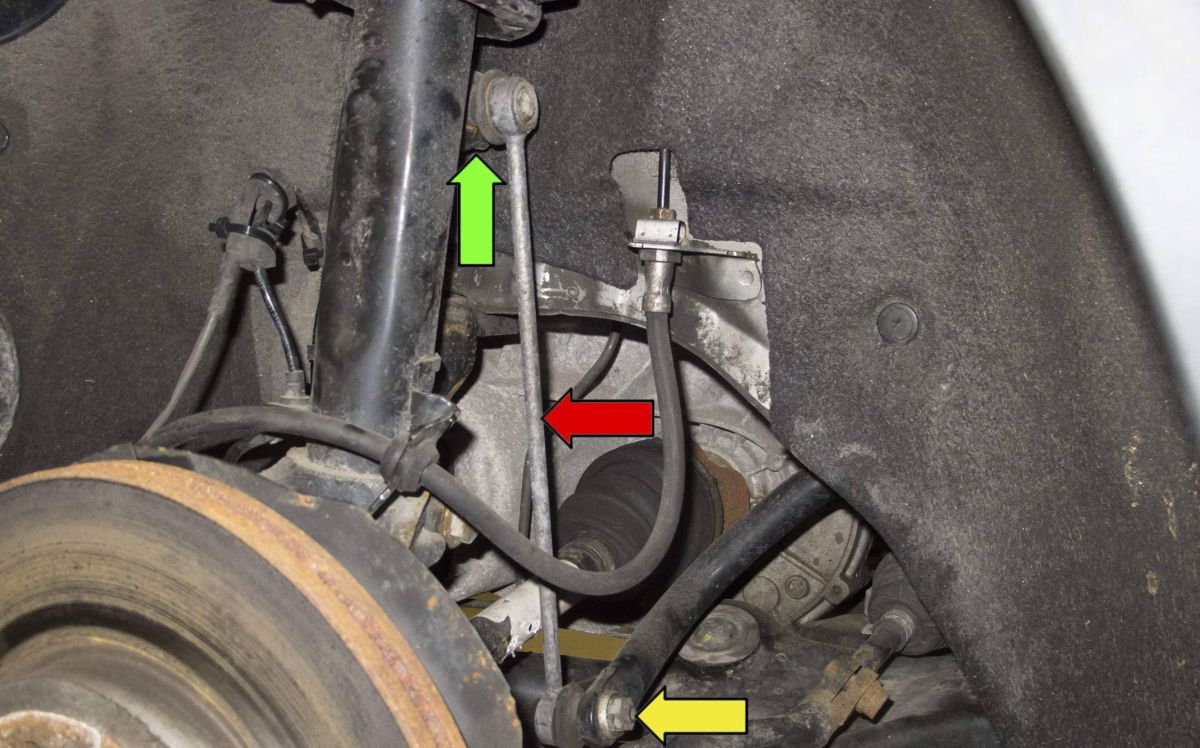
What Is a Z-Link? What Are the Symptoms of Failure?
The Z-link, also called a stabilizer link, sway bar link, or anti-roll bar link, is a small but important suspension component that connects the stabilizer bar to the suspension assembly.
Although it is relatively small compared with components such as the control arm, strut, or stabilizer bar, a worn Z-link can significantly affect suspension noise, cornering stability, and driving comfort.
A Z-link does not normally support the vehicle's weight. Its main job is to transfer movement and forces between the stabilizer bar and the suspension while allowing the suspension to move up and down.
What Does a Z-Link Do?
The stabilizer bar helps reduce body roll when the vehicle enters a corner.
When the vehicle turns, the outside suspension compresses while the inside suspension extends. This difference in suspension movement causes the body to lean.
The stabilizer bar resists this twisting movement and helps keep the vehicle more level.
The Z-links connect the stabilizer bar to the suspension components. They allow the stabilizer bar to react to suspension movement while the suspension continues to move independently.
A typical system works like this:
Suspension movement → Z-link → stabilizer bar → resistance to body roll
The exact arrangement varies between vehicles. Some designs use a short link between the stabilizer bar and the strut, while others connect it to the control arm or another suspension component.
Where Is the Z-Link Located?
Z-links are usually found near the wheels, connecting the stabilizer bar to the suspension.
On many vehicles, you can identify them as relatively thin rods with a joint at each end.
Depending on the suspension design, the link may have:
-
Ball joints at both ends
-
Rubber bushings
-
A combination of bushings and ball joints
-
Threaded studs
-
Protective boots around the joints
The design differs considerably between manufacturers and suspension systems.
This is why the correct replacement part should always be selected according to the vehicle's exact specifications.
What Are the Symptoms of a Faulty Z-Link?
One of the most common symptoms is a knocking or clunking noise from the suspension.
However, a Z-link can fail in different ways, and the symptoms depend on whether the problem is caused by a worn ball joint, damaged bushing, loose fastener, corrosion, or physical damage.
Common symptoms include:
-
Knocking over bumps
-
Clunking from the front or rear suspension
-
Rattling on rough roads
-
Increased suspension noise
-
Loose or imprecise handling
-
Increased body roll
-
Reduced cornering stability
-
Uneven or abnormal suspension movement
-
Squeaking or creaking in some cases
-
Excessive play in the link
-
Visible damage to the link or its joints
A particularly characteristic complaint is a repetitive metallic knocking sound when driving over small bumps or broken road surfaces.
Knocking Noise Over Small Bumps
A worn Z-link is often suspected when the vehicle produces a knocking sound while passing over:
-
Speed bumps
-
Potholes
-
Broken asphalt
-
Cobblestone roads
-
Drain covers
-
Small consecutive bumps
The noise can sometimes become more noticeable at low speeds.
However, this symptom alone does not prove that the Z-link is faulty.
Worn control-arm bushings, ball joints, strut mounts, stabilizer-bar bushings, shock absorbers, and other suspension components can produce very similar noises.
Therefore, replacing the Z-link solely because of a knocking noise is not always the correct diagnosis.
What Happens When the Z-Link Ball Joint Wears Out?
Many modern Z-links use small ball joints at their ends.
These joints allow the suspension and stabilizer bar to move at different angles.
Over time, the joint can develop excessive clearance.
When this happens, the joint may move slightly before transferring force. That movement can create a characteristic clicking, knocking, or clunking sound.
In severe cases, the protective rubber boot may also become cracked or torn.
Once dirt and moisture enter the joint, lubrication can deteriorate and wear can accelerate.
A worn ball joint may have noticeable play when the suspension is inspected correctly.
Damaged Z-Link Bushings
Not every Z-link uses a ball joint at both ends.
Some designs use rubber or elastomer bushings.
Bushings can deteriorate because of:
-
Age
-
Heat
-
Oil contamination
-
Water and road salt
-
Repeated suspension movement
-
Heavy loads
-
Poor-quality replacement parts
A damaged bushing can become cracked, hardened, compressed, or separated from its metal sleeve.
This can produce knocking, squeaking, or excessive movement.
Can a Bad Z-Link Cause Steering Problems?
A severely worn Z-link can affect how the vehicle responds during cornering, but it is important not to exaggerate its effect.
The Z-link is not normally the primary component controlling wheel alignment.
A worn link may allow excessive stabilizer-bar movement and reduce the effectiveness of the anti-roll system.
The driver may notice:
-
More body movement in corners
-
Less confidence during sudden direction changes
-
Increased lateral movement
-
A less controlled feeling on uneven roads
But significant steering looseness should not automatically be blamed on the Z-link.
Tie rods, ball joints, control arms, wheel bearings, steering components, and alignment problems can cause more serious steering-related symptoms.
Can a Z-Link Cause Uneven Tire Wear?
A worn Z-link generally does not directly cause abnormal tire wear in the same way that an alignment problem does.
If you see unusual tire wear, the suspension should be inspected more broadly.
Possible causes include:
-
Incorrect wheel alignment
-
Worn control-arm bushings
-
Damaged ball joints
-
Bent suspension components
-
Worn wheel bearings
-
Incorrect tire pressure
-
Steering-component wear
-
Damaged shocks or struts
A faulty Z-link may exist at the same time as one of these problems, but it should not automatically be considered the cause of the tire wear.
Why Do Z-Links Fail?
Z-links operate every time the suspension moves, so they experience continuous mechanical stress.
Common causes of failure include:
Normal wear
Ball joints and bushings gradually develop clearance as mileage increases.
Poor road conditions
Potholes, broken roads, and repeated impacts place additional stress on the link and its joints.
Corrosion
Road salt, moisture, and dirt can accelerate corrosion, particularly around exposed metal components and fasteners.
Damaged protective boots
A torn ball-joint boot can allow water and dirt to enter the joint.
Oil or chemical contamination
Certain rubber materials can deteriorate when exposed to engine oil, transmission fluid, grease, or other chemicals.
Heavy vehicle use
Frequent carrying of heavy loads or driving on rough terrain can increase suspension stress.
Poor-quality replacement parts
Low-quality links may have inferior joints, bushings, seals, or materials and may wear prematurely.
Incorrect installation
Improper tightening, incorrect positioning, or installation with the suspension at an inappropriate height can contribute to premature wear in some designs.
How Is a Z-Link Diagnosed?
A proper diagnosis should begin with a visual inspection.
A technician can inspect:
-
The link body
-
Ball joints
-
Rubber boots
-
Bushings
-
Fasteners
-
Stabilizer-bar mounting points
-
Corrosion
-
Signs of physical impact
-
Excessive movement
The suspension may then be checked for abnormal play.
In some cases, the vehicle needs to be lifted in a way that allows the suspension and stabilizer system to be assessed correctly.
Simply grabbing the link and moving it by hand does not always reveal every fault.
Some worn links only produce noticeable play under specific suspension loads.
How Do You Know If the Noise Is Really Coming From the Z-Link?
This is one of the most important diagnostic questions.
A suspension knocking noise can originate from many different components.
For example, a vehicle making a clunking noise over bumps could have:
-
Worn Z-links
-
Worn stabilizer-bar bushings
-
Worn control-arm bushings
-
Worn ball joints
-
Worn shock absorbers
-
Damaged strut mounts
-
Loose suspension fasteners
-
Worn wheel bearings
-
Broken springs
-
Damaged steering components
The sound can also travel through the suspension structure, making the apparent location misleading.
Therefore, a mechanic should inspect the complete suspension rather than replacing parts based only on the location of the noise.
Can a Z-Link Be Repaired?
In most cases, the Z-link itself is replaced rather than rebuilt.
If the ball joint has excessive play or the bushing is damaged, replacing the complete link is generally the practical solution.
Some links are inexpensive compared with major suspension components, but the replacement procedure still needs to be performed correctly.
The correct replacement part should match:
-
Thread dimensions
-
Link length
-
Joint design
-
Bushing type
-
Mounting configuration
-
Vehicle suspension design
A visually similar link is not necessarily the correct part.
Should Z-Links Be Replaced in Pairs?
It depends on the condition of the opposite side and the manufacturer's or technician's recommendation.
If one Z-link is worn, the other side may have experienced similar mileage and environmental conditions.
Replacing both sides can therefore be reasonable when both show wear.
However, automatically replacing both is not always necessary if the other link is in good condition.
The important point is to inspect both sides rather than replacing components blindly.
Is It Safe to Drive With a Bad Z-Link?
A mildly worn Z-link may allow the vehicle to remain driveable, particularly if the joint has only a small amount of play.
However, continued driving is not ideal.
As wear increases, the link may become progressively looser and the stabilizer system may become less effective.
A severely damaged or broken link deserves more immediate attention.
If the vehicle has additional symptoms such as:
-
Significant steering looseness
-
Severe suspension knocking
-
Excessive body roll
-
Unstable handling
-
A broken or disconnected link
-
Other damaged suspension components
normal driving should be avoided until the suspension has been inspected.
What Happens If the Z-Link Breaks?
A broken Z-link can disconnect the stabilizer bar from one side of the suspension.
The vehicle may still move because the stabilizer bar is not responsible for supporting the vehicle's weight.
However, the anti-roll system may no longer function as intended.
Depending on the suspension design, a broken link can also move around and contact other components.
This can create additional noise or mechanical interference.
For this reason, a completely broken or disconnected Z-link should be repaired rather than ignored.
Z-Link vs Stabilizer Bar
These two components are often confused.
The stabilizer bar is the larger bar that connects the suspension systems on the left and right sides of an axle.
The Z-link is the smaller connecting component that transfers movement between the stabilizer bar and the suspension.
The stabilizer bar itself can be perfectly healthy while one of its links is worn.
Likewise, the stabilizer-bar bushings can wear out while the Z-links remain in good condition.
This distinction is important during diagnosis because replacing the wrong component will not eliminate the noise.
Z-Link vs Shock Absorber
A Z-link and a shock absorber perform completely different jobs.
The Z-link connects the stabilizer system to the suspension.
The shock absorber controls suspension movement and prevents excessive bouncing.
A worn shock absorber can cause:
-
Excessive bouncing
-
Poor body control
-
Longer stopping distances on uneven surfaces
-
Uneven tire contact
-
Oil leakage from the shock
A worn Z-link is more commonly associated with knocking or clunking noises, especially over small bumps.
Nevertheless, both components can fail at the same time.
Does a Z-Link Trigger an OBD Fault Code?
A conventional mechanical Z-link normally does not have an electrical sensor.
Therefore, a mechanical Z-link failure usually does not generate a specific OBD fault code.
This is different from electronically controlled suspension systems that may use sensors and electronically controlled components.
If the vehicle has a warning light or suspension-related diagnostic code, the code should be diagnosed according to the vehicle's actual system architecture.
A diagnostic scanner cannot normally detect a simple mechanical Z-link joint with excessive play.
Physical inspection is therefore essential.
How Long Does a Z-Link Last?
There is no universal service life.
A Z-link can last many years and tens of thousands of kilometers, while another may wear much earlier depending on road conditions and vehicle use.
Factors affecting lifespan include:
-
Road quality
-
Mileage
-
Vehicle weight
-
Suspension design
-
Climate
-
Corrosion
-
Driving style
-
Heavy loads
-
Quality of replacement parts
Frequent driving over potholes and rough roads can significantly increase suspension component wear.
Can a Z-Link Make the Car Pull to One Side?
A Z-link is not normally the first component to suspect when a vehicle pulls left or right.
Pulling can be caused by:
-
Wheel alignment
-
Unequal tire pressure
-
Tire construction differences
-
Brake drag
-
Worn steering components
-
Suspension damage
-
Wheel bearing problems
-
Uneven ride height
A badly damaged suspension component can influence vehicle behavior, but a simple worn Z-link should not automatically be blamed for a pulling problem.
What Should Be Checked When Replacing a Z-Link?
Replacing the link provides a good opportunity to inspect the surrounding suspension.
The technician should check:
-
Stabilizer-bar bushings
-
Control arms
-
Ball joints
-
Shock absorbers
-
Strut mounts
-
Springs
-
Wheel bearings
-
Steering components
-
Suspension fasteners
-
Corrosion
-
Wheel alignment where appropriate
If the new Z-link is installed while another worn component remains, the original suspension noise may continue.
Final Thoughts
A Z-link is a small but important suspension component that connects the stabilizer bar to the suspension assembly.
The most recognizable symptom of a worn Z-link is often a knocking, clunking, or rattling noise over bumps, particularly on rough roads and at low speeds.
However, this noise is not unique to the Z-link.
Other suspension components can produce almost identical symptoms, so replacing the Z-link without confirming the source of the noise can lead to unnecessary repairs.
A proper diagnosis should include the Z-link, stabilizer-bar bushings, control arms, ball joints, shock absorbers, strut mounts, wheel bearings, and other relevant suspension components.
If the link is genuinely worn or broken, replacement is usually straightforward and relatively inexpensive compared with many other suspension repairs. The important part is identifying the correct component and fixing the actual cause rather than assuming every suspension knocking noise comes from the Z-link.