TR
TR EN
EN

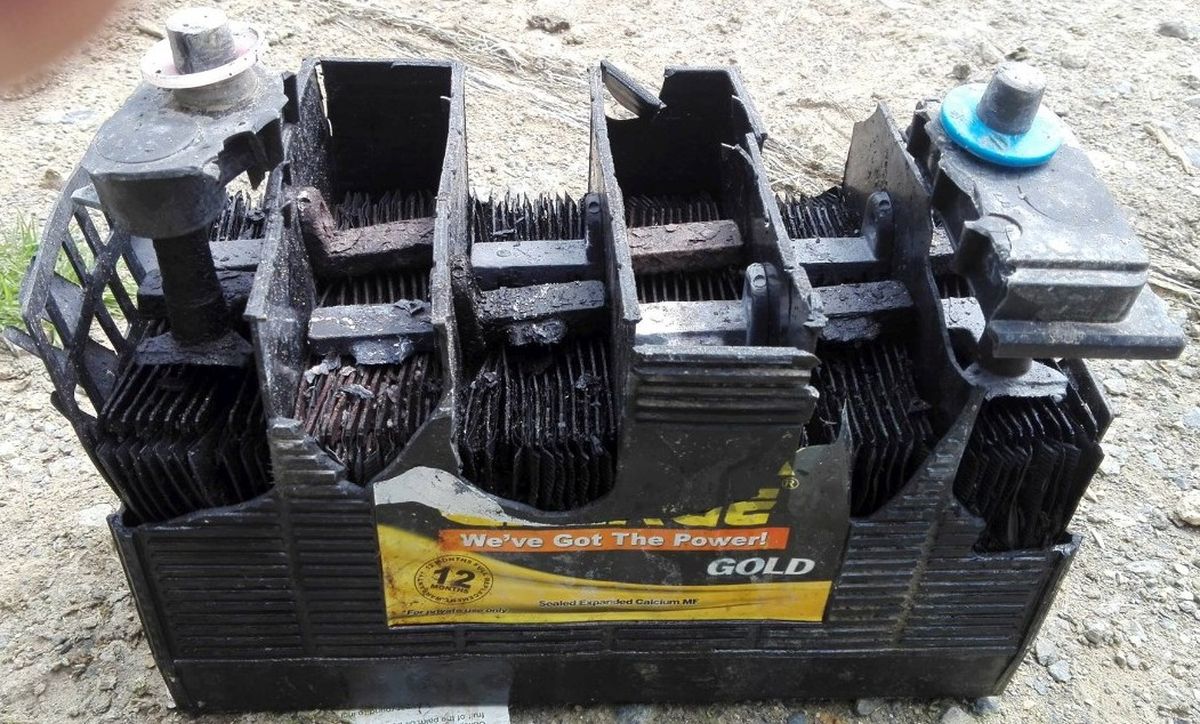
What Is Battery Overcharging? Causes of Battery Overcharging
Battery overcharging is a condition in which the vehicle's charging system supplies a battery with a voltage that is higher than the level intended by the manufacturer.
Although the battery stores electrical energy, it does not normally control its own charging voltage. The alternator, voltage regulator, battery monitoring system, and engine control or body control modules work together to maintain the appropriate charging conditions.
When the charging voltage becomes excessively high, the battery can overheat and deteriorate rapidly. In modern vehicles, overcharging can also damage sensitive electronic components.
Importantly, battery overcharging does not automatically mean that the battery itself is faulty. In many cases, the actual problem is related to the alternator, voltage regulator, wiring, battery sensor, or charging-system control.
What Is Battery Overcharging?
A vehicle's charging system must keep electrical voltage within an appropriate range.
On many conventional 12-volt systems, charging voltage is commonly somewhere around the mid-13 to mid-14 volt range while the engine is running, but the correct value varies according to vehicle design, temperature, battery type, engine speed, and charging strategy.
Modern vehicles can intentionally vary charging voltage.
Therefore, seeing a voltage value change while driving does not automatically indicate overcharging.
The problem occurs when the actual charging voltage consistently exceeds the manufacturer's specified range or the charging system detects an abnormal high-voltage condition.

What Causes Battery Overcharging?
Several faults can cause excessive charging voltage.
Common causes include:
-
Faulty voltage regulator
-
Alternator regulator failure
-
Alternator internal failure
-
Faulty battery temperature sensor
-
Battery monitoring sensor problems
-
Damaged wiring
-
Poor electrical connections
-
Grounding problems
-
Charging-system control faults
-
Incorrect alternator installation
-
Incorrect battery type or configuration
-
Control-module communication problems
-
Incorrect aftermarket electrical modifications
The voltage regulator is one of the most common components associated with overcharging, but it should not be replaced without testing the complete charging system.
Faulty Voltage Regulator
The voltage regulator controls alternator output.
In a conventional alternator, the regulator controls the alternator's field current so that the charging voltage remains within an appropriate range.
If the regulator fails and allows excessive field excitation, the alternator can produce excessive voltage.
Possible results include:
-
Battery overcharging
-
Battery overheating
-
Excessive charging voltage
-
Bright or fluctuating lights
-
Battery warning light
-
Electrical system faults
-
Damage to electronic components
On many modern alternators, the voltage regulator is integrated into the alternator assembly.
Alternator Problems
The alternator is responsible for producing electrical power while the engine is running.
An alternator problem does not always result in low charging voltage.
Depending on the failure, an alternator can also contribute to excessive or unstable voltage.
Possible alternator-related causes include:
-
Internal regulator failure
-
Damaged field-control components
-
Internal wiring problems
-
Rectifier problems
-
Poor connections
-
Internal electronic faults
Because the regulator is often integrated into the alternator, technicians may sometimes diagnose the alternator as a complete assembly rather than replacing individual components.
Battery Temperature Sensor Problems
Temperature has an important effect on charging voltage.
Many vehicles use battery temperature information to adjust the charging strategy.
If the system incorrectly believes that the battery is extremely cold, it may command a higher charging voltage than would be appropriate for a warm battery.
A faulty battery temperature sensor can therefore contribute to abnormal charging behavior.
Possible symptoms include:
-
High charging voltage
-
Battery warning messages
-
Incorrect start-stop operation
-
Battery overheating
-
Charging-system fault codes
-
Unusual electrical behavior
However, a battery temperature sensor code does not automatically prove that the sensor itself is defective.
The sensor, wiring, connector, battery monitoring system, and charging strategy should be checked.
Battery Monitoring Sensor
Modern vehicles may use a battery monitoring sensor mounted near the battery terminal.
Depending on the vehicle, this system can monitor parameters such as:
-
Battery voltage
-
Current flow
-
Battery temperature
-
State of charge
-
Charging and discharging behavior
The information can be used by the vehicle's control modules to manage alternator output.
A problem with the battery monitoring system can therefore affect charging behavior.
Poor Ground Connection
A poor ground connection can create unusual voltage readings and charging-system problems.
Important grounds include:
-
Battery negative terminal
-
Engine-to-body ground strap
-
Alternator ground path
-
Chassis grounds
-
Control-module grounds
Corrosion, loose connections, damaged cables, or excessive resistance can interfere with voltage regulation.
A charging problem should therefore not be diagnosed by testing the alternator alone.
Damaged Positive Cable
The alternator's positive output must reach the battery and vehicle electrical system through a high-current connection.
A damaged or corroded cable can create voltage drops and abnormal charging behavior.
Possible problems include:
-
Corrosion
-
Loose terminals
-
Damaged cable
-
High resistance
-
Poor connection at the alternator
-
Poor connection at the battery or fuse link
Voltage-drop testing can help determine whether the cable and connections are functioning correctly.
Signs and Symptoms of Battery Overcharging
Battery overcharging can produce several warning signs.
Common symptoms include:
-
Battery warning light
-
Charging-system warning message
-
Excessively high measured voltage
-
Battery becoming unusually hot
-
Battery swelling
-
Electrolyte loss in serviceable batteries
-
Strong sulfur or rotten-egg smell
-
Headlights becoming unusually bright
-
Bulbs failing prematurely
-
Electrical warning lights
-
Electronic module faults
-
Battery failure
-
Reduced battery life
Some vehicles may not display an obvious warning light even when charging voltage is abnormal.
This is why voltage measurement can be useful when symptoms suggest a charging problem.
Battery Smells Like Rotten Eggs
A strong sulfur or rotten-egg smell around a conventional lead-acid battery can be a warning sign of battery overheating, overcharging, or internal battery problems.
Excessive charging can cause electrolysis and gas generation.
This should not be ignored.
If the battery is extremely hot, swollen, leaking, or producing a strong abnormal odor, the vehicle should be switched off and inspected safely.
Battery Swelling
Battery swelling is a serious warning sign.
Excessive heat, overcharging, freezing, internal failure, or other conditions can cause a battery case to deform.
A visibly swollen battery should not simply be recharged and returned to service.
It should be inspected and normally replaced according to the appropriate battery safety procedure.
Can Overcharging Damage a Battery?
Yes.
Continuous overcharging can significantly shorten battery life.
Depending on the battery type, excessive charging can cause:
-
Electrolyte loss
-
Excessive heat
-
Plate damage
-
Internal degradation
-
Reduced capacity
-
Increased self-discharge
-
Battery swelling
-
Premature battery failure
A battery that has been severely overcharged may remain capable of starting the engine but still have substantially reduced service life.
Can Battery Overcharging Damage Electronics?
Yes.
A vehicle's electrical and electronic components are designed to operate within a specified voltage range.
Excessive voltage can place additional stress on:
-
Control modules
-
Sensors
-
Lighting systems
-
Audio equipment
-
Instrument clusters
-
Electronic relays
-
Charging circuits
-
Other electrical components
The severity depends on how high the voltage becomes and how long the condition continues.
A brief voltage variation during certain operating conditions is not necessarily harmful, but sustained abnormal voltage should be investigated.
What Is the Normal Charging Voltage?
There is no single voltage value that applies to every vehicle.
Older conventional charging systems often operate around the 13.5–14.7 V range under many conditions.
However, modern smart-charging systems can intentionally operate outside this range at certain times.
Charging voltage may change according to:
-
Battery temperature
-
Battery state of charge
-
Engine speed
-
Electrical load
-
Vehicle operating mode
-
Acceleration
-
Deceleration
-
Start-stop operation
-
Battery type
-
Manufacturer charging strategy
Therefore, a single voltage reading should not be used as a universal pass-or-fail threshold.
The manufacturer's specifications and the vehicle's charging strategy should be considered.
Smart Charging Systems
Modern vehicles increasingly use intelligent charging systems.
Instead of maintaining one fixed voltage all the time, the vehicle can adjust alternator output according to operating conditions.
The engine control module or another control unit may communicate with the alternator through an electronic control signal.
This can improve fuel efficiency and battery management.
As a result, charging voltage can rise or fall intentionally.
A diagnostic procedure must distinguish between normal smart charging behavior and genuine overcharging.
Battery Type and Charging Strategy
Different battery technologies can have different charging requirements.
Vehicles may use:
-
Conventional flooded lead-acid batteries
-
EFB batteries
-
AGM batteries
-
Other specialized battery technologies
A vehicle designed for a particular battery type may require the battery management system to be configured correctly after replacement.
Installing the wrong battery type can affect charging behavior and battery life.
Battery Replacement and Registration
Some modern vehicles require a replacement battery to be registered or configured in the battery management system.
The procedure varies by vehicle.
If the vehicle does not recognize the new battery correctly, the charging strategy may not be optimized for the battery.
This does not mean that every vehicle requires battery registration.
The exact procedure depends on the manufacturer's system.
Can a Bad Battery Cause Overcharging?
A defective battery can influence charging behavior, but it is important to distinguish battery failure from charging-system overvoltage.
A battery with an internal problem may exhibit abnormal voltage behavior.
However, if the alternator is producing excessive charging voltage, replacing the battery alone will not correct the charging-system fault.
In fact, a new battery can also be damaged if the underlying overcharging problem remains.
Battery Warning Light and Overcharging
The battery warning light is more accurately a charging-system warning light.
It does not necessarily mean that the battery itself is defective.
Depending on the vehicle, the warning can be triggered by:
-
Alternator failure
-
Voltage regulator problems
-
Charging voltage abnormalities
-
Belt problems
-
Wiring faults
-
Battery monitoring faults
-
Control-system problems
An illuminated battery warning light should therefore be investigated as a charging-system problem.
Alternator Belt Problems
The alternator is usually driven by an engine accessory belt.
A worn, loose, damaged, or slipping belt can affect alternator operation.
Typical belt-related symptoms include:
-
Battery warning light
-
Charging problems
-
Squealing noises
-
Fluctuating electrical voltage
-
Belt dust
-
Visible belt damage
A belt problem usually causes insufficient alternator output rather than classic overcharging, but it should still be checked during a charging-system diagnosis.
Can a Bad Alternator Cause High Voltage?
Yes.
An alternator with a defective voltage regulator or internal control problem can produce excessive voltage.
However, high voltage measured at the battery does not automatically prove that the alternator is defective.
The technician should also check:
-
Battery condition
-
Battery sensor
-
Ground connections
-
Alternator control signals
-
Wiring
-
Charging-system communication
-
Vehicle-specific charging strategy
How Is Battery Overcharging Diagnosed?
A proper diagnosis should begin with measurement rather than replacing parts.
Check the battery
Inspect the battery case, terminals, condition, and state of charge.
Measure voltage
Measure battery voltage with the engine off and then under appropriate running conditions.
Do not judge the charging system from one reading alone.
Check voltage under different conditions
Measure voltage at different engine speeds and with different electrical loads when appropriate.
Inspect the alternator
Check the alternator, regulator, electrical connections, belt, and mounting.
Inspect grounds
Perform voltage-drop tests across important ground and positive connections.
Check the battery sensor
If the vehicle uses a battery monitoring or temperature sensor, verify its readings and wiring.
Scan the vehicle
Use a diagnostic scanner capable of accessing the relevant charging and body-control systems.
Compare with manufacturer specifications
The measured values should be compared with the vehicle's actual specifications and charging strategy.
OBD Codes Related to Charging Problems
Modern vehicles can store diagnostic trouble codes related to voltage and charging control.
Depending on the manufacturer, codes may relate to:
-
System voltage too high
-
System voltage too low
-
Generator control
-
Battery sensor
-
Battery temperature
-
Alternator communication
-
Charging-system performance
A code related to high system voltage does not necessarily identify the failed component.
For example, a high-voltage code could result from the regulator, sensor, wiring, or charging-control system.
Why Should You Not Immediately Replace the Alternator?
Because several components can create similar symptoms.
If the battery voltage is too high, replacing the alternator may solve the problem if the regulator has failed.
But if the actual cause is a battery sensor, wiring fault, ground problem, or charging-control issue, the new alternator may not solve the problem.
This is particularly important on vehicles with smart charging.
Can Overcharging Cause Headlights to Become Brighter?
Yes.
If system voltage becomes excessively high, incandescent bulbs may become noticeably brighter.
This can also reduce bulb life.
However, headlights can appear brighter or dimmer for many other reasons, including normal charging strategy, poor grounds, bulb differences, or electrical load changes.
Therefore, visual brightness alone cannot diagnose overcharging.
Can Overcharging Cause Battery Drain?
It may seem contradictory, but a vehicle can experience both abnormal charging and battery discharge symptoms.
For example, excessive charging can damage the battery and reduce its ability to hold a charge.
The driver may then experience:
-
Difficult starting
-
Repeated battery discharge
-
Short battery life
-
Electrical instability
The battery may therefore be discharged after being damaged by a charging-system problem.
Can You Drive With an Overcharging Problem?
Driving with confirmed excessive charging voltage is not recommended.
Overcharging can damage the battery and potentially place excessive voltage on vehicle electronics.
The risk increases if the battery is:
-
Extremely hot
-
Swollen
-
Leaking
-
Producing a strong abnormal odor
If severe symptoms are present, the vehicle should be switched off and inspected rather than driven normally.
Battery Overcharging vs Normal Smart Charging
This distinction is especially important on modern vehicles.
A voltage that appears high compared with an older vehicle may be completely normal for a specific smart-charging strategy.
Likewise, a voltage that looks normal at one moment does not prove that the system is functioning correctly.
Diagnosis should consider:
-
Battery temperature
-
State of charge
-
Engine speed
-
Electrical load
-
Charging command
-
Actual alternator output
-
Manufacturer specifications
This prevents normal charging behavior from being incorrectly diagnosed as an alternator failure.
Preventing Battery Overcharging
Regular charging-system maintenance can reduce the risk of problems.
Useful measures include:
-
Use the correct battery type
-
Replace the battery according to its condition and application
-
Keep terminals clean and secure
-
Inspect charging cables
-
Check engine and chassis grounds
-
Inspect the accessory belt
-
Address battery warning lights promptly
-
Avoid incorrect electrical modifications
-
Check battery sensor connections
-
Use the correct charging procedure after battery replacement
-
Diagnose repeated battery failures instead of repeatedly replacing the battery
Final Thoughts
Battery overcharging is a charging-system problem in which the battery receives excessive charging voltage for the vehicle's operating conditions.
The voltage regulator is a common suspect, but it is not the only possible cause. Alternator faults, battery temperature sensors, battery monitoring systems, wiring, grounds, and charging-control electronics can all contribute to abnormal voltage.
Modern vehicles make diagnosis more complicated because smart charging systems intentionally vary alternator output according to temperature, battery condition, engine operation, and electrical demand.
The most important point is that a high-voltage reading does not automatically mean the alternator or battery is defective. The actual charging voltage must be measured under the correct conditions and compared with the manufacturer's specifications.
If the battery becomes excessively hot, swollen, or produces a strong abnormal odor, the problem should be treated as urgent. Continued overcharging can shorten battery life and potentially damage other electrical and electronic components.