TR
TR EN
EN

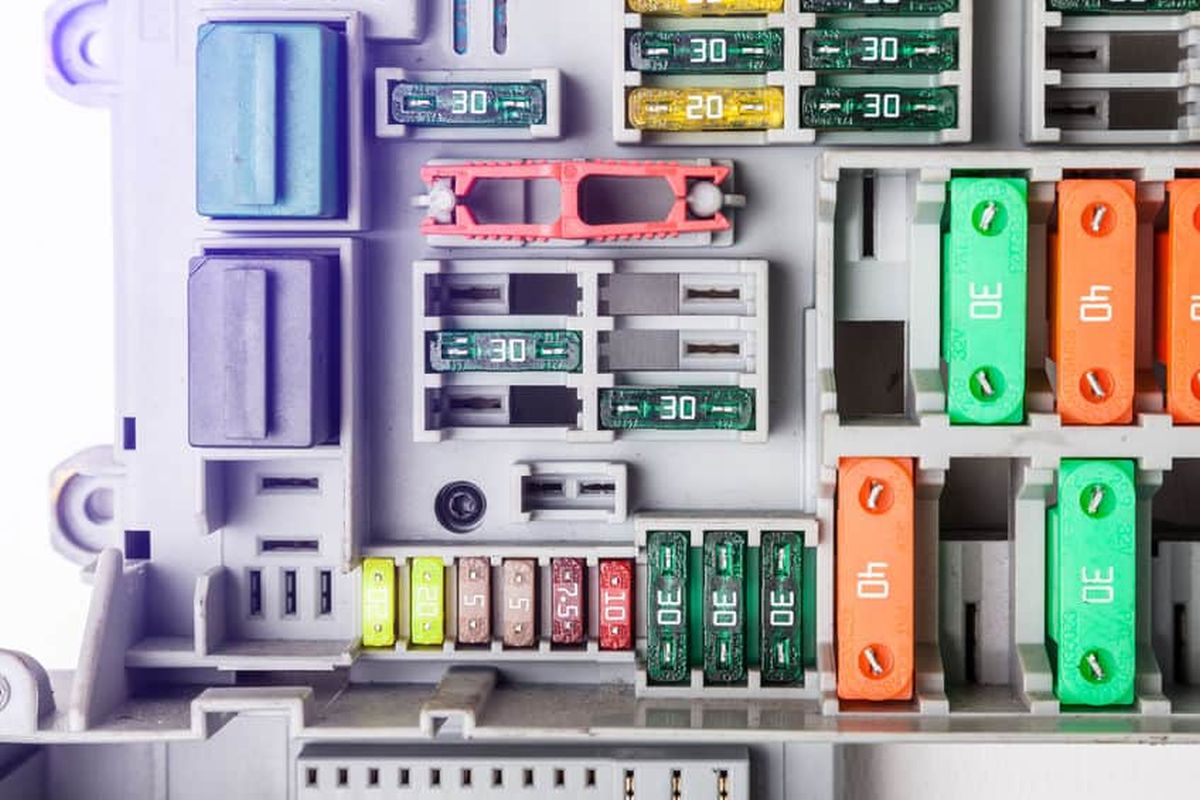
What Is a Car Electrical Fuse? Information About Fuse Types and Failures
A car electrical fuse is a small but extremely important component that protects the vehicle's electrical wiring and electronic components from excessive current.
Modern vehicles contain dozens of electrical circuits. Headlights, windshield wipers, power windows, fuel pumps, cooling fans, infotainment systems, interior lighting, control modules, sensors, and many other components require electrical power.
If a circuit develops a short circuit or draws more current than it should, the wiring can overheat. A fuse is designed to interrupt the circuit before excessive current causes wiring damage, component failure, or potentially a fire.
For this reason, a blown fuse should not simply be replaced and forgotten. In many cases, a blown fuse is a symptom of another electrical problem.
How Does a Car Fuse Work?
A fuse contains a calibrated metal element designed to carry a specific amount of electrical current.
For example, a fuse may be rated at 5 A, 10 A, 15 A, 20 A, 30 A, or another value depending on the circuit.
When the current remains within the expected range, the fuse continues to conduct electricity.
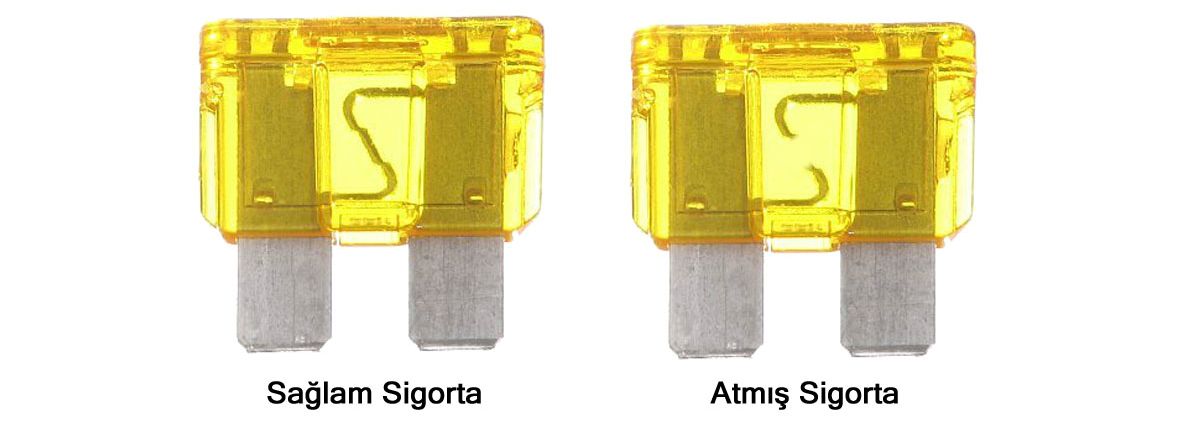
If excessive current flows through the circuit, the metal element heats up and eventually melts. This opens the circuit and stops the flow of electricity.
The process can be summarized simply:
Normal current → fuse remains intact → circuit operates normally.
Excessive current → fuse overheats → fuse element melts → circuit is disconnected.
The purpose is not to protect the electrical device alone. The fuse primarily protects the circuit wiring and associated components from excessive current.
Why Are Fuses Necessary in Cars?
A vehicle battery can supply a very large amount of electrical current.
Without appropriate circuit protection, a short circuit could cause wiring to become extremely hot.
For example, if a positive power wire becomes damaged and touches the vehicle body, a very high current can flow directly toward ground.
The fuse interrupts this current before the wiring becomes dangerously hot.
Without proper protection, the consequences could include:
-
Melted wiring
-
Damaged connectors
-
Electrical component failure
-
Smoke
-
Fire
-
Battery discharge
-
Damage to control modules
This makes the fuse one of the simplest and most important safety components in a vehicle's electrical system.
Where Are Car Fuses Located?
Most vehicles have one or more fuse boxes.
Common locations include:
-
Engine compartment
-
Under the dashboard
-
Behind a dashboard access panel
-
Inside the glove compartment area
-
Near the driver's footwell
-
Near the battery
Some vehicles have separate fuse and relay boxes for different electrical systems.
The fuse-box cover usually contains a diagram showing the purpose and rating of each fuse.
The owner's manual normally provides more detailed information.
Common Types of Automotive Fuses
Vehicles use several different fuse designs.
The exact type depends on the vehicle's age, manufacturer, electrical architecture, and fuse box.
Common automotive fuse types include:
-
Micro blade fuses
-
Low-profile mini fuses
-
Mini blade fuses
-
Standard blade fuses
-
Maxi blade fuses
-
Cartridge fuses
-
High-current bolt-down fuses
-
J-case fuses
-
PAL-type fuses
Blade fuses are especially common in modern passenger vehicles.
They are often color-coded according to their current rating, although the rating printed on the fuse should always be used as the final reference rather than relying only on color.
What Do the Numbers on a Fuse Mean?
The number printed on a fuse represents its rated current capacity.
For example:
-
5 A = five amps
-
10 A = ten amps
-
15 A = fifteen amps
-
20 A = twenty amps
-
30 A = thirty amps
A 20 A fuse should not automatically be replaced with a 30 A fuse simply because the larger fuse does not blow.
The fuse rating is selected according to the wiring and components in that circuit.
What Causes a Car Fuse to Blow?
A fuse normally blows because the circuit experiences excessive current.
Common causes include:
-
Short circuit
-
Damaged wiring
-
Faulty electrical component
-
Excessive motor current
-
Water intrusion
-
Corrosion
-
Incorrect aftermarket accessories
-
Overloaded circuit
-
Faulty relay
-
Internal component failure
-
Wiring modification
-
Incorrectly installed electrical equipment
A fuse itself can also occasionally fail because of age, heat, vibration, or poor contact, but repeated fuse failure usually indicates another problem.
Short Circuit
A short circuit is one of the most common reasons for a fuse to blow.
In a vehicle, a positive power wire may become damaged and touch:
-
Vehicle body
-
Engine
-
Another wire
-
Ground connection
-
Metal bracket
This creates an unintended low-resistance path.
The resulting current can increase dramatically, causing the fuse to open.
Damaged Wiring
Automotive wiring is exposed to heat, vibration, moisture, chemicals, and movement.
Over time, insulation can become damaged.
Wires can also be:
-
Pinched
-
Cut
-
Chafed
-
Melted
-
Pulled
-
Improperly repaired
-
Damaged by rodents
A wire that intermittently touches the body can cause a fuse to blow only under certain driving conditions.
This can make intermittent electrical faults particularly difficult to diagnose.
Faulty Electrical Components
A component connected to the circuit can internally fail and draw excessive current.
Examples include:
-
Fuel pumps
-
Cooling fans
-
Blower motors
-
Windshield wiper motors
-
Power window motors
-
Seat motors
-
Sunroof motors
-
Headlight systems
-
Heating elements
-
Electric pumps
An internal short inside one of these components can cause the fuse to blow repeatedly.
Electric Motor Problems
Electric motors can draw more current when they become worn or mechanically restricted.
For example, a cooling fan motor with damaged bearings may require more current than normal.
The same principle can apply to:
-
Blower motors
-
Wiper motors
-
Window motors
-
Seat motors
-
Fuel pumps
If the motor begins to seize, current consumption can increase until the fuse opens.
Therefore, replacing the fuse without checking the motor may only provide a temporary solution.
Water and Moisture
Water intrusion can create serious electrical problems.
Moisture can enter:
-
Connectors
-
Fuse boxes
-
Wiring harnesses
-
Headlights
-
Taillights
-
Door modules
-
Engine-bay components
-
Control modules
Water can create unintended electrical paths and promote corrosion.
If a fuse begins blowing after heavy rain, washing the engine compartment, or water entering the cabin, moisture should be considered as a possible cause.
Corrosion
Corrosion increases electrical resistance and can damage electrical connections.
Corroded terminals can cause:
-
Voltage drops
-
Intermittent operation
-
Heat generation
-
Poor grounding
-
Electrical communication problems
In some situations, corrosion can also contribute to abnormal current flow and fuse failure.
A green, white, or heavily oxidized connector should be investigated rather than simply replacing the fuse.
Aftermarket Accessories
Aftermarket electrical equipment is another common source of fuse problems.
Examples include:
-
Dash cameras
-
LED lighting
-
Alarm systems
-
Audio amplifiers
-
Remote starters
-
Parking sensors
-
Additional USB chargers
-
Auxiliary heaters
-
Aftermarket infotainment systems
Poor installation, incorrect wiring, inadequate circuit protection, or connecting an accessory to the wrong circuit can cause repeated fuse failures.
Can a Weak Battery Blow a Fuse?
A weak battery does not normally cause a fuse to blow simply because its voltage is low.
In fact, low voltage often results in reduced electrical performance rather than excessive current.
However, a weak battery can complicate electrical diagnosis because it can cause:
-
Slow starter operation
-
Multiple warning lights
-
Communication faults
-
Module resets
-
Abnormal electronic behavior
The battery and charging system should therefore be checked when diagnosing unusual electrical problems, but a weak battery should not automatically be blamed for a blown fuse.
What Happens When a Fuse Blows?
When a fuse opens, the electrical circuit it protects loses power.
Depending on the circuit, the driver may notice:
-
Headlights not working
-
Wipers not working
-
Power windows not working
-
Interior lights not working
-
Radio or infotainment failure
-
Fuel pump not operating
-
Cooling fan failure
-
Air conditioning problems
-
Dashboard functions not working
-
Certain warning lights appearing
The consequences depend entirely on which circuit has lost power.
Can a Blown Fuse Cause a Car Not to Start?
Yes.
If the blown fuse protects an important engine-management or starting circuit, the vehicle may crank but fail to start.
Depending on the vehicle, a fuse may supply power to components such as:
-
Engine control module
-
Fuel pump
-
Ignition system
-
Injectors
-
Starter control circuit
-
Sensors
-
Main engine relays
However, a no-start condition does not automatically mean a fuse has blown.
The battery, starter, immobilizer, fuel system, ignition system, crankshaft position sensor, and other components can produce similar symptoms.
What Is the Difference Between a Fuse and a Relay?
A fuse and a relay perform different functions.
A fuse protects a circuit from excessive current.
A relay acts as an electrically controlled switch.
A relay can allow a low-current control signal to operate a higher-current circuit.
For example, a vehicle's control system may activate a relay that supplies power to a fuel pump, cooling fan, horn, or other high-current component.
A faulty relay can sometimes cause symptoms that appear similar to a fuse problem.
Why Does the Same Fuse Keep Blowing?
If a replacement fuse blows immediately or repeatedly, there is usually an unresolved electrical fault.
Possible causes include:
-
Persistent short circuit
-
Damaged wiring
-
Failed motor
-
Internally shorted component
-
Water intrusion
-
Faulty relay
-
Incorrect accessory installation
-
Excessive current draw
Installing another fuse without finding the cause is not a proper repair.
What Does It Mean If a Fuse Blows Immediately?
An immediate fuse failure is an important diagnostic clue.
It often suggests a strong short circuit or a component that is drawing excessive current as soon as power is applied.
The technician should identify exactly what the fuse supplies and then isolate the circuit.
Disconnecting individual loads or sections of the wiring can help identify where the excessive current originates.
What If the Fuse Blows Only Sometimes?
Intermittent fuse failures can be more difficult to diagnose.
The fault may occur only when:
-
The vehicle is moving
-
The wiring harness moves
-
A door is opened or closed
-
The engine vibrates
-
The circuit becomes hot
-
A motor reaches a certain position
-
Rain or moisture is present
-
A particular electrical accessory is activated
For example, a damaged wire may remain away from the body while the vehicle is stationary but touch the body when the engine moves under acceleration.
How Should a Blown Fuse Be Diagnosed?
The first step is to identify the exact fuse that has failed.
Then determine which components are protected by that fuse.
The fuse-box diagram and wiring diagram can be extremely useful.
A systematic diagnostic process may include:
1. Inspect the fuse
Confirm that the fuse is actually open.
2. Check the fuse rating
Make sure the correct fuse rating is installed.
3. Identify the circuit
Determine which components receive power through the fuse.
4. Inspect visible wiring
Look for melted insulation, damaged wires, corrosion, loose connectors, and aftermarket modifications.
5. Disconnect electrical loads
Where appropriate, individual components can be disconnected to determine whether one of them is causing excessive current.
6. Test the circuit
A technician may use a multimeter, test light, current clamp, or other diagnostic equipment depending on the circuit.
7. Check relays
A faulty relay can cause electrical problems in some circuits.
8. Inspect grounds
Poor grounds can cause unusual electrical behavior and voltage drops.
9. Use diagnostic equipment
OBD scanning can be useful when the fault involves electronically controlled systems or control modules.
Can an OBD Scanner Find a Blown Fuse?
Sometimes.
An OBD scanner does not directly replace electrical testing.
A blown fuse can prevent a control module or component from receiving power, which may generate communication or circuit-related fault codes.
For example, the vehicle may store:
-
Low-voltage codes
-
Communication codes
-
Sensor circuit codes
-
Actuator circuit codes
-
Module power-supply faults
However, a basic OBD scanner may not tell you exactly why a fuse has blown.
Electrical testing is often necessary.
Should You Replace a Blown Fuse With a Higher-Rated Fuse?
No.
This is one of the most important rules when dealing with vehicle fuses.
If a circuit requires a 10 A fuse, installing a 20 A fuse can allow the wiring to carry more current than it was designed to handle.
The fuse may no longer provide the intended protection.
This can result in:
-
Overheated wiring
-
Melted insulation
-
Damaged components
-
Electrical fire
Always use the correct fuse rating specified for that circuit.
What If You Install a Smaller Fuse?
Using a fuse with a lower rating is also not a proper solution.
A smaller fuse may blow during normal operation because the circuit is designed to carry more current.
For example, replacing a 20 A fuse with a 10 A fuse may cause repeated fuse failure even when the electrical system is functioning correctly.
The correct rating should always be used.
Can a Fuse Be Repaired?
A blown fuse should not be repaired by joining the metal element with wire, foil, solder, or another improvised material.
The purpose of the fuse is to open the circuit at a specific current level.
Bypassing the fuse removes an important safety feature.
A damaged fuse should be replaced with the correct type and rating after determining whether there is an underlying electrical problem.
Can a Blown Fuse Damage the Car?
The fuse itself usually prevents damage rather than causing it.
However, the electrical problem that caused the fuse to blow may be serious.
For example, a short circuit could damage:
-
Wiring
-
Connectors
-
Control modules
-
Sensors
-
Motors
-
Electrical accessories
A fuse that blows once may be a relatively simple issue, but a fuse that repeatedly fails requires further investigation.
Automotive Fuse Color Coding
Many blade-type fuses use standardized colors to help identify their current rating.
Common ratings include:
-
5 A
-
7.5 A
-
10 A
-
15 A
-
20 A
-
25 A
-
30 A
-
40 A
-
50 A
-
60 A
However, color standards can vary by fuse type and manufacturer.
The number printed on the fuse and the vehicle's fuse specification should take priority over color alone.
High-Current Fuses
Some vehicle circuits require much more current than standard blade fuses can handle.
High-current protection may be used for systems such as:
-
Main power distribution
-
Starter circuits
-
Alternator circuits
-
Electric cooling fans
-
Glow plug systems
-
High-power electrical equipment
These fuses may have different designs and may be bolted into place rather than simply plugged into a fuse box.
Because these circuits can carry very high current, working on them requires extra care.
Why Does a Fuse Box Become Hot?
A fuse box can become warm under certain conditions, but excessive heat is a warning sign.
Possible causes include:
-
High current consumption
-
Loose fuse connection
-
Corroded terminals
-
Poor electrical contact
-
Overloaded circuit
-
Incorrect fuse
-
Damaged fuse-box terminal
A poor connection can create resistance and generate heat.
If the area around a fuse is discolored, melted, or unusually hot, the problem should be inspected promptly.
Can a Loose Fuse Cause Problems?
Yes.
A fuse that does not make proper contact with its terminals can cause intermittent electrical operation.
Possible symptoms include:
-
Electrical equipment turning off and on
-
Flickering
-
Intermittent warning lights
-
Voltage drops
-
Heat around the fuse
-
Component malfunction
The fuse box terminals themselves can also become damaged.
Simply replacing the fuse may not solve the problem if the terminal has lost its proper contact tension.
Fuse Failure After Water Exposure
If an electrical fuse blows after water enters the vehicle, the cause should be investigated carefully.
Water may reach:
-
Fuse boxes
-
Door modules
-
Wiring connectors
-
Floor harnesses
-
Control modules
-
Lighting connectors
Drying the visible area may not be enough if water has entered a connector or wiring harness.
Corrosion can continue to cause problems even after the vehicle appears dry.
Do Modern Cars Still Use Traditional Fuses?
Yes, but modern electrical systems are becoming more sophisticated.
Many modern vehicles combine traditional fuses with:
-
Electronic circuit protection
-
Body control modules
-
Smart power distribution
-
Semiconductor switches
-
Integrated relays
-
Electronic current monitoring
Some circuits may therefore not have a conventional replaceable relay or fuse in the same form used on older vehicles.
This is one reason why the wiring diagram and vehicle-specific service information are important.
Important Safety Circuits
Some fuse-related problems are more urgent than others.
Particular attention should be given to circuits associated with:
-
Fuel systems
-
Braking systems
-
ABS
-
Electronic stability control
-
Headlights
-
Brake lights
-
Cooling fans
-
Engine management
-
Airbags
-
Transmission control
If a fuse failure affects a safety-critical system, normal driving should be avoided until the problem has been properly diagnosed.
Final Thoughts
A car electrical fuse is a simple component, but it plays a critical role in protecting the vehicle's wiring and electrical systems.
A fuse can blow because of a short circuit, damaged wiring, a faulty motor, excessive current consumption, water intrusion, corrosion, a defective relay, or an incorrectly installed aftermarket accessory.
The most important thing to remember is that a blown fuse is often a symptom rather than the root cause of the problem.
Replacing the fuse with the correct rating may restore the circuit temporarily, but if the new fuse blows again, the underlying electrical fault must be found.
Never install a higher-rated fuse or bypass a fuse with wire or another improvised connection. Correct fuse selection, systematic electrical testing, and proper diagnosis are essential for both vehicle reliability and electrical safety.